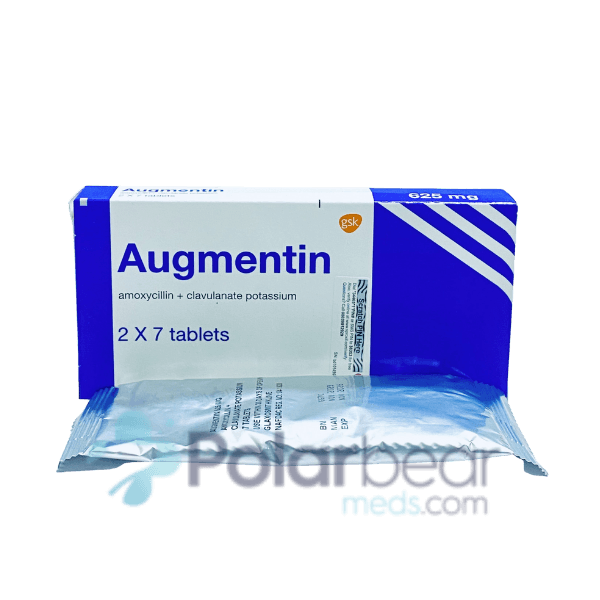
Ordering your medication online is simple and convenient.
STEP 01
Select the prescribed dosage and quantity, then proceed to checkout.
STEP 02
Sign in or create a new account.
STEP 03
Upload your prescription.
STEP 04
Complete your purchase by processing the payment.
STEP 01
Select the prescribed dosage and quantity, then proceed to checkout.
STEP 02
Sign in or create a new account.
STEP 03
Upload your prescription.
STEP 04
Complete your purchase by processing the payment.
Shipping takes approximately 3-5 business days.

Our Pharmacy Reviews
Read what our customers have to say about their shopping experience.
Product Details
Description
Augmentin is a widely prescribed antibiotic combining amoxicillin and clavulanic acid, used to treat different types of bacterial infections. It is effective against respiratory tract infections (e.g., bronchitis, pneumonia), ear infections (otitis media), skin infections (e.g., cellulitis), sinusitis, and urinary tract infections (UTIs). Its key advantage lies in its dual-action formula: amoxicillin specifically targets bacterial cell walls, while clavulanic acid inhibits beta-lactamase enzymes, making it effective against resistant bacteria. Augmentin is available in tablets and oral suspensions and is suitable for adults and children. Patients often experience symptom relief within days, but completing the full course is crucial to prevent resistance.
Augmentin comes in multiple strengths, with dosages tailored to the infection type and severity. For example, severe UTIs may require 875 mg tablets every 12 hours for 10–14 days, while sinus infections often need 5–7 days of treatment. Common side effects of Augmentin include nausea, diarrhea, and skin rashes, but serious reactions like liver toxicity, C. difficile infection, or severe allergic responses (e.g., anaphylaxis) require immediate medical attention. Patients with kidney or liver impairment, penicillin allergies, or phenylketonuria (PKU) should use caution. Augmentin interacts with certain medications (e.g., methotrexate, live vaccines) and may reduce the efficacy of probiotics or fecal microbiota treatments.
Augmentin should be taken with food to enhance absorption and minimize stomach upset. Tablets must be swallowed whole, and doses should be spaced evenly. If a dose is missed, it should be taken as soon as possible unless the next dose is due. Storage requires keeping tablets at room temperature, away from moisture and light. Alternatives like levofloxacin or doxycycline may be prescribed for penicillin-allergic patients, but a healthcare provider should guide this choice. Frequently asked questions clarify that Augmentin is not the "strongest" antibiotic but is versatile due to its resistance-fighting properties, and it can be taken with milk or food without reducing effectiveness. Hydration is encouraged to mitigate side effects.
Uses and Benefits
Augmentin is a prescribed antibiotic medication used to treat a variety of bacterial infections, including:
Lower respiratory tract infections (RTIs) (such as bronchitis & pneumonia)
Acute bacterial otitis media (middle ear infections)
Skin infections (including cellulitis and wound infections)
Sinusitis (bacterial sinus infections)
Urinary tract infections (UTIs)
Benefits of Augmentin
If you plan to buy Augmentin online to treat bacterial infections, you can get the following benefits:
Augmentin is highly effective against a wide range of bacterial infections, including strains that are resistant to amoxicillin alone. This makes Augmentin a versatile choice for treating various infections, from respiratory to urinary tract infections.
Its combination of amoxicillin & clavulanic acid allows it to combat beta-lactamase-producing bacteria, which typically break down standard antibiotics. This dual-action formula ensures stronger and more reliable treatment outcomes.
Augmentin is available in various forms, such as tablets and oral suspensions, making it suitable for adults, children, and those who have difficulty swallowing pills.
Patients often experience noticeable symptom improvement within a few days of starting treatment, helping to reduce discomfort and speed up recovery.
Dosage
What Are the Forms & Strengths of Augmentin?
Augmentin is available in two primary forms: oral tablets and oral liquid suspensions. Here are the strengths of each:
Oral Tablets:
250 mg amoxicillin / 125 mg clavulanic acid
500 mg amoxicillin / 125 mg clavulanic acid
875 mg amoxicillin / 125 mg clavulanic acid
Oral Liquid Suspensions:
125 mg amoxicillin / 31.25 mg clavulanic acid per 5 mL
200 mg amoxicillin /28.5 mg clavulanic acid per 5 mL
250 mg amoxicillin / 62.5 mg clavulanic acid per 5 mL
400 mg amoxicillin / 57 mg clavulanic acid per 5 mL
600 mg amoxicillin / 42.9 mg clavulanic acid per 5 mL (marketed as Augmentin ES-600)
What Is the Recommended Dosage for Augmentin?
When you buy Augmentin online from Canada, consider the following dosage recommendations:
Augmentin Dose for Urinary Tract Infections (Severe Cases)
Typical Dosage: One 875-mg oral tablet taken every 12 hours.
Treatment Duration: Generally 10 to 14 days, depending on infection severity and patient response.
Notes: This regimen is typically prescribed for complicated or severe UTIs, such as pyelonephritis (kidney infection). Shorter courses may be used for uncomplicated UTIs.
Augmentin Dose for Sinus Infections (Acute Bacterial Sinusitis)
Typical Dosage: One 875-mg oral tablet every 12 hours.
Treatment Duration: Usually 5 to 7 days, though some cases may require up to 10 days if symptoms persist.
Notes: Treatment length may vary based on bacterial resistance patterns and clinical improvement.
Augmentin Dose for Skin Infections (e.g., Impetigo, Cellulitis)
Typical Dosage: One 875-mg oral tablet every 12 hours.
Treatment Duration: Typically 7 days, but may extend to 10 days for more severe or widespread infections.
Notes: Used for bacterial skin infections caused by susceptible organisms, such as Staphylococcus aureus or Streptococcus pyogenes.
Augmentin Dose for Ear Infections
Typical Dosage: One 875-mg oral tablet every 12 hours.
Treatment Duration: Usually 10 days to ensure complete resolution and prevent recurrence.
Notes: Commonly prescribed for moderate to severe bacterial ear infections, particularly when caused by Streptococcus pneumoniae or Haemophilus influenzae.
Augmentin Dose for Respiratory Infections (e.g., Pneumonia, Bronchitis)
Typical Dosage: One 875-mg oral tablet every 12 hours.
Treatment Duration: Typically 10 days for bacterial pneumonia; shorter courses (5–7 days) may be sufficient for mild bronchitis.
Notes: Used for community-acquired pneumonia (CAP) and other lower respiratory infections when caused by susceptible bacteria.
Additional Considerations
Duration of Treatment: The length of therapy depends on the infection type and response to treatment. Always complete the full Augmentin course, even if symptoms improve earlier.
Renal Impairment: Augmentin dosage adjustments may be necessary for patients with kidney dysfunction.
Administration Instructions: Augmentin should be taken at the start of a meal to enhance absorption & reduce gastrointestinal side effects.
[Note: Remember, these recommendations might vary from person to person. Discuss it with your pharmacist, and they'll customize your Augmentin dosage accordingly.]
Usage Guide
Many patients choose to buy Augmentin online from Canada and follow these administration steps:
Follow your doctor’s prescription carefully—do not alter the Augmentin dosage.
Take the Augmentin tablet at the beginning of a meal for optimal absorption.
Swallow the Augmentin tablet whole—do not crush or break it.
Maintain a consistent Augmentin dosage schedule—take it at the same time daily.
Complete the full course even if symptoms improve.
For Augmentin oral suspension or tablets, follow specific instructions for shaking, measuring, or chewing as directed. Always consult your doctor for personalized guidance.
[Note: Your doctor will decide the right Augmentin amount for you based on your medical condition, following guidelines & studies on the medication. They'll adjust it as needed over time.]
How It Works
Augmentin is a powerful antibiotic medication that works through the combination of its 2 active ingredients: amoxicillin & clavulanate potassium. Amoxicillin, a penicillin-type antibiotic, targets and kills bacteria by interfering with their ability to form protective cell walls, which are important for their survival. Without these walls, bacteria become vulnerable and eventually die. However, some bacteria have developed resistance mechanisms by producing enzymes called beta-lactamases, which can break down amoxicillin before it can take effect. To counteract this, Augmentin includes clavulanate potassium, a beta-lactamase inhibitor.
Clavulanate binds to and neutralizes these enzymes, preventing them from degrading amoxicillin and thereby enhancing its effectiveness. This dual-action approach allows Augmentin to combat various bacterial infections, including infections caused by resistant strains that would otherwise be difficult to treat with amoxicillin alone. By combining these two components, Augmentin ensures a more robust and reliable antibacterial effect, making it a widely used treatment for various bacterial infections.
Side Effects
Common Augmentin Side Effects: Like all medications, Augmentin may cause you the following side effects:
Nausea or Vomiting: These are among the most frequent side effects of Augmentin, a combination antibiotic containing amoxicillin and clavulanate. These symptoms occur because the medication can irritate the stomach lining or disrupt the natural balance of gut bacteria. Taking Augmentin with food may help reduce stomach upset. If nausea or vomiting becomes severe or persistent, medical advice should be sought.
Black Hairy Tongue (BHT): This issue may sound alarming, but it is actually a harmless and temporary side effect that some people experience while taking Augmentin. This condition causes the tongue's papillae (small taste buds) to elongate and darken, giving the tongue a black, hairy appearance. Along with these visible changes, some individuals may also develop bad breath. Although BHT is not very common, its exact cause isn't fully understood. One possible explanation is that antibiotics like Augmentin could disrupt the balance of bacteria in the mouth, allowing certain pigments or microbes to accumulate on the tongue. Fortunately, this condition is not dangerous and typically resolves on its own after stopping the medication or improving oral hygiene.
Diarrhea: Augmentin often causes diarrhea due to its impact on the gut microbiome, killing both harmful and beneficial bacteria. This disruption can lead to loose stools or frequent bowel movements. In most cases, the diarrhea is very mild and resolves after the medication is finished. However, if it becomes severe, watery, or bloody, it could indicate a more serious condition, like a C. diff infection, requiring immediate medical attention.
Skin Rash: A mild skin rash, often appearing as red, itchy patches, is a common side effect of consuming Augmentin tablets. This reaction may be due to a mild allergy or sensitivity to penicillin-based antibiotics. While most rashes are harmless, a widespread or blistering rash could indicate a serious allergic reaction that requires urgent medical care.
Itchiness: Itchiness, with or without a rash, can occur as a side effect of Augmentin. This may result from a mild allergic reaction or the body's response to the medication. Antihistamines or moisturizers may help relieve discomfort, but if itching is severe or accompanied by swelling or difficulty breathing, it could signal anaphylaxis, a life-threatening emergency.
Yeast Infection: Since Augmentin kills both harmful and beneficial bacteria, it may lead to an overgrowth of yeast (such as Candida), causing infections in the mouth (oral thrush) or genital area (vaginal yeast infection). Symptoms include white patches, itching, and unusual discharge. Antifungal treatments can help, and probiotics may help restore bacterial balance.
Gas & Bloating: Augmentin can disrupt normal digestion, leading to increased gas production and bloating. Eating probiotic-rich foods (like yogurt) may help ease discomfort.
Stomach Pain or Cramps: Some people experience mild to moderate abdominal pain while taking Augmentin, often due to gut irritation. Drinking plenty of water & eating bland foods may help.
Serious Augmentin Side Effects: Although Augmentin is generally well-tolerated, it could cause severe side effects in some individuals. If you experience any of the following, seek immediate medical attention.
Liver Problems: Augmentin can occasionally cause liver damage, leading to symptoms like jaundice, dark urine, serious fatigueness, or abdominal pain. Liver enzyme elevations may be detected in blood tests. While rare, severe liver injury requires immediate discontinuation of the drug and medical intervention.
Clostridioides difficile (C. diff) Infection: Augmentin disrupts gut bacteria, sometimes allowing C. diff—a harmful bacterium—to overgrow, leading to severe diarrhea, abdominal cramps, and colitis. C. diff infection can be life-threatening, especially in older or immunocompromised patients, and requires prompt treatment with specific antibiotics.
Severe Skin Reactions: Augmentin treatment can lead to serious skin reactions, including Stevens-Johnson syndrome, drug reaction with eosinophilia & systemic symptoms (DRESS), toxic epidermal necrolysis (TEN), and acute generalized exanthematous pustulosis (AGEP). Symptoms may involve a red or discolored skin rash, blistering, skin peeling, fever, and flu-like symptoms.
Drug-Induced Enterocolitis Syndrome (DIES): Amoxicillin, a key component of Augmentin, may trigger DIES, an allergic reaction affecting the digestive system. This condition is more common in children than adults. Symptoms include prolonged vomiting, diarrhea, pale skin, sluggishness, low blood pressure, shock, and elevated white blood cell levels. If these symptoms occur, discontinue the medication and consult a doctor immediately, as prompt treatment is necessary to manage this serious side effect.
Allergic Reaction: Some individuals might experience a severe allergic reaction to Augmentin, particularly those with a penicillin allergy. A past allergic reaction to this medication makes future use potentially fatal. Symptoms include severe skin rashes, hives, swelling of the throat, tongue, or lips, and difficulty breathing. If you have a history of allergic reactions to Augmentin or penicillin, inform your doctor before taking this medication again to avoid life-threatening complications.
[Note: Remember, this list might not cover all possible Augmentin side effects. Always consult with your healthcare giver or doctor for medical advice about side effects.]
Warnings
People often buy Augmentin online to treat bacterial infections and should consider the following warnings:
Hypersensitivity Warning: Augmentin may trigger severe allergic reactions, including anaphylaxis, in individuals with penicillin or cephalosporin allergies. Before taking this medication—especially if obtained online—disclose any drug allergies to your doctor. Symptoms like facial or throat swelling, breathing difficulties, severe rashes, or hives require urgent medical attention. Never disregard allergic reactions, as delayed treatment can be life-threatening. Always share your complete allergy history with your healthcare provider to avoid dangerous complications.
Risk of Liver Damage: Though uncommon, Augmentin has been associated with liver injury, particularly with longer use. Watch for symptoms such as dark urine, jaundice, continuous nausea, or extreme fatigue. Patients with pre-existing liver conditions should use this medication cautiously under close medical supervision. If liver dysfunction symptoms appear, discontinue Augmentin immediately and seek medical help to prevent further harm.
Kidney Disease Considerations: Patients with severe kidney impairment must use Augmentin with caution, as impaired kidney function could lead to drug accumulation and increased toxicity risks. Your doctor might adjust the Augmentin dosage or suggest an alternative antibiotic based on kidney function tests. Ensure your healthcare provider or doctor is aware of any kidney-related issues to guarantee safe and effective treatment.
Phenylketonuria (PKU) Warning: Augmentin oral suspension contains phenylalanine, which could be harmful to individuals with PKU, a genetic disorder affecting phenylalanine metabolism. Those with PKU should avoid this form of medication and consult their doctor for a phenylalanine-free alternative.
Safety Guide
Adhere to the following precautionary guidelines when you buy Augmentin online:
Pregnancy: The safety of Augmentin during pregnancy has not been fully established due to limited human studies. While animal research has not shown harmful effects on fetal development, these findings may not always apply to humans. Therefore, Augmentin should only be used during pregnancy if absolutely necessary, as determined by a healthcare provider. Your doctor will assess the possible benefits against any possible risks to ensure the safest treatment option for both mother and baby.
Breastfeeding: Augmentin can pass into breast milk in small quantities, though it is generally considered compatible with breastfeeding. However, there is a possibility of side effects in the nursing infant, such as diarrhea or fungal infections. Before taking Augmentin while breastfeeding, consult your doctor to evaluate whether the advantages of treatment outweigh the potential risks. Your healthcare provider or doctor can help determine the best course of action to ensure both your health and your baby’s safety.
Safety Guidelines: Inform your doctor of any medical history involving liver disease, kidney disease, or mononucleosis, as Augmentin may not be suitable. Different formulations of Augmentin are not interchangeable, so strictly follow your doctor’s prescribed dosage.
Missed Dose
If you forget to take a dose of Augmentin, take it as soon as possible unless it is almost time for your next daily dose. In that case, skip the missed Augmentin dose and continue with your regular dosing plan. For further guidance, consult your doctor.
[Note: If you have missed a dose of your medicine and are unsure about when to take the next one, consult your doctor or pharmacist immediately.]
Overdose
Taking more than the prescribed dose of Augmentin can lead to very severe side effects, including stomach pain, diarrhea, nausea, or skin rash. If you suspect an overdose and experience these symptoms, seek emergency medical help.
[Note: If you have consumed more than the recommended Augmentin dose, get medical help immediately or call the Poison Help line at 1-800-222-1222.]
Storage Guide
To ensure the medication remains effective, follow these storage instructions:
Store Augmentin tablets at room temperature.
Keep the Augmentin tablets away from heat, moisture, and direct light.
Keep the Augmentin tablets out of reach of children.
Dispose of expired or unused Augmentin tablets properly.
[Note: Discuss with your healthcare expert or professional about the proper disposal of any unused tablets and any questions you may have regarding their storage.]
Interactions
Augmentin (amoxicillin/clavulanate) can interact with various medications, including:
Cholera Vaccine, Live: Augmentin may diminish the effectiveness of the live cholera vaccine. If you are currently on Augmentin or have taken it within the past 14 days, discuss vaccination timing with your doctor. Ideally, the cholera vaccine should be given either at least 14 days after finishing Augmentin or at least 10 days before starting it to ensure a proper immune response.
Fecal Microbiota Spores, Live: Augmentin may reduce the efficacy of live fecal microbiota spores, which are used to restore healthy gut bacteria. To minimize this interaction, your doctor may adjust the timing of administration between the antibiotic and the probiotic treatment.
Leflunomide: Combining leflunomide with Augmentin (which contains clavulanate) may increase the risk of liver toxicity, as both medications can affect liver function. Since leflunomide remains in the body for an extended period, this interaction may persist even after stopping the medication. Avoid alcohol while on these drugs and seek medical attention if you experience signs such as fever, abdominal pain, fatigue, dark urine, or jaundice, as these may indicate liver damage.
Methotrexate: Augmentin may increase methotrexate levels in the blood, raising the risk of side effects such as nausea, mouth sores, and low blood cell counts. This could lead to anemia, bleeding complications, or infections. If you develop symptoms like unusual fatigue, bruising, fever, or sore throat, contact your doctor promptly. Dose adjustments and close monitoring may be necessary when these medications are used together.
Typhoid Vaccine, Live: Augmentin can interfere with the live typhoid vaccine’s effectiveness. If you are currently on Augmentin or have taken it within the last three days, consult your doctor before vaccination. Ideally, the vaccine should be given at least three days after completing antibiotic therapy. If you have already received the vaccine, wait at least three days before starting Augmentin unless urgent treatment is required.
Mycophenolate Mofetil & Mycophenolic Acid: Augmentin may decrease the blood levels and effectiveness of mycophenolate mofetil or mycophenolic acid, increasing the risk of organ rejection in transplant patients. Your doctor may need to adjust the dose and monitor you closely. Seek medical attention if you experience signs of rejection, such as reduced urine output (kidney transplant), swelling or fatigue (heart transplant), or jaundice (liver transplant).
What Are the Other Augmentin Interactions?
Apart from medication interactions, consider the following other interactions too:
Disease Interactions: There are 7 disease interactions associated with this medication:
Hepatotoxicity: Amoxicillin-clavulanate (Augmentin) has been associated with rare cases of hepatotoxicity, including elevated liver enzymes (transaminases, bilirubin, alkaline phosphatase). Liver injury may present during treatment or weeks after discontinuation. Histologic findings often show cholestatic or hepatocellular damage. While most cases are reversible, fatalities have occurred, particularly in patients with liver disease or concurrent hepatotoxic medications. Liver function tests should be very closely monitored during prolonged therapy. Augmentin is contraindicated in patients with a history of drug-induced cholestatic jaundice or hepatic dysfunction.
Antibiotic-Associated Colitis: Augmentin, like other antibiotics, may cause Clostridioides difficile-associated diarrhea (CDAD), ranging from mild diarrhea to life-threatening colitis. Antibiotics disrupt gut flora, allowing C. difficile overgrowth and toxin production. Hypertoxin-producing strains can lead to severe, refractory cases requiring colectomy. CDAD can occur even weeks after antibiotic use. Patients with a past history of serious gastrointestinal disease, particularly colitis, are at higher risk. If CDAD is suspected, discontinuing Augmentin (unless essential) and appropriate treatment for C. difficile (e.g., vancomycin, fidaxomicin) should be initiated.
Mononucleosis: Aminopenicillins, including Augmentin, can cause a non-allergic maculopapular rash in patients with mononucleosis. This rash is typically self-limiting and resolves after discontinuation. The mechanism may involve altered drug metabolism or an immune response unrelated to true penicillin allergy. Due to this risk, aminopenicillins should be avoided in patients with confirmed or suspected mononucleosis.
False-Positive Urine Glucose Tests: High urinary concentrations of amoxicillin (a component of Augmentin) may cause false-positive glucose results with copper-reduction tests (e.g., Clinitest®, Benedict’s Solution). Enzymatic glucose oxidase methods (e.g., Clinistix®) are recommended for accurate glucose monitoring in diabetic patients.
Phenylketonuria (PKU): Some Augmentin formulations contain phenylalanine as an excipient. Patients with phenylketonuria (PKU) must monitor phenylalanine intake to prevent neurological complications. Alternative formulations without phenylalanine should be considered for PKU patients.
Renal Dysfunction: Beta-lactam antibiotics, including Augmentin, are primarily excreted renally. Impaired kidney function may lead to drug accumulation, increasing the risk of toxicity. Dosage adjustments are necessary for renal impairment based on severity and infection type. Renal function should be monitored during prolonged or high-dose therapy.
Hemodialysis: Penicillins (except penicillinase-resistant types) are significantly removed by hemodialysis. Augmentin doses should be given after dialysis or supplemented post-dialysis to maintain therapeutic levels. Adjustments are necessary to avoid subtherapeutic concentrations in dialysis patients.
Alcohol Consumption: Drinking alcohol while taking Augmentin can heighten the risk of certain side effects or intensify existing ones. Alcohol may interfere with the medicine's effectiveness and place additional stress on the liver, which processes both the drug and alcohol. Common side effects that could worsen with alcohol consumption include nausea, vomiting, dizziness, stomach discomfort, and potential liver complications. Since Augmentin already carries a risk of gastrointestinal upset and, in rare cases, liver issues, combining it with alcohol may amplify these effects. To ensure safe usage, consult your doctor about whether any amount of alcohol is permissible during your treatment and follow their recommendations closely.
Dairy Products: Unlike some antibiotics that can bind to calcium in dairy products—reducing their absorption and effectiveness—Augmentin does not interact with milk or other dairy foods. This means you can consume dairy, such as yogurt, cheese, or milk, without worrying about it interfering with Augmentin's potency. However, if you have concerns about digestive tolerance (as antibiotics can sometimes cause stomach upset), you may still choose to space out dairy consumption from your doses. Always follow your doctor’s or pharmacist’s advice regarding dietary considerations while on medication.
[Note: This is not a complete list, and there could be other medicines that interact with Augmentin. Make sure to tell your doctor or healthcare provider about any prescription, over-the-counter medicines (OTC), and herbal products you’re taking.]
Alternatives
If you're looking for alternatives to Augmentin, here are some options:
Levofloxacin
Ciprofloxacin
Dicloxacillin
Cefdinir
Doxycycline
[Note: Your doctor or pharmacist will choose what is best for you. Don’t use any of these alternative medicines without consulting them. Taking them by yourself might cause you serious side effects.]
Cost & Coupons
Looking to buy Augmentin online with coupon savings? At Polar Bear Meds, we make it easy to access this essential antibiotic at a fraction of U.S. retail prices. Simply use coupon code “WELCOMEPB10” at checkout to enjoy 10% off your first order. Augmentin is a commonly prescribed medication for bacterial infections, but its high cost in the U.S. can be a burden. That’s why we offer affordable pricing and extra discounts—plus, you can earn up to $200 in savings through our referral program when you recommend us to friends and family. Stay on top of your health without overspending by choosing Polar Bear Meds for low-cost, high-quality medications.
FAQ
Guarantee
AtPolarBearMeds.com, we assure you the most affordable price to buy Augmentin online from Canada. Rest easy knowing that your order will be dispatched from a reputable Licensed Canada Pharmacy Online, adhering to the highest standards of quality and authenticity. Our discounted medications are shipped directly from Canada to your doorstep, ensuring a swift and secure delivery experience. To conveniently buy Augmentin online to treat bacterial infections at a substantial cost, call us at 1-888-779-2193 toll-free.

Important Notice
The content provided on the Polar Bear Meds website serves to increase knowledge about healthcare products and medical conditions and is strictly for informational purposes. It should not replace professional medical advice. We urge you to consult with a qualified healthcare professional prior to utilizing any prescription or over-the-counter medication. Our platform grants access to an extensive array of products, sourced internationally, including Canada. We collaborates with a licensed pharmacy partner in Canada and trusted dispensing pharmacies globally. All affiliated fulfillment centers are accredited by the regulatory authorities of their respective countries.
Medically Reviewed by "Dr. Jackson Miller (M.D)"
Dr. Jackson Miller is a board-certified medicine physician & hospitalist. He is a healthcare professional with a strong background in patient care. With years of experience and a patient-first approach, he believes the foundation of good health is a patient who feels informed and empowered. He contributes to medical content review, drawing on his background in clinical practice and patient education. He focuses on presenting health information in a clear, accurate, and accessible way to help readers make informed decisions. His work emphasizes clarity, evidence-based guidance, and understandable explanations of medical topics.
We offer competitive pricing on all our medications. We'll match if you find a lower price on an identical product at a verified Canadian online pharmacy!
Eligibility Criteria:
The competitor's price must be active (no past/future sales).
It is only valid for Canadian online pharmacies with a verifiable address.
The product must match the strength, pack size, quantity, manufacturer & origin.
There are no price matches on used/expired medications.
You must submit your requests before placing an order.
We cannot adjust prices after purchase.
Request via live chat or phone before placing your order.