

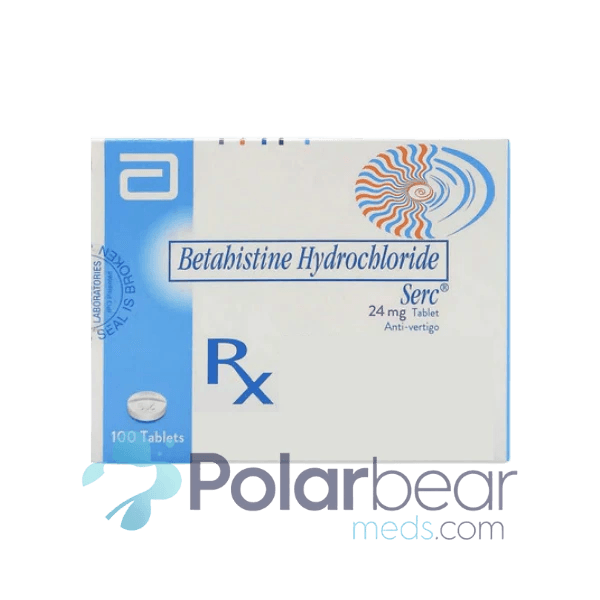
Betahistine Hyd…
Teva-betahistine
$11.62
$11.62


We offer competitive pricing on all our medications. Find a lower price? We'll match it from any verified Canadian online pharmacy! Know More
We offer competitive pricing on all our medications. Find a lower price? We'll match it from any verified Canadian online pharmacy! Know More
Ordering your medication online is simple and convenient.
Select the prescribed dosage and quantity, then proceed to checkout.
Sign in or create a new account.
Upload your prescription.
Complete your purchase by processing the payment.
Select the prescribed dosage and quantity, then proceed to checkout.
Sign in or create a new account.
Upload your prescription.
Complete your purchase by processing the payment.
Shipping takes approximately 3-5 business days.


Betahistine is a prescription medicine commonly used outside the U.S. to help control vertigo symptoms caused by inner-ear conditions such as Ménière’s disease. This condition causes dizziness attacks involving vertigo (a spinning sensation), hearing loss, and tinnitus (ringing in the ears). Ménière’s disease is associated with abnormal inner-ear fluid balance, which is thought to contribute to these symptoms.
While Betahistine is not FDA-approved, patients may access it through compounding pharmacies with a prescription. This medicine is generally well-tolerated by most people when used under medical supervision. Although Betahistine tablets are available in different strengths (8, 16, and 24 mg), this page focuses on Betahistine 16 mg.
| Generic name | Betahistine (often as betahistine dihydrochloride) |
|---|---|
| Brand name | SERC |
| Drug class | Histamine analog |
| FDA approval status | Not FDA-approved in the U.S. |
| Common use | Management of vertigo symptoms related to Ménière’s disease |
| Rx status | Prescription in many countries outside the U.S. |
| How it’s taken | Oral tablet |
| Available strengths | 8 mg, 16 mg, and 24 mg |
← Swipe to see more →

Betahistine helps manage vertigo and related symptoms in patients with inner-ear balance disorders. It is most often prescribed for:
Betahistine is typically used for ongoing symptom management rather than acute vertigo attacks.

If you are using Betahistine for Meniere’s disease treatment or to treat symptoms associated with it, make sure to follow these administration steps:
There is no specific time to take Betahistine for inner ear problems, but consistency is most important.

Betahistine works by acting on histamine receptors in the inner ear. It partially stimulates H1 receptors and blocks H3 receptors. It is thought to help increase blood flow to the inner ear and reduce excess inner ear fluid pressure. As a result, circulation and pressure balance improve, which is believed to ease vertigo symptoms and support inner ear function over time.

Betahistine is generally well-tolerated, but some side effects may occur. This is not a complete list of possible Betahistine side effects. If you notice other adverse reactions during your treatment, report them immediately to your prescriber.
These side effects affect fewer than 1 in 10 users. Most reactions are mild to moderate and usually subside as your body adjusts to the medication’s effects.
These side effects are rare among users but may cause serious reactions, requiring urgent medical care.
Consult your provider before starting your treatment. They will individualize the dose based on symptom control and tolerance. Here is the average Betahistine dosage for Meniere’s disease:
Starting Dose:
Maintenance Dose:
Tablets Quantity According to Different Strengths
| Betahistine 8 mg | Betahistine 16 mg | Betahistine 24 mg |
|---|---|---|
| 1 to 2 tablets, three times daily | ½ to 1 tablet, three times daily | 1 tablet, two times daily |
← Swipe to see more →

The following information highlights important Betahistine warnings, precautions, and conditions where use may not be appropriate:
Betahistine may not be suitable for everyone. Certain medical conditions can increase the risk of side effects or require closer monitoring. Always use Betahistine for inner ear problems under the guidance of a healthcare provider.
Before taking Betahistine for Meniere’s disease, tell your doctor about your medical history, especially if you have:
While taking Betahistine for inner ear problems or Meniere’s disease, certain substances may reduce its effectiveness or increase side effects. This includes:
Betahistine should not be used, or should be used only with specialist guidance, in people who have:
Betahistine can interact with some medications that may affect histamine activity or blood pressure. Always tell your doctor about all medicines or supplements you take. Some of the Betahistine interactions may include:

If Betahistine is unsuitable or unavailable, the following alternatives may be considered after consulting a medical provider:

At Polar Bear Meds, we help make Betahistine more affordable without compromising on quality. By partnering with licensed Canadian pharmacies, we offer Betahistine at prices often up to 80% lower than those of typical U.S. pharmacies.
New customers may save even more by using the Betahistine coupon code “WELCOMEPB10” for an extra 10% off. No insurance is required, and there are no hidden fees. All orders are shipped fast and discreetly, typically within 3–5 business days via Xpress Post, making it simple and reliable to start your treatment.

This information is for educational purposes only and should not substitute for medical advice, diagnosis, or treatment. Betahistine is a prescription medicine and should be taken only as directed by your prescriber. This is particularly important if you have underlying health conditions, are pregnant, breastfeeding, or using other medicines.


Dr. Jackson Miller is a board-certified medicine physician & hospitalist. He is a healthcare professional with a strong background in patient care. With years of experience and a patient-first approach, he believes the foundation of good health is a patient who feels informed and empowered. He contributes to medical content review, drawing on his background in clinical practice and patient education. He focuses on presenting health information in a clear, accurate, and accessible way to help readers make informed decisions. His work emphasizes clarity, evidence-based guidance, and understandable explanations of medical topics.
Learn more about Betahistine and related topics


