


Search for 'Ozempic'

We offer competitive pricing on all our medications. Find a lower price? We'll match it from any verified Canadian online pharmacy! Know More
We offer competitive pricing on all our medications. Find a lower price? We'll match it from any verified Canadian online pharmacy! Know More
Ordering your medication online is simple and convenient.
Select the prescribed dosage and quantity, then proceed to checkout.
Sign in or create a new account.
Upload your prescription.
Complete your purchase by processing the payment.
Select the prescribed dosage and quantity, then proceed to checkout.
Sign in or create a new account.
Upload your prescription.
Complete your purchase by processing the payment.
Shipping takes approximately 3-5 business days.


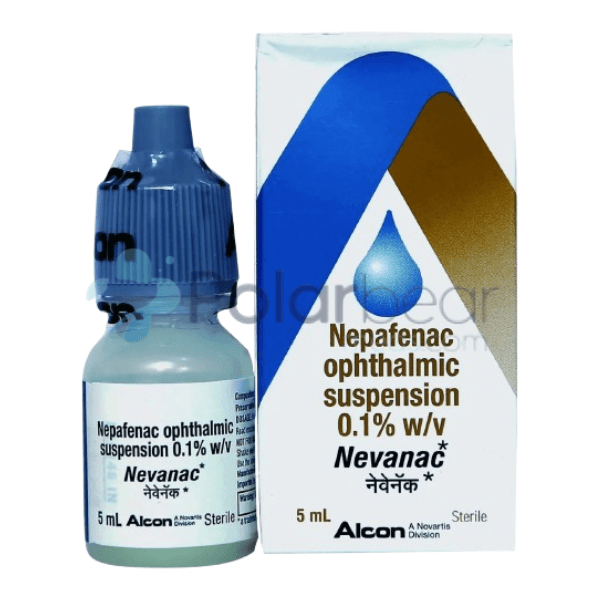
Nevanac Eye Drops contain nepafenac 0.1%, a non-steroidal anti-inflammatory drug (NSAID) formulated for ophthalmic use. It is prescribed to reduce eye pain and inflammation associated with cataract surgery. It is commonly used after cataract surgery to reduce postoperative pain and inflammation when used as directed by an ophthalmologist.
Below is a quick overview of important facts for patients and caregivers:
| Product Name | Nevanac Eye Drops |
|---|---|
| Generic Name | Nepafenac |
| Available Strengths | 0.1% ophthalmic suspension |
| Drug Class | Ophthalmic NSAID |
| Primary Use | Pain and inflammation after cataract surgery |
| Prescription Required | Yes |
| Storage | Store between 36°F to 77°F (2°C-25°C) |
← Swipe to see more →

Nevanac Eye Drops are indicated for the treatment of pain and inflammation associated with cataract surgery. Key benefits include:
This medication is not intended for the treatment of general eye irritation or long-term inflammation without medical supervision.
Nevanac Eye Drops work through the following process:
Always follow your healthcare provider’s instructions. General guidelines include:
Use Nevanac exactly for the prescribed duration and do not use it longer than recommended unless advised by your physician.

The dosage of this medicine depends on your ophthalmologist’s instructions and postoperative treatment plan.
| Dosage Information | Details |
|---|---|
| Recommended Dose | One drop in the affected eye(s) |
| Frequency | Three times daily |
| When to Start | Beginning 1 day before cataract surgery |
| Day of Surgery | Continue use |
| Post-Surgery Duration | Continue through the first 14 days after surgery. |
| Before Use | Shake the container well before using |
| Use With Other Eye Medications | Separate applications by at least 5 minutes |
← Swipe to see more →

Like all medications, Nevanac may cause side effects in some people. Some patients may experience side effects after cataract surgery. Commonly reported Nevanac Eye Drops side effects are listed below:
If you experience any side effects that persist, worsen, or concern you, contact your healthcare provider promptly. If excess medication is applied or severe reactions occur, wipe away excess solution, stop use, and seek immediate medical advice or contact a poison control center.

Nevanac Eye Drops are a topical NSAID indicated for use after cataract surgery and should be administered under medical supervision. Like other ophthalmic NSAIDs, this medication may increase bleeding tendency, delay healing, or cause corneal complications in certain patients.
Tell your doctor before using Nevanac Eye Drops if you have:
Use of Nevanac more than 1 day before surgery or beyond 14 days after surgery may increase the risk of corneal complications.
This medication may rarely lead to serious medical problems, including:
Stop use and seek immediate medical care if you notice worsening eye pain, redness, vision changes, or signs of corneal injury.
Pregnancy:
There are no adequate and well-controlled studies in pregnant women. Nevanac should be used during pregnancy only if the potential advantages justify the potential risk to the fetus. Use during late pregnancy should be avoided because drugs that inhibit prostaglandin synthesis may affect fetal cardiovascular development.
Breastfeeding:
It is not known whether nepafenac is excreted in human breast milk. Since many drugs are expelled in breast milk, caution should be exercised when Nevanac Eye Drops are used while breastfeeding. Consult your healthcare provider before use.
Always consult your doctor before using this medicine while pregnant or planning for pregnancy, or breastfeeding.

No clinically significant drug interactions are expected based on available clinical pharmacology data. Always inform your doctor about all prescription drugs, over-the-counter medicines, and supplements you are taking. Use caution if taking Nevanac, especially when combined with the following:
Caution is advised when Nevanac is used with other medications that may increase bleeding risk, such as systemic NSAIDs or anticoagulants, as ophthalmic NSAIDs may increase ocular bleeding during surgery.

Depending on surgical protocol, inflammation severity, and individual treatment response, doctors may prescribe other ophthalmic NSAID eye drops instead of Nevanac.
| Brand Name | Ophthalmic NSAID | Drug Class |
|---|---|---|
| Ilevro | Nepafenac | Ophthalmic NSAID |
| Prolensa | Bromfenac | Ophthalmic NSAID |
| Bromday | Bromfenac | Ophthalmic NSAID |
| Acular | Ketorolac | Ophthalmic NSAID |
| Acuvail | Ketorolac | Ophthalmic NSAID |
← Swipe to see more →
Important notes:

Prescription eye medications used after cataract surgery may often be expensive at local U.S. pharmacies. Ordering Nevanac Eye Drops online from Polar Bear Meds helps reduce overall costs while maintaining safety, quality, and reliability.
All Nevanac Eye Drops orders are processed through licensed Canadian pharmacies that follow strict quality and safety standards. A valid prescription is required for every purchase to ensure proper medical use and patient protection.

This content is for informational purposes only and does not replace expert medical guidance, diagnosis, or treatment. Nevanac Eye Drops is a prescription medication used to reduce inflammation and pain associated with cataract surgery. Always consult an authorized healthcare professional before starting, stopping, or changing the dosage. Individual results, side effects, and dosing needs may vary.


Dr. Jackson Miller is a board-certified medicine physician & hospitalist. He is a healthcare professional with a strong background in patient care. With years of experience and a patient-first approach, he believes the foundation of good health is a patient who feels informed and empowered. He contributes to medical content review, drawing on his background in clinical practice and patient education. He focuses on presenting health information in a clear, accurate, and accessible way to help readers make informed decisions. His work emphasizes clarity, evidence-based guidance, and understandable explanations of medical topics.
Learn more about Nevanac Eye Drop and related topics

