

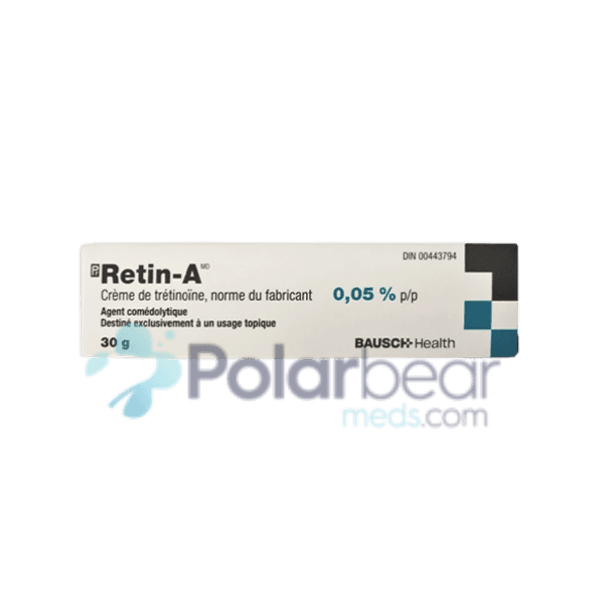
Prices from $25.40
Questions about your order?Call 1-(888)-478-2193
 Ships from Canada


Retin-A is a prescription topical medication that contains tretinoin, a vitamin A derivative used for the topical treatment of acne vulgaris and to improve overall skin health. It is commonly prescribed for people experiencing mild to moderate acne, clogged pores, or uneven skin texture. By increasing skin cell turnover, Retin-A helps unclog pores, reduce acne breakouts, and promote clearer, smoother skin over time. It should be used under the guidance of a healthcare provider to ensure proper usage and minimize potential Retin-A side effects such as skin irritation or dryness.
| Category | Information |
|---|---|
| Generic Name | Tretinoin |
| Brand Name | Retin‑A Cream |
| Dosage Forms & Strengths | Cream: 0.025%, 0.05%, 0.1% (strengths may vary by product formulation) |
| Indication | Topical treatment of acne vulgaris |
| Administration | Apply once daily at bedtime to affected areas; wait 20–30 minutes after washing before application |
| Contraindications | Hypersensitivity to tretinoin or any ingredient in the cream |
| Warnings | • Increased sun sensitivity; avoid excessive sunlight and sunlamps • Do not use on eczema‑affected skin (risk of severe irritation) |
| Precautions | • Use sunscreen and protective clothing outdoors • Avoid contact with eyes, mouth, corners of nose, and mucous membranes • Severe irritation may require reducing frequency or discontinuing use |
| Pediatric Use | Safety and effectiveness in pediatric patients below 12 years have not been established (safety varies by formulation). |
| Adverse Reactions | • Common: redness, peeling, warmth, stinging, temporary hyper‑ or hypopigmentation • Rare: severe irritation, blistering, crusting, true contact allergy |
| Storage Conditions | Store below 80°F (27°C); keep tightly closed |
← Swipe to see more →

Retin-A works by increasing skin cell turnover, helping the skin shed old cells and produce new ones more quickly. This process prevents dead skin cells from clogging pores, which helps reduce acne, such as blackheads, whiteheads, and pimples. Over time, it also helps improve skin texture and promote clearer, healthier-looking skin.

Follow this Retin-A dosing schedule for managing acne as directed by your healthcare provider.
| Phase | Recommended Use | Frequency | Notes |
|---|---|---|---|
| Initial Application | Apply a thin layer of Retin‑A Cream (0.025%, 0.05%, or 0.1%) to affected areas | Once daily at bedtime | Wait 20–30 minutes after washing face before applying; use only enough to lightly cover the skin |
| Adjustment Period | Reduce frequency if severe irritation occurs | Every other night or less often | Skin may become red, peel, or feel warm; adjust use until tolerance improves |
| Maintenance Therapy | Continue nightly application | Once daily at bedtime | Consistent use is required for best results; noticeable improvement may occur after several weeks, with optimal improvement typically seen after 6–12 weeks |
| Precautions During Use | Use sunscreen and protective clothing | Daily | Retin‑A increases sun sensitivity; avoid excessive sunlight and sunlamps |
| Duration of Therapy | Long‑term use may be required | As directed by the physician | Acne may recur if therapy is discontinued; ongoing maintenance may be necessary |
← Swipe to see more →

To use Retin-A cream safely and effectively, follow these basic steps recommended by dermatologists:

Retin-A may cause both common and serious (rare) side effects, especially during the first few weeks of your acne treatment as the skin adjusts to the medication.
| Common Side Effects of Retin-A | Rare or Serious Side Effects of Retin-A |
|---|---|
| Redness (erythema) | Severe local irritation (blistering, crusting) |
| Peeling or scaling of skin | True allergic contact dermatitis |
| Stinging, burning, or warmth at the application site | Severe skin reactions in patients with eczema |
| Temporary hyperpigmentation or hypopigmentation | Severe dryness or swelling requiring discontinuation |
| Mild itching | Eye irritation if accidentally applied near the eyes |
| Increased sensitivity to sunlight |
← Swipe to see more →

To use Retin-A for acne treatment safely, keep the following precautions in mind:
Retin-A may not be suitable for everyone. You should avoid using it if:

Using too much Retin-A or applying it more frequently than prescribed will not make this topical cream work faster. Overuse may cause increased skin irritation, including redness, peeling, dryness, burning, or discomfort. If severe irritation occurs, stop using the medication and consult your healthcare provider for guidance.
If this topical cream is accidentally swallowed, seek medical attention or contact a healthcare professional or poison control center immediately.

When using Retin-A, certain skincare products may increase irritation and should be used with caution or avoided unless recommended by your provider. Avoid the following while using Retin-A:
Using gentle cleansers, moisturizers, and daily sunscreen can help reduce irritation and support healthy skin while using Retin-A. Always consult your provider before adding new skincare products to your routine.

No, Retin-A (tretinoin) does not need to be refrigerated. It should be stored at controlled room temperature and protected from excessive heat.

According to the FDA prescribing information, significant systemic drug interactions with topical tretinoin are unlikely because only small amounts are absorbed through the skin. However, certain topical products and medications applied to the skin may increase irritation when used together with Retin-A.
Use caution when combining Retin-A with the following:
Before starting Retin-A, tell your provider about all prescription medications, OTC products, and skincare treatments you are using.

If Retin-A is not suitable due to irritation, cost, or availability, dermatologists may recommend other topical treatments to manage acne or improve skin texture. Common Retin-A alternatives for acne include:

Prescription skincare treatments like Retin-A can be expensive in the U.S., which is why many patients look for trusted pharmacies that offer affordable access to prescribed medications. Polar Bear Meds helps patients order Retin-A online through licensed Canadian pharmacy partners while maintaining strict safety and quality standards.
Benefits When You Buy Retin-A Online from Canada with Polar Bear Meds
For patients seeking a reliable, cost-effective way to buy Retin-A online, Polar Bear Meds offers convenient access while prioritizing pharmacy licensing, prescription verification, and patient safety.

The information provided about the Retin-A cream is for general educational purposes only and is not a substitute for any diagnosis, medical advice, or treatment. Retin-A is a prescription medication used for acne vulgaris and should be used only under the guidance of a healthcare provider. Always consult your healthcare provider, pharmacist, or doctor before starting, stopping, or changing the Retin-A dose. This is especially true if you already have medical conditions or are taking other medications.



Dr. Jackson Miller is a board-certified medicine physician & hospitalist. He is a healthcare professional with a strong background in patient care. With years of experience and a patient-first approach, he believes the foundation of good health is a patient who feels informed and empowered. He contributes to medical content review, drawing on his background in clinical practice and patient education. He focuses on presenting health information in a clear, accurate, and accessible way to help readers make informed decisions. His work emphasizes clarity, evidence-based guidance, and understandable explanations of medical topics.
Learn more about Retin A and related topics



We offer competitive pricing on all our medications. We'll match if you find a lower price on an identical product at a verified Canadian online pharmacy!
Need help? Call our sales team at 1-(888) 478-2193 or fill out the Contact Form