Logo
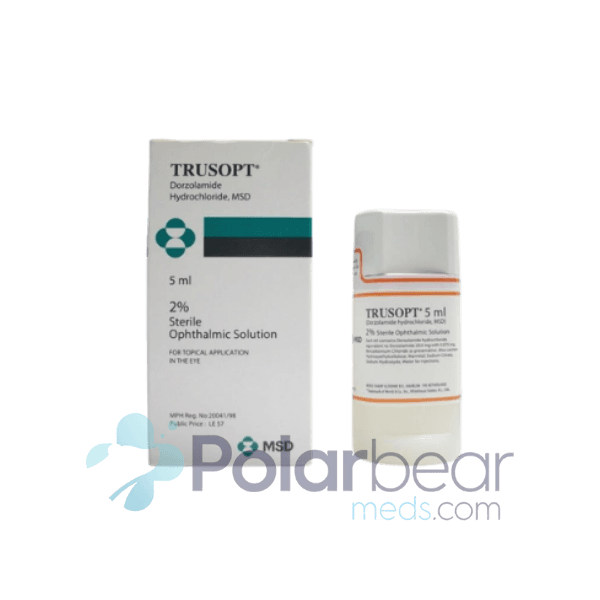
Trusopt - Image 1

Trusopt

No packages found
price-match-guarantee

Price Match Guarantee

We offer competitive pricing on all our medications. Find a lower price? We'll match it from any verified Canadian online pharmacy! Know More

Similar Medications

How to Order

Ordering your medication online is simple and convenient.

STEP 01

Select the prescribed dosage and quantity, then proceed to checkout.

STEP 02

Sign in or create a new account.

STEP 03

Upload your prescription.

STEP 04

Complete your purchase by processing the payment.

Shipping takes approximately 3-5 business days.

Our Pharmacy Reviews

Read what our customers have to say about their shopping experience.

Product Details

Description

Trusopt is an ophthalmic solution used to reduce pressure inside the eye (intraocular pressure) in patients with ocular hypertension or open-angle glaucoma. The prescription medication is available at a strength of 2%. It contains dorzolamide hydrochloride, a carbonic anhydrase inhibitor, as its active ingredient, which reduces aqueous humor production. It is indicated for use in adults and children over the age of two, under medical supervision. You should put one drop in the affected eye(s) three times daily. For safe and efficient use of the ophthalmic solution, you should use it exactly as prescribed and talk to your physician or healthcare professional if you have any queries or concerns. If you want to buy Trusopt at low cost, you can do so using your doctor’s prescription.

Trusopt (Dorzolamide Hydrochloride Ophthalmic Solution) is a prescription eye drop formulated to decrease pressure inside the eyes in patients with open-angle glaucoma or ocular hypertension. Its active ingredient, dorzolamide hydrochloride, is a carbonic anhydrase inhibitor that reduces the formation of aqueous humor in the eye, thereby lowering pressure and preventing optic nerve damage.

Trusopt is available in a 2% ophthalmic solution. It is administered as one drop into the affected eye(s) three times daily or as directed by a healthcare provider. It is suitable for adults and children over the age of two, though pediatric use requires medical supervision. The solution works by inhibiting the enzyme carbonic anhydrase in the eye’s ciliary body, reducing fluid buildup and maintaining normal eye pressure levels.

Similar to other ophthalmic solutions, it can cause certain temporary side effects, which may include burning, stinging, blurred vision, or a bitter taste after application. If severe irritation, eye pain, or signs of an allergic reaction occur, discontinue use and seek medical attention. Patients with kidney disease or sulfa allergies should consult their doctor before use. If a dose is missed, apply it as soon as possible unless it is close to the next scheduled dose. Avoid double dosing. Overdose requires immediate medical attention. Store the bottle at room temperature, away from moisture and heat. Do not touch the dropper tip to any surface to prevent contamination. Use only as prescribed and follow all instructions from a healthcare professional.

Uses and Benefits

It is primarily used to

  • Reduce pressure in the eyes, which can be caused by conditions like glaucoma.
Dosage

What Are the Forms & Strengths of Trusopt?

It is available in the form of an ophthalmic solution, which comes in the following strengths:

  • 2%

What Is the Recommended Dosage of Trusopt?

To get the optimal results, you should use it exactly as directed by a licensed healthcare professional. Do not use more or less of it or more often than prescribed, as it can cause unwanted side effects. The recommended dosage is as follows:

For Reducing Pressure in the Eyes

  • One drop of Trusopt ophthalmic solution in the affected eye(s) thrice daily.
  • If you are using multiple ophthalmic medications, it is best recommended to keep an interval of at least ten minutes between them.
  • Contact lenses should be taken off before administration of the eye drops & reinserted after 15 minutes.

[Note: Remember, these recommendations may vary from person to person. Discuss it with your doctor, and they'll customize your dosage accordingly.]

Usage Guide
  • Before using Trusopt for the first time and each time you get a refill, you should refer to the patient information leaflet (PIL) and the medication guide, if provided by your pharmacist or healthcare provider, and understand how to use them safely and efficiently. If you have any questions or concerns or if you have difficulty understanding any part of the leaflet, you should ask your doctor or healthcare professional.
  • Your doctor will tell you how often and how much of this medicine you should use. You should not use it more or less than prescribed, in large quantities, or more often than recommended, as it can cause undesirable side effects.
  • If you usually wear contact lenses, you should remove them before you apply the Trusopt ophthalmic solution. Reapply them after at least 15 minutes.
  • You should wash your hands properly with soap and water before and after administering the medicine.
  • Before using Trusopt for the first time, ensure that the safety strip on the bottle is not broken or tampered with.
  • To break the seal, tear off the safety tip and open the bottle by unscrewing the cap and turning it exactly as indicated by the arrows given on the bottle top.
  • You should not pull the cap directly in an upward motion or away from the bottle.
  • Before applying the Trusopt eye drops, tilt your head back and gently press your finger just below the lower eyelid to put it away from the eye to make a pouch.
  • Gently drop one into the affected eye(s) and close your eye while letting go of the eyelid. Do not blink, and keep the eye closed for around one to two minutes to allow the medicine to cover the eye.
  • If you suspect you may not have properly absorbed the medication, repeat the process to reapply for the drop.
  • After use, replace the cap by turning it in the opposite direction of the arrow given on the top of the cap. Avoid overtightening the cap, or you may damage the bottle and cap.
  • Do not allow the tip of the Trusopt applicator to come into contact with any surface, including the eye, skin, or any other surface, and keep the bottle tightly closed when not in use to avoid contamination.
  • If your doctor has recommended that you use two different ophthalmic medicines together, you should keep a gap of at least five minutes between the times you apply both medications. This will help to keep the second medicine from washing out the first one.
  • Let your doctor or healthcare provider know if your condition does not get better or if it worsens.

[Note: Your doctor will decide the right amount for you based on your condition, following guidelines and studies on the drug. They'll adjust it as needed over time.]

How It Works

Trusopt is an ophthalmic solution that reduces elevated intraocular pressure in patients with conditions such as open-angle glaucoma and ocular hypertension. It contains the active ingredient dorzolamide hydrochloride, which functions by obstructing an enzyme called carbonic anhydrase in the ciliary processes of the eye. This enzyme plays an essential role in the formation of aqueous humor, the fluid within the eye. By blocking carbonic anhydrase, Trusopt decreases the production of this fluid, leading to a reduction in intraocular pressure. This helps in preventing optic nerve damage and vision loss associated with high eye pressure.

Side Effects

What Are the Side Effects of the Drug Trusopt?

Common side effects of Trusopt: Similar to other ophthalmic medicines, Trusopt can cause certain temporary side effects in some people using it, which usually resolve on their own within a few days or weeks as your body starts to adjust to the medicine. Not everyone applying Trusopt to reduce ocular pressure will experience these symptoms. If these side effects still persist or become bothersome, you should tell your doctor or healthcare professional. Common side effects of Trusopt may include:

  • Burning, stinging, or discomfort after application: Some people may experience a transient burning or stinging sensation, which happens due to the eye’s surface being sensitive to the medicine’s formulation and causing temporary irritation. To minimize the risk of this side effect, you should ensure proper administration by avoiding contact between the dropper and the eye to prevent contamination. If the sensation persists or becomes bothersome, you should consult with an ophthalmologist to discuss potential alternatives.
  • Bitter or unusual taste in your mouth: You may experience a bitter or unusual taste after you put the drop in your eye. This is most likely to occur because the medicine can drain from the eye through the nasolacrimal duct into the nasal cavity and then to the throat, causing the taste sensation. To decrease the risk of this side effect, you should gently press on the inner corner of your eye for around 60 seconds after administering the drop. This technique helps prevent medicine from draining into the nasal passages.
  • Eye discomfort, redness, tearing, or dryness: Trusopt may cause ocular side effects such as discomfort, redness, increased tearing, or dryness. These symptoms can result from the eye's reaction to the medication or its preservatives, leading to irritation or allergic responses. Using preservative-free artificial tears can alleviate dryness and irritation. If symptoms persist, consult your eye care provider; they may recommend adjusting the treatment or switching to a preservative-free formulation.
  • Blurry vision: Some patients report blurred vision after using Trusopt. This temporary effect can occur due to the medication's impact on the tear film or slight irritation of the ocular surface. To manage this, apply the eye drop at a time when temporary vision changes will not pose a safety concern, such as before bedtime. If blurred vision continues or affects daily activities, seek advice from your ophthalmologist.
  • Vision that is sensitive to bright light: Increased sensitivity to light, or photophobia, may develop in some individuals using Trusopt. This can be due to ocular surface irritation or changes in the eye's environment caused by the medication. Wearing sunglasses with UV protection can help manage light sensitivity. If photophobia persists, discuss this with your eye care professional to determine if treatment adjustments are necessary.

Serious side effects of Trusopt: In rare cases, Truzopt can cause severe side effects in some people using it. These side effects require immediate medical assistance and can become fatal if not treated promptly. Your doctor has recommended you use Trusopt after determining that the benefits associated with its use outweigh its risks. If you experience any of the symptoms mentioned below, you should seek medical assistance by calling a healthcare professional or 911. You can also go to the nearest medical care centre.

  • Severe allergic reactions: Dorzolamide is a sulfonamide derivative, and although applied topically, it can be absorbed systemically, potentially leading to allergic reactions similar to those caused by systemic sulfonamides. These reactions can manifest as breathing difficulties, wheezing, rapid heartbeat, fever, general malaise, swollen lymph nodes, facial swelling (including lips, mouth, tongue, or throat), difficulty swallowing, throat tightness, itching, skin rash, hives, skin blisters or peeling, nausea, vomiting, dizziness, lightheadedness, fainting, stomach cramps, or joint pain. In rare cases, severe reactions such as Stevens-Johnson syndrome/toxic epidermal necrolysis have been reported. If any of these symptoms occur, it's crucial to discontinue use immediately and seek emergency medical attention. To prevent such reactions, inform your healthcare provider of known sulfonamide allergies before starting Trusopt. Regular monitoring and prompt reporting of unusual symptoms can aid in early detection and management.
  • Eye or eyelid inflammation: Use of dorzolamide may lead to ocular side effects such as conjunctivitis (inflammation of the conjunctiva) and eyelid reactions, including redness, itching, swelling, discharge, crusting, watery eyes, eye pain, or persistent vision changes. These symptoms might indicate an allergic reaction or irritation. If such signs develop, it is best recommended to discontinue using the medication and get in touch with your healthcare provider promptly. Management may involve discontinuing the offending agent and, in some cases, administering anti-inflammatory or antihistamine medicines as prescribed. Proper eyelid hygiene and avoiding known irritants can also help prevent these inflammatory responses.

[Note: Remember, this list may not cover all possible side effects. Always consult with your healthcare giver for medical advice about side effects.]

Warnings
  • You should not use Trusopt unless your doctor has prescribed it to you. You should use it exactly as prescribed.
  • You should not share this medicine with other people, even if they have the same condition as you, as it can cause harm.
  • This medication is for ophthalmic use only. You should not apply it anywhere else. Before using Trusopt, make sure your caregiver understands how to properly administer the eye drops. If you have any queries or concerns, talk to your physician or healthcare provider.
  • If your doctor has prescribed you to use more than one medicine for your eye condition, you should keep a gap of at least five minutes between each medication. Ask your physician or healthcare professional if you are uncertain about when to use your eye medications.
  • If Trusopt gets contaminated with bacteria or other germs, eye infections may occur. In certain cases, eye infections may become severe and cause vision loss. To help prevent eye infections, you should not let the eye drop tip come into contact with any surface, such as the eye, fingers, or other surfaces. You should properly wash your hands before and after administration of the ophthalmic solution. If signs and symptoms of an eye infection develop, such as blurry vision, irritation, eye discharge, fever, or swollen eyelids, you should seek prompt medical assistance. Inform your healthcare provider immediately if you have eye surgery, vision changes, eye injury, or eye infection.
  • You should not keep wearing contact lenses before applying Trusopt eye drops. Remove them and wait for at least fifteen minutes before you put your contact lenses back in.
  • Truzopt can cause serious allergic reactions, including Stevens-Johnson syndrome (SJS) & toxic epidermal necrolysis (TEN) in individuals with sulfonamide allergies. Its symptoms may include swelling, trouble breathing, severe skin reactions, rash, or hives.
  • Patients with pre-existing corneal conditions (such as corneal endothelial dystrophy) are at higher risk of corneal swelling and damage while being treated with Trusopt.
  • Trusopt is excreted through the kidneys, so patients with severe kidney dysfunction. So, patients with severe renal impairment should avoid using Trusopt.
  • Since Trusopt can cause your eyes to become more sensitive to light than they are usually, you should wear sunglasses and avoid extreme exposure to bright light to reduce discomfort. If the discomfort persists, get in touch with your healthcare provider.
  • If you hurt your eye or develop an infection while being treated with Trusopt, you or your child should get a new bottle of Trusopt eye drops to help prevent eye infections or prevent an eye infection from getting worse.
Safety Guide
  • Before using Trusopt, you should tell your doctor about your medical and family history and whether you use medicines to treat your conditions. Tell your doctor if you have or have ever had a sulfa drug allergy, renal disease, liver disease, or narrow-angle glaucoma.
  • Before using Trusopt, tell your doctor or healthcare provider if you have ever had an allergic reaction to any of the ingredients present in it. Also, inform them if you have an allergy to dyes, preservatives, animals, or foods. Trusopt can contain certain inactive ingredients, which can cause hypersensitivity reactions, so you should be aware of all the ingredients the medication you use contains. If you experience itching, redness, swelling, or other signs and symptoms of eye or eyelid irritation, you should check with your doctor. These signs may mean that you have hypersensitivity to Trusopt or any of its active or inactive ingredients.
  • Before using Trusopt, tell your doctor if you are pregnant, plan to become pregnant, or breastfeeding.
  • Some people using Trusopt experience temporary blurred vision. Do not drive a vehicle, use heavy machinery, or engage in other hazardous activities that require clear vision unless you can do it safely. If this persists or becomes worse, talk to your doctor or healthcare professional. Your doctor may recommend that you take certain tests at regular intervals to determine whether the medicine is working properly and to monitor for unwanted side effects. Make sure to visit them regularly to check your progress.
  • You should not use other medicines without consulting with your doctor or healthcare professional. This includes all prescription, over-the-counter drugs, herbs, or vitamin and herbal supplements.
Contraindications

Trusopt is contraindicated for use in patients who have:

  • Hypersensitivity to any of the active or inactive ingredients of the product
  • Severe renal impairment
  • Hyperchloraemic acidosis- a type of metabolic acidosis
Missed Dose
  • To get the most out of the medicine you are using, it is essential that you keep consistent in dosage and apply it around the same time every day to help you remember to use it.
  • If you have missed a dose of Trusopt, you should apply it as soon as you think of it unless it is almost time to use your next dose.
  • However, if it is almost time for your next dose of Trusopt, you should omit the missed dose & return to your regular dosing schedule.
  • You should not apply an extra dose of the eye drop to make up for the missed dose, as it can lead to unfavorable outcomes.

[Note: If you have missed a dose of your medication and are unsure about when to take the next one, immediately consult your doctor or pharmacist.]

Overdose

Using too much Trusopt can lead to an overdose, which may cause serious side effects. Symptoms of an overdose can include confusion, irregular heartbeat, numbness, tingling, pain, muscle cramps or pain, seizures, weakness in the hands or feet, trembling, and weakness and heaviness of the legs. If you or someone has used Trusopt more than the prescribed dose and is having severe symptoms, you should seek prompt medical attention by calling a healthcare professional or 911. You can also go to the nearest medical care centre.

[Note: If you consumed more than the recommended dose, get medical help right away or call the Poison Help line at 1-800-222-1222.]

Storage Guide
  • You should store Trusopt at room temperature, in a tightly closed bottle, and in a cool & dry place, away from direct exposure to light, moisture, and heat. Exposure to light can degrade the solution.
  • Do not keep it in places with high humidity, such as bathrooms, as moisture can cause harm to certain medicines.
  • Keep it in a secure place, out of sight and reach of children and pets.
  • Do not use the solution past its expiration date. Do not keep it if it has passed its expiration date or is no longer needed. Dispose of it in a way that does not allow children, animals, or other people to consume it.
  • However, you should not dispose of it in wastewater or garbage bins unless instructed to do so.
  • For more information on how to safely discard unwanted or outdated medicines, talk to your pharmacist or healthcare provider.

[Note: Discuss with your healthcare professional about the proper disposal of any unused medicine and any questions you may have regarding its storage.]

Interactions

Some medications can interact with dorzolamide and either increase the risk of unfavorable side effects or reduce its effectiveness. To avoid potential complications, inform your doctor about all prescription drugs, over-the-counter medications, vitamins, and herbal supplements you are taking or planning to take. This allows your healthcare provider to assess possible interactions and adjust your treatment plan if necessary. If a significant interaction is detected, your doctor may modify the dosage or recommend an alternative medication. Below are some drugs that may interact with Trusopt:

  • Acetazolamide
  • Aspirin
  • Bismuth Subsalicylate
  • Choline Salicylate
  • Dichlorphenamide
  • Diflunisal
  • Magnesium Salicylate
  • Methazolamide
  • Salsalate
  • Sodium Salicylate
  • Sodium Thiosalicylate
  • Topiramate
  • Zonisamide

What Are the Other Trusopt Interactions?

It is best recommended to avoid using certain medications at or around the same time as consuming meals or certain types of substances, as interactions may occur. Trusopt may interact with certain herbs, supplements, food items, or beverages. Using alcohol or tobacco may also lead to interactions. Discuss these with your doctor. The presence of certain medical conditions may also affect the use of Trusopt. Ensure to tell your doctor about your medical problems and family medical history, especially if:

  • Acute angle-closure glaucoma
  • Allergy to sulfa drugs
  • Bacterial eye infection
  • Cornea
  • Liver disease
  • Recent eye surgery
  • Renal disease

[Note: This isn't a complete list, and there could be other drugs that interact with Trusopt. Make sure to tell your doctor about any prescription, over-the-counter medicines, and herbal products you’re taking.]

Alternatives

If Trusopt is not the right fit for you, there are several other options available for managing intraocular pressure in conditions like glaucoma. Before making any changes to your prescription, you should speak with your doctor to ensure the alternative is safe & effective for your specific needs. Factors such as your medical and family history, current medications & overall eye health will play an essential role in determining the best option. Some commonly used alternatives include:

[Note: Your doctor will choose what’s best for you. Don’t use any of these alternative medications without consulting your healthcare provider. Taking them by yourself may cause serious side effects.]

Cost & Coupons

The price of Trusopt can vary depending on factors such as the health insurance coverage plan and the pharmacy you choose to buy dorzolamide ophthalmic solution online; this leads to out-of-pocket costs. To manage this financial burden, many Americans turn to our services, which provide affordable and authentic medicines shipped conveniently to your doorstep. We enable first-time users to buy Trusopt with coupon code WELCOMEPB10 to get an additional 10% off on their first purchase.

FAQ

Guarantee

AtPolarBearMeds.com, we assure you the most affordable price to buy Trusopt online from Canada. Rest easy knowing that your order will be dispatched from a reputable Licensed Canada Pharmacy Online, adhering to the highest standards of quality and authenticity. Our discounted medications are shipped directly from Canada to your doorstep, ensuring a swift and secure delivery experience. To conveniently buy Trusopt to treat glaucoma at a substantial cost, call us at 1-888-779-2193 toll-free.

Important Notice

The content provided on the Polar Bear Meds website serves to increase knowledge about healthcare products and medical conditions and is strictly for informational purposes. It should not replace professional medical advice. We urge you to consult with a qualified healthcare professional prior to utilizing any prescription or over-the-counter medication. Our platform grants access to an extensive array of products, sourced internationally, including Canada. We collaborates with a licensed pharmacy partner in Canada and trusted dispensing pharmacies globally. All affiliated fulfillment centers are accredited by the regulatory authorities of their respective countries.

Dr. Jackson Miller

Medically Reviewed by "Dr. Jackson Miller (M.D)"

Dr. Jackson Miller is a board-certified medicine physician & hospitalist. He is a healthcare professional with a strong background in patient care. With years of experience and a patient-first approach, he believes the foundation of good health is a patient who feels informed and empowered. He contributes to medical content review, drawing on his background in clinical practice and patient education. He focuses on presenting health information in a clear, accurate, and accessible way to help readers make informed decisions. His work emphasizes clarity, evidence-based guidance, and understandable explanations of medical topics.

Find Dr. Jackson Miller on:LinkedIn
Price matching guarantee certificate

We offer competitive pricing on all our medications. We'll match if you find a lower price on an identical product at a verified Canadian online pharmacy!

Eligibility Criteria:

  • The competitor's price must be active (no past/future sales).
  • It is only valid for Canadian online pharmacies with a verifiable address.
  • The product must match the strength, pack size, quantity, manufacturer & origin.
  • There are no price matches on used/expired medications.
  • You must submit your requests before placing an order.
  • We cannot adjust prices after purchase.
  • Request via live chat or phone before placing your order.

Need help? Call our friendly support team at 1-888-779-2193 or fill out the Contact Form