

Can Ozempic Cause Pancreatitis?
Yes, Ozempic (semaglutide) can cause acute pancreatitis, though it is rare, affecting fewer than 1% of users. The FDA maintains a warning for this risk in official prescribing information. Patients must immediately discontinue use and seek emergency care if they experience severe, persistent upper abdominal pain that radiates to the back.
Key Takeaways
- Lawsuit Context (MDL 3094): As of January 2026, thousands of cases are pending in federal court. While many focus on gastroparesis, pancreatitis is often cited as the "trigger" event.
- The 1% Rule: Real-world data confirms pancreatitis is a rare side effect, affecting roughly 1 in 100 to 1 in 1,000 users, consistent across both Ozempic and the new 2026 oral semaglutide pills.
- The "Boring" Pain Signal: The hallmark of Ozempic-induced pancreatitis is a constant, "boring" pain in the upper abdomen that does not fluctuate like common Ozempic nausea.
- Permanent Discontinuation: If Ozempic triggers pancreatitis, 2026 guidelines strictly advise permanent discontinuation. Switching to Mounjaro or Zepbound is not recommended due to cross-reactivity.
- Genetic Biobanking: The UK's MHRA and other agencies are now using genetic testing to determine which patients are naturally susceptible to pancreatic inflammation from GLP-1s.
Can Ozempic Cause Pancreatitis? Symptoms, Risks & Guidelines
Ozempic belongs to a class of drugs called glucagon-like peptide-1 (GLP-1) receptor agonists . It works by mimicking a natural hormone that helps regulate blood sugar, insulin secretion, and appetite. While its exact mechanism for potentially triggering pancreatitis isn't fully understood, researchers believe that activating GLP-1 receptors on pancreatic cells might, in rare instances, lead to inflammation .
The pancreas is a vital organ located behind your stomach that produces both digestive enzymes and important hormones like insulin . When it becomes inflamed, these digestive enzymes can activate prematurely and damage the organ itself, leading to the severe pain and complications associated with pancreatitis .
It's also worth noting that rapid weight loss from Ozempic can increase the risk of gallstones, which are another known cause of pancreatitis when they block the pancreatic duct . This creates an indirect pathway through which the medication might contribute to pancreatic inflammation.
How Common Is Pancreatitis with Ozempic?
Pancreatitis is considered an uncommon side effect of Ozempic, typically affecting fewer than 1 in 100 people. A large 2025 study published in the Journal of Clinical Medicine, which analyzed nearly 970,000 patients with type 2 diabetes, found no statistically significant increase in pancreatitis risk for those taking GLP-1 medications compared to those using other treatments .
However, other research has shown conflicting results. A 2023 JAMA study noted that users of GLP-1 receptor agonists for weight loss had a significantly higher relative risk of pancreatitis compared to those using other weight-loss medications . Despite this increased relative risk, the absolute number of cases remains low.
Real-world data from reporting systems provides additional insight. As of early 2025, the UK's Medicines and Healthcare products Regulatory Agency (MHRA) had received hundreds of reports of acute pancreatitis linked to GLP-1 drugs, including Ozempic and Wegovy . Similarly, the FDA's Adverse Event Reporting System (FAERS) documented 908 reports of pancreatitis (including acute, chronic, and necrotizing forms) in patients taking Ozempic as of January 2025 .
Table: Pancreatitis Risk Estimates from Different Sources
| Source | Reported Risk/Incidence | Population |
|---|---|---|
| Drug Labeling | Uncommon (affects 1 in 100 people) | All users |
| Large 2025 Study | No significant increase (0.1% vs. 0.1%) | Type 2 diabetes patients |
| FDA FAERS Database | 908 reported cases (as of Jan 2025) | Ozempic users |
← Swipe to see more →
What Does the FDA Warning Say About Ozempic and Pancreatitis?
The FDA has taken multiple regulatory actions regarding Ozempic and pancreatitis risk. The prescribing information for Ozempic, which is approved for type 2 diabetes, contains explicit warnings about pancreatitis . It states that patients should be advised to stop using Ozempic immediately and contact their doctor if they experience severe abdominal pain that doesn't go away, potentially radiating to the back, with or without vomiting .
In September 2025, the FDA issued a warning letter to Novo Nordisk, the manufacturer of Ozempic, concerning promotional communications that were found to be "false or misleading" because they failed to adequately present the serious risks of these drugs, including their boxed warning for thyroid C-cell tumors and other significant risks like pancreatitis.
The agency expressed concern that the company was promoting its drugs in a manner that failed to present serious risks truthfully, despite prior communications on similar issues dating back to 2010 for other GLP-1 drugs in their portfolio .
The FDA continues to monitor the safety of Ozempic and similar medications through its post-marketing surveillance systems. The agency recommends that healthcare providers carefully consider their patients' individual risk factors before prescribing GLP-1 receptor agonists and remain vigilant for potential pancreatic adverse events .
Who Is at Higher Risk of Pancreatitis While Taking Ozempic?
While anyone taking Ozempic could potentially develop pancreatitis, certain factors significantly increase your risk. Being aware of these can help you and your doctor make a more informed decision about whether Ozempic is appropriate for you.
Key risk factors include:
- Personal or Family History of Pancreatitis: If you've had pancreatitis before, you're at higher risk of developing it again while taking Ozempic . The drug may potentially trigger a recurrence.
- Gallbladder Disease or Gallstones: The presence of gallstones is a leading cause of pancreatitis. Since rapid weight loss can increase gallstone risk, this creates a compounded danger .
- Heavy Alcohol Use: Regular consumption of large amounts of alcohol is a known and common cause of pancreatitis. Combining significant alcohol intake with Ozempic use may further elevate your risk .
- Very High Triglyceride Levels: Severely elevated triglycerides (fats in your blood), typically above 400 mg/dL, are a established risk factor for pancreatic inflammation .
- Other Medical Conditions: Certain conditions like cystic fibrosis or hypercalcemia can also predispose you to pancreatitis .
If you have one or more of these risk factors, it does not automatically mean you cannot take Ozempic. However, it does mean you should have a detailed conversation with your doctor about the potential benefits versus the risks in your specific situation. Your doctor might recommend more frequent monitoring or alternative treatments.
Table: Risk Factors for Pancreatitis with Ozempic
| Risk Factor | Why It Increases Risk |
|---|---|
| History of Pancreatitis | Previous inflammation may make the pancreas more vulnerable. |
| Gallstones | Can block ducts and trigger inflammation; weight loss increases gallstone risk. |
| Heavy Alcohol Use | Alcohol is directly toxic to pancreatic cells. |
| High Triglycerides | Very high levels can trigger acute pancreatic inflammation. |
| Certain Genetic Predispositions | Some genes may make individuals more susceptible to drug-induced pancreatitis. |
← Swipe to see more →
What Early Symptoms of Pancreatitis Should Ozempic Users Watch For?
Recognizing the symptoms of pancreatitis early is crucial for getting prompt treatment and preventing serious complications. The symptoms of pancreatitis are distinct from the more common and typically mild gastrointestinal side effects like temporary nausea or decreased appetite that some people experience when first starting Ozempic.
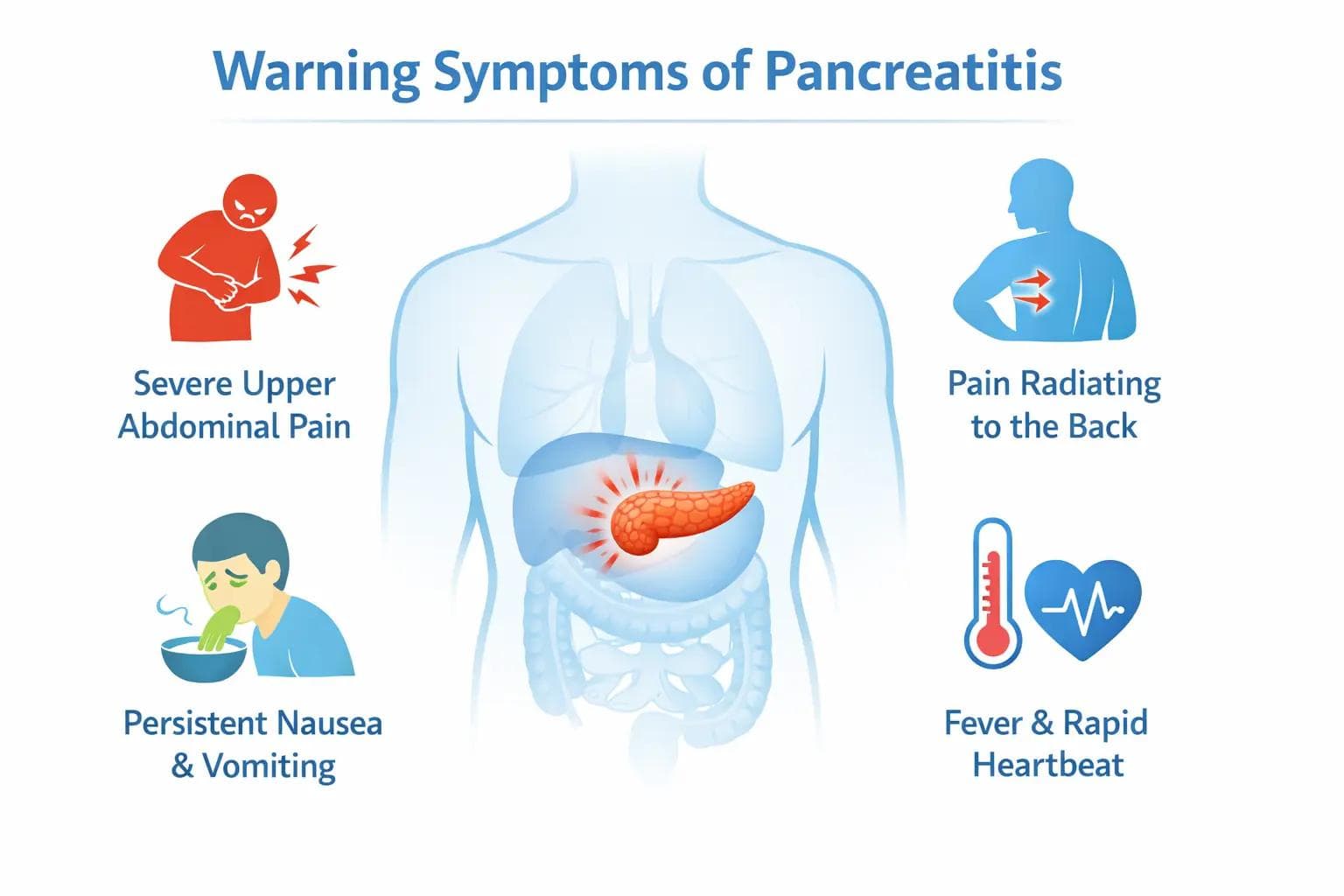
The most common and telling symptom of pancreatitis is severe, persistent abdominal pain. Here's what to specifically watch for:
- Severe Abdominal Pain: This isn't ordinary stomach upset. It's often described as a constant, boring, or sharp pain in the upper center of your abdomen, just below the breastbone. The pain frequently radiates through to your back and may worsen after eating .
- Nausea and Vomiting: Unlike temporary nausea, this feeling is persistent and may be accompanied by vomiting that doesn't resolve .
- Fever and Rapid Heart Rate: These are signs that your body is fighting significant inflammation .
- Abdominal Tenderness or Swelling: Your abdomen may feel tender to the touch or appear visibly swollen .
- Jaundice: In some cases, a yellowing of the skin or the whites of the eyes (jaundice) may occur, which can indicate a blockage .
How Is Pancreatitis Diagnosed?
If you experience these symptoms, your doctor will likely run tests to confirm or rule out pancreatitis. These typically include:
- Blood tests to check for elevated levels of pancreatic enzymes (amylase and lipase) .
- Imaging studies such as an abdominal ultrasound, CT scan, or MRI to look for inflammation or structural issues like gallstones .
What Should You Do Immediately If You Suspect Pancreatitis from Ozempic?
If you experience severe, persistent abdominal pain with or without vomiting while taking Ozempic, you should take immediate action. Do not wait to see if the symptoms go away on their own.
Follow these steps without delay:
- Stop Taking Ozempic: Cease using the medication immediately. Do not take your next scheduled dose .
- Seek Emergency Medical Care: Go to the nearest emergency room or call for emergency services. Pancreatitis is a serious condition that requires prompt medical evaluation and treatment. Tell the healthcare providers that you are taking Ozempic .
- Do Not Attempt to Self-Treat: This is not a condition that can be managed at home with rest or over-the-counter medications. Severe pancreatitis can lead to life-threatening complications and requires hospital care .
In the hospital, treatment may involve fasting (to rest the pancreas), receiving intravenous (IV) fluids for hydration, managing pain with medications, and monitoring for complications . Most cases of acute pancreatitis improve with this supportive care, and patients typically recover within a week.
Can You Restart Ozempic or Switch to Another Medication After Pancreatitis?
This is a critical decision that must be made carefully with your healthcare provider. If you have a confirmed case of pancreatitis that is believed to be caused by Ozempic, the general medical consensus is that you should not restart the medication . Continued use could re-trigger the inflammation and lead to more severe, chronic damage to your pancreas.
The official prescribing information for Ozempic states that it is not known whether patients with a history of pancreatitis can safely use the drug . Other GLP-1 receptor agonists, including Trulicity (dulaglutide) and Victoza (liraglutide), carry similar warnings about pancreatitis risk . Therefore, simply switching to another drug in the same class is generally not recommended after experiencing pancreatitis.
What Are the Alternatives?
If you need to discontinue Ozempic, your doctor will help you explore other options for managing your type 2 diabetes or weight. These may include:
- Other classes of diabetes medications such as metformin, SGLT2 inhibitors, or DPP-4 inhibitors, which have different mechanisms of action.
- Alternative weight management therapies including other prescription medications, lifestyle modification programs, or surgical options where appropriate.
- Focusing on foundational lifestyle changes regarding diet, physical activity, and stress management, which are beneficial for both blood sugar control and overall health.
The decision will be based on your individual health profile, the severity of your pancreatitis episode, and your treatment goals. The key is to have an open and thorough discussion with your doctor about finding the safest and most effective path forward for you.
Balancing Benefits and Risks
Ozempic is an effective medication for many people managing type 2 diabetes, and it has also gained popularity for weight loss. However, like all potent medications, it carries risks, including the potential for pancreatitis. While this side effect is uncommon, its seriousness cannot be understated.
Staying informed about the symptoms, understanding your personal risk factors, and acting quickly if you suspect a problem are the best ways to protect your health while using this medication. Always maintain open communication with your prescribing physician, and never hesitate to seek immediate medical care for severe symptoms.
Frequently Asked Questions
Symptoms of pancreatitis can appear within the first few weeks or months after starting Ozempic, though they can theoretically occur at any point during treatment . It's important to remain vigilant for symptoms throughout your time on the medication.
Yes, because both Ozempic and Wegovy contain the same active ingredient, semaglutide. Wegovy is approved for weight management at a higher maximum dose, but both medications carry the same warning regarding the risk of pancreatitis.
Yes. These medications contain tirzepatide and work similarly to GLP-1 drugs. Their patient information leaflets also list pancreatitis as an uncommon side effect. The UK's MHRA has received reports of acute pancreatitis linked to Mounjaro as well.
Having only a family history of pancreatitis is different from having a personal history. However, because Ozempic is contraindicated in patients with a personal or family history of medullary thyroid carcinoma (a specific thyroid cancer), it's crucial to discuss any family medical history thoroughly with your doctor before starting the medication.
Acute pancreatitis is a sudden, short-term inflammation that typically resolves with treatment. Chronic pancreatitis is a long-lasting, progressive condition that causes permanent damage. If Ozempic triggers pancreatitis, it would typically be the acute form. However, repeated episodes of acute pancreatitis can lead to chronic pancreatitis over time.
Generally, no. In 2026, clinical consensus remains that if one GLP-1 receptor agonist triggers pancreatitis, the entire class (including tirzepatide) should be avoided to prevent permanent pancreatic damage.
The 25mg and 50mg oral semaglutide formulations (Wegovy Oral) carry the same pancreatitis warnings as the injections. While easier to take, the systemic risk to the pancreas remains identical to the subcutaneous version.


