Why Eli Lilly Switched From Mounjaro Vials to the Kwikpen?
Eli Lilly's shift from Mounjaro vials to KwikPen delivery systems reflects a strategic focus on patient convenience and industry standardization. The KwikPen offers pre-filled, fixed doses in six strengths, minimizing dosing errors and simplifying administration compared to manual vial measurements.
While both Canada and the U.S. have adopted this change, availability and pricing structures differ between countries. This alteration aligns with pharmaceutical trends and marks a significant evolution in diabetes and weight management treatment.
Key Takeaways
- KwikPen's pre-filled design reduces dosing errors and simplifies treatment by eliminating manual measurement steps required with vials.
- The switch aligns with pharmaceutical industry trends toward standardized, user-friendly delivery systems that improve patient compliance.
- KwikPen offers consistent dosing through standardized clicks and comes in six different strength options for precise administration.
- Multi-dose KwikPen format reduces medical waste and storage complications compared to individual vials and syringes.
- Both Canadian and U.S. markets received regulatory approvals, with Canada offering multi-dose pens while U.S. uses single-dose formats.
Why Eli Lilly moved from Mounjaro vials to the Kwikpen
While Eli Lilly phases out Mounjaro vials in favor of the KwikPen delivery system, the change reflects a strategic combination of commercial interests and practical considerations.
The conversion aligns with broader industry trends in pharmaceutical packaging, particularly for medications treating type 2 diabetes and weight management.
The KwikPen's pre-filled design eliminates potential dosing errors associated with manual syringe use, while maintaining flexible dosing options through its click-based mechanism. This standardization simplifies the treatment process for both healthcare providers and patients.
The move received regulatory approvals across multiple markets, supporting Eli Lilly's goal of improving patient compliance through user-friendly delivery methods. Similar to modern insulin delivery systems, the KwikPen represents an evolution in therapeutic administration, offering precise dose control without the complexities of vial-and-syringe combinations. This strategic shift enables Eli Lilly to streamline manufacturing, improve market control, and provide a more consistent product experience across different regions.
Differences between the vial and Kwikpen in dosage and convenience
Significant differences in dosage administration and convenience emerge during comparing Mounjaro's vial and KwikPen delivery systems. The KwikPen offers pre-filled, fixed doses across six strength options, eliminating the need for manual measurement and reducing potential dosing errors. This contrasts with vials, which require patients to carefully draw and measure each dose using syringes.
The KwikPen's design prioritizes user-friendly features, supporting consistent dosing through standardized clicks for personalized dose adjustments. Its multi-dose format provides four weekly injections in one pen, streamlining the administration process. While vials offer dosing flexibility through manual measurement, they demand more handling steps and storage considerations for leftover medication.
For patients seeking liberation from complex injection procedures, the KwikPen's simplified approach improves dosing accuracy and confidence, though at a higher cost compared to vials. This trade-off between convenience and price influences individual treatment choices.
Availability of the Mounjaro Kwikpen in Canada and the United States
Major differences exist between Canadian and American availability of Mounjaro's KwikPen delivery system. In Canada, where approval came in 2022, patients now have access to a multi-dose KwikPen format that allows several administrations before requiring a refill. This contrasts with the USA, where only single-dose prefilled pens are available.
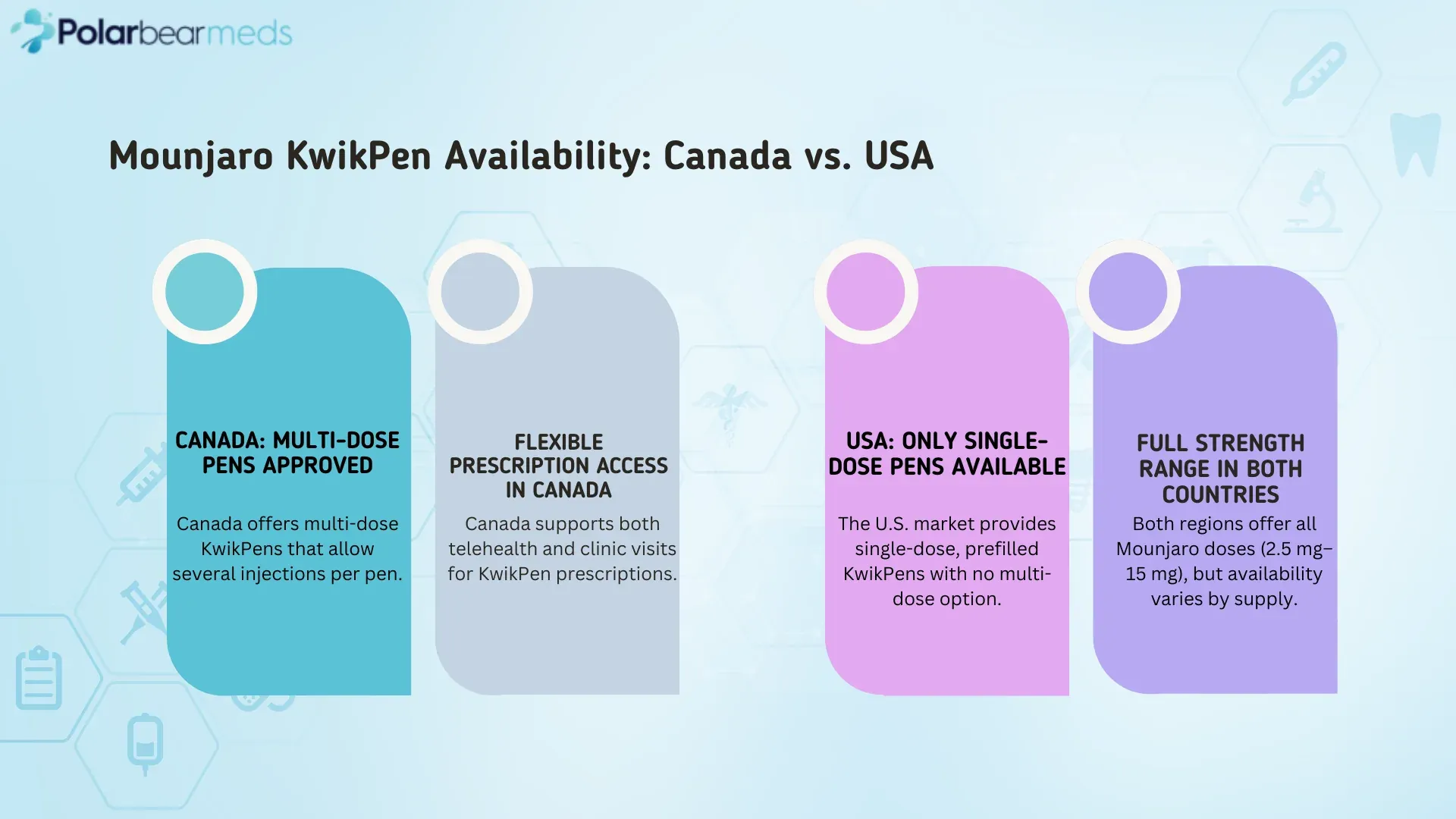
The Canadian healthcare system has adopted a more flexible approach to Mounjaro prescriptions, allowing telehealth evaluations alongside traditional in-person appointments. Healthcare providers can prescribe KwikPen doses ranging from 2.5 mg to 15 mg, with steady availability across all dosage strengths.
While Canada phases out vial formats, focusing on the KwikPen's sustainability and convenience, both nations maintain strong patient support systems through Eli Lilly. This strategic difference in delivery systems reflects each country's unique approach to patient care and medication accessibility.
What this change means for prescriptions and insurance coverage
Moving from device availability to practical implications, switching from vials to KwikPen delivery systems requires patients and healthcare providers to navigate updated prescription protocols and insurance considerations.
Healthcare providers can facilitate the changeover through telemedicine evaluations, eliminating the need for in-person appointments while guaranteeing proper case management. Pharmacists play a vital role in patient safety by providing extensive education on KwikPen usage and injection techniques. Insurance coverage varies greatly, with many plans requiring updated formularies and prior authorizations for the new delivery format.
While some patients may experience changes in co-pay structures, the financial implications often balance out through improved medication access and reduced waste. The change process involves coordination between healthcare providers, insurance companies, and pharmacies to guarantee continuous care.
Canadian pricing structures typically offer cost advantages compared to U.S. rates, though cross-border insurance coverage may present additional complexities for patients seeking more affordable options.
The business and patient factors behind Eli Lilly’s decision
While Eli Lilly shifts from vials to KwikPen delivery systems for Mounjaro, their decision reflects a careful balance of business strategy and patient-centered advancements. The vial discontinuation streamlines manufacturing processes and enables more efficient supply chain management through standardization of delivery formats.
From a commercial strategy perspective, KwikPen aligns with modern market demands and competitor offerings while providing better pricing control. The change offers significant usability improvements, with pre-filled pens eliminating manual dose drawing and enabling precise titration through a click-based system. This improved dosing precision reduces potential errors and supports consistent treatment adherence.
The shift also optimizes prescription management by establishing a unified delivery platform, simplifying distribution channels and inventory control. For patients, the switch brings practical benefits through improved portability, discrete administration, and simplified self-dosing procedures, though the economic impact varies based on insurance coverage and market fluctuations.
Frequently Asked Questions
Never reuse a Mounjaro KwikPen after 4 weekly doses or 30 days from first use. Always attach a new needle for each injection and store properly.
Kwikpen requires refrigeration (2-8°C) before first use and can be stored at room temperature for 30 days after opening.
Stop injection immediately. Document malfunction details. Contact Eli Lilly support. Try: re-priming pen, replacing needle, checking for air bubbles. Request replacement pen if issues continue.
Used Mounjaro KwikPens require disposal in FDA-approved sharps containers. Do not place in household trash. Dispose at local pharmacies or medical facilities with sharps collection programs.
Yes, Mounjaro KwikPen uses universal pen needle fittings and works with standard pen needles from other manufacturers.