Aromasin Side Effects: A Complete Guide
Aromasin (exemestane) is a prescription medication used to treat hormone receptor-positive breast cancer in postmenopausal women. While Aromasin is an effective part of breast cancer treatment, it can cause a range of side effects, from common symptoms like joint pain, fatigue, and hot flashes to more serious risks such as bone density loss and cardiovascular complications. This guide provides a clear, evidence-based overview of common, mild, serious, and long-term Aromasin side effects, along with practical strategies to help manage them safely.
What Are the Common and Mild Side Effects of Aromasin?
Aromasin (exemestane) commonly causes menopause-like side effects due to estrogen suppression. While many of these effects are mild and manageable, some may persist or become more noticeable over time.
The most common and mild Aromasin side effects include:
- Joint pain (arthralgia): One of the most common symptoms, often affecting the hands, knees, or back.
- Hot flashes and sweating: Caused by hormonal changes and may occur during the day or at night.
- Fatigue: A persistent feeling of tiredness or low energy.
- Headache: Typically mild but can occur during treatment.
- Insomnia: Difficulty falling or staying asleep.
- Nausea: Usually mild and more common in the early stages.
- Hair thinning: Less severe than chemotherapy-related hair loss.
- Mood changes: Including irritability, anxiety, or mild depression.
- Weight changes: Some patients may notice slight weight gain on Aromasin or increased appetite.
According to the FDA-approved information for Aromasin, these common, mild side effects are generally mild to moderate and tend to improve as the body adjusts to the medication. However, patients should report any severe symptoms to their healthcare provider.

What Are the Serious Aromasin Side Effects?
Aromasin may cause certain serious side effects that require immediate medical attention. While common symptoms like fatigue and hot flashes are usually mild, some effects can impact long-term health or signal a potentially serious condition.
Aromasin serious side effects to watch for:
- Heart-related problems (cardiovascular risk): Some patients may experience increased blood pressure or a higher risk of heart disease, especially with long-term use.
- Severe allergic reactions: Symptoms may include rash, itching, swelling (especially of the face or throat), severe dizziness, or difficulty breathing.
- Liver problems: Signs may include yellowing of the skin or eyes (jaundice), dark urine, or persistent abdominal pain.
- Severe depression or mood changes: In rare cases, Aromasin may contribute to significant mood disturbances that affect daily functioning.
- High cholesterol levels: Aromasin may raise cholesterol levels, increasing long-term cardiovascular risk if not monitored.
Although these serious side effects are not common, healthcare providers typically monitor bone health, cholesterol levels, and overall cardiovascular risk during Aromasin treatment. Regular follow-ups and early symptom reporting are key to preventing complications.
What Are the Long-Term Side Effects of Aromasin?
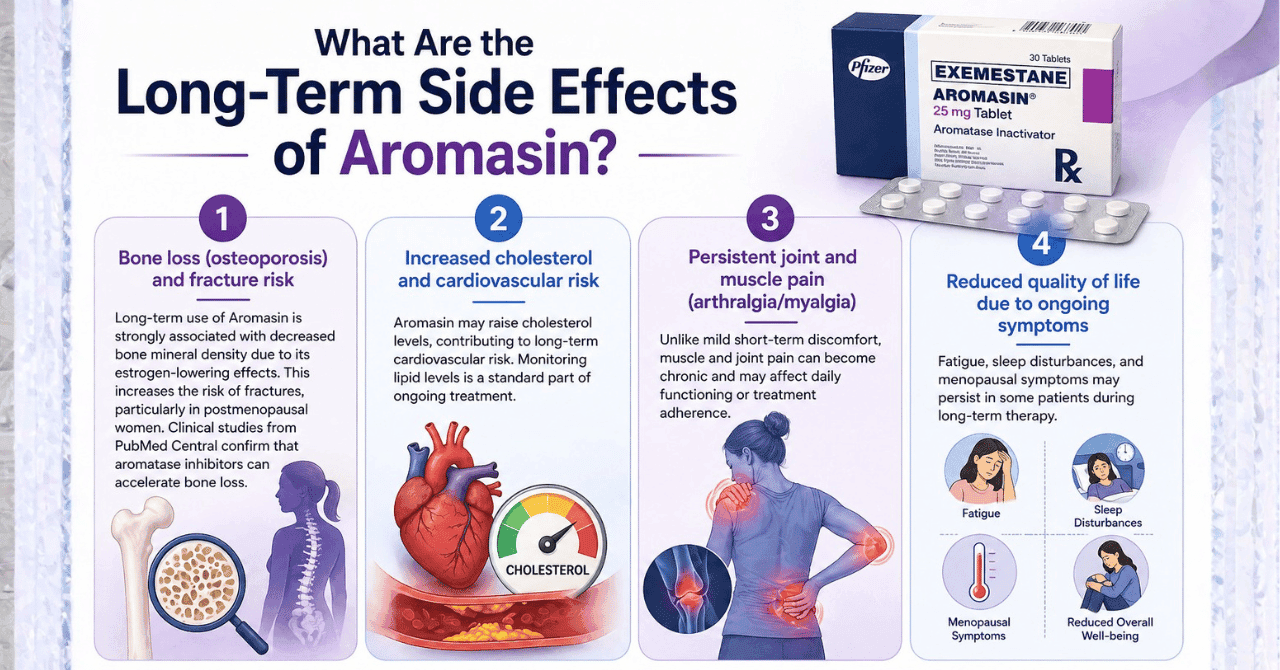
Long-term exemestane side effects are primarily linked to sustained estrogen suppression, which can affect cardiovascular function, bone health, and overall quality of life. Unlike short-term symptoms, these effects may persist throughout treatment and require regular medical monitoring.
Aromasin long-term side effects include:
- Bone loss (osteoporosis) and fracture risk: Long-term use of Aromasin is strongly associated with decreased bone mineral density due to its estrogen-lowering effects. This increases the risk of fractures, particularly in postmenopausal women. Clinical studies from PubMed Central confirm that aromatase inhibitors can accelerate bone loss over time.
- Increased cholesterol and cardiovascular risk: Aromasin may raise cholesterol levels, contributing to long-term cardiovascular risk. Monitoring lipid levels is a standard part of ongoing treatment.
- Persistent joint and muscle pain (arthralgia/myalgia): Unlike mild short-term discomfort, muscle and joint pain can become chronic and may affect daily functioning or treatment adherence.
- Reduced quality of life due to ongoing symptoms: Fatigue, sleep disturbances, and menopausal symptoms may persist in some patients during long-term therapy.
How Long Do Aromasin Side Effects Last?
For most patients using Aromasin (exemestane), side effects are temporary and may improve as the body adjusts to treatment. The duration of the side effects varies by type and individual response to treatment.
- Short-term side effects (such as nausea, hot flashes, and fatigue) often begin within the first few weeks and may improve as the body adjusts to the medication.
- Ongoing side effects like insomnia, joint pain, and sweating can persist throughout treatment in some patients.
- Long-term effects (such as bone loss or high cholesterol) may develop gradually and continue as long as the medication is used.
How to Manage Aromasin Side Effects?
Managing Aromasin side effects often involves lifestyle changes and supportive care. Effective symptom control and regular monitoring can also improve overall management.
- Joint and Muscle Pain: Regular low-impact exercise (e.g., walking, stretching) and over-the-counter pain relief (if approved by a doctor) may help.
- Fatigue: Maintaining light physical activity and a consistent sleep schedule can improve energy levels.
- Hot flashes: Wearing light clothing, avoiding heavy meals (such as caffeine or spicy foods), and staying cool can help reduce symptoms.
- Bone health: Calcium and vitamin D supplementation, along with weight-bearing exercise, may help reduce the risk of bone loss.
- Nausea: Staying hydrated and taking medication after meals can help minimize discomfort.
Who Should Avoid Aromasin? (Warnings & Precautions)
Certain individuals may face a higher risk of side effects with Aromasin and may need to avoid or closely monitor treatment.
Contraindications for Aromasin
Avoid taking Aromasin if you have:
- Hypersensitivity
- Premenopausal women
- Pregnancy and breastfeeding
- Use with estrogen-containing therapies
Warnings and Precautions
- Liver or kidney impairment: Liver or kidney impairment: May increase the risk or severity of side effects due to slower drug metabolism.
- Osteoporosis or low bone density: Higher risk of fractures due to Aromasin-related bone loss.
- Cardiovascular risk factors: May worsen Aromasin-related cholesterol changes and increase heart risk.
- Drug interactions (CYP3A4 inducers): Medications such as rifampin, phenytoin, carbamazepine, and St. John’s Wort may reduce effectiveness, potentially impacting treatment outcomes.
Final Thoughts on Aromasin Side Effects
Aromasin (exemestane) is an effective treatment for hormone receptor-positive breast cancer. At the same time, it can cause side effects ranging from mild symptoms like hot flashes and joint pain to more serious risks such as bone loss and high cholesterol. Most side effects are manageable, but some require ongoing monitoring or medical attention. Understanding these Aromasin side effects, tracking symptoms, and staying in regular contact with your healthcare provider can help ensure safe and effective treatment.
Frequently Asked Questions
Joint pain (arthralgia) is one of the most commonly reported Aromasin side effects and can range from mild discomfort to persistent pain during treatment.
Aromasin may cause mild hair thinning, but it is usually less severe than chemotherapy-related hair loss and may improve after treatment ends.
Aromasin side effects include weight gain, but they are not among the most common. Some patients report mild weight gain, often related to hormonal changes or reduced activity levels.
Aromasin is generally considered as effective as other aromatase inhibitors, but side effects may vary between individuals. A doctor will determine the most suitable option.
Medical Disclaimer
The above content is for informational purposes only and does not replace professional medical advice. Always consult a licensed healthcare provider before starting or combining medications.