Can Advil Cause Constipation?
Yes. Advil (ibuprofen) can cause constipation in some people. As a nonsteroidal anti-inflammatory drug (NSAID), it may affect the gastrointestinal tract and irritate the stomach and intestinal lining, leading to symptoms such as constipation, gas, abdominal bloating, or diarrhea. While not the most common side effect, constipation is more likely with higher doses or long-term use.
Why Can Advil Cause Constipation?
Clinical research from the NIH indicates that ibuprofen works by reducing prostaglandins, which play a key role in inflammation and also help regulate gut movement. This mechanism can indirectly affect normal bowel activity. Constipation is more likely with higher doses, long-term use, or in people already prone to digestive issues. This is sometimes referred to as NSAID-induced constipation, although it is less common compared to other gastrointestinal effects.

How Common Is Constipation as a Side Effect of Advil (Ibuprofen)?
Not everyone experiences constipation as a side effect, and its frequency is relatively low. While findings from the FDA primarily highlight broader gastrointestinal risks such as stomach irritation and bleeding, medically reviewed sources confirm that some users may experience constipation. Overall, it is less commonly reported compared to other gastrointestinal side effects. Compared to other digestive side effects, constipation is reported less frequently. Here’s how it compares:
| Side Effects of Advil (Ibuprofen) | How Common Is It? |
|---|---|
| Stomach pain/ irritation | Common |
| Nausea | Common |
| Diarrhea | Less common |
| Constipation | Relatively uncommon |
| Bloating or gas | Less common |
| Heart disease | Increased cardiovascular complications |
← Swipe to see more →
How to Relieve Constipation from Advil?
If you experience constipation while taking Advil (ibuprofen), simple lifestyle adjustments can usually help relieve symptoms and restore normal bowel movements.
- Drink enough water throughout the day to keep stools soft and easier to pass.
- Add more fiber-rich foods, such as fruits, vegetables, and whole grains, to support digestion.
- Stay physically active; light movement, such as walking, can stimulate bowel function.
- Take Advil with food to reduce digestive discomfort.
- Use the lowest effective dose and avoid long-term use unless advised by a doctor.
- Consider a mild stool softener only if symptoms persist and after medical advice.
Who Is at Higher Risk of Constipation from Advil?
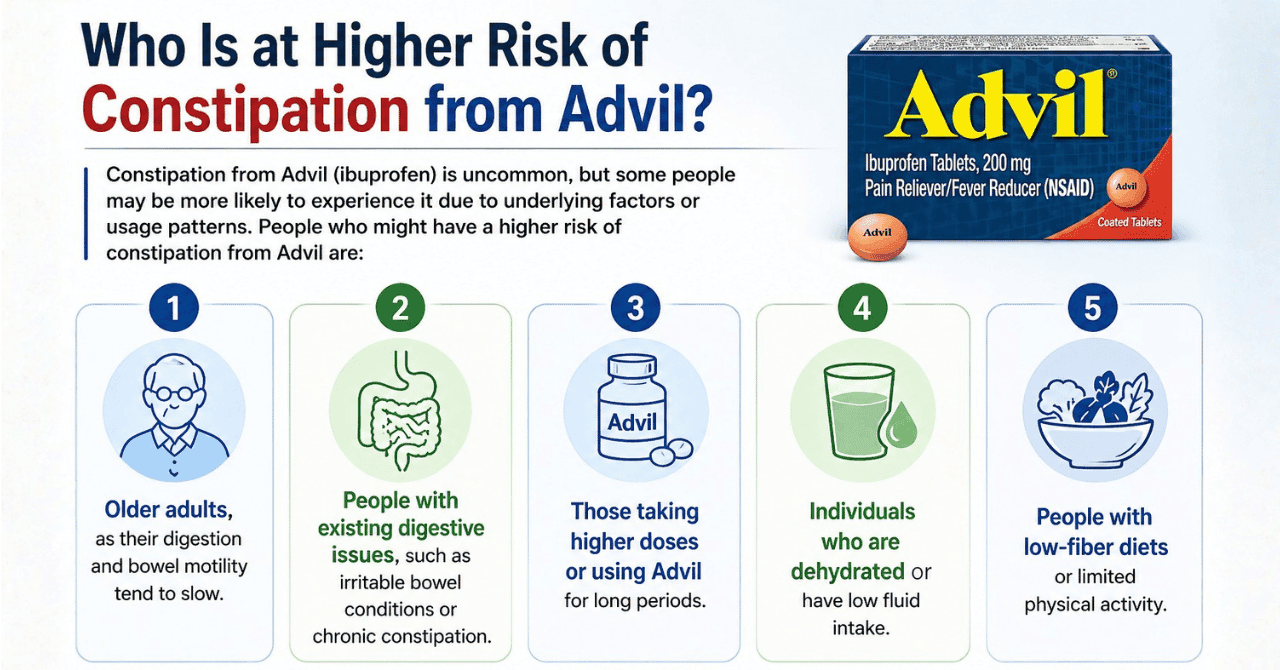
Constipation from Advil (ibuprofen) is uncommon, but some people may be more likely to experience it due to underlying factors or usage patterns. People who might have a higher risk of constipation from Advil are:
- Older adults, as their digestion and bowel motility tend to slow.
- People with existing digestive issues, such as irritable bowel conditions or chronic constipation.
- Those taking higher doses or using Advil for long periods.
- Individuals who are dehydrated or have low fluid intake.
- People with low-fiber diets or limited physical activity.
When Should You Be Concerned About Constipation from Advil?
Constipation from Advil (ibuprofen) is usually mild, but certain symptoms may indicate a more serious issue and should not be ignored. If you experience any of these symptoms, seek medical help immediately.
- Constipation lasting more than a few days despite basic remedies.
- Blood in the stool or black, tarry stools.
- Nausea or vomiting along with constipation.
- Severe abdominal pain, cramping, or persistent bloating.
- No bowel movement for several days with increasing discomfort.
Can You Continue Taking Advil If It Causes Constipation?
In most cases, mild constipation does not require stopping Advil (ibuprofen), especially if it is being used short-term at recommended doses. Simple measures like increasing fluid intake, adding fiber, and staying active can often relieve symptoms. However, if constipation persists, worsens, or is accompanied by other concerning symptoms, it is advisable to stop using the medication and consult a healthcare professional for guidance.
Bottom Line: Is Constipation a Side Effect of Advil?
Advil (ibuprofen) can cause constipation in some people, but it is a relatively uncommon and usually mild side effect. It is more likely with higher doses, long-term use, or in individuals prone to digestive issues. In most cases, simple measures such as staying hydrated, eating enough fiber, and taking the medication as directed can help prevent or relieve symptoms. If constipation persists or becomes severe, seek medical advice.
Frequently Asked Questions
Ibuprofen can cause both constipation and diarrhea, but these digestive side effects are relatively uncommon. When they do occur, they are usually mild and temporary, especially with short-term use.
Constipation from Advil (ibuprofen) is usually mild and temporary, often resolving within a few days with a dose adjustment or stopping the medication. If it persists for more than a few days, medical advice is recommended.
Yes, Motrin (ibuprofen) can cause constipation in some people, but it is a relatively uncommon side effect. When it occurs, it is usually mild and temporary.
It’s best to limit or avoid alcohol while taking ibuprofen, as both can irritate the stomach and increase the risk of gastrointestinal side effects like bleeding or discomfort.
Medical Disclaimer
This blog is provided for informational purposes only and does not replace expert medical guidance, diagnosis, or treatment. The information is based on trusted sources such as the FDA and National Library of Medicine, but individual responses may vary. Always consult an authorized healthcare professional before making treatment decisions.