

Can I Take Magnesium with Metformin? Safety, Benefits & Timing
Managing medications and supplements together can raise important safety questions, especially for people using Metformin for conditions like type 2 diabetes. A frequent concern is: Can I take Magnesium with Metformin without affecting absorption or causing unwanted side effects? Since both play roles in metabolic health, understanding their interactions is essential.
In most cases, magnesium, particularly forms such as magnesium glycinate, is generally safe to take with Metformin, although individual responses can vary. Some research suggests magnesium may support insulin sensitivity in certain individuals. However, taking them a few hours apart may help reduce any potential absorption issues.
Can I Take Metformin and Magnesium Glycinate Together Safely?
Yes, it is generally considered safe to take Metformin and magnesium glycinate together. No significant drug interaction has been reported, and magnesium may support insulin function in some individuals. To minimize any potential absorption issues, taking them a few hours apart can be helpful. Always consult your healthcare provider or doctor, especially if you have kidney concerns or are on long-term Metformin therapy.
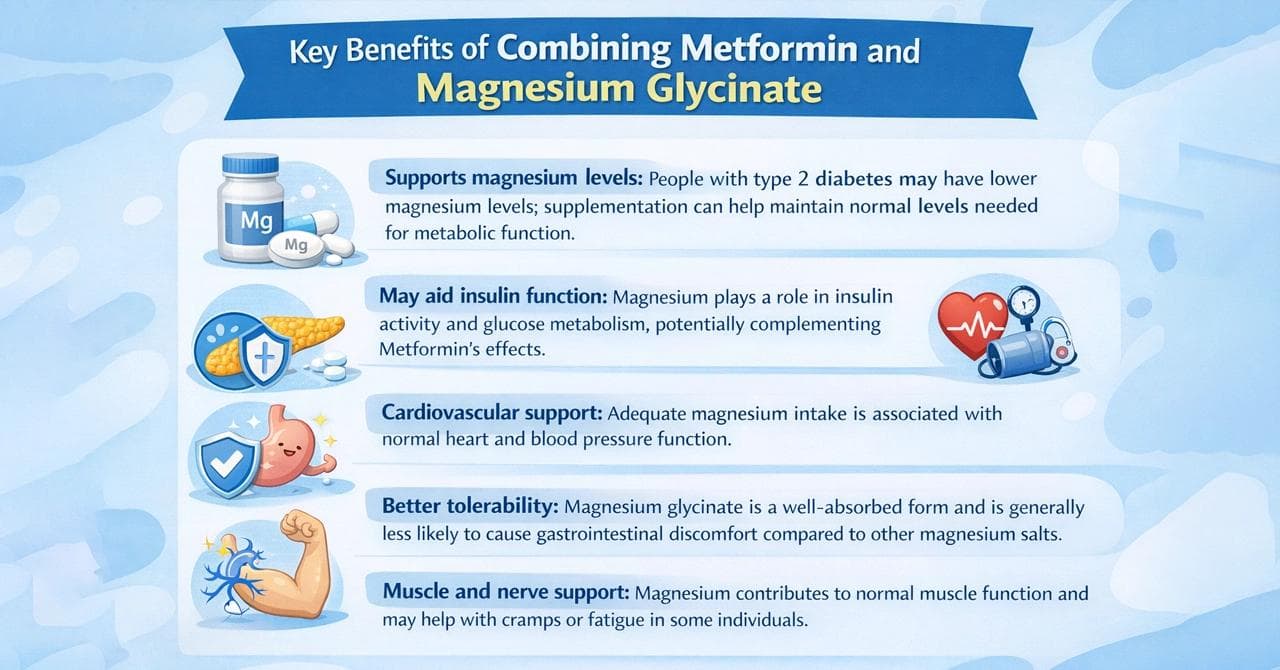
Key Benefits of Combining Metformin and Magnesium Glycinate
- Supports magnesium levels: People with type 2 diabetes may have lower magnesium levels; supplementation can help maintain normal levels needed for metabolic function.
- May aid insulin function: Magnesium plays a role in insulin activity and glucose metabolism, potentially complementing Metformin’s effects.
- Cardiovascular support: Adequate magnesium intake is associated with normal heart and blood pressure function.
- Better tolerability: Magnesium glycinate is a well-absorbed form and is generally less likely to cause gastrointestinal discomfort compared to other magnesium salts.
- Muscle and nerve support: Magnesium contributes to normal muscle function and may help with cramps or fatigue in some individuals.
Note: These benefits are based on general clinical and nutritional evidence. Magnesium supplements are not FDA-approved to treat diabetes, and effects may vary. Always consult your provider before combining supplements with prescription medications.
Best Time to Take Metformin and Magnesium Glycinate
- Take FDA-approved Metformin with meals to reduce gastrointestinal side effects such as diarrhea, nausea, or stomach discomfort.
- Magnesium glycinate is often taken in the evening due to its calming effects and good tolerability.
- Taking magnesium a few hours apart from Metformin can help minimize any potential absorption concerns, although no major interactions have been reported.
- Follow your prescribed schedule. If Metformin is taken once daily, it is usually with the evening meal. If taken twice daily, it is typically taken with breakfast and dinner.
- Take both at roughly the same time each day to maintain stable effects.
Timing may vary based on your condition, dosage, and tolerance. Always follow your healthcare provider’s instructions for best results.
Does Magnesium Affect Metformin Absorption?
Current evidence indicates that magnesium has minimal impact on the absorption or effectiveness of Metformin. The FDA-approved prescribing information does not list magnesium as a clinically significant drug interaction.
Some research indicates that people with type 2 diabetes, especially those taking Metformin, may have lower magnesium levels. For example, the Fremantle Diabetes Study reported that approximately 19% of patients had hypomagnesemia, with lower magnesium levels observed in those using Metformin compared to some other groups.
Magnesium also plays a role in glucose metabolism and insulin function, which may complement Metformin’s mechanism rather than interfere with it. However, these effects are supportive and do not replace prescribed treatment.
While no direct absorption issue is confirmed, taking magnesium and Metformin a few hours apart can be a practical approach for those who want to optimize tolerance and consistency.

Can Magnesium Help Reduce Metformin Side Effects?
Magnesium supplementation may support Metformin tolerance by addressing potential magnesium depletion with long-term use. It may also contribute to improved glucose control and metabolic function. However, it is not a primary treatment for side effects, and combining them should be done under medical guidance, especially to avoid the risk of low blood sugar.
Who Should Not Take Metformin and Magnesium Together?
- People with kidney disease should be cautious, as both Metformin and magnesium are cleared through the kidneys and might accumulate if kidney function is impaired.
- Older adults may require monitoring, especially if they have reduced kidney function or are on multiple medications.
- Those at risk of low blood sugar should use caution, as magnesium may enhance insulin sensitivity in some individuals.
- People taking high-dose magnesium supplements may experience digestive issues or an electrolyte imbalance.
- Anyone with existing electrolyte imbalances should consult a healthcare provider before combining them.
How Much Magnesium Can You Take with Metformin?
Magnesium intake should follow established dietary guidelines, as there is no specific FDA-approved dose for combining magnesium with Metformin.
| Category | Recommended Daily Intake (RDA) | Upper Limit from Supplements (UL) |
|---|---|---|
| Adult Men (19-30 years) | 400 mg/day | 350 mg/day |
| Adult Men (31+ yrs) | 420 mg/day | 350 mg/day |
| Adult Women (19-30 yrs) | 310 mg/day | 350 mg/day |
| Adult Women (31+ yrs) | 320 mg/day | 350 mg/day |
← Swipe to see more →
For Patient Guidance:
- The RDA includes magnesium from both food and supplements.
- The upper limit applies only to supplemental magnesium, not food sources.
- Excess magnesium from supplements may cause diarrhea or gastrointestinal discomfort.
- Avoid exceeding supplement doses unless advised by a healthcare provider.
Final Verdict: Should You Take Magnesium with Metformin?
Magnesium may generally be taken with Metformin and may support metabolic health, but it is not a substitute for treatment. No major interaction is reported, though individual needs vary. Stay within recommended doses, take Metformin with meals, and consult your provider, especially if you have kidney concerns or regularly use supplements.
Important Disclaimer
This blog is provided for informational purposes only and does not replace expert medical guidance, diagnosis, or treatment. The information is based on reputable medical sources and clinical literature, but individual responses to medications may vary. Always consult an authorized healthcare professional before making treatment decisions.
Frequently Asked Questions
Yes, you can take magnesium and Metformin at the same time. No clinically significant interaction is reported in FDA-approved prescribing information. However, some healthcare providers may suggest taking them a few hours apart to improve tolerance and maintain consistency, especially if you experience mild digestive discomfort.
There are no strict FDA-listed restrictions on supplements, but caution is advised with supplements that may affect blood sugar or drug response. These include berberine, ginseng, and cinnamon, which may increase the risk of low blood sugar, as well as St. John’s Wort and high-dose niacin, which may alter glucose control. Always consult your provider before combining supplements.
No, magnesium does not have a clinically significant interaction with Metformin based on FDA-approved labeling. It does not affect how the drug is absorbed or how well it works.
Some studies show that people with type 2 diabetes, including those on long-term Metformin, may have lower magnesium levels. Maintaining adequate magnesium intake may be helpful under medical guidance.
Magnesium glycinate is generally the safest and best-tolerated form to take with Metformin. It is highly bioavailable, gentle on the stomach, and less likely to cause diarrhea than other forms. This form supports blood sugar regulation without worsening the gastrointestinal side effects sometimes associated with Metformin.
Metformin can reduce magnesium levels in some patients. Taking magnesium may help correct a deficiency, but always consult your healthcare provider first. Your doctor can recommend an appropriate dosage based on lab results to avoid interactions or over-supplementation.
Yes, long-term Metformin use has been associated with lower magnesium levels in some patients. Magnesium deficiency can affect blood sugar control and muscle function, so monitoring levels is recommended for diabetics on chronic Metformin therapy.
Magnesium helps improve insulin sensitivity and may slightly lower blood sugar, but it rarely causes dangerously low glucose when taken at recommended doses. Monitor levels if you are on insulin or other diabetes medications.
Early signs include muscle cramps, weakness, fatigue, nausea, irregular heartbeat, or tingling sensations. Low magnesium can worsen insulin resistance, so routine monitoring is important for diabetic patients, especially those on Metformin.


