Can Metformin Cause Cough? Causes, Evidence, and What It Means for You
Metformin is one of the most widely prescribed medications for type 2 diabetes, known for its safety, effectiveness, and long track record of use. But occasionally, some patients report unexpected symptoms, including cough, which raises an important and often confusing question: Can Metformin actually cause coughing, or is something else responsible?
No, metformin typically does not cause a cough. According to FDA prescribing data and clinical reviews, cough is not listed as a primary or common adverse effect of metformin. If coughing occurs, it is usually due to acid reflux, infections, or other medications, not metformin itself. For people managing a chronic condition like diabetes, understanding whether a symptom is a true medication side effect is essential for safety, treatment adherence, and informed decision-making. Let’s break down what’s actually going on and what you should do next.
Who Should Read This?
This may help you:
- Adults with type 2 diabetes taking metformin.
- Patients experiencing an unexplained cough.
- Individuals comparing medication side effects.
What Metformin Actually Does in the Body?
Metformin is a commonly used medication for type 2 diabetes. It helps control blood sugar in a few key ways:
- It reduces the amount of sugar your liver makes.
- It helps your body use insulin more effectively.
- It improves how your body processes sugar in the gut.
What’s Happening Inside the Body?
At a cellular level, metformin mainly affects how your body handles energy.
- It activates a natural “energy regulator” in your body (called AMPK).
- It slightly slows the rate at which cells generate energy.
- It may also change the balance of bacteria in your gut, which can influence digestion and metabolism.
Important FDA Safety Warning for Metformin
According to FDA safety labeling and clinical data, metformin carries a rare but serious risk of lactic acidosis, which can be fatal.
Symptoms may include:
- Weakness or unusual tiredness
- Muscle pain
- Trouble breathing
- Unusual sleepiness
- Stomach discomfort
Higher risk in patients with:
- Kidney impairment
- Liver disease
- Heart failure or low oxygen states
- Age ≥65 years
- Excess alcohol use
- Use of contrast dye (imaging procedures)
Seek emergency care immediately. Metformin is typically discontinued in a medical setting if lactic acidosis is suspected.
Is Cough a Common Side Effect of Metformin?
No, cough is not recognized as a common side effect. FDA adverse reaction data primarily reports gastrointestinal symptoms such as diarrhea, nausea, and abdominal discomfort.
Unlike ACE inhibitors (well-known for causing dry cough), metformin:
- Does not increase bradykinin levels
- Does not irritate airway receptors
- Has no direct action on lung tissue
What Clinical Data Shows
- Large clinical trials do not list cough as a common adverse effect
- Most reported side effects are gastrointestinal (nausea, diarrhea, bloating)
Why Do Some People Report Cough While on Metformin?
So why do some people notice a cough?
Coincidental Illness (Most Common Cause)
Cough is extremely common due to:
- Viral infections
- Allergies
- Environmental triggers such as seasonal allergies, air pollution, or smoking exposure
In many cases, patients start metformin and develop a cough around the same time, but the two are unrelated.
Gastroesophageal Reflux (GERD) Trigger
Metformin can cause gastrointestinal irritation, which may:
- Worsen acid reflux
- Lead to reflux-induced cough
According to clinical literature, GERD is a well-established cause of chronic cough.
Hypersensitivity or Allergic Reaction (Rare)
Though uncommon, some patients may experience:
- Mild allergic responses
- Throat irritation
- Respiratory discomfort
Drug Interactions (Often Overlooked)
Patients on metformin are frequently also taking:
- ACE inhibitors (e.g., enalapril, lisinopril)
- DPP-4 inhibitors
ACE inhibitors are well known to cause persistent dry cough due to bradykinin accumulation.
Underlying Conditions
Conditions like:
- Asthma
- COPD
- Post-nasal drip
Can flare independently of medication use.
How to Manage a Cough While Taking Metformin?
If you develop a cough while taking metformin, first look for common causes like infections, allergies, or acid reflux. Review other medications, especially ACE inhibitors, which are a frequent cause of dry cough. If reflux is suspected, avoid heavy or late meals, stay upright for at least 30 minutes after eating, and limit trigger foods. Stay hydrated to soothe throat irritation. Monitor when the cough started; if it doesn’t match your medication timing, metformin is unlikely to be the cause. Seek medical advice if the cough lasts more than 2-3 weeks or worsens. Do not stop metformin without consulting your healthcare provider.
Why Metformin Does Not Cause Cough?
Here is a proper table that explains how the medication works and how it relates to the cough.
| How Metformin Works | Does Metformin Affect It? | Relevance to Cough |
|---|---|---|
| Bradykinin accumulation | No | The main cause of ACE inhibitor cough |
| Airway inflammation | Minimal evidence | Not a known pathway |
| Lung tissue irritation | No | There is no strong clinical evidence linking metformin to direct respiratory side effects. |
| Gut-brain axis | Yes | May indirectly affect reflux |
| Microbiome changes | Yes | May influence GI-related symptoms |
← Swipe to see more →
Key takeaway: Current clinical evidence does not support metformin as a direct cause of cough. When a cough occurs, it is more likely due to acid reflux, other medications, or unrelated respiratory conditions.
What Steps Should You Take If You Develop a Cough While Taking Metformin?
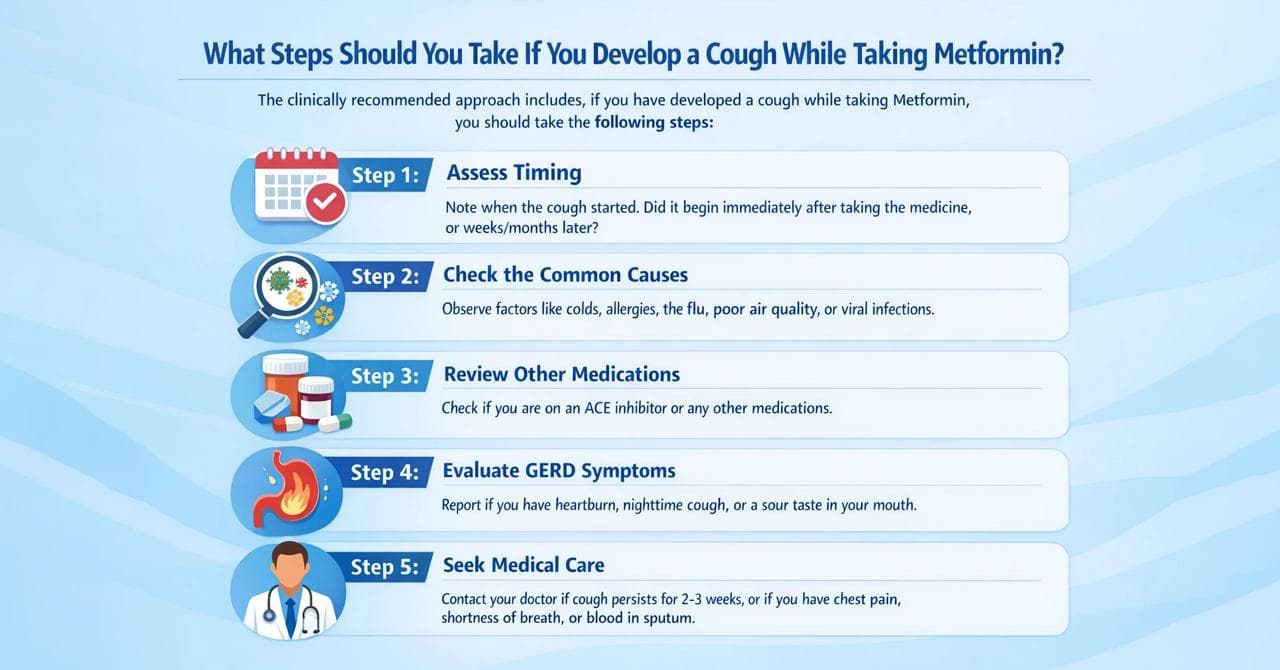
The clinically recommended approach includes, if you have developed a cough while taking Metformin, you should take the following steps:
Step 1: Assess Timing
If you are prescribed Metformin for type 2 diabetes, you must note the exact date the cough started. Did it start immediately after taking the medicine, or weeks/months later?
Step 2: Check the Common Causes
You must observe the common causes of coughs firsthand. Causes such as colds, allergies, the flu, exposure to poor air quality, or viral infections.
Step 3: Review Other Medications
Track yourself whether you are on an ACE inhibitor or any other medications.
Step 4: Evaluate GERD Symptoms
You must report if you have recently experienced GERD symptoms, such as heartburn, a nighttime cough, or a sour taste in your mouth.
Step 5: Seek Medical Care
Consult your doctor immediately if you experience a continuous cough for 2-3 weeks, chest pain, shortness of breath, or notice blood in sputum.
When Should You Suspect Metformin as a Possible Cause for Cough?
In most cases, the chance of developing a cough on Metformin is minimal. However, it may be worth considering only after more common causes, such as infections, allergies, acid reflux, or other medications, have been ruled out. A possible link becomes more relevant if your symptoms clearly improve after stopping metformin and then return if the medication is restarted.
Even in this situation, it’s important to understand that this type of reaction is rare and not typical. Because of this, you should never stop taking metformin on your own. Instead, speak with your healthcare provider, who can help determine the true cause of your symptoms and guide you on the safest next steps.
The Final Call: Can You Develop a Cough on Metformin
Metformin is highly prescribed for type 2 diabetes with reported side effects and benefits. Current clinical and regulatory evidence does not support metformin as a direct cause of cough. Metformin primarily works through metabolic and gastrointestinal pathways, making a direct link to cough unlikely.
Some patients may notice coughing while taking metformin, but in most cases, the cause is indirect or unrelated. Common explanations include acid reflux (which metformin can sometimes worsen), environmental triggers, infections, or other medications such as ACE inhibitors. This is why a structured, step-by-step evaluation is essential before attributing symptoms to metformin.
The key takeaway is simple: don’t assume; assess. If you develop a persistent or unexplained cough, consult your healthcare provider rather than stopping the medication on your own. With appropriate evaluation, most patients can safely continue metformin while addressing the underlying cause of their symptoms.
Medical Disclaimer: The above content is for informational purposes only and does not replace professional medical advice. Always consult a licensed healthcare provider before starting or combining medications.
Frequently Asked Questions
No, cough is not a common or recognized side effect of metformin. Most reported side effects are digestive, such as nausea, diarrhea, or stomach discomfort.
No, you should not stop metformin without medical advice. It’s important to first identify the actual cause of the cough. Speak with your healthcare provider for proper evaluation.
In many cases, the timing is coincidental. Your cough may be caused by conditions like a cold, allergies, acid reflux, or even another medication you’re taking, rather than by metformin itself.
You should seek medical advice if your cough lasts more than 2-3 weeks, worsens over time, or is accompanied by symptoms like shortness of breath, chest pain, or fever.