Can You Take Saxenda and Xenical Together? What Patients Should Know
Yes, Saxenda and Xenical can sometimes be taken together, but only under medical supervision. These medications work through different mechanisms: Saxenda helps regulate appetite while Xenical blocks fat absorption in the digestive tract. Since they work differently, patients often wonder if combination therapy improves clinical outcomes.
However, taking Saxenda and Xenical together does not consistently improve weight loss outcomes. Doctors typically review your health history, medications, and side-effect tolerance before recommending any combination therapy. In addition, prescribing information for Saxenda notes that its safety and effectiveness with other weight-loss medications have not been established, so healthcare providers evaluate this type of combination carefully.
“Combining weight-loss medications should always involve medical supervision and guidance”
When Do Doctors Consider Combining Saxenda and Xenical?
According to the Saxenda prescribing information, the medication is intended for use alongside a low-calorie diet and increased physical activity for long-term weight management. Doctors may consider combination therapy when a single medication is not effective.
However, combining treatments is carefully assessed because both medications affect digestion and metabolism differently. Key factors doctors consider include:
- Treatment response: If weight loss is limited with one medication alone.
- Different mechanisms: Saxenda reduces appetite, while Xenical blocks fat absorption in the intestines.
- Side-effect tolerance: Some patients may experience digestive symptoms when using both medications.
- Medical history: Doctors review other medications and health conditions before recommending combination therapy.
How Saxenda and Xenical Work Differently
Both medications support weight management, but they work through different mechanisms.
Saxenda (Liraglutide): Appetite Regulation
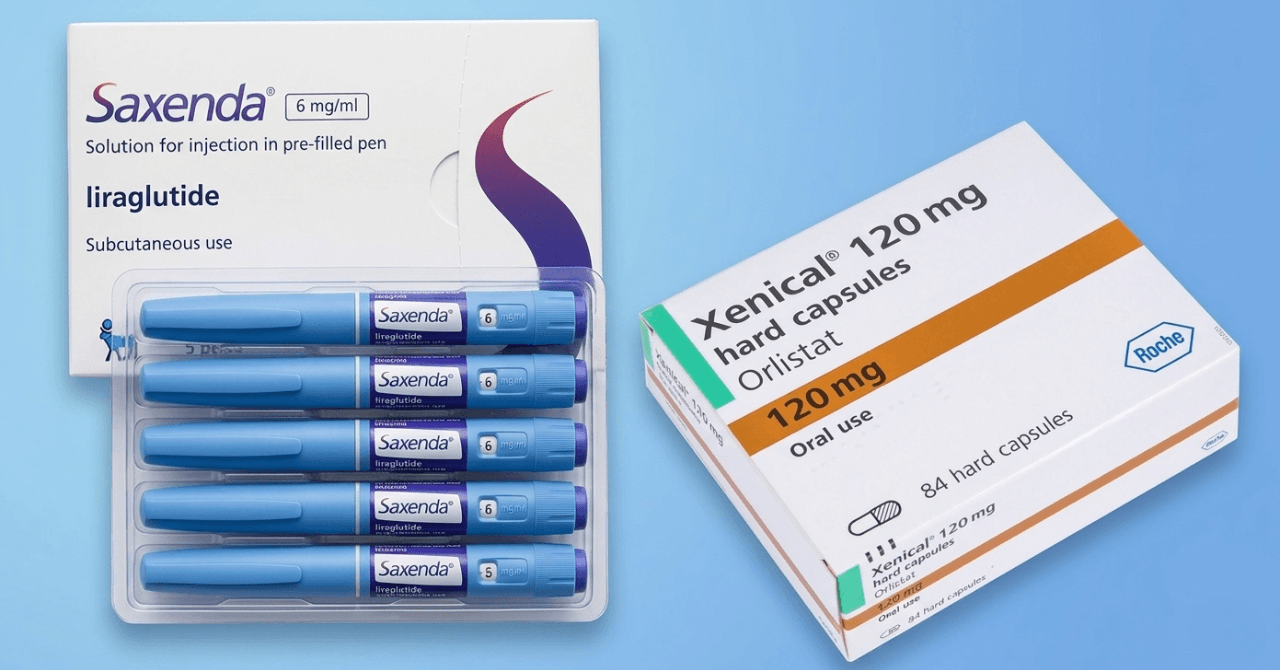
Saxenda (liraglutide) mimics a natural hormone that helps regulate appetite and food intake. It works by influencing brain appetite signals and slowing stomach emptying, helping patients feel full sooner and eat fewer calories. It is administered as a once-daily subcutaneous injection and is intended for use alongside a reduced-calorie diet and increased physical activity for long-term weight management.
Xenical (Orlistat): Blocking Fat Absorption
Xenical contains orlistat, a medication that works directly in the digestive system rather than the brain. Instead of affecting appetite, it blocks enzymes called gastrointestinal lipases, which break down dietary fat. According to the Xenical prescribing information, this action prevents the body from absorbing part of the fat ingested in meals.
The unabsorbed fat is eliminated through bowel movements. Xenical is typically taken three times daily with meals containing fat and is recommended as part of a reduced-calorie diet.
What Are the Common Side Effects of Saxenda and Xenical?
Both Saxenda and Xenical can cause side effects, especially during the first few weeks of treatment. Because the medications affect appetite and digestion in different ways, patients may experience gastrointestinal symptoms as their bodies adjust to treatment.
Xenical Side Effects
Common side effects include:
- Oily or fatty stools
- Increased bowel movements
- Gas with oily spotting
- Sudden urgency to use the bathroom
- Abdominal discomfort
Saxenda Side Effects
Common side effects include:
- Nausea
- Vomiting
- Diarrhea or constipation
- Headache
- Fatigue
- Injection site reactions
“Digestive side effects often occur as the body adapts to treatment”
Important Safety Factors to Know Before Combining Saxenda and Xenical
Before using Saxenda and Xenical together, healthcare providers usually review several safety factors. Although the medications work through different mechanisms, they can affect digestion and nutrient absorption, which requires careful medical evaluation.
Vitamin Absorption and Nutritional Deficiencies
Xenical can reduce the absorption of fat-soluble vitamins such as vitamins A, D, E, and K. Because of this, patients taking Xenical are often advised to use a daily multivitamin to help maintain proper nutrition. Vitamin supplements must be taken at least 2 hours apart from the medication to ensure adequate absorption.
Digestive System Tolerance
Both Saxenda and Xenical affect the digestive process in different ways. Saxenda slows stomach emptying and helps regulate appetite, while Xenical prevents the absorption of some dietary fat in the intestines. When used together, these effects may increase the likelihood of gastrointestinal symptoms such as nausea, loose stools, or abdominal discomfort.
Other Medications That May Interact with Orlistat
Drug interaction resources report that more than 100 medications may interact with orlistat, including drugs used to treat thyroid conditions, blood clotting disorders, and certain neurological conditions. Examples include:
- Cyclosporine
- Levothyroxine
- Warfarin
- Certain antiepileptic medications
Because of these potential interactions, healthcare providers typically review a patient’s full medication list before recommending Xenical.
What Is the Difference Between Xenical and Saxenda?
Although both medications support weight management, their mechanisms of action and uses differ significantly.
| Feature | Saxenda | Xenical |
|---|---|---|
| Drug class | GLP-1 receptor agonist | Gastrointestinal lipase inhibitor |
| How it works | Regulates appetite and slows stomach emptying | Blocks the absorption of dietary fat |
| Administration | Daily injection | Oral capsule |
| Typical dosing | Up to 3 mg once daily | 120 mg three times daily with meals |
| Target effect | Reduces calorie intake | Reduces fat absorption |
| Common side effects | Nausea, vomiting, fatigue | Oily stools, digestive discomfort |
← Swipe to see more →
Treatment decisions regarding combination therapy should always be guided by a healthcare professional.
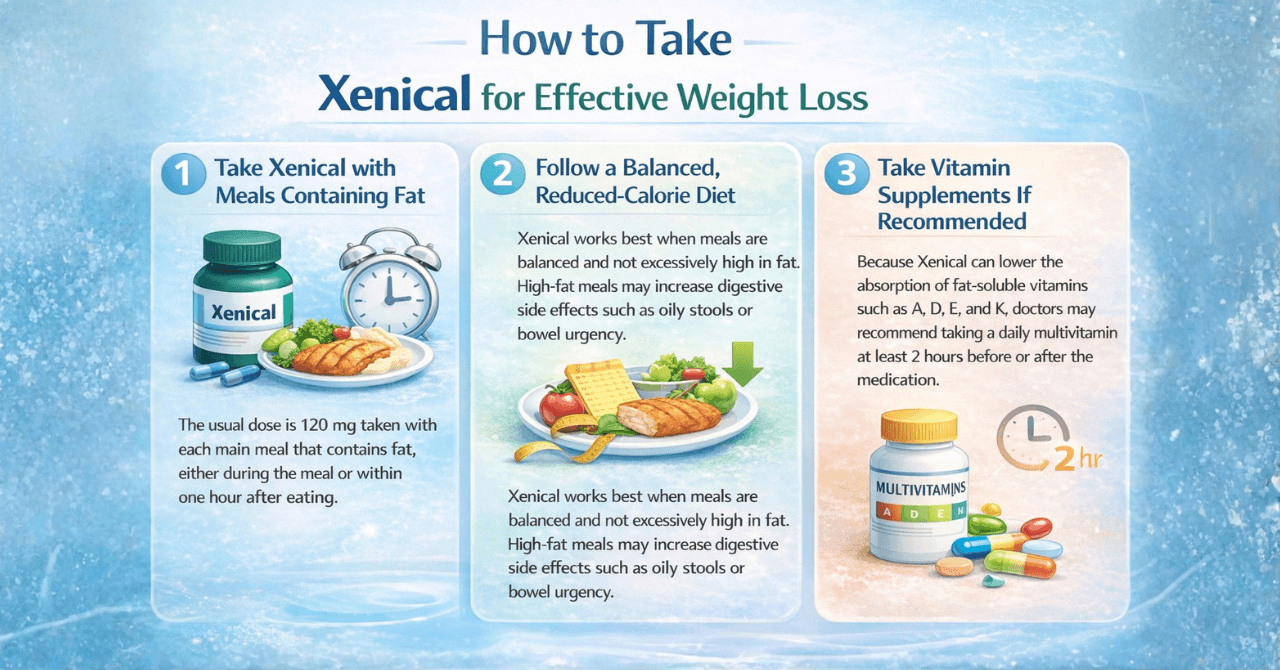
How to Take Xenical for Effective Weight Loss
When prescribed Xenical, proper use can help improve treatment results and reduce unwanted digestive side effects.
Step 1: Take Xenical with Meals Containing Fat
- The usual dose is 120 mg taken with each main meal that contains fat, either during the meal or within one hour after eating.
Step 2: Follow a Balanced, Reduced-Calorie Diet
- Xenical works best when meals are balanced and not excessively high in fat. High-fat meals may increase digestive side effects such as oily stools or bowel urgency.
Step 3: Take Vitamin Supplements If Recommended
- Because Xenical can lower the absorption of fat-soluble vitamins such as A, D, E, and K, doctors may recommend taking a daily multivitamin at least 2 hours before or after the medication.
Note: Unlike Xenical, Saxenda is used as a once-daily injection that helps regulate appetite and calorie intake, typically alongside a reduced-calorie diet and regular physical activity.
When Are Prescription Weight-Loss Medications Recommended?
The clinical research on obesity treatment suggests that medications are most effective when combined with dietary changes, physical activity, and behavioral support programs. Prescription weight-loss medications are usually recommended for patients who have obesity or weight-related health risks. Doctors may consider medication when:
- BMI is 30 or higher (obesity)
- BMI is 27 or higher with weight-related conditions, such as hypertension or type 2 diabetes
- Lifestyle interventions alone have not produced adequate results
- Patients require additional medical support for long-term weight management
Key Takeaways About Using Saxenda and Xenical Together
Both medications are used in medically supervised weight-management programs, but they work through different mechanisms. Saxenda helps regulate appetite and calorie intake, while Xenical lowers the absorption of dietary fat in the digestive system. While they target different aspects of weight loss, combining them requires a doctor's evaluation.
If your weight-loss progress slows or your treatment plan needs adjustment, discussing your situation with a healthcare provider can help determine the most appropriate approach. Patients exploring prescription weight-management treatments can also learn more about available medications and treatment options through Polar Bear Meds, where reliable information helps support informed healthcare decisions.
Important Disclaimer
This content is provided for informational purposes only and does not replace professional medical advice, diagnosis, or treatment. The information is based on reputable medical sources and clinical literature, but individual responses to medications may vary. Always consult an authorized healthcare professional before making treatment decisions.
Frequently Asked Questions
In some cases, doctors may allow Xenical and Saxenda to be used together because they work through different mechanisms. However, this combination should only be used under medical supervision to monitor side effects and ensure safe treatment.
Xenical (orlistat) may interact with several medications, including cyclosporine, levothyroxine, and warfarin. Patients should review their current medications with a healthcare provider before starting Xenical.
Xenical is usually taken three times daily with meals that contain fat. Following a balanced, reduced-calorie diet and avoiding high-fat meals can help improve results and reduce digestive side effects.