Does Ozempic Cause Yeast Infections? Side Effects and Prevention
Ozempic (semaglutide) is a widely prescribed medication for managing type 2 diabetes and supporting weight loss. As its use continues to grow, many patients are asking an important question: Does Ozempic cause yeast infections? While the medication is effective in controlling blood sugar levels, concerns about side effects, especially infections linked to glucose imbalance, are becoming more common among users.
Although yeast infections are not listed as a direct side effect, factors like elevated blood sugar and changes in the body’s natural balance may increase the risk in some individuals. This guide answers the question in detail, covering causes, symptoms, prevention strategies, and when to seek medical advice.
Can Ozempic Cause Yeast Infections?
Ozempic is not known to directly cause yeast infections, but it may increase the risk indirectly. Blood sugar fluctuations, hormonal changes, and metabolic shifts can promote yeast overgrowth. Some users report vaginal itching or irritation, especially if diabetes is not well controlled or glucose levels remain elevated.
Understanding the Link: Why Ozempic Users May Be at Risk of Yeast Infections
As Ozempic is a GLP-1 receptor agonist, it does not directly cause genitourinary infections like SGLT2 inhibitors. Instead, the risk is influenced by underlying biological factors:
1. The Glucose Connection (Fuel for Yeast)
Candida albicans (yeast) feeds on glucose. In people with type 2 diabetes, elevated or fluctuating blood sugar levels create an ideal environment for fungal overgrowth, making this the primary driver of yeast infections. Diabetics generally have a 2-3x higher risk compared to non-diabetics.
2. Hormonal Shifts from Weight Loss
Rapid weight loss can alter estrogen levels, which may lead to vaginal dryness & thinning of tissues. These changes increase sensitivity and make infections more likely.
3. Microbiome & pH Imbalance
Metabolic changes can reduce protective Lactobacillus bacteria in the vaginal microbiome. When these levels drop, vaginal pH rises, allowing yeast to grow more easily.
Is Yeast Infection a Common Side Effect of Ozempic?
No, yeast infections are not considered a common side effect of Ozempic. According to clinical data from the SUSTAIN trial program, the most commonly reported side effects of semaglutide were gastrointestinal issues such as nausea, vomiting, and diarrhea. Fungal infections were not identified as a common adverse effect.
That said, some users may still experience yeast infections due to individual health factors, especially if blood sugar is not well controlled. This means the occurrence is possible but uncommon, and typically related to underlying conditions rather than the medication itself.
Who Is Most at Risk of Yeast Infections While Taking Ozempic?
Certain individuals are more likely to develop yeast infections while using Ozempic due to underlying risk factors:
- Patients with uncontrolled hyperglycemia: Higher HbA1c levels are strongly linked to increased infection risk, as elevated glucose supports microbial growth.
- Individuals with a history of recurrent yeast infections or urinary tract infections (UTIs): These people are more sensitive to metabolic and hormonal changes.
- Former SGLT2 inhibitor users: May have lingering susceptibility to genitourinary infections.
- Immunocompromised individuals: Reduced immune response allows Candida to grow more easily.
- Recent antibiotic users: The loss of protective bacteria like Lactobacillus increases risk.
- High-moisture lifestyles: Sweat, tight clothing, or humid environments can promote fungal growth.
Clinical research shows that infection risk in people with diabetes increases as HbA1c rises, highlighting the importance of maintaining stable blood sugar levels.
Yeast Infection vs. UTI: How to Tell the Difference
| Feature | Yeast Infection | UTI |
|---|---|---|
| Cause | Candida (fungus) | Bacteria (E. coli) |
| Area Affected | Vagina/vulva | Bladder/urethra |
| Main Symptoms | Itching, thick white discharge, redness | Burning urination, frequent urge, cloudy urine |
| Pain Type | External irritation | Internal burning pain |
| Other Signs | Pain during sex; usually no odor | Blood in urine, fever (severe cases) |
| Diagnosis | Vaginal swab | Urine test |
| Treatment | Antifungals (e.g., fluconazole) | Antibiotics |
← Swipe to see more →
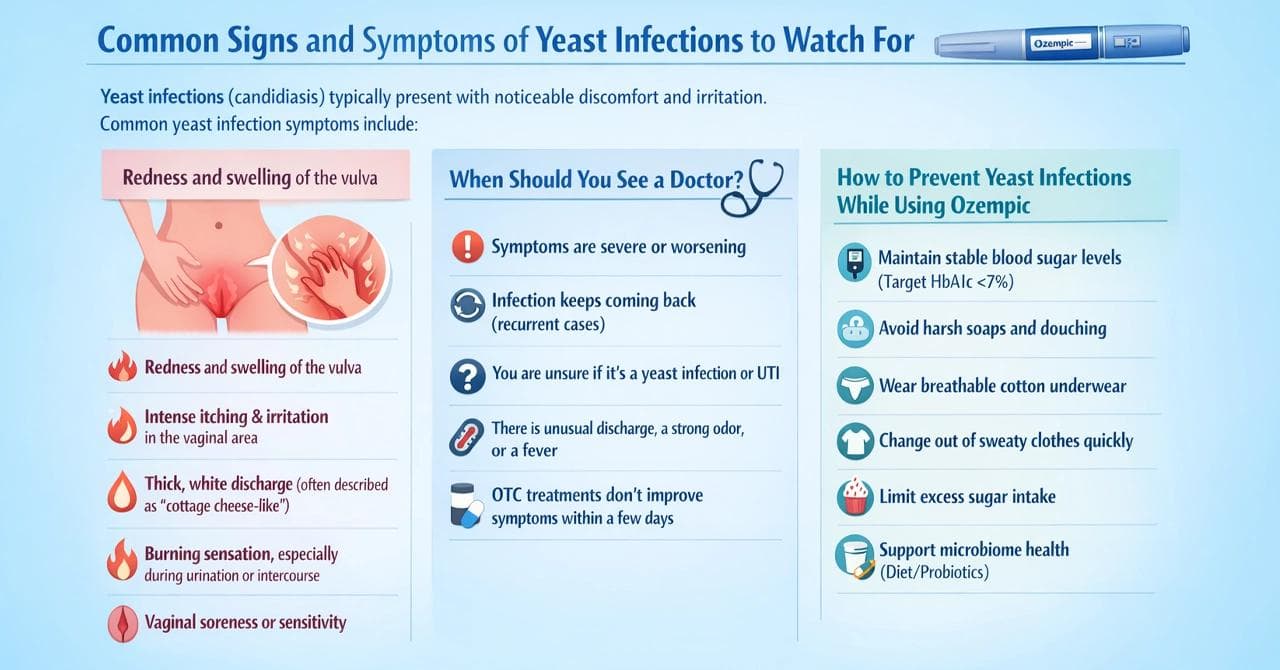
Common Signs and Symptoms of Yeast Infections to Watch For
Yeast infections (candidiasis) typically present with noticeable discomfort and irritation. Common yeast infection symptoms include:
- Redness and swelling of the vulva
- Intense itching & irritation in the vaginal area
- Thick, white discharge (often described as “cottage cheese-like”)
- Burning sensation, especially during urination or intercourse
- Vaginal soreness or sensitivity
When Should You See a Doctor?
- Symptoms are severe or worsening
- Infection keeps coming back (recurrent cases)
- You are unsure if it’s a yeast infection or UTI
- There is unusual discharge, a strong odor, or a fever
- OTC treatments don’t improve symptoms within a few days
How to Prevent Yeast Infections While Using Ozempic
- Maintain stable blood sugar levels (target HbA1c <7%)
- Avoid harsh soaps and douching
- Wear breathable cotton underwear
- Change out of sweaty clothes quickly
- Limit excess sugar intake
- Support microbiome health (diet/probiotics)
How to Treat Yeast Infections Caused by Ozempic
- Over-the-counter antifungals: Creams or suppositories (e.g., clotrimazole, miconazole)
- Oral antifungal medication: Such as fluconazole (prescribed for moderate to severe cases)
- Complete the full course: Even if symptoms improve early
- Avoid self-diagnosis in recurring cases: Consult a doctor to confirm the cause
Ozempic vs. SGLT2 Inhibitors: Infection Risk
| Medication Type | Example | Infection Risk | Why |
|---|---|---|---|
| GLP‑1 (Ozempic) | Semaglutide | Low (Indirect) | Does not cause glucose excretion in urine |
| SGLT2 Inhibitors | Jardiance, Farxiga | High (Direct) | Glucose in urine feeds yeast, raising infection risk |
← Swipe to see more →
SGLT2 inhibitors carry a significantly higher risk of yeast infections than Ozempic, due to how they work in the kidneys.
Complete List of Ozempic Side Effects (Common vs. Rare)
According to FDA-approved prescribing information, most Ozempic side effects are gastrointestinal and occur when treatment is started or the dose is increased.
Most Common Side Effects (≥5% of Patients)
- Nausea
- Vomiting
- Diarrhea
- Constipation
- Abdominal pain
- Fatigue
- Loss of appetite
Rare but Serious Side Effects
- Pancreatitis
- Gallbladder problems (gallstones, inflammation)
- Hypoglycemia (low blood sugar, especially with other diabetes drugs)
- Kidney injury (due to dehydration)
- Diabetic retinopathy complications
- Severe allergic reactions
Ozempic FDA Boxed Warning
- Risk of thyroid C-cell tumors (seen in animal studies)
- Avoid if you have Medullary Thyroid Carcinoma (MTC) or MEN 2 syndrome
Who Should Be Cautious When Using Ozempic?
- People with poorly controlled diabetes
- History of recurrent infections
- Hormonal sensitivity (vaginal health issues)
Summary: Can Ozempic Lead to Yeast Infections and What to Do
Ozempic does not directly cause yeast infections, but underlying factors like blood sugar levels and body changes may increase the risk in some users. With proper glucose control, hygiene, and timely treatment, most cases are preventable and manageable. Consult a healthcare provider or doctor if symptoms persist or recur.
Important Disclaimer
This blog is provided for informational purposes only and does not replace expert medical guidance, diagnosis, or treatment. The information is based on reputable medical sources and clinical literature, but individual responses to medications may vary. Always consult an authorized healthcare professional before making treatment decisions.
Frequently Asked Questions
No, yeast infections are not a common side effect of Ozempic. Clinical studies mainly report gastrointestinal issues, not fungal infections. However, people with diabetes may still experience them due to fluctuating or high blood sugar levels, which create conditions where yeast can grow more easily.
Yeast infections typically last 3 to 7 days with proper treatment. Mild cases may resolve faster with antifungal medications, while more severe or recurrent infections can take longer. If symptoms persist beyond a week, medical evaluation is recommended to confirm the diagnosis and adjust treatment.
Ozempic may indirectly contribute to vaginal dryness in some users. Rapid weight loss and hormonal shifts can affect estrogen levels, leading to dryness or irritation. While not a direct side effect, these changes can increase sensitivity and discomfort in certain individuals.
Other GLP-1 receptor agonists like Wegovy and Mounjaro have similar mechanisms and are not directly linked to yeast infections. However, underlying diabetes and metabolic changes may still increase the risk in some users.
Patients with diabetes are more prone to yeast infections because high blood sugar levels provide fuel for Candida (yeast). Elevated glucose in body tissues and fluids creates an environment where yeast can grow more easily, increasing the risk of infections.
A yeast infection (vaginal candidiasis) is a fungal overgrowth caused by Candida, leading to itching, irritation, and abnormal discharge. It is commonly linked to high blood sugar levels and microbiome imbalance.
Yes, high blood sugar is one of the main causes of yeast infections. Elevated glucose levels in body tissues and fluids provide fuel for Candida growth, significantly increasing infection risk, especially in people with uncontrolled diabetes.