Does Wegovy Cause Hiccups: Causes and Prevention
Key Takeaways
- Hiccups are not commonly listed as an official side effect of Wegovy, but may occur indirectly due to its effects on digestion.
- Delayed gastric emptying and acid reflux can increase pressure on the diaphragm, which may contribute to hiccups.
- Hiccups are more likely during the early stages of treatment or after dose increases.
- Simple methods like breathing techniques and dietary adjustments may help manage symptoms.
- Persistent or severe hiccups should be evaluated by a healthcare provider.
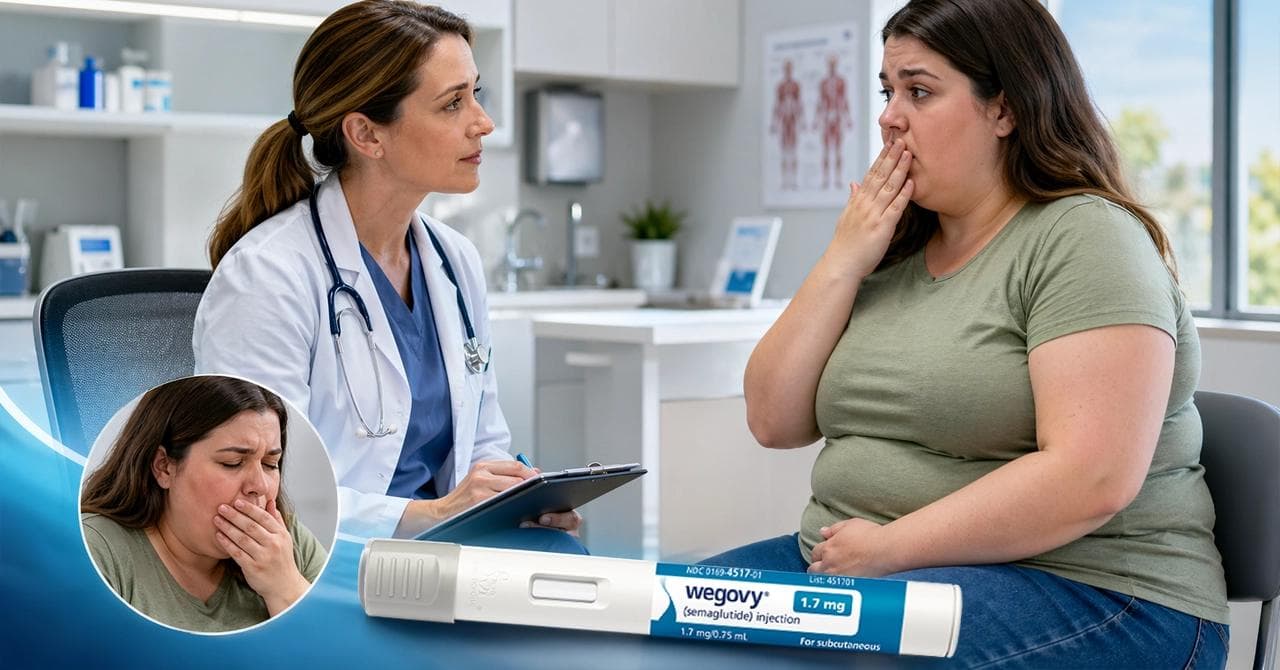
Wegovy may be associated with hiccups in some people, but it is not listed as an official side effect. Instead, they likely occur indirectly due to the medication’s effects on digestion. According to FDA prescribing information, Wegovy commonly causes gastrointestinal side effects such as acid reflux, bloating, and belching, which may trigger hiccups in certain cases.
If you are experiencing hiccups while taking Wegovy, they are usually linked to these digestive changes rather than being a direct drug side effect. In most cases, they are temporary and improve as your body adjusts to the medication.
Why Does Wegovy Cause Hiccups?
Wegovy may lead to hiccups in some people because of how it affects digestion. The connection is indirect and linked to gastrointestinal changes rather than a direct side effect. Understanding why this happens can help you manage symptoms more effectively.
Delayed Gastric Emptying and Stomach Pressure
Wegovy is a GLP-1 receptor agonist that slows how quickly food leaves your stomach. According to the National Library of Medicine (NLM), semaglutide delays gastric emptying, thereby increasing fullness. When food remains in the stomach longer, it can increase abdominal pressure. This pressure may affect the diaphragm, contributing to hiccups in some individuals.
Acid Reflux and Gastrointestinal Irritation
Wegovy is associated with gastrointestinal side effects such as acid reflux, abdominal distension, and belching. Acid reflux can irritate the esophagus and the nearby diaphragm area. This irritation may increase the likelihood of hiccups.
Vagus Nerve and Diaphragm Response
Digestive changes caused by Wegovy may also influence the nerves that control the diaphragm. When the stomach is distended or irritated, it can stimulate nerve pathways involved in the hiccup reflex. The hiccup reflex involves a neural pathway between the vagus nerve, phrenic nerve, and brainstem. Irritation or stimulation along this reflex arc can trigger involuntary diaphragm contractions, which appear as hiccups.
When Do Hiccups Usually Occur While Taking Wegovy?
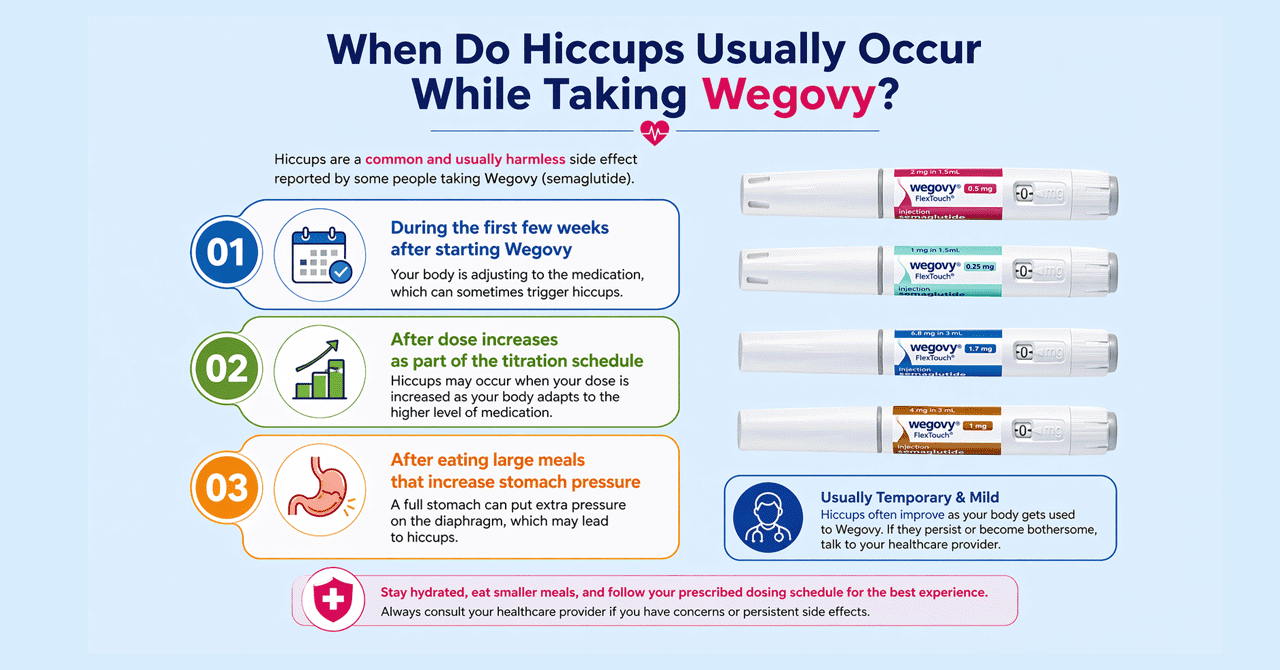
Hiccups linked to Wegovy are more likely to appear during certain phases of treatment, especially when your body is still adjusting to its digestive effects. Most commonly, they may occur:
- During the first few weeks after starting Wegovy
- After dose increases as part of the titration schedule
- After eating large meals that increase stomach pressure
According to a pharmacovigilance study, gastrointestinal side effects associated with semaglutide often appear early in treatment and tend to decrease over time as the body adapts. If you notice Wegovy hiccups at night, they may be linked to lying down soon after eating, which can worsen acid reflux and increase irritation near the diaphragm.
How to Stop Hiccups on Wegovy
If you are experiencing hiccups while taking Wegovy, the focus should be on relaxing the diaphragm and reducing digestive triggers linked to gastrointestinal side effects. The following methods are commonly used to interrupt the hiccup reflex and may provide quick relief:
| Method | How It Helps |
|---|---|
| Sip cold water slowly | Helps calm the diaphragm and reduce irritation |
| Hold your breath for 10 to 20 seconds | May reset breathing patterns and interrupt the hiccup reflex |
| Controlled breathing | Helps stabilize diaphragm movement |
| Gentle pressure under the chest | May reduce diaphragm spasms |
← Swipe to see more →
Ways to reduce recurrence of hiccups:
| Habit | Why It Helps |
|---|---|
| Eat smaller meals | Reduces stomach pressure on the diaphragm |
| Avoid carbonated drinks | Prevents gas buildup and bloating |
| Limit fatty or spicy foods | Helps reduce acid reflux |
| Eat slowly | Reduces swallowed air and digestive strain |
← Swipe to see more →
When to Consult a Doctor for Wegovy Hiccups
Most hiccups linked to Wegovy are temporary and improve as your body adjusts to the medication. However, some situations may require medical attention. While hiccups are usually harmless, persistent symptoms may indicate ongoing irritation, such as acid reflux or prolonged gastric distension. You should consult a doctor if:
- Hiccups last longer than 48 hours
- They interfere with eating, sleeping, or breathing
- They become frequent or severe over time
Persistent hiccups may indicate ongoing gastrointestinal irritation or another underlying issue that needs medical evaluation.
The Bottom Line: Connection Between Wegovy and Hiccups
Hiccups while taking Wegovy are usually linked to its effects on digestion rather than being a direct side effect. They tend to appear early in treatment or after dose changes and often improve over time. Simple strategies like adjusting eating habits and using basic relief techniques can help manage symptoms. However, if hiccups persist or become severe, consult a healthcare provider to rule out underlying issues.
Frequently Asked Questions
You can try simple methods such as sipping cold water slowly, holding your breath for a few seconds, or using controlled breathing techniques. These may help interrupt the hiccup reflex.
Yes, hiccups may be more noticeable during dose escalation when your body is still adjusting to the medication and its gastrointestinal effects.
Large meals, carbonated drinks, and foods that worsen acid reflux can increase the chances of hiccups. Wegovy burping and hiccups are often linked to these digestive triggers.
In most cases, hiccups improve as your body adapts to Wegovy. They are usually temporary and more common in the early stages of treatment.
You should consult a doctor if hiccups last longer than 48 hours, become frequent, or interfere with eating, sleeping, or breathing.
Medical Disclaimer
This blog is provided for informational purposes only and does not replace expert medical guidance, diagnosis, or treatment. The information is based on trusted sources such as the U.S. Food and Drug Administration (FDA) and the National Library of Medicine (NLM). However, individual responses may vary. Always consult an authorized healthcare professional before making treatment decisions.