Polarbearmeds - Home
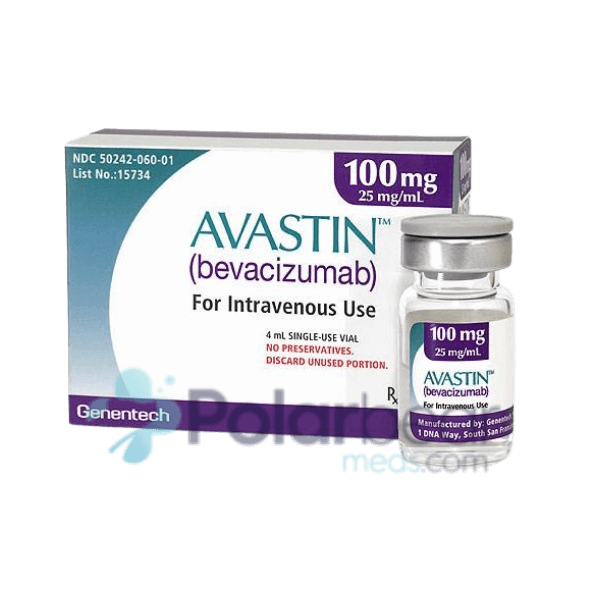
Avastin - Image 1

Avastin

No packages found
price-match-guarantee

Price Match Guarantee

We offer competitive pricing on all our medications. Find a lower price? We'll match it from any verified Canadian online pharmacy! Know More

How to Order

Ordering your medication online is simple and convenient.

STEP 01

Select the prescribed dosage and quantity, then proceed to checkout.

STEP 02

Sign in or create a new account.

STEP 03

Upload your prescription.

STEP 04

Complete your purchase by processing the payment.

Shipping takes approximately 3-5 business days.

5 Star Excellence award from Shopper Approved for collecting at least 100 5 star reviews

Product Details

Description

Description

Avastin is an effective medication that treats several forms of cancer in adults. It contains bevacizumab, a monoclonal antibody that targets and blocks VEGF (vascular endothelial growth factor), which is basically a protein that helps tumors grow new blood vessels. By cutting off the tumor’s blood supply, Avastin helps slow or stop cancer progression. This medication is administered as an intravenous (IV) infusion by healthcare professionals. It comes in two vial strengths, 100 mg/4 mL & 400 mg/16 mL, and is usually given every 2 - 3 weeks, depending on the type of cancer being treated.

Avastin is FDA-approved to treat recurrent glioblastoma, metastatic colorectal cancer, non-small cell lung cancer, certain gynecologic cancers (ovarian, fallopian tube, and peritoneal), cervical cancer, liver cancer, and metastatic kidney cancer. It’s often used in combination with chemotherapy or other targeted therapies like atezolizumab or interferon alfa. While Avastin can be effective, it may cause side effects ranging from mild (like dry skin and nasal congestion) to serious (such as bleeding, high blood pressure, or gastrointestinal issues).

It’s essential to follow your doctor’s guidance and report any unusual symptoms immediately. Patients should avoid using Avastin before or after surgery due to potential wound healing complications. If you are pregnant, planning to become pregnant, or breastfeeding, speak with your doctor about risks. Avastin offers a targeted approach to cancer therapy, and when monitored carefully by your care team, it may significantly improve treatment outcomes for specific cancer types.

Uses and Benefits

Uses and Benefits

Avastin is an FDA-approved medication used to treat certain types of cancer in adults. It is prescribed for the following conditions:

Recurrent Glioblastoma

Certain Ovarian, Fallopian Tube, and Peritoneal Cancers

Metastatic Colorectal Cancer

Certain Non-Small Cell Lung Cancer (NSCLC)

Certain Cervical Cancer

Metastatic Kidney Cancer

Certain Liver Cancers

Avastin is often used in combination with chemotherapy to treat these cancers, depending on the specific type of cancer being addressed.

Dosage

Dosage

What Are the Forms & Strengths of Avastin?

Avastin is available as a solution in single-dose vials. It is given by healthcare professionals through an intravenous (IV) infusion, meaning the medication is injected into your vein over a specific period of time. Below are the available vial sizes:

4-milliliter (mL) Vial: Contains 100 milligrams (mg) of Avastin.

16-milliliter (mL) Vial: Contains 400 milligrams (mg) of Avastin.

What Is the Recommended Dosage for Avastin?

Dosage for Ovarian Cancer

  • Initial Treatment (Following Surgery):
    • Dose: 15 mg of Avastin per kilogram of body weight (mg/kg).
    • Frequency: Given once every 3 weeks.
    • Combination: Given with two chemotherapy drugs, carboplatin and paclitaxel.
    • Duration: This treatment continues for up to six 3-week cycles.
    • After six cycles, Avastin may be continued without chemotherapy, still at the same dose of 15 mg/kg every 3 weeks.
  • Total Duration: Avastin can be given for up to twenty-two 3-week cycles, with or without chemotherapy, unless the cancer worsens earlier.

Dosage for Recurrent Ovarian Cancer

  • For Cancers Responding to Platinum-Based Chemotherapy:
    • Dose: 15 mg/kg, given once every 3 weeks.
    • Combination: First six to ten cycles with chemotherapy drugs (carboplatin and paclitaxel or carboplatin and gemcitabine).
    • After Six to Ten Cycles: Avastin is given alone at the same dose of 15 mg/kg, once every 3 weeks, until the cancer worsens.
  • For Cancers Resistant to Platinum-Based Chemotherapy:
    • Dose: 10 to 15 mg/kg, given once every 2 to 3 weeks.
    • Combination: Avastin is used with either paclitaxel, liposomal doxorubicin, or topotecan.
    • Duration: The doctor will decide how long treatment should continue based on the patient's condition.

Dosage for Lung Cancer

The dose for Non-Squamous Non-Small Cell Lung Cancer (NSCLC):

  • Dose: 15 mg of Avastin per kilogram of body weight (mg/kg).
  • Frequency: Given once every 3 weeks.
  • Combination: Avastin is used with two chemotherapy drugs, carboplatin and paclitaxel.
  • Duration: The doctor will determine how long Avastin treatment should continue based on your condition.

Dosage for Colon Cancer

  • For Metastatic Colon Cancer: The dosage of Avastin depends on the chemotherapy drugs it is used with. Here are the recommended dosages:
    • With IFL Chemotherapy:
      • Dose: 5 mg of Avastin per kilogram of body weight (mg/kg).
      • Frequency: Given once every 2 weeks.
    • With FOLFOX-4 Chemotherapy:
      • Dose: 10 mg/kg.
      • Frequency: Given once every 2 weeks.
  • If Colon Cancer Worsens After Treatment with Bevacizumab:
    • The following dosages may be prescribed:
      • 5 mg/kg given once every 2 weeks, or
      • 7.5 mg/kg given once every 3 weeks.
    • Combination: These doses should be used with a chemotherapy regimen that includes fluoropyrimidines (such as, fluorouracil) and either irinotecan (Onivyde, Camptosar) or oxaliplatin (Eloxatin).
  • Duration: Your doctor will determine how long Avastin treatment should continue based on your condition.

Dosage for Glioblastoma

The dosage for recurrent Glioblastoma is given below:

  • Dose: 10 mg of Avastin per kilogram of body weight (mg/kg).
  • Frequency: Given once every 2 weeks.
  • Duration: Your doctor will decide how long Avastin treatment should continue based on your condition.

Dosage for Cervical Cancer

  • Dose: 15 mg of Avastin per kilogram of body weight (mg/kg).
  • Frequency: Given once every 3 weeks.
  • Combination: Avastin is used with one of the following combinations:
    • Paclitaxel and cisplatin, or
    • Paclitaxel and topotecan.
  • Duration: Your doctor will determine how long Avastin treatment should continue based on your condition.

Dosage for Liver Cancer

  • Dose: 15 mg of Avastin per kilogram of body weight (mg/kg).
  • Frequency: Given once every 3 weeks.
  • Combination: Avastin is used with a drug called atezolizumab (Tecentriq).
  • Duration: Your doctor will determine how long Avastin treatment should continue based on your condition.

Dosage for Kidney Cancer

  • Dose: 10 mg of Avastin per kilogram of body weight (mg/kg).
  • Frequency: Given once every 2 weeks.
  • Combination: Avastin is used with a drug called interferon alfa.
  • Duration: Your doctor will decide how long Avastin treatment should continue based on your condition

[Note: Remember, these recommendations may vary from person to person. Discuss it with your doctor, and they'll customize your dosage accordingly.]

Usage Guide

Usage Guide

If you're starting treatment with Avastin, it's important to know how the medication is given and what to expect during the infusion process. Avastin is not a pill or injection you can take at home—it’s administered by healthcare professionals through an intravenous (IV) infusion. Below is a simple guide to help you understand how it works and how often you’ll receive it.

  • How Avastin Is Given:
    • Avastin is given as an IV infusion, which means it is slowly injected into a vein over a period of time.
    • Only a trained medical professional will administer this medicine in a clinic or hospital setting.
  • What to Expect During Infusion:
    • First infusion: Usually lasts around 90 minutes. This allows the medical team to monitor how your body responds.
    • Second infusion: If the first goes well, your second infusion will take about 60 minutes.
    • Future infusions: If you don’t experience any side effects during the first two, later infusions may be given in just 30 minutes.
  • How Often Avastin Is Given:
    • The frequency of your infusions depends on the type of cancer being treated.
    • In most cases, Avastin is given once every 2 to 3 weeks.
    • Your doctor will let you know how long your treatment should continue based on your condition and how well you respond.
  • Helpful Tip: To avoid missing your dose, set a reminder on your phone or calendar for each appointment.

Always follow your doctor’s instructions and keep up with your scheduled treatments for the best results.

[Note: Your doctor will decide the right amount for you based on your condition, following guidelines and studies on the drug. They'll adjust it as needed over time.]

How It Works

How It Works

Avastin is a medication used to treat several types of cancer. It contains an active ingredient called bevacizumab, which is a monoclonal antibody—a special kind of drug made from immune system cells. Bevacizumab belongs to a group of medicines known as VEGF inhibitors. VEGF stands for vascular endothelial growth factor, which is a natural substance in your body that helps form new blood vessels.

Cancer cells often produce more VEGF than normal cells. This allows tumors to grow their own blood supply, which gives them the oxygen and nutrients they need to grow quickly and spread. Avastin works by blocking VEGF, which helps cut off the blood supply to the tumor. Without new blood vessels, the tumor can't grow as easily or spread to other areas. In this way, Avastin helps slow down or stop the progression of cancer in your body.

Side Effects

Side Effects

Common and Mild Side Effects of Avastin: Like many medications, Avastin may cause some side effects. Most of these are considered mild and may improve as your body adjusts to the treatment. However, if any of these symptoms last longer than expected or start to affect your daily life, it's important to talk to your doctor for further advice. Here’s a quick guide to the common mild side effects you may experience:

  • Changes in the way your voice sounds: Your voice may become hoarse or sound different. This is usually not serious but let your doctor know if it’s affecting your speech or breathing.
  • Changes in taste: You might notice food tastes different or has a metallic flavor. Try experimenting with different seasonings or using mouth rinses to freshen your palate.
  • Back pain: Some people report mild to moderate back discomfort. Applying heat, gentle stretching, or over-the-counter pain relief (if approved by your doctor) may help.
  • Problems with tear production: You may have dry or irritated eyes. Using artificial tears or lubricating eye drops can ease discomfort.
  • Minor bleeding, such as nosebleeds: Occasional nosebleeds can occur. Keep your nasal passages moist with saline sprays and avoid blowing your nose too hard.
  • Dry skin: Your skin might feel rough or flaky. Use fragrance-free moisturizers and stay hydrated.
  • High blood pressure: Avastin may increase blood pressure. Regular monitoring is important, and your doctor might prescribe medication if needed.
  • Headache: Mild headaches can happen. Rest, hydration, and doctor-approved pain relievers may be helpful.
  • Rhinitis (runny or stuffy nose): You may feel congested or have a runny nose. Nasal sprays or steam inhalation may offer relief.

Serious Side Effects of Avastin: While serious side effects from Avastin are not common, they can happen in some people. That’s why it’s important to recognize the signs early and contact your doctor right away if anything feels unusual or concerning. Below is a list of serious side effects and what symptoms you should watch out for. If any of these occur, do not wait—get medical help immediately.

  • Gastrointestinal Issues: Gastrointestinal perforation (a hole in your bowel) or fistulae (abnormal openings in your digestive system). Symptoms may include:
    • Diarrhea
    • Fever or chills
    • Nausea or vomiting
    • Changes in your normal bowel movements
    • Severe or unusual stomach pain
  • Blood Clot-Related Conditions (Thromboembolic Events): These are caused by blood clots forming in your blood vessels and can be life-threatening:
    • Mini-stroke (TIA): Temporary stroke-like symptoms
    • Deep vein thrombosis (DVT): Swelling or pain in your leg
    • Stroke: Numbness, trouble speaking, or sudden vision problems
    • Angina: Chest discomfort caused by reduced blood flow to the heart
    • Pulmonary embolism: A blood clot in your lung causing sudden shortness of breath
    • Heart attack: Chest pain or pressure due to blocked blood flow to the heart
  • Kidney Damage: This can result in high levels of protein in your urine (proteinuria). Symptoms include:
    • Sudden weight gain
    • Bloating or swelling, especially in feet, hands, or face
    • Foamy-looking urine
    • High blood pressure
  • Severe Infusion Reactions: This can occur during or soon after the IV infusion. Symptoms include:
    • Shivering or feeling cold
    • Very high blood pressure
    • Headache
    • Chest pain
    • Wheezing or breathing trouble
    • Anaphylaxis or serious allergic reaction
    • Heavy sweating
  • Posterior Reversible Encephalopathy Syndrome (PRES): This is a rare brain condition caused by swelling in the brain. Watch for:
    • High blood pressure
    • Sudden blindness or vision changes
    • Feeling very tired or low on energy
    • Seizures or convulsions
    • Confusion or trouble thinking clearly
    • Headaches
  • Early Menopause (in women who haven’t reached menopause):
    • Mood changes
    • Stopped periods
    • Vaginal dryness
    • Difficulty sleeping
  • Heart Failure: This may occur with long-term treatment. Symptoms include:
    • Swelling (especially in the legs or abdomen)
    • Feeling very tired or fatigue
    • Persistent cough
    • Wheezing or difficulty breathing
    • Shortness of breath

If you notice any of these symptoms during treatment with Avastin, call your doctor immediately or seek emergency care. Quick action can make a big difference in managing side effects safely.

[Note: Remember, this list may not cover all possible side effects. Always consult with your healthcare giver for medical advice about side effects.]

Warnings

Warnings

Before starting Avastin, it's important to have an open conversation with your doctor about your medical history and any current health conditions. Certain factors may affect whether Avastin is safe or appropriate for you. Below is a clear, easy-to-understand guide to help you be aware of important safety precautions.

  • Birth Control and Pregnancy
    • Birth control is necessary: Avastin may harm an unborn baby if used during pregnancy.
    • For women who can become pregnant: You should use effective birth control while on Avastin and for at least 6 months after your last dose.
    • If you’re pregnant or planning to be: Talk to your doctor. They may suggest a different treatment during pregnancy to avoid risks to the baby.
    • Animal studies show low birth weight and skeletal problems in babies exposed to Avastin during pregnancy. While this doesn't always reflect what happens in humans, it's still a concern.
    • Post-marketing reports (from real-world use) also mention fetal problems, but exact risks are not clearly known.
  • For Men Taking Avastin
    • Avastin’s manufacturer hasn’t given specific guidance for men.
    • If you’re sexually active with a partner who can become pregnant, talk to your doctor about precautions or birth control during treatment.
  • Surgery and Wound Healing
    • Avastin can interfere with healing after surgery.
    • Do not take Avastin:
      • Within 28 days before a planned (non-emergency) surgery.
      • For at least 28 days after surgery.
      • Until your surgical wounds are fully healed.
    • Let your doctor know if you’ve recently had or are planning any surgery.
  • Breastfeeding
    • It’s not known if Avastin passes into breast milk or how it might affect a baby.
    • Do not breastfeed while taking Avastin and for at least 6 months after your last dose.
    • If you’re breastfeeding or planning to, speak to your doctor about safe alternatives for feeding your baby.

Having this discussion with your healthcare provider ensures you can use Avastin safely and effectively. Always follow their advice and never make changes to your treatment on your own.

Safety Guide

Safety Guide

When you're receiving Avastin, it's important to be aware of certain safety concerns. While the medication can be highly effective in treating cancer, it may also lead to some serious side effects. Knowing what to watch for can help you act quickly if something doesn’t feel right. Here's a simple and professional breakdown to keep you informed and safe during your treatment.

Bleeding Risks

  • Avastin can increase your risk of bleeding.
  • Get emergency medical help if you experience bleeding that doesn’t stop.
  • Bleeding may happen internally, not just on the outside.
  • Call your doctor immediately if you notice:
    • Signs of bleeding in the digestive system:
      • Severe stomach pain
      • Feeling very dizzy or weak
      • Coughing up blood or vomiting that looks like coffee grounds
      • Bloody or black, tar-like stools
    • Signs of bleeding in the brain:
      • Slurred speech
      • Sudden numbness or weakness
      • Vision or balance problems
      • Severe headache

Brain-Related Side Effects

  • In rare cases, Avastin may cause a serious brain condition.
  • Symptoms may show up right after the first dose or even months later.
  • Watch for these symptoms and call your doctor immediately:
    • Confusion
    • Headache
    • Severe tiredness or weakness
    • Vision issues
    • Fainting or seizures (convulsions)

Infusion Reactions

Some people react during the IV infusion of Avastin. Let your medical team know right away if you experience:

  • Nausea or sweating
  • Dizziness or lightheadedness
  • Fast heartbeat
  • Chest pain or wheezing
  • Itching or chills

Stay alert and always report anything unusual to your doctor. Being proactive can help you stay safe while benefiting from your Avastin treatment.

Missed Dose

Missed Dose

Since Avastin is given through scheduled infusions by a healthcare provider, it’s important to stick to your appointment dates. If you happen to miss a dose, don’t worry and take the right steps to stay on track. Here’s what you should do:

  • What to Do If You Miss a Dose:
    • Call your doctor’s office right away if you miss an infusion appointment.
    • The medical team will help you reschedule your treatment as soon as possible.
    • Do not try to adjust your treatment schedule on your own—always follow your doctor’s guidance.
  • How to Avoid Missing a Dose:
    • Set reminders on your phone or calendar to help you remember upcoming appointments.
    • If possible, arrange transportation in advance so you don’t miss your visit due to last-minute issues.
    • Keep a treatment log or journal to stay organized with dates and side effect notes.

[Note: If you have missed a dose of your medication and are unsure about when to take the next one, immediately consult your doctor or pharmacist.]

Overdose

Overdose

  • Avastin is given in controlled doses by doctors or nurses, so the chance of an overdose is very low.
  • If an overdose does happen, it will likely be recognized and treated immediately at the clinic or hospital.
  • Your medical team will monitor your vital signs and manage any side effects or reactions promptly.
  • If you ever have concerns about how much Avastin you've received or how you're feeling after treatment, speak up and let your healthcare provider know right away.

[Note: If you consumed more than the recommended dose, get medical help right away or call the Poison Help line at 1-800-222-1222.]

Storage Guide

Storage Guide

If you're handling this medication at a healthcare facility or storing it before use, make sure you're following the right storage guidelines. Here's how to Store Bevacizumab (Avastin):

  • Keep it refrigerated at a temperature between 36°F to 46°F (2°C to 8°C). This helps maintain the medicine’s stability and effectiveness.
  • Do not freeze the vials or cartons. Freezing can damage the medication and make it unusable.
  • Avoid storing it at room temperature, as bevacizumab can lose its effectiveness if not kept cold.
  • Keep it in its original packaging until it's ready to be used. This helps protect it from light and other external factors.

[Note: Discuss with your healthcare professional about the proper disposal of any unused medicine and any questions you may have regarding its storage.]

Interactions

Interactions

While Avastin has not shown any major interactions with other medications, it’s still very important to share a complete list of everything you take with your healthcare team. Even if interactions are rare, being careful can help you avoid unexpected side effects or issues during treatment. Here are the important things to do:

  • Tell your doctor and pharmacist about all the medications you take — including prescription, over-the-counter (OTC), and any herbal supplements.
  • Don’t forget vitamins or natural remedies you may be using.
  • If you’re ever unsure about whether something you’re taking is fine with Avastin, just ask your doctor or pharmacist.

What Are the Other Interactions to Avastin?

Avastin (bevacizumab) can interact with factors beyond medications, including certain health conditions and lifestyle choices. Here are some notable interactions:

  • Health Conditions: Avastin may pose risks for individuals with conditions such as hypertension, bleeding disorders, gastrointestinal perforation, and thromboembolic disorders. If you have any of these conditions, your doctor may need to monitor you closely.
  • Alcohol: While there are no direct interactions between Avastin and alcohol, some chemotherapy drugs used alongside Avastin may interact with alcohol. It’s best to consult your doctor before consuming alcohol during treatment.
  • Vaccines: Avastin may interact with certain vaccines, potentially affecting their effectiveness. If you’re scheduled for vaccinations, discuss this with your healthcare provider.

[Note: This isn't a complete list, and there could be other drugs that interact with Avastin. Make sure to tell your doctor about any prescription, over-the-counter medicines, and herbal products you’re taking.]

Alternatives

Alternatives

There are other medications available that can help treat the same conditions as Avastin. In some cases, a different drug may be a better option based on your overall health, how your body responds to treatment, or specific cancer type. Here are the alternatives to Avastin to treat different forms of cancer:

Alternatives for Glioblastoma

Below are other medications used to treat brain cancer that includes:

  • Temodar (temozolomide)
  • Mvasi (bevacizumab-awwb)
  • Vegzelma (bevacizumab-adcd)
  • Alymsys (bevacizumab-maly)
  • Vincristine (vincristine)
  • Zirabev (bevacizumab-bvzr)
  • Bicnu (carmustine)

Alternatives for Colon Cancer

Below are other medications used to treat colon cancer that includes:

  • Xeloda (capecitabine)
  • Vectibix (panitumumab)
  • Onivyde (irinotecan)
  • Camptosar (irinotecan)
  • Keytruda (pembrolizumab)
  • Vegzelma (bevacizumab-adcd)
  • Zirabev (bevacizumab-bvzr)
  • Zaltrap (ziv-aflibercept)
  • Mvasi (bevacizumab-awwb)
  • Eloxatin (oxaliplatin)
  • Stivarga (regorafenib)
  • Alymsys (bevacizumab-maly)
  • Cyramza (ramucirumab)
  • Fluorouracil (fluorouracil)
  • Erbitux (cetuximab)

Alternatives for Lung Cancer

If you're being treated for non-small cell lung cancer (NSCLC) or another type of lung cancer, your doctor might consider one of these alternatives to Avastin:

  • Gilotrif (afatinib)
  • Alunbrig (brigatinib)
  • Keytruda (pembrolizumab)
  • Abraxane (paclitaxel)
  • Portrazza (necitumumab)
  • Tarceva (erlotinib)
  • Cyramza (ramucirumab)
  • Opdivo (nivolumab)
  • Vegzelma (bevacizumab-adcd)
  • Doxil (liposomal doxorubicin)
  • Alymsys (bevacizumab-maly)
  • Zirabev (bevacizumab-bvzr)
  • Carboplatin (carboplatin)
  • Docetaxel (docetaxel)
  • Mvasi (bevacizumab-awwb)
  • Alecensa (alectinib)
  • Cetuximab (cetuximab)
  • Gemcitabine (gemcitabine)

Alternatives for Cervical Cancer

Below are other medications used to treat cervical cancer that includes:

  • Bleomycin (bleomycin)
  • Hycamtin (topotecan)
  • Vegzelma (bevacizumab-adcd)
  • Keytruda (pembrolizumab)
  • Mvasi (bevacizumab-awwb)
  • Alymsys (bevacizumab-maly)
  • Zirabev (bevacizumab-bvzr)
  • Rubraca (rucaparib)

Alternatives for Ovarian Cancer

Below are other medications used to treat ovarian cancer that includes:

  • Alymsys (bevacizumab-maly)
  • Zejula (niraparib)
  • Etoposide (etoposide)
  • Abraxane (paclitaxel)
  • Rubraca (rucaparib)
  • Vegzelma (bevacizumab-adcd)
  • Cytoxan (cyclophosphamide)
  • Lynparza (olaparib)
  • Mvasi (bevacizumab-awwb)
  • Zirabev (bevacizumab-bvzr)
  • Bleomycin (bleomycin)
  • Vincristine (vincristine)
  • Carboplatin (carboplatin)
  • Cisplatin (cisplatin)

Alternatives for Kidney Cancer

Your doctor may recommend one of the following drugs as an alternative to Avastin for kidney cancer treatment:

  • Afinitor (everolimus)
  • Inlyta (axitinib)
  • Sutent (sunitinib)
  • Vegzelma (bevacizumab-adcd)
  • Keytruda (pembrolizumab)
  • Alymsys (bevacizumab-maly)
  • Zirabev (bevacizumab-bvzr)
  • Yervoy (ipilimumab)
  • Opdivo (nivolumab)
  • Nexavar (sorafenib)
  • Gemcitabine (gemcitabine)
  • Mvasi (bevacizumab-awwb)
  • Cisplatin (cisplatin)
  • Camptosar (irinotecan)
  • 5-Fluorouracil (fluorouracil)

Alternatives for Liver Cancer

For patients with liver cancer, Avastin alternatives may include targeted therapies or immune-based drugs such as:

  • Cabometyx (cabozantinib)
  • Keytruda (pembrolizumab)
  • Nexavar (sorafenib)
  • Stivarga (regorafenib)
  • Yervoy (ipilimumab)
  • Opdivo (nivolumab)
  • Lenvima (lenvatinib)
  • Cyramza (ramucirumab)

If you're thinking about switching from Avastin or exploring other options, it's best to talk with your doctor. They can guide you through the alternatives and help you find a treatment that’s safe, effective, and personalized to your needs.

[Note: Your doctor will choose what’s best for you. Don’t use any of these alternative medications without consulting your healthcare provider. Taking them by yourself may cause serious side effects.]

Cost & Coupons

Cost & Coupons

Avastin is a widely prescribed cancer medication, but in the U.S., the cost can be overwhelming—often running into thousands of dollars per dose without insurance. At Polar Bear Meds, we help make this life-saving treatment more accessible. You can buy Avastin online with coupon code “WELCOMEPB10” to enjoy an additional 10% off your first order. Our Canadian pharmacy offers Avastin at a much lower price, helping American patients manage their treatment without breaking the bank. Join our referral program to save even more—up to $200 in total medication costs. Quality, affordability, and peace of mind—all in one place.

FAQ

FAQ

Guarantee

Guarantee

At PolarBearMeds.com, we assure you the most affordable price to buy Avastin online from Canada. Rest easy knowing that your order will be dispatched from a reputable Licensed Canada Pharmacy Online, adhering to the highest standards of quality and authenticity. Our discounted medications are shipped directly from Canada to your doorstep, ensuring a swift and secure delivery experience. To conveniently buy Avastin online to treat several forms of cancer at a substantial cost, call us at1-888-779-2193toll-free.

Important Notice

Important Notice

The content provided on the Polar Bear Meds website serves to increase knowledge about healthcare products and medical conditions and is strictly for informational purposes. It should not replace professional medical advice. We urge you to consult with a qualified healthcare professional prior to utilizing any prescription or over-the-counter medication. Our platform grants access to an extensive array of products, sourced internationally, including Canada. We collaborates with a licensed pharmacy partner in Canada and trusted dispensing pharmacies globally. All affiliated fulfillment centers are accredited by the regulatory authorities of their respective countries.

Dr. Jackson Miller

Medically Reviewed by Dr. Jackson Miller (M.D)

Dr. Jackson Miller is a board-certified medicine physician & hospitalist. He is a healthcare professional with a strong background in patient care. With years of experience and a patient-first approach, he believes the foundation of good health is a patient who feels informed and empowered. He contributes to medical content review, drawing on his background in clinical practice and patient education. He focuses on presenting health information in a clear, accurate, and accessible way to help readers make informed decisions. His work emphasizes clarity, evidence-based guidance, and understandable explanations of medical topics.

Find Dr. Jackson Miller on:LinkedIn

Learn more about Avastin and related topics

Price matching guarantee certificate

We offer competitive pricing on all our medications. We'll match if you find a lower price on an identical product at a verified Canadian online pharmacy!

Eligibility Criteria:

  • The competitor's price must be active (no past/future sales).
  • It is only valid for Canadian online pharmacies with a verifiable address.
  • The product must match the strength, pack size, quantity, manufacturer & origin.
  • There are no price matches on used/expired medications.
  • You must submit your requests before placing an order.
  • We cannot adjust prices after purchase.
  • Request via live chat or phone before placing your order.

Need help? Call our friendly support team at 1-888-779-2193 or fill out the Contact Form