Fluticasone Fur…


We offer competitive pricing on all our medications. Find a lower price? We'll match it from any verified Canadian online pharmacy! Know More

We offer competitive pricing on all our medications. Find a lower price? We'll match it from any verified Canadian online pharmacy! Know More
Ordering your medication online is simple and convenient.
Select the prescribed dosage and quantity, then proceed to checkout.
Sign in or create a new account.
Upload your prescription.
Complete your purchase by processing the payment.
Select the prescribed dosage and quantity, then proceed to checkout.
Sign in or create a new account.
Upload your prescription.
Complete your purchase by processing the payment.
Shipping takes approximately 3-5 business days.
Read what our customers have to say about their shopping experience.
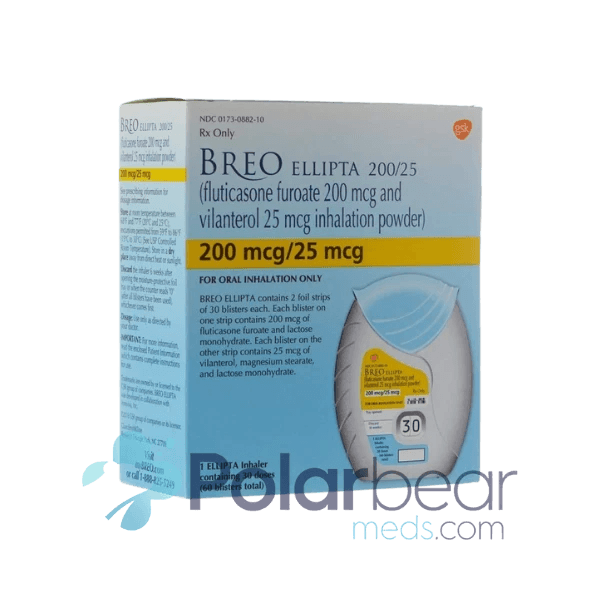
Breo Ellipta is an FDA-approved prescription inhaler used to treat chronic obstructive pulmonary disease (COPD) and asthma in adults. It combines fluticasone furoate, an inhaled corticosteroid that reduces airway inflammation, and vilanterol, a long-acting beta2-adrenergic agonist that relaxes airway muscles. The inhaler is designed for long-term treatment, helping to prevent breathing difficulties and manage symptoms. It is not intended for immediate relief of acute symptoms, for which a separate rescue inhaler is prescribed. Breo Ellipta is taken once daily and has specific dosages based on the condition being treated.
Breo Ellipta is a brand-name inhalation powder specifically designed for adults suffering from chronic obstructive pulmonary disease (COPD) and asthma. This dual-ingredient medication contains fluticasone furoate, an inhaled corticosteroid (ICS) that helps to decrease inflammation within the airways, and vilanterol trifenatate, a long-acting beta2-adrenergic agonist (LABA) that aids in relaxing the muscles around the airways to improve breathing.
The inhaler is used once daily and is available in two strengths: 100 mcg fluticasone furoate with 25 mcg vilanterol and 200 mcg fluticasone furoate with 25 mcg vilanterol. For asthma, the dosage can vary between these two strengths based on the severity of symptoms and individual response to treatment. The maximum recommended dosage for asthma is one puff of the 200 mcg/25 mcg strength per day. For COPD, the prescribed dosage is consistently 100 mcg/25 mcg once daily, which is also the maximum for this condition.
Breo Ellipta is designed for the long-term management of respiratory diseases and is not suitable for immediate symptom relief. For sudden breathing issues, patients are advised to use a quick-acting rescue inhaler like albuterol. The regular use of Breo Ellipta helps maintain a steady level of medication in the body, facilitating better long-term control of symptoms and reducing flare-ups. Patients with liver issues may require dosage adjustments and monitoring due to the corticosteroid content. It is essential to follow the healthcare provider’s instructions closely and discuss any side effects or concerns for optimal management of COPD and asthma.
It is approved to treat the following conditions in adults:
Breo Ellipta comes in the form of a powder inhaler and has three strengths:
Dosage for Asthma Using Breo Ellipta
Dosage for COPD Using Breo Ellipta
Long-term Treatment with Breo Ellipta
Dosage Adjustments
[Note: These recommendations may vary from person to person. Discuss them with your doctor; they’ll customize your dosage accordingly.]
[Note: Your doctor will decide the right amount for you based on your condition, following guidelines and studies on the drug. They’ll adjust it as needed over time.]
Breo Ellipta is designed to improve breathing by relaxing the muscles in your airways. It is used to treat chronic obstructive pulmonary disease (COPD) and to help reduce the frequency of symptom flare-ups in COPD patients. It also helps prevent asthma attacks in adults. COPD and asthma can cause your airways to narrow during flare-ups, making breathing difficult. The narrowing of the airways can be caused by several factors, including:
Breo Ellipta addresses these issues, helping to keep the airways open and reducing the severity of breathing problems. It contains two active ingredients: fluticasone furoate and vilanterol trifenatate. Fluticasone furoate is an inhaled corticosteroid (ICS), while vilanterol trifenatate is a long-acting beta2-adrenergic agonist (LABA).
Mild side effects of Breo Ellipta may include:
Serious side effects of Breo Ellipta may include:
[Note: This list may not cover all possible side effects. Always consult with your healthcare provider for medical advice about side effects.]
Before starting treatment with Breo Ellipta, discussing your complete health history with your doctor is essential. Breo Ellipta may not be suitable for everyone, especially if you have certain medical conditions that could interact negatively with the drug. These interactions between the drug and health conditions are known as drug-condition interactions. Other personal health factors can also influence whether Breo Ellipta is a safe and effective treatment option for you. Consider the following factors and discuss them with your doctor:
In all cases, a thorough conversation with your healthcare provider will help determine the best course of action based on your specific health needs and circumstances.
[Note: If you have missed a medication dose and are unsure when to take the next one, consult your doctor or pharmacist immediately.]
Using more Breo Ellipta than prescribed by your doctor can lead to serious side effects. It is crucial to adhere strictly to the dosage your doctor recommends. While the manufacturer does not specifically report overdoses of Breo Ellipta, there have been cases of overdoses with the individual drugs it contains. Due to its inhaled form, Breo Ellipta is generally less likely to cause an overdose compared to oral forms of the same medications. However, possible overdose symptoms from fluticasone furoate, one of the components in Breo Ellipta, might include:
Overdose symptoms of vilanterol in Breo Ellipta may include:
If you accidentally take more than the recommended dose of Breo Ellipta, it’s important to act quickly and call your doctor immediately if you believe you have taken too much Breo Ellipta. They can provide guidance based on the amount you’ve taken. If you experience severe symptoms such as difficulty breathing, chest pain, or severe dizziness, call 911 or your local emergency number immediately or go directly to the nearest emergency room. Taking prompt action can help manage the effects of an overdose and ensure your safety.
[Note: If you consumed more than the recommended dose, get medical help right away or call the Poison Help line at 1-800-222-1222.]
[Note: Discuss with your healthcare professional about the proper disposal of any unused medicine and any questions you may have regarding its storage.]
Breo Ellipta can interact with various medications and certain supplements, potentially causing different effects depending on the interaction. Some interactions may affect the effectiveness of Breo, while others could increase the likelihood of side effects. It is essential to be aware of these potential interactions to ensure optimal treatment outcomes and avoid adverse effects. Always discuss all medications, over-the-counter drugs, and supplements you are using with your healthcare provider to manage and monitor these interactions effectively.
Interaction with Other Medications
Breo Ellipta may interact with various medications, and while the list provided below includes some everyday interactions, it is not exhaustive. Before starting Breo, it is crucial to inform your doctor and pharmacist about all the prescription medications, over-the-counter drugs, vitamins, herbs, and supplements you are currently using. This comprehensive disclosure helps your healthcare providers identify any potential interactions and manage them proactively to prevent adverse effects. If you have any concerns or questions about how other drugs might interact with Breo, do not hesitate to consult your doctor or pharmacist for personalized advice and guidance.
Certain Antimicrobial Medications: Certain antimicrobial medications, which are used to treat infections caused by bacteria, viruses, or fungi, can interact with Breo Ellipta. When taken alongside certain antimicrobials, the levels of Breo in your body may increase, potentially leading to more frequent and more severe side effects. If you are taking any antimicrobial medications, it’s essential to discuss with your doctor the specific risks associated with using Breo. They can provide guidance on how to safely manage your medications to minimize these risks. Examples of antimicrobials that may interact with Breo include:
Certain Antidepressants: Taking Breo Ellipta in combination with certain antidepressants can lead to heart rhythm problems. This is because some antidepressants can interact with Breo, affecting how it is metabolized or how it functions in your body. If you are prescribed any antidepressant medications, it is crucial to discuss the potential risks and considerations with your doctor before using Breo. They can help you understand the implications and decide on the safest approach to your treatment. Examples of antidepressants that may cause interactions with Breo include:
Other Drugs That Can Affect Your Heart Rhythm: Certain drugs can impact your heart’s rhythm by increasing your QT interval, a measure used to assess the timing of heart electrical activity. When these drugs are taken with Breo Ellipta, the risk of developing heart rhythm problems may increase. It’s crucial to discuss the potential risks with your doctor if you are taking any medications known to affect your QT interval. Your doctor can provide guidance on how to safely use Breo in conjunction with these medications and monitor for any adverse effects. Examples of medicines that can extend the QT interval and may interact with Breo include:
Certain Blood Pressure and Heart Medications: Certain blood pressure and heart medications, specifically beta-blockers, can interact negatively with Breo Ellipta. Beta-blockers are used to manage blood pressure and heart conditions but can counteract the effects of Breo. This interaction can lead to the constriction (narrowing) of blood vessels in your lungs, making breathing more difficult and potentially increasing your risk of asthma attacks. If you are prescribed beta-blockers, it’s important to discuss this with your doctor to understand the risks and manage your medications to avoid exacerbating respiratory issues. Examples of beta-blockers that may interact with Breo include:
Certain Diuretics: Certain diuretics, specifically non-potassium-sparing diuretics, can interact with Breo Ellipta when used concurrently. These types of diuretics are used to treat heart and blood pressure conditions but may cause potassium to be excreted from the body through urine. When potassium levels become too low, it can lead to significant heart issues, including abnormal heart rhythms that may be too fast, too slow, or irregular. If you are taking these diuretics, it’s crucial to discuss this with your doctor, as the combination with Breo could affect your heart health. Examples of non-potassium-sparing diuretics include:
Breo Use with Other Drugs
When managing chronic obstructive pulmonary disease (COPD) or asthma, your doctor may prescribe Breo Ellipta along with other medications. It’s common in the treatment of these respiratory conditions to use a combination of long-term control medications and short-acting, or rescue, medications.
Long-term medications like Breo are used regularly to maintain control of chronic symptoms and prevent exacerbations. They are not suitable for treating acute asthma attacks or sudden COPD flare-ups and are typically limited to once or twice daily use based on the prescribed regimen.
Rescue medications, on the other hand, are short-acting drugs designed to quickly relieve symptoms during an acute episode. These inhalers can be used multiple times throughout the day as needed to manage sudden breathing difficulties due to COPD flare-ups or asthma attacks. To complement the treatment with Breo, your doctor might also prescribe the following types of medications:
Use with Incruse Ellipta: The combination of Breo Ellipta and Incruse Ellipta is specifically utilized in the treatment of chronic obstructive pulmonary disease (COPD). Incruse Ellipta is a brand-name medication that includes umeclidinium bromide, which is a long-acting muscarinic antagonist (LAMA). Breo Ellipta, on the other hand, combines an inhaled corticosteroid (ICS), fluticasone fumerate, with a long-acting beta2-adrenergic agonist (LABA), vilanterol trifenatate.
Using Breo and Incruse Ellipta together introduces three types of therapeutic agents into the treatment regimen: an LABA, a LAMA, and an ICS. This triple therapy approach can be beneficial for individuals whose COPD symptoms are not adequately controlled by one or two medications alone. For a more integrated solution, the brand-name medication Trelegy Ellipta combines these three types of drugs into a single inhaler, which is also used once daily for the management of COPD. This approach aims to simplify treatment regimens while effectively controlling the symptoms of COPD.
Use with Spiriva: Breo Ellipta, containing an inhaled corticosteroid (fluticasone fumerate) and a long-acting beta2-adrenergic agonist (LABA, vilanterol trifenatate), can be used in conjunction with Spiriva, which contains tiotropium bromide, a long-acting muscarinic antagonist (LAMA). This combination covers three major classes of respiratory drugs: LABA, LAMA, and ICS. This triple therapy is particularly useful for individuals whose symptoms of COPD or severe asthma are not adequately controlled by mono or dual therapy.
Use with Albuterol: While Breo is intended for long-term management of COPD and prevention of asthma attacks, it is not suitable for immediate relief during an acute flare-up or asthma attack. For such urgent situations, albuterol, a short-acting beta2-adrenergic agonist (SABA), is recommended. Albuterol works quickly to relieve symptoms of COPD flare-ups and asthma attacks. Patients may use albuterol in conjunction with Breo to address sudden symptoms effectively while maintaining long-term control with Breo.
This strategic use of medications ensures both preventive care through Breo and immediate relief through albuterol, offering a comprehensive approach to managing respiratory conditions effectively. Always consult with healthcare providers to tailor the medication regimen that best suits individual health needs and conditions.
[Note: This isn’t a complete list, and there could be other drugs that interact with Breo Ellipta. Make sure to tell your doctor about any prescription, over-the-counter, or herbal products you’re taking.]
[Note: Your doctor will choose what’s best for you. Don’t use any of these alternative medications without consulting your healthcare provider. Taking them by yourself may cause serious side effects.]
AtPolarBearMeds.com, we assure you the most affordable price to buy Breo Ellipta online from Canada. Rest easy knowing that your order will be dispatched from a reputable Licensed Canada Pharmacy Online, adhering to the highest standards of quality and authenticity. Our discounted medications are shipped directly from Canada to your doorstep, ensuring a swift and secure delivery experience. To conveniently access Breo Ellipta for treating COPD and Asthma at a substantial cost, call us at 1-888-779-2193 toll-free.
The content provided on the Polar Bear Meds website serves to increase knowledge about healthcare products and medical conditions and is strictly for informational purposes. It should not replace professional medical advice. We urge you to consult with a qualified healthcare professional prior to utilizing any prescription or over-the-counter medication. Our platform grants access to an extensive array of products, sourced internationally, including Canada. We collaborates with a licensed pharmacy partner in Canada and trusted dispensing pharmacies globally. All affiliated fulfillment centers are accredited by the regulatory authorities of their respective countries.

Dr. Jackson Miller is a board-certified medicine physician & hospitalist. He is a healthcare professional with a strong background in patient care. With years of experience and a patient-first approach, he believes the foundation of good health is a patient who feels informed and empowered. He contributes to medical content review, drawing on his background in clinical practice and patient education. He focuses on presenting health information in a clear, accurate, and accessible way to help readers make informed decisions. His work emphasizes clarity, evidence-based guidance, and understandable explanations of medical topics.

We offer competitive pricing on all our medications. We'll match if you find a lower price on an identical product at a verified Canadian online pharmacy!
Need help? Call our friendly support team at 1-888-779-2193 or fill out the Contact Form