How Long Does Saxenda Stay in Your System After Stopping? A Complete Guide
If you were prescribed Saxenda and have recently stopped taking it, it is natural to wonder how long the aftereffects last. This is especially important if you are managing side effects, planning a medication switch, or simply curious about how your body adjusts after treatment.
The short answer? Saxenda typically stays in your system for about 2-3 days after your last injection. But the full picture involves understanding how the drug works, its half-life, and individual factors that influence how quickly your body clears it.
“The end of a medication is not the end of progress; it’s the beginning of the lifestyle built to last”
Here’s how it actually works in your body.
Who Should Read This?
- People who have stopped taking Saxenda recently
- Patients switching GLP-1 medications
- Those experiencing side effects after stopping Saxenda
- Anyone concerned about weight regain
What Is Saxenda? Medication & Mechanism
As a Glucagon-like peptide-1 (GLP-1) agonist, Saxenda is a commonly prescribed injectable medication for weight management, especially for individuals struggling with obesity or weight-related conditions. Saxenda contains liraglutide, a GLP-1 receptor agonist that helps support weight loss by working with your body’s natural systems. It slows the rate at which your stomach empties, helps curb cravings and appetite, and improves blood sugar control. Eventually, you tend to feel fuller sooner and stay satisfied for longer after meals.
Because of how these effects work together, your body begins to adjust to changes in how much and how often you eat. During this transition, it’s not unusual to feel a bit low on energy or tired, especially in the early stages of treatment, as your metabolism and calorie intake shift.
Understanding Half-Life of Saxenda
The half-life of Saxenda (liraglutide) is approximately 13 hours, meaning it takes that amount of time for half of the drug to be eliminated from the body. Pharmacokinetic data published on NCBI indicate that liraglutide is slowly absorbed after subcutaneous injection and remains active long enough to support once-daily dosing. Because it takes about 5-6 half-lives for a drug to be mostly cleared, Saxenda is typically eliminated from the system within 2-3 days after the last dose.
How Long Does Saxenda Stay in Your System?
Saxenda doesn’t stay in your body for long after you stop it. For Saxenda, this translates to roughly 65 to 80 hours (about 2 to 3 days) after your last injection. According to the FDA-approved prescribing information for liraglutide, the drug has a half-life of approximately 13 hours and follows a well-defined pharmacokinetic profile, supporting once-daily dosing.
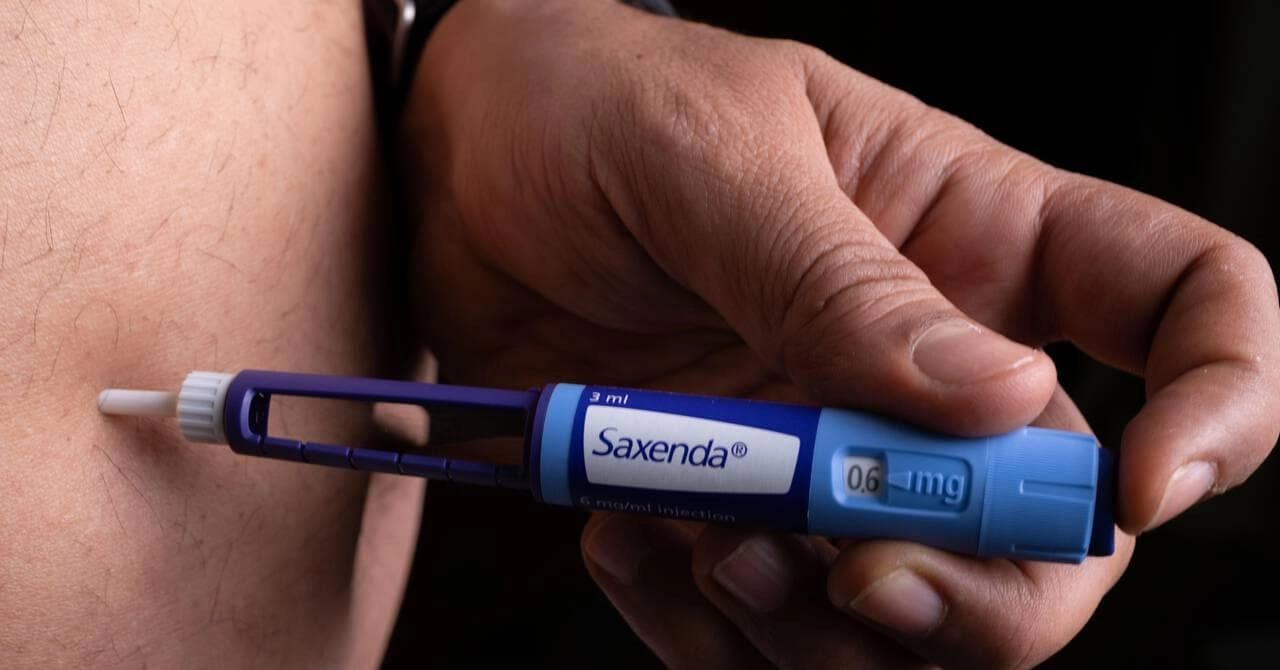
Saxenda Clearance Timeline: What Happens After Your Last Dose
| Time After Last Dose | What Happens in Your Body |
|---|---|
| 0-13 hours | Drug at peak levels, full effect present |
| 13-24 hours | About 50% of the drug remains |
| 24-48 hours | Drug levels drop significantly |
| 48-72 hours | Most of the drug is eliminated |
| After 72 hours | Minimal to no active drug remains |
← Swipe to see more →
Why Saxenda Doesn’t Stay Longer?
Saxenda is designed for once-daily dosing, which reflects how it behaves in the body. It doesn’t linger for weeks like some newer GLP-1 medications, and there are clear biological reasons for that:
- Moderate half-life (13 hours): Short enough to require daily dosing but long enough to provide sustained appetite control.
- Protein-based metabolism: Broken down into amino acids rather than stored in organs.
- No long-term accumulation: Reaches steady levels quickly but clears efficiently once stopped.
- Subcutaneous absorption: Released gradually into the bloodstream, but not retained in fat tissue.
Because of these characteristics, Saxenda provides consistent daily effects without remaining in the body for extended periods after discontinuation.
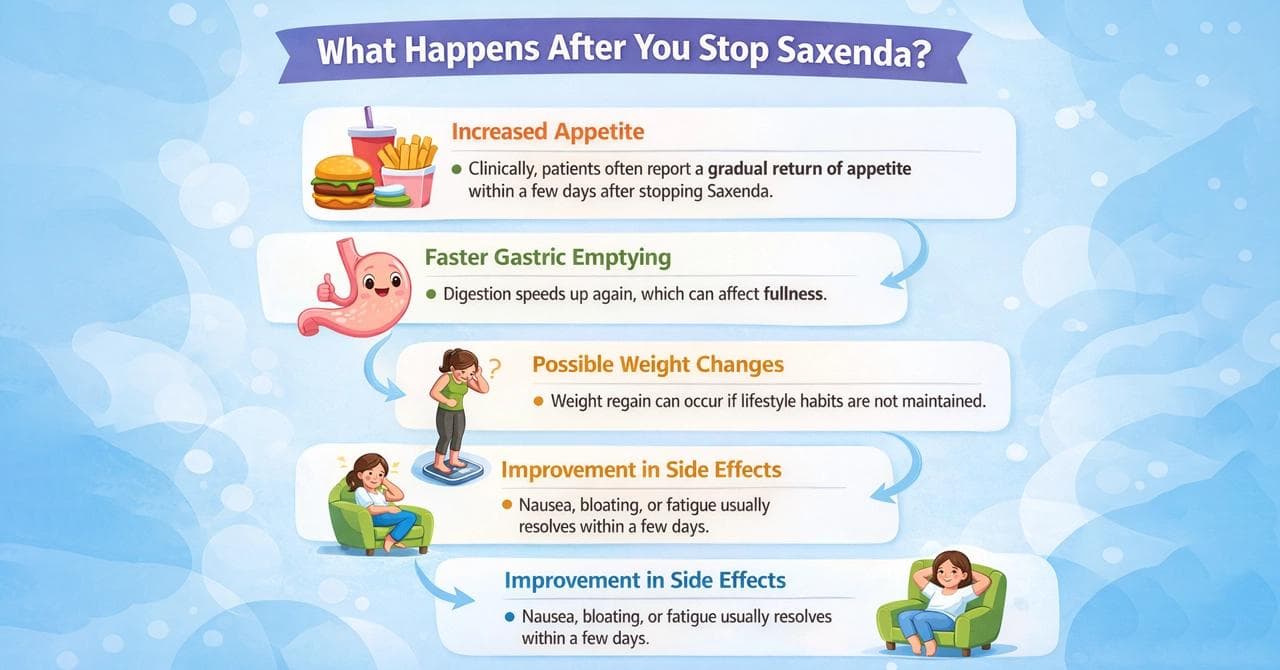
What Happens After You Stop Saxenda?
When you stop taking Saxenda, your body begins to return to its natural hormonal and digestive patterns. Since the medication works by mimicking GLP-1 (a hormone that regulates appetite and digestion), stopping it removes that external support.
Here’s what most people may experience:
- Increased appetite: Clinically, patients often report a gradual return of appetite within a few days after stopping Saxenda.
- Faster gastric emptying: Digestion speeds up again, which can affect fullness.
- Possible weight changes: Weight regain can occur if lifestyle habits are not maintained.
- Improvement in side effects: Nausea, bloating, or fatigue usually resolves within a few days.
You won’t notice everything changing overnight; it usually happens over a few days.
How Long Do Saxenda Effects Last After Stopping?
Even after Saxenda leaves your system (within about 3 days), its effects may linger slightly longer. This is because the body does not instantly reset its appetite and digestion signals.
In most cases:
- Appetite suppression may persist for a few extra days before fully returning
- Eating patterns developed during treatment may continue temporarily
- Blood sugar and digestion effects stabilize gradually
However, these benefits are not permanent without continued lifestyle support. Clinical guidance emphasizes that long-term weight management depends on diet, physical activity, and behavioral changes, not just the medication itself.
What Steps Should You Take After Stopping Saxenda?
If you have stopped recently (within 3 days)
- Saxenda (liraglutide) is still leaving your system.
- You might experience mild side effects.
If it’s been more than 3 days:
- The medicine is mostly cleared, and only clinically insignificant levels remain in the body.
- You may feel hungry.
If you plan to restart medicine:
- Start taking a lower dose.
- Speak to your doctor.
When Should You See a Doctor?
- If side effects persist beyond a few days.
- If you experience severe nausea or vomiting.
- If you plan to switch to another GLP-1 medication.
- If you have diabetes or concerns about blood sugar.
Do You Need to Taper Off Saxenda?
In most cases, Saxenda does not need to be tapered before stopping. You can usually discontinue it in most patients without complications without gradually reducing the dose, as it does not cause withdrawal symptoms like some other medications.
However, there are a few important considerations:
- If you restart after a break of more than 3 days, you’ll likely need to begin at a lower dose.
- Restarting at the full dose may increase side effects like nausea.
- Medical guidance is recommended before stopping or restarting.
This happens because Saxenda changes how your body handles appetite and digestion. Your body builds tolerance over time, and a sudden reintroduction at a high dose can feel intense if that tolerance has reset.
When Can You Start Another GLP-1 After Saxenda?
Most healthcare providers recommend waiting until Saxenda is mostly cleared from your system (about 2-3 days) before starting another GLP-1 medication such as semaglutide or tirzepatide. This helps reduce the risk of overlapping side effects like nausea, vomiting, or digestive discomfort. However, the exact timing may vary depending on your medical history, current condition, and treatment goals. Always consult your doctor before switching medications to ensure a safe transition.
Who Should Be More Cautious After Stopping Saxenda?
While stopping Saxenda is generally safe, some individuals may need closer monitoring:
- People with type 2 diabetes (due to blood sugar changes).
- Individuals with a history of disordered eating.
- Patients switching to another GLP-1 medication.
- Those who experienced strong gastrointestinal side effects during treatment.
In these cases, medical guidance can help manage symptoms and ensure a smoother transition.
The Final Thoughts on Saxenda’s After Effects When Stopped
Stopping Saxenda (liraglutide) is a gradual transition rather than an instant change. Although the medication is mostly cleared from your system within 2-3 days, its effects, such as reduced appetite and slower digestion, can take a few more days to fully wear off. During this time, it’s common to notice a return of hunger or changes in eating patterns, which are natural responses as your body readjusts.
That’s why long-term success after stopping Saxenda depends less on the medication itself and more on the habits you maintain. Following a balanced diet, controlling portions, and staying physically active can help prevent weight regain and support lasting results. While Saxenda does not usually require tapering or cause withdrawal symptoms, restarting after a break may require a lower dose. Staying in touch with your healthcare provider ensures a smoother and safer transition moving forward.
Medical Disclaimer: The above content is for informational purposes only and does not replace professional medical advice. Always consult a licensed healthcare provider before starting or combining medications.
Frequently Asked Questions
Saxenda (liraglutide) usually stays in your system for about 2 to 3 days after your last injection. This is based on its 13-hour half-life, meaning it takes several cycles for the drug to be fully cleared from your body.
In most cases, stopping Saxenda suddenly is safe and does not cause withdrawal symptoms. However, your appetite may return, and you could feel hungrier as the medication’s effects wear off.
Most common side effects—such as nausea, bloating, or mild fatigue—improve within a few days after stopping Saxenda. This is because the drug is mostly eliminated from your system within 72 hours.
Weight regain is possible after stopping Saxenda, especially if appetite increases and lifestyle changes are not maintained. Continuing to eat healthily and stay active can help maintain your results.