How Long Does Zepbound Stay in Your System?
If you’re wondering: how long does Zepbound stay in your system? The short answer is that it remains in your body for several weeks after your last dose. Because of its slow elimination rate, it does not clear immediately and instead reduces gradually over time.
According to the FDA prescribing information, Zepbound (tirzepatide) is designed for once-weekly dosing due to its extended duration in the body. Understanding this helps you plan around missed doses, side effects, or stopping treatment.
How Long Does Zepbound Take to Leave Your Body? (The Half-Life Timeline)
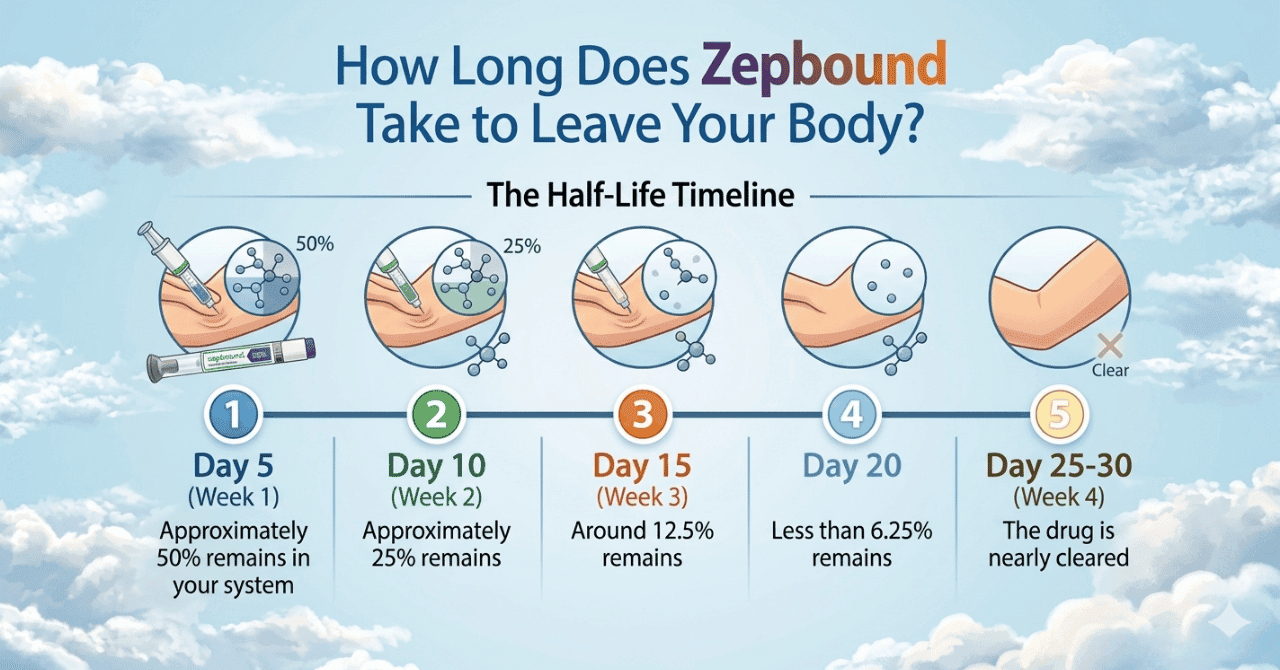
Zepbound follows a predictable elimination pattern based on its 5-day half-life. This means the amount of medication in your body is reduced by half roughly every five days. StatPearls data show that tirzepatide is gradually broken down and eliminated through natural metabolic processes. This leads to a predictable, step-by-step decline:
- Day 5 (Week 1): Approximately 50% remains in your system
- Day 10 (Week 2): Approximately 25% remains
- Day 15 (Week 3): Around 12.5% remains
- Day 25-30 (Week 4): The drug is nearly cleared
This gradual reduction explains why Zepbound continues working smoothly between your weekly doses without causing sudden, sharp drops in your medication levels.
Does Dosage Affect How Long Zepbound Stays in Your System?
No, your dose does not change how long the medication stays in your body. Whether you are on the lowest starting dose or the maximum maintenance dose, the clearance timeline remains exactly the same. While higher doses result in a higher initial concentration of the medication in your bloodstream, the 5-day Zepbound half-life ensures the drug leaves the body at a consistent rate.
For example, many patients think how long do you stay on 2.5 Zepbound? The FDA label states that the 2.5 mg dose is strictly for treatment initiation (typically lasting 4 weeks) to help your body adjust, and is not meant for long-term weight management. However, the elimination timeline still follows the same pattern. As the medication clears from your system, its effects begin to fade.
What Happens After Zepbound Leaves Your System?
As Zepbound clears your system, the medication's active effects gradually fade rather than stopping overnight. If you're wondering, how long does Zepbound take to wear off? Most people begin to notice physiological changes within a few weeks of their last dose.
According to the FDA's approval announcement for Zepbound, the active ingredient tirzepatide works by activating specific hormone receptors to reduce your appetite and food intake. As the medication wears off, these changes occur gradually rather than all at once:
| Physiological Change | What You Will Notice |
|---|---|
| The Return of Appetite | Hunger levels and mental food noise typically return to their previous, pre-medication baselines. |
| Faster Digestion | Gastric emptying (the speed at which food leaves your stomach) speeds back up to its normal rate. |
← Swipe to see more →
This transition is exactly why weight regain after Zepbound is common among many patients. The medication is specifically approved for chronic (long-term) weight management in combination with a reduced-calorie diet and physical activity. Clinical data show that when the medication is discontinued, patients often experience weight regain if they do not strictly maintain their newly established diet and exercise habits.
The Bottom Line: Can You Get Zepbound Out of Your System Faster?
Zepbound does not leave your body immediately, and there is no safe way to speed up this process. The medication follows a predictable clearance pattern based on its 5-day half-life, meaning it gradually reduces in your body over several weeks rather than leaving all at once.
As it clears, its effects gradually fade rather than stopping suddenly, which is why understanding this timeline is important for planning treatment changes, missed doses, or stopping safely. If you are considering starting or continuing treatment, make sure you are using a legitimate, prescription-based source so your care remains safe, consistent, and medically supervised.
Frequently Asked Questions
There is no difference in the clearance timeline. Zepbound is simply the brand name for the active ingredient tirzepatide. Therefore, if you are asking, how long does tirzepatide stay in your system, the answer remains consistent regardless of dose.
According to the FDA label, if you have a Zepbound missed dose, you should take it as soon as possible if it has been 4 days (96 hours) or less. If more than 4 days have passed, skip the missed dose entirely and take your next injection on your regularly scheduled day. Never take two doses within 3 days (72 hours) of each other.
No. There is no safe, medically proven way to flush the medication out of your body faster. Tirzepatide is eliminated naturally through standard metabolic processes over the course of roughly 30 days, and detoxification or excessive hydration will not accelerate this half-life.
Zepbound does not cause clinical or physical withdrawal symptoms like some other classes of medications. While some people search for Zepbound withdrawal symptoms, what they are actually experiencing is simply the drug's effects wearing off, such as a returning appetite, digestive changes, or a reversal of stopping Zepbound side effects.
If you skip a week for vacation, simply resume your normal weekly schedule when you return. If you miss more than two weeks, you should consult your healthcare provider, as you may need to restart at the lower 2.5 mg initiation dose to avoid gastrointestinal side effects.
Medical Disclaimer
This blog is provided for informational purposes only and does not replace expert medical guidance, diagnosis, or treatment. The content is based on trusted sources, including U.S. Food and Drug Administration (FDA) prescribing information and peer-reviewed data from the National Library of Medicine (PubMed), but individual responses may vary. Always consult an authorized healthcare professional before making treatment decisions.