

How Rapid Is Weight Loss With Farxiga? Timeline and Realistic Results
Weight loss with Farxiga (dapagliflozin) tends to be gradual rather than rapid. While the medication helps remove excess glucose through urine, the calorie loss adds up slowly over time. Most people notice small changes within the first few weeks, but significant weight loss typically becomes more noticeable after a few months of consistent use.
Clinical studies show that, on average, patients using Farxiga experienced a consistent weight reduction of 2% to 5% over a six-month period when compared to a placebo. Results vary, and Farxiga is not primarily a weight-loss drug, so expectations should remain realistic and focused on long-term metabolic benefits.
Farxiga Weight Loss Timeline: Month-by-Month Expectations
Month 1: Initial Fluid Shift
- Days 1-7: Increased glucose excretion begins immediately. You may notice more frequent urination with minimal weight change, primarily due to fluid loss.
- Weeks 2-4: A small drop of about 1-3 pounds may occur, largely due to water loss from the drug’s mild diuretic effect.
Months 2-3: Steady Fat Loss
- Weight loss becomes more consistent as the body begins to lose fat mass rather than just water.
- Farxiga supports calorie control by reducing glucose reabsorption, making diet and physical activity more effective.
Month 6: Clinical Average
- Average weight loss reaches about 3-7 pounds (1.5-3 kg).
- Progress may slow as the body adapts, which is expected and reflects stabilization.
Beyond 6 Months: Maintenance Phase
- Weight typically stabilizes, with continued use helping maintain results.
- Ongoing benefits focus on blood sugar control, heart health, and kidney protection.
Safety Note: Rapid or excessive weight loss is not typical with Farxiga. If you experience sudden drops in weight, extreme thirst, or severe weakness, contact your healthcare provider immediately, as these could be signs of dehydration or ketoacidosis.
Why Farxiga Weight Loss Isn't "Rapid" Like Mounjaro
While both medications can support weight loss, Farxiga (dapagliflozin) and Mounjaro (tirzepatide) work through different biological mechanisms. This difference explains why Farxiga produces gradual results, whereas Mounjaro often leads to more noticeable changes over time.
1. Different Mechanism, Different Speed
- Farxiga (Kidney-driven): Removes excess glucose through urine, resulting in an estimated ~200-300-calorie/day deficit in clinical studies (varies by individual). It does not affect appetite or food intake.
- Mounjaro (Hormone-driven): Activates GLP-1 and GIP receptors to reduce appetite and slow gastric emptying, leading to lower calorie intake.
2. The Type of Weight Loss Differs
- Farxiga: Early weight loss is partly due to fluid loss, with gradual fat reduction developing over time.
- Mounjaro: Promotes a higher proportion of fat loss, resulting in more visible body composition changes.
3. Primary Goal vs. Secondary Benefit
- Farxiga: Primarily used for blood sugar control, heart failure, and kidney protection. Weight loss is a secondary effect.
- Mounjaro: Used for blood sugar management and significant weight reduction, with stronger effects on body weight.
4. Clinical Outcomes Comparison
| Feature | Farxiga | Mounjaro |
|---|---|---|
| Primary Action | Glucose excretion (urine) | Appetite suppression (hormonal) |
| Average Weight Loss | ~2-5% body weight over time | ~15-22% in clinical trials (dose-dependent) |
| Speed | Gradual (over 6+ months) | Faster onset; appetite reduction in weeks, weight loss over months |
← Swipe to see more →
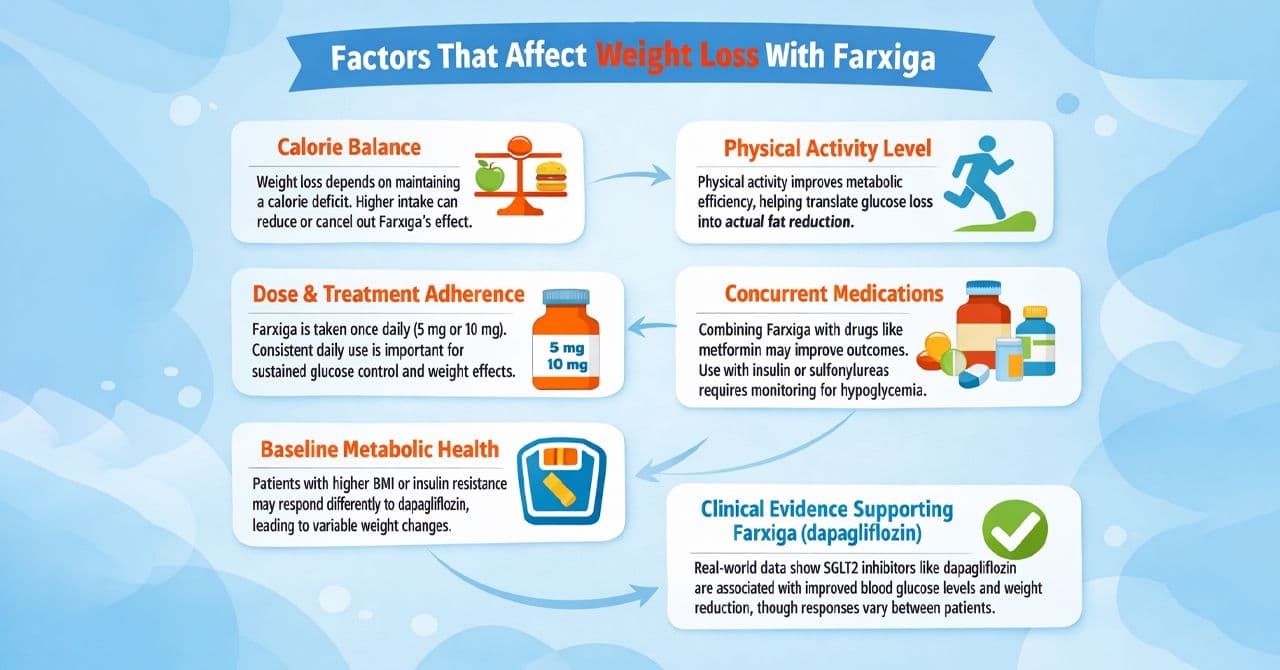
Factors That Affect Weight Loss With Farxiga
Weight loss with Farxiga (dapagliflozin) depends on individual response rather than a fixed outcome. Since its effect is indirect, several patient-specific factors influence results.
- Calorie Balance
Weight loss depends on maintaining a calorie deficit. Higher intake can reduce or cancel out Farxiga’s effect.
- Physical Activity Level
Physical activity improves metabolic efficiency, helping translate glucose loss into actual fat reduction.
- Dose and Treatment AdherenceFarxiga is taken once daily (5 mg or 10 mg). Consistent daily use is important for sustained glucose control and weight effects.
- Concurrent MedicationsCombining Farxiga with drugs like metformin may improve outcomes. Use with insulin or sulfonylureas requires monitoring for hypoglycemia.
- Baseline Metabolic HealthPatients with higher BMI or insulin resistance may respond differently to dapagliflozin, leading to variable weight changes.
- Clinical Evidence Supporting Farxiga (dapagliflozin) Real-world data show that SGLT2 inhibitors like dapagliflozin are associated with improved blood glucose levels and weight reduction, although responses vary between patients.
Farxiga Side Effects to Watch During Weight Loss
While Farxiga (dapagliflozin) can cause side effects, especially early in treatment. Most are mild, but some require prompt medical attention. Use this table to monitor your response safely.
| Category | Normal / Expected | Red Flag (Seek Medical Care) |
|---|---|---|
| Hydration | Slightly increased thirst or urination (1–2 extra times per day) | Extreme dizziness or fainting; dark‑colored urine indicating severe dehydration |
| Infection Risk | Mild urinary frequency or slight yeast irritation | Persistent burning, pelvic pain, fever, or other signs of urinary tract or yeast infection |
| Energy Levels | Mild tiredness as your body adjusts to glucose loss | Sudden extreme fatigue, confusion, or “fruity”‑smelling breath (possible ketoacidosis) |
| Stomach / GI Issues | Mild nausea when starting Farxiga | Severe abdominal pain, persistent vomiting, or inability to keep fluids down |
← Swipe to see more →
Always maintain proper hydration, monitor urinary or genital symptoms, and contact your healthcare provider immediately if any red-flag or severe symptoms appear.
Does Farxiga Cause Weight Loss?
Farxiga (dapagliflozin) can produce modest weight loss, but it is not FDA-approved specifically for weight reduction. Its primary approval is for treating Type 2 diabetes, heart failure, and chronic kidney disease. Weight loss occurs as a secondary effect because the medication blocks glucose reabsorption in the kidneys, causing excess sugar to be excreted in urine. This creates a gradual calorie deficit, which over time can lead to slow, sustained weight reduction.
Individual results vary widely depending on diet, physical activity, metabolic health, and concurrent medications. Early weight changes are often due to fluid loss, while true fat reduction develops gradually over several weeks to months. Patients should not rely on Farxiga as a primary weight-loss drug. Always consult your healthcare provider for guidance, especially if you are combining it with other diabetes medications or if you experience unexpected symptoms.
Key Takeaways: Is Farxiga Right for Your Weight Goals?
Farxiga (dapagliflozin) can help achieve modest, gradual weight loss, but it is not FDA-approved specifically for weight reduction. Its main benefits are blood sugar control, heart protection, and kidney support, with weight loss occurring as a secondary effect. Results vary depending on diet, exercise, metabolism, and concurrent medications. Early changes may reflect fluid loss, while true fat reduction develops over weeks to months. Patients should have realistic expectations and always follow medical guidance when combining Farxiga with other diabetes treatments.
Important Disclaimer
This content is provided for informational purposes only and does not replace expert medical guidance, diagnosis, or treatment. The information is based on reputable medical sources and clinical literature, but individual responses to medications may vary. Always consult an authorized healthcare professional before making treatment decisions.
Frequently Asked Questions
Farxiga is not specifically approved as a weight-loss drug. Combining it with other weight-loss medications should only be done under medical supervision to avoid interactions and monitor blood sugar safely.
If you miss a Farxiga dose, take it as soon as you remember. If it’s almost time for your next dose, skip the missed one. Do not double up. Consistent daily use is important for blood sugar control.
Yes, when used as prescribed. Rapid or excessive weight loss may indicate dehydration or ketoacidosis. Contact your healthcare provider immediately if this occurs.
Weight loss from Farxiga is gradual and secondary to glucose excretion. Stopping the medication may reverse weight changes over time, so maintaining diet and exercise is key to sustaining results.
Yes, Farxiga can lead to modest weight loss by causing the kidneys to excrete excess glucose. Typical reductions are gradual (2-5% body weight over 6 months) and vary depending on lifestyle, metabolism, and other medications.
Patients with higher baseline BMI, poor glycemic control, or insulin resistance often see more pronounced weight reduction with Farxiga. Those maintaining a consistent diet and exercise routine typically achieve better results. Note that individual responses vary widely.


