How to Prevent Zepbound Injection Site Reactions: A Complete Guide
A Zepbound injection site reaction, such as redness, itching, or swelling, is a common side effect after your weekly shot. Most reactions are mild and can be prevented with proper technique. Zepbound (tirzepatide) is given as a once-weekly subcutaneous injection, and how you prepare and inject it directly affects how your skin responds.
According to the NLM (DailyMed), injection site reactions like rash, itching, and pain are reported side effects, especially during early treatment or dose adjustments. By improving your injection routine and technique, you can reduce irritation and avoid recurring reactions.
What Do Zepbound Injection Site Reactions Look Like?
If you’re noticing changes after your shot, you’re probably wondering what a Zepbound injection site reaction actually looks like. You may notice:
- Redness or pink patches around the injection site
- Itching or skin irritation
- Mild swelling or puffiness
- A small raised bump or rash
- Slight burning or tenderness after the injection
These symptoms usually appear shortly after your injection and improve within a few days.
What Causes Zepbound Injection Site Reactions?
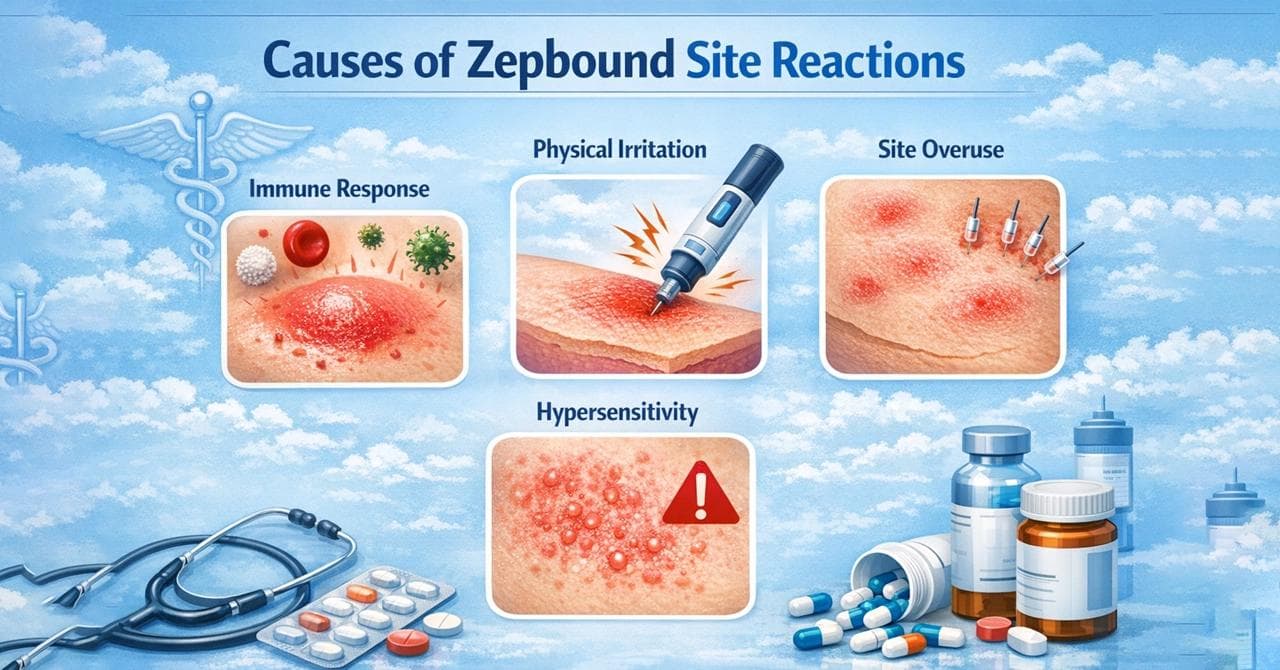
An injection site reaction can happen due to a combination of how your body responds to the medication and how the injection is given:
- Local immune response: A tirzepatide injection site reaction occurs when your body responds, causing mild inflammation, such as redness or itching.
- Injection-related irritation: The needle and injection process can temporarily irritate the skin.
- Repeated use of the same site: Injecting in the same area repeatedly can increase irritation and sensitivity.
- Hypersensitivity reactions: In some cases, delayed skin reactions like rash or itching may occur after the injection.
The MedlinePlus (NLM) states that tirzepatide is given as a subcutaneous injection into areas like the abdomen, thigh, or upper arm, and rotating injection sites is recommended to reduce reactions.
What Steps to Take to Prevent Zepbound Injection Site Reactions?
If you want to reduce the risk of a Zepbound injection site reaction, the key is to follow the right steps before, during, and after your injection. Small mistakes in technique are one of the biggest reasons people experience redness, itching, or swelling.
How to Prepare Before Your Zepbound Injection
- Let the medication reach room temperature before use, as cold injections can feel more irritating.
- Clean the skin at the injection site with an alcohol swab and allow it to dry completely.
- Choose a healthy injection site and avoid bruised, tender, or damaged skin.
How to Inject Zepbound Correctly
- Use proper Zepbound subcutaneous injection technique as instructed by your healthcare provider.
- Inject into fatty tissue under the skin, not into muscle.
- Keep your hand steady and apply slow, controlled pressure during the injection.
According to the CDC subcutaneous injection guidelines, proper injection technique, site selection, and hygiene help reduce skin irritation and improve medication absorption.
What to Do After Your Injection
- Do not rub or massage the injection site, as this can increase irritation.
- Use a cold compress after injection if you notice mild redness or swelling.
- Avoid tight clothing that may cause friction on the area.
These steps help reduce irritation and improve injection comfort.
Where Is the Best Place to Inject Zepbound to Avoid Reactions?
Choosing the right Zepbound injection locations can make a big difference in preventing irritation. The best place to inject Zepbound includes:
- Abdomen, at least 2 inches away from the belly button.
- Thigh, especially the front or outer area.
- Upper arm, usually given by another person.
Zepbound is injected under the skin in these areas, and changing your injection site regularly helps reduce skin irritation and improve how your body absorbs the medication.
Why Rotating Injection Sites Matters for Preventing Reactions
Even if you prefer one area, like your abdomen, injecting in the exact same spot every week increases your risk of a Zepbound injection site reaction. Rotating injection sites helps you:
- Prevent repeated stress on the same skin area.
- Reduce inflammation and irritation buildup.
- Lower the risk of Zepbound injection site swelling and discomfort.
According to findings published in NLM (PMC), repeated injections in the same location have been associated with injection-site nodules, and patients are advised to rotate sites to reduce these risks and improve outcomes.
Common Mistakes That Cause Injection Site Reactions
Injection site reactions are often linked to how the injection is performed rather than the medication itself. Small technique errors, such as injecting into the same spot repeatedly or not preparing the skin properly, can increase irritation and make reactions more noticeable.
Common triggers include injecting cold medication, not letting the alcohol dry before the shot, using already irritated or damaged skin, and rubbing the area afterward. These mistakes can lead to redness, itching, or swelling, but correcting them is one of the most effective ways to reduce and prevent these reactions over time.
When to Worry About an Injection Site Reaction
Most injection site reactions are mild and improve on their own, but certain symptoms may indicate a more serious issue that needs medical attention.
| Symptom | What It May Indicate |
|---|---|
| Redness that spreads or worsens after 48 hours | Ongoing inflammation or possible infection |
| Severe or increasing pain | Tissue irritation or improper injection response |
| Swelling that becomes significant or hard | Localized reaction or fluid buildup |
| Warmth, pus, or fever | Possible infection |
| Rash spreading beyond the injection area | Possible hypersensitivity reaction |
| Difficulty breathing, facial or throat swelling, dizziness | Serious allergic (hypersensitivity) reaction |
← Swipe to see more →
According to the NLM (DailyMed prescribing information for Zepbound), serious hypersensitivity reactions can occur and require immediate medical attention.
The Bottom Line: How serious are Zepbound injection site reactions?
Zepbound injection site reactions are common and generally mild, often presenting as redness, itching, or swelling at the injection site. In clinical data and postmarketing reports, these reactions have been identified as known side effects of tirzepatide. Most cases improve on their own with proper injection technique and basic care, such as rotating injection sites and avoiding skin irritation. However, worsening symptoms, spreading redness, or signs of infection or allergic reaction require prompt medical attention.
Frequently Asked Questions
Yes, mild injection site reactions such as redness, itching, or swelling are common and usually temporary. However, severe or worsening symptoms may require medical attention.
Use proper injection technique, rotate injection sites regularly, and avoid injecting into irritated or damaged skin. Letting the medication reach room temperature and following hygiene steps can also reduce irritation.
Redness and itching are usually caused by a mild local immune response or temporary skin irritation from the injection. This is a common and expected reaction in many patients.
Applying a cold compress, avoiding friction, and keeping the area clean can help reduce discomfort. Over-the-counter options like hydrocortisone cream or antihistamines may be used if needed, after consulting a healthcare provider.
Most injection site reactions are mild and improve within a few days. In some cases, minor irritation or small lumps may last slightly longer but typically resolve on their own without treatment.
Important Disclaimer
This blog is provided for informational purposes only and does not replace expert medical guidance, diagnosis, or treatment. The information is based on trusted sources, including the FDA and National Institutes of Health (NIH), but individual responses to medications may vary. Always consult an authorized healthcare professional before making treatment decisions.