

Is Mayonnaise Good for Diabetes? Effects, Risks, and Alternatives
When diagnosed with diabetes, it often means questioning everyday foods, even the ones that seem harmless. One such food choice is mayonnaise. It’s creamy, satisfying, and commonly used in everything from salads to sandwiches. But is Mayonnaise good for diabetes, or should you limit it?
In simple terms, Mayonnaise can be diabetes-friendly, but it’s not considered “good” unless used wisely. What matters is how it affects your blood sugar, weight, and heart health. Let’s break it down practically and simply.
“You don’t have to quit the foods you enjoy; just learn how to enjoy them wisely.”
What Is Mayonnaise Made Of?
Traditional mayonnaise is a high-fat condiment made from a few basic ingredients:
- Vegetable oil (soybean, canola, olive, or avocado oil)
- Egg yolks
- Vinegar or lemon juice
- Seasonings

Nutritional Value (Per tablespoon)
| Nutrient | Amount |
|---|---|
| Calories | 90-100 kcal |
| Carbohydrates | 0-1 g |
| Sugar | 0 g |
| Fat | 10 g |
| Protein | 0 g |
← Swipe to see more →
How Is This Related to Diabetes?
- Very low carbs: It has a minimal direct impact on blood sugar.
- High fat: It can affect weight and heart health.
Does Mayonnaise Raise Blood Sugar Levels?
Mayonnaise has a glycemic index (GI) of around 0–5, meaning it has almost no direct impact on blood sugar levels. This is because it contains little to no carbohydrates. However, its real effect depends on what it is eaten with. For example, pairing mayonnaise with white bread can still raise blood glucose due to the bread, not the mayo itself. The fat in mayonnaise may even slightly slow carbohydrate absorption, leading to a more gradual rise in blood sugar.
Is Mayonnaise Good for Diabetes?
This is where nuance matters. Mayonnaise is often misunderstood in a diabetes diet; it’s neither inherently “good” nor strictly harmful. Its impact depends on how it’s used, the quality of the ingredients, and the overall composition of the meal.
When Mayonnaise Can Fit into a Diabetes-Friendly Diet
You can include it in small amounts if you’re mindful. Because it is extremely low in carbohydrates, it does not directly raise blood glucose levels. When paired with balanced meals, it may even support better glycemic control.
It tends to work well when:
- Used in small, controlled portions
- Combined with fiber-rich and protein-based foods like vegetables, eggs, or lean meats
- Manufactured with healthier fats, such as olive oil or avocado oil
In mixed meals, the fat in Mayonnaise may help slow gastric emptying, leading to more gradual carbohydrate absorption and fewer sudden blood sugar spikes. It can also improve satiety, helping reduce overeating, an important factor in long-term diabetes management.
When Mayonnaise May Work Against Your Health Goals
Even though it’s low in carbs, Mayonnaise is still a calorie-dense, high-fat food. When used excessively or paired with less healthy foods, it can negatively impact metabolic health over time.
Consume large or frequent portions:
- Consumed in large or frequent portions, leading to excess calorie intake.
- Paired with refined carbohydrates such as white bread, fries, or processed snacks.
- Made with highly processed oils, added sugars, or artificial ingredients.
These patterns can lead to weight gain and reduced insulin sensitivity, both of which are key concerns in diabetes care.
How Mayonnaise Affects Blood Sugar
When it comes to managing diabetes, one of the top things people consider is how food impacts blood sugar levels. Surprisingly, Mayonnaise is not a major concern in this area.
In fact, some clinical studies suggest that the fat in Mayonnaise can actually slow down the digestion of carbohydrates eaten in the same meal (like the bread in a sandwich), which may lead to a more gradual rise in blood sugar rather than a sharp peak.
Heart Health and Diabetes Risk
People with diabetes are at a higher risk of cardiovascular disease. While mayonnaise is low in carbohydrates, it is high in fats, which can impact cholesterol levels depending on the type of oil used. Diets high in saturated fats may increase LDL (bad cholesterol), while unsaturated fats from olive or avocado oil may support heart health, which is especially important since people with diabetes have a higher risk of cardiovascular disease.
How to Eat Mayonnaise Without Spiking Blood Sugar
If you are diabetic and still crave Mayonnaise, pair it with healthy options that won’t harm your health.
Pair With Protein
- Grilled chicken
- Eggs
- Chicken salad
- Vegetables
- Lettuce wrap
- Beans
Real Meal Examples
- White bread + mayo + processed meat → blood sugar spike
- Whole grain bread + grilled chicken + thin mayo → balanced
- Lettuce wrap + egg + avocado mayo → low-carb option
- Tuna + Greek yogurt + small mayo mix → protein-rich, stable glucose
It will help stabilize your blood sugar.
Avoid the Intake of Refined Carbs
Skip consuming white bread, processed wraps, and sugary sauces; rather, choose whole-grain breads and lettuce wraps.
Use it for An Additional Flavour Booster
- Add a thin layer instead of heavy spreads
- Mix with yogurt or mustard to reduce the quantity
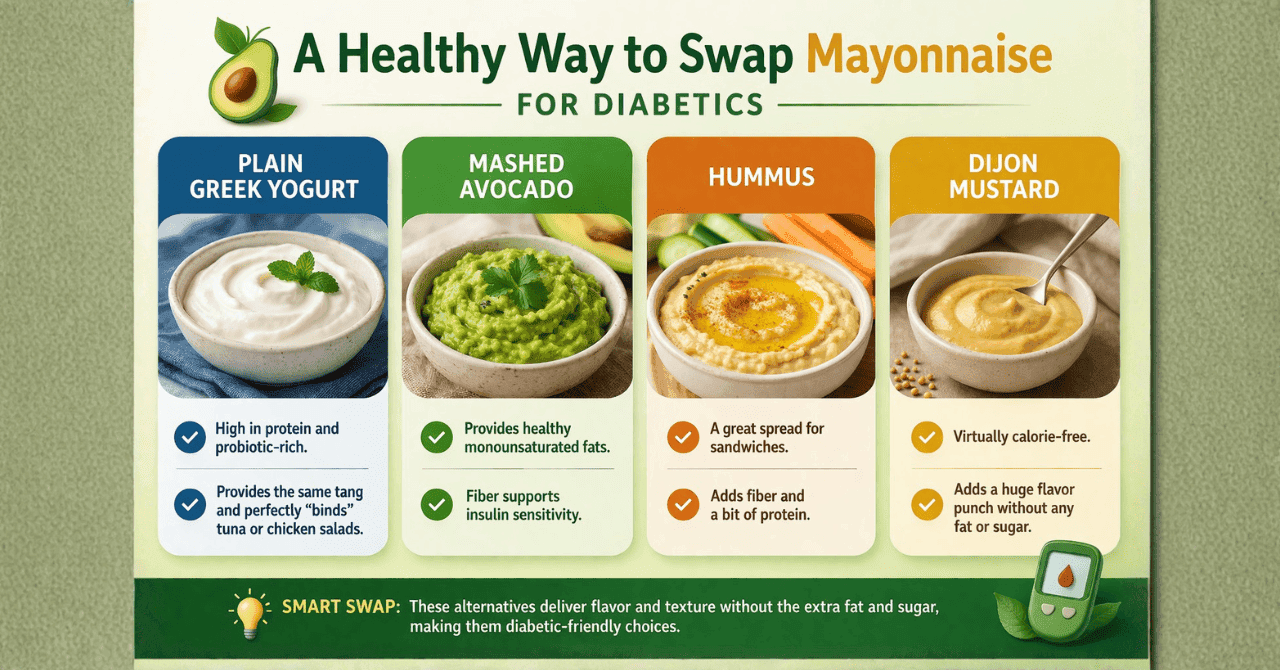
A Healthy Way to Swap Mayonnaise for Diabetics
If you want the creaminess without the calorie density of traditional mayo, try these diabetic-friendly swaps:
- Plain Greek Yogurt: High in protein and probiotic-rich. It provides the same tang and perfectly "binds" tuna or chicken salads.
- Mashed Avocado: Provides healthy monounsaturated fats and fiber, which support insulin sensitivity.
- Hummus: A great spread for sandwiches that adds fiber and a bit of protein.
- Dijon Mustard: Virtually calorie-free and adds a huge flavor punch without any fat or sugar.
Best Mayonnaise Options for Diabetes (What to Choose)
Choosing the right Mayonnaise makes a difference. Not all mayos are created equal.
- Olive Oil Mayonnaise
- Avocado oil Mayonnaise
- Sugar-free Mayonnaise
- Homemade Mayonnaise
What Labels Should You Look For?
It is crucial to look for the following essential labels on Mayonnaise:
- 0g added sugar
- No hydrogenated oils
- Lower sodium levels
- Simple ingredient list
Types of Mayonnaise You Should Avoid
Some mayo options seem healthier, but they are counter to your health goals.
- Low-fat mayo
- Flavored mayo
- Highly processed brands
Expert-Backed Tips for Including Mayonnaise in a Diabetic Diet
- You should always read nutrition labels carefully before buying Mayonnaise.
- Always choose Mayonnaise made with healthy oils (olive/avocado).
- Avoid combining mayo with processed carbs.
- Stick to portion control consistently to avoid excess sugar intake.
- Regularly monitor your individual blood sugar response.
According to dietary guidance from the American Diabetes Association, low-carbohydrate foods have minimal direct impact on blood glucose levels. Overall diet quality, fat intake, and calorie balance still play a crucial role in long-term diabetes management.
Is Mayonnaise Good for Type 2 Diabetes?
Yes, individuals with type 2 diabetes can consume Mayonnaise, but in a moderate portion.
For people with type 2 diabetes:
- Mayonnaise doesn’t raise glucose
- It can fit into a low-carb diet
- It must be balanced with overall calorie intake
People with diabetes should focus only on whole diet patterns, not just one ingredient.
Who Should Limit Mayonnaise Intake?
While Mayonnaise can easily fit into a diabetes-diet plan, certain individuals should be more cautious:
- Those who are trying to lose weight due to its high calorie density
- People with high cholesterol or those at risk of heart disease
- Individuals are advised to follow low-fat diets for medical reasons
The Final Call on Mayonnaise Is a Good Choice for Diabetes
So, is Mayonnaise good for diabetes? Mayonnaise can be part of a diabetes-friendly diet because it is low in carbohydrates and does not directly raise blood sugar levels. This makes it a better alternative to high-sugar condiments when managing blood glucose. However, while Mayonnaise does not significantly raise blood sugar due to its very low carbohydrate content, it is a diabetes-friendly condiment when used in moderation. However, because it is high in calories and fat, excessive intake may affect weight and heart health. Choosing healthier oil-based versions and pairing them with balanced meals is key to safely including them in a diabetes diet.
Medical Disclaimer: The above content is for informational purposes only and does not replace professional medical advice. Always consult a licensed healthcare provider before starting or changing your medications.
Frequently Asked Questions
Mayonnaise is lower in carbs than butter and doesn’t affect blood sugar, but both are high in fat. Healthier oils in mayo may offer a slight advantage if used moderately.
Yes, people with diabetes can eat mayonnaise daily, but only in small portions. Since it is high in calories and fat, excessive intake may contribute to weight gain, which can impact blood sugar control over time.
Yes, people with diabetes can eat homemade Mayonnaise because it can be a better option, as the ingredients are in your control. It allows you to avoid added sugars, unhealthy oils, and preservatives commonly found in processed versions.
No, Mayonnaise does not typically spike insulin levels because it contains very little to no carbohydrates. However, consuming it with high-carb foods may influence overall blood sugar and insulin response.


