Malarone Side Effects: How Long They Last and What to Do
Malarone (atovaquone/proguanil) is a widely used medication for preventing and treating malaria, especially for travelers visiting high-risk areas. It is generally considered well-tolerated, but like any medication, it can cause side effects. The most commonly reported symptoms include nausea, headache, stomach pain, and, sometimes, vivid dreams, particularly during the first few days as the body adjusts to the medicine.
In most cases, these symptoms are temporary and do not require stopping the treatment. Most Malarone side effects begin to fade within 12 to 48 hours after the final dose. By following simple administration tips, such as taking the pill with a fatty meal or milk, you may significantly reduce discomfort and focus on your travels safely.
Common Malarone Side Effects and How Long They Last
According to the Centers for Disease Control and Prevention (CDC), Malarone is often the preferred antimalarial because its side effects are typically less severe than alternatives like Mefloquine. Most symptoms are mild and occur during the initial adjustment period to the active ingredients, atovaquone and proguanil.
Common Side Effects of Malarone
The most frequently reported side effects of Malarone include:
- Gastrointestinal Issues: Nausea, abdominal pain, & diarrhea are the most frequent complaints.
- Neurological Symptoms: Headaches, dizziness, and "vivid dreams" are commonly reported.
- Physical Reactions: Fatigue, loss of appetite, or a mild skin rash.
How Long Do Malarone Side Effects Last?
The duration of these symptoms depends on whether you are still taking the medication or have completed your course:
- Initial phase (Days 1-3): Side effects are usually most intense during the first 2-3 days of treatment as the body adapts to the chemical compounds.
- During Continued Use: Mild symptoms may improve in some individuals over the first week, even while treatment continues.
- After the Last Dose: Because Malarone leaves the system relatively quickly, most side effects resolve within 24 to 48 hours after stopping this medication.
Serious Malarone Side Effects (When to Seek Medical Help)
The CDC notes that severe reactions to Malarone (atovaquone/proguanil) are rare but require urgent medical attention if they occur.
1. Severe Allergic Reactions (Anaphylaxis)
Seek emergency care if you experience:
- Swelling of the tongue, face, lips, or throat.
- Difficulty breathing or severe chest tightness.
- Hives or a rapidly spreading, itchy skin rash.
2. Serious Skin Reactions
Rarely, Malarone can trigger severe skin conditions. Seek help for:
- Blistering or peeling skin, especially around the mouth, nose, or eyes.
- A rash accompanied by fever or flu-like symptoms (this could indicate a serious systemic reaction).
3. Liver Dysfunction
Watch for signs that the medication is affecting your liver:
- Jaundice: Yellowing of the whites of the eyes or skin.
- Dark-colored urine or pale stools.
- Persistent pain in the upper right side of your abdomen.
4. Psychological or Neurological Symptoms
While "vivid dreams" are common, the following are serious:
- Severe confusion or hallucinations.
- Intense mood changes, such as sudden anxiety or depression.
- Seizures or fainting spells.
5. Blood Disorders (Rare)
Monitor for signs of decreased blood cell counts:
- Unusual bruising or bleeding (e.g., nosebleeds or bleeding gums).
- Extreme pale skin and profound weakness.
When to Seek Immediate Help: If any of these symptoms occur, seek urgent medical attention immediately. Your healthcare provider should decide whether to continue or stop the medication and whether an alternative antimalarial is needed to maintain protection against malaria.
How Long Do Malarone Side Effects Last After Stopping the Medication?
Malarone side effects usually stop shortly after the medication is discontinued, as the drug is cleared from the body relatively quickly. Unlike many other antimalarials, it does not remain in the system for an extended period, which is why lingering symptoms are uncommon.
Why Malarone Side Effects Stop Quickly After Leaving the Body
According to the National Center for Biotechnology Information (NCBI), Malarone has a short elimination profile:
- Proguanil is eliminated rapidly, with levels dropping within about a day, leading to a quick reduction in related side effects.
- Atovaquone has a longer elimination time of about 2-3 days, but its levels still decline steadily after stopping, reducing its effects quickly.
Malarone Clinical Insight: Because both components clear the body relatively quickly, Malarone is not associated with long-term or permanent side effects after a standard course of use. This is consistent with clinical safety summaries reported in pharmacology references such as NCBI drug monographs.

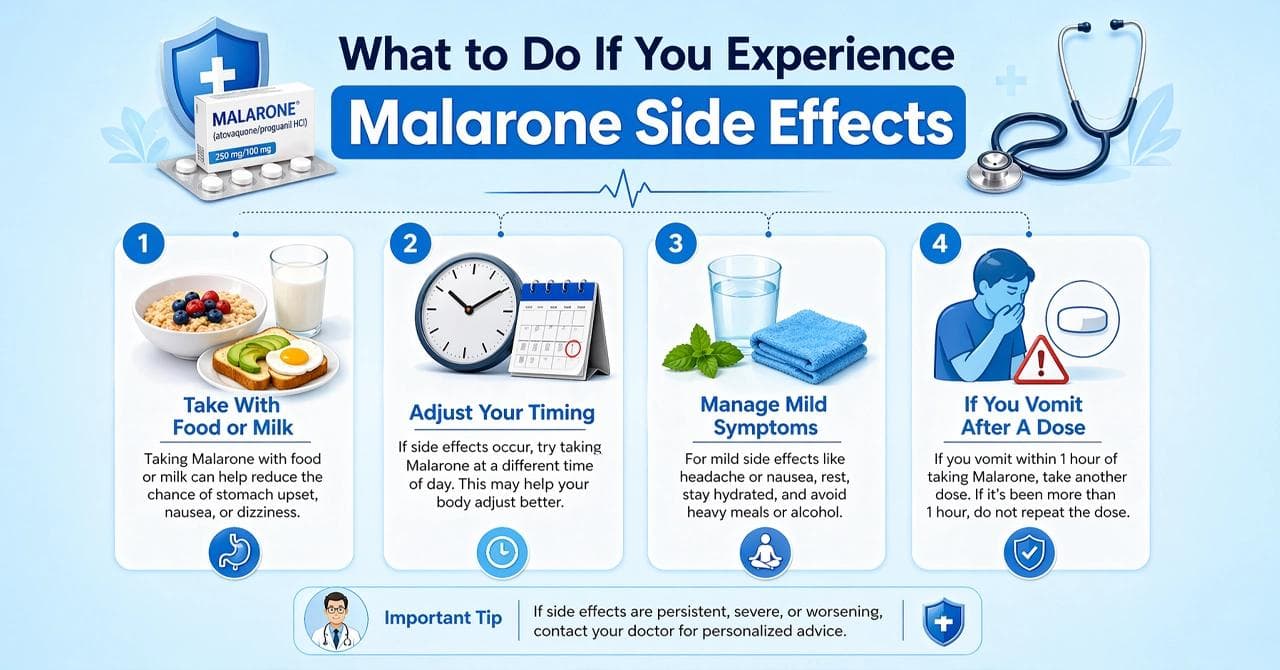
What to Do If You Experience Malarone Side Effects
If you develop mild Malarone side effects, they can usually be managed with simple adjustments while continuing your malaria protection. The goal is to reduce discomfort without interrupting the medication unless advised by a doctor or healthcare professional.
1. Take With Food or Milk
Always take Malarone with food or a milky drink, as this improves absorption and helps reduce stomach-related side effects such as abdominal discomfort.
2. Adjust Your Timing
- According to CDC prescribing guidance, taking the medication at the same time each day, ideally in the evening, may reduce daytime side effects such as nausea or dizziness.
- For Vivid Dreams or Insomnia: As noted in travel medicine protocols, if Malarone affects your sleep, take your dose with breakfast in the morning. This allows the drug’s peak concentration to pass during the day, reducing the likelihood of sleep disturbances at night.
3. Manage Mild Symptoms
- Rest if you feel tired or dizzy
- Stay well-hydrated
- Eat light meals if stomach upset occurs
4. If You Vomit After a Dose
If vomiting occurs within 1 hour of taking the dose, the full dose should generally be repeated to ensure proper protection.
Who Is More Likely to Experience Malarone Side Effects?
Most healthy travelers tolerate the FDA-approved Malarone well, but the risk of side effects increases in people with underlying health conditions or those taking higher therapeutic doses.
1. People Taking Higher Treatment Doses
Side effects are more frequent in malaria treatment (higher dose for 3 days) compared to prevention. The higher concentration can increase nausea, headache, and stomach discomfort.
2. People with Reduced Kidney Function
Because part of the drug (especially proguanil metabolites) is cleared through the kidneys, reduced kidney function can slow elimination, leading to stronger or longer-lasting side effects.
3. People Taking Interacting Medicines
Some drugs can change how Malarone behaves in the body:
- Rifampin: May reduce atovaquone blood levels, potentially reducing the effectiveness of Malarone.
- Warfarin: May increase anticoagulant effect (INR), which can raise the risk of bruising or bleeding.
4. People Who Are More Sensitive to Medication Effects
Some individuals naturally experience stronger reactions, such as nausea or vivid dreams, even at standard preventive doses. This is related to individual sensitivity rather than disease.
5. Children or Low-Body-Weight Patients
Because dosing is weight-adjusted, incorrect or borderline dosing in low-weight individuals can sometimes lead to more noticeable side effects.
6. Women who are Pregnant or Breastfeeding
Use during pregnancy or breastfeeding should be guided by a healthcare provider. The CDC notes that Malarone is generally not recommended for pregnant women unless the risk of malaria outweighs the risk of the medication.
Is Malarone Safe for Long-Term Use or Travel?
Yes. Malarone (atovaquone/proguanil) is FDA-approved for both short-term and extended malaria prevention. Clinical data from the U.S. Centers for Disease Control and Prevention and the NCBI indicate that it can be safely used for continuous malaria prophylaxis for up to approximately 1 year in appropriate candidates.
Research indicates that Malarone does not show cumulative toxicity with prolonged use, meaning side effects do not typically increase over time in healthy individuals. It is also considered well-tolerated during extended travel when taken as prescribed, with no evidence of long-term organ damage from standard preventive use.
For effective protection, it must be continued for 7 days after leaving a malaria-risk area, as recommended by the CDC. If someone is staying in a malaria-risk area for longer than 12 months, a travel medicine specialist may reassess the prevention plan. They may also suggest alternative options if there are additional medical risk factors.
Final Verdict: How to Manage Malarone Side Effects Safely
Malarone remains one of the most reliable and well-tolerated options for malaria prevention. Most side effects are mild and self-limiting, typically resolving within the first few days of treatment or shortly after the final dose. Taking it with food or milk and following a consistent dosing schedule can help reduce discomfort. Serious reactions are rare but require immediate medical attention. With proper use and awareness of warning signs, Malarone provides effective protection, allowing safe and confident travel in malaria-risk regions.
Frequently Asked Questions
The most common side effects of Malarone include nausea, stomach pain, diarrhea, headache, dizziness, fatigue, and sometimes vivid dreams. These symptoms are usually mild and occur during the early adjustment period.
Taking Malarone with food or a milky drink, staying well hydrated, and taking it at the same time each day can significantly reduce side effects. Mild symptoms usually improve without stopping the medication.
Yes. Malarone tablets should be taken with food or a milky drink, as this improves absorption and helps reduce nausea and stomach upset.
Yes, in some cases. Medicines like rifampin may reduce its effectiveness, while blood thinners such as warfarin may increase its effect. Always inform your doctor or pharmacist about any medications you are taking before starting Malarone.
Medical Disclaimer
This content is for informational purposes only and does not constitute medical advice. Malarone use and side effects may vary based on individual health conditions. Always consult a licensed healthcare provider or travel medicine specialist before starting, stopping, or changing any malaria prevention or treatment medication.