Mounjaro Lower Back Pain: Why It Happens and When to Worry
Key Takeaways
1. Wegovy can cost more than $1,000 per month before savings.
2. NovoCare Pharmacy lists self-pay Wegovy options from $149 to $399 per month, depending on form, dose, and eligibility.
3. HSA/FSA reimbursement may apply when treatment is for a physician-diagnosed disease.
4. Compounded GLP-1 products are not FDA-approved and carry safety and dosing concerns.
5. Medicare GLP-1 Bridge may offer $50 monthly access for eligible Part D beneficiaries from July 1, 2026.
Mounjaro lower back pain is one of those complaints that catches patients off guard. The medication’s official side effect profile focuses heavily on gastrointestinal issues, so new back pain on Mounjaro can feel unexplained and confusing. Several medically plausible mechanisms may explain why some patients experience lower back pain during treatment. This article breaks down the mechanisms behind it, the warning signs that need urgent attention, and what you can actually do about it.
Mounjaro Lower Back Pain: The Gap Between Clinical Data and Real-World Reports
Mounjaro's (tirzepatide) clinical trials don't list back pain among the primary Mounjaro side effects affecting the back or musculoskeletal system. That's the official record. Yet post-marketing reports, patient forums, and clinician observations suggest that some people experience new or worsening lumbar discomfort during treatment.
So why the disconnect? Clinical trials track direct pharmacological effects. They're not always designed to capture the cascade of physical changes that follow rapid weight loss. The back pain reported by some patients during Mounjaro treatment appears to be an indirect consequence of what the drug does exceptionally well: stripping away significant body weight in a short period. Indirect doesn't mean imaginary. It means the mechanism is one step removed, and understanding that step is what helps you manage it.

Rapid Weight Loss Reshapes Your Body's Mechanics
Your spine has spent years adapting to a specific body weight and distribution. When that weight drops quickly, the adaptation doesn't happen overnight. That's the posture shift reality most patients aren't warned about.
Excess abdominal weight pulls the spine forward, creating a particular lumbar curve. As that weight disappears, the center of gravity shifts. Changes in posture and body mechanics may temporarily increase stress on the muscles supporting the lumbar spine. The recalibration period creates real biomechanical stress on the lower back. Ligaments, tendons, and stabilizing muscles that aren't yet conditioned for the new frame bear the brunt of it.
This is comparable to changing the load on a suspension bridge without adjusting the tension in the cables. The structure still holds, but there's strain in places that weren't strained before. For some patients, these posture-related changes improve as the body adapts to weight loss. The lumbar region tends to feel it most because it's the fulcrum of the whole system.
Muscle Loss: The Hidden Cost of Fast Weight Reduction
Here's a number worth sitting with: according to a body-composition substudy of the SURMOUNT-1 trial, fat mass decreased by 33.9% over 72 weeks on tirzepatide, but muscle mass dropped by 10.9% as well. Across the broader research, approximately 25% of the total weight lost on Mounjaro is lean tissue, not fat. Some studies suggest this figure can reach as high as 39%, according to data reported by Sword Health.
That lean tissue loss includes core and gluteal muscles. Both are foundational to spinal stability. Weak glutes shift load onto the lower back. A deconditioned core fails to protect the lumbar spine during everyday movement. The result is muscle strain that builds gradually, often presenting as a dull ache that gets worse with sitting or standing for extended periods.
This isn't a reason to avoid the medication. It's a reason to treat resistance training and protein intake as non-negotiable parts of the treatment plan, not optional add-ons. Tirzepatide back issues tied to muscle deconditioning are largely preventable with the right support structure in place.
Gastrointestinal Side Effects and Referred Pain
Mounjaro's GI side effect profile is well-documented. In clinical trials, nausea was reported by 31% of patients, diarrhea by 23%, vomiting by 12%, and constipation by 5%. These aren't minor inconveniences for everyone who experiences them.
When the gut is in distress, the surrounding muscles tighten, and this tension can radiate. Constipation in particular creates sustained abdominal pressure that refers pain to the lower back through shared nerve pathways. The spine isn't causing the problem; rather, it's the digestive system, yet the back receives the signal.
Dehydration compounds this. GI side effects drive fluid loss, and inadequate hydration leads to muscle cramps, general soreness, and, in more serious cases, acute kidney injury that produces flank pain easily mistaken for lumbar discomfort. Staying ahead of fluid loss isn't just about comfort; it's about keeping the kidneys and muscles functioning properly while the body adjusts to the medication.
Red Flags: When Back Pain Signals a Serious Condition
Most Mounjaro-related back pain is manageable due to an identifiable indirect cause, but some isn't, and knowing the difference is crucial.
Severe or persistent back pain paired with intense stomach pain, nausea, vomiting, or fever should not be attributed to posture shifts or muscle loss. These symptom combinations may indicate pancreatitis or gallbladder problems, both of which require immediate medical evaluation. Acute gallbladder disease occurred in approximately 0.5% of participants in Mounjaro users during clinical trials, according to WebMD's review of trial data. That's not a vanishingly rare event.
Pain that escalates rather than stabilizes, or that sits in the flank rather than the lumbar muscles, also warrants a call to your doctor rather than a wait-and-see approach. When in doubt, rule out the serious causes first.
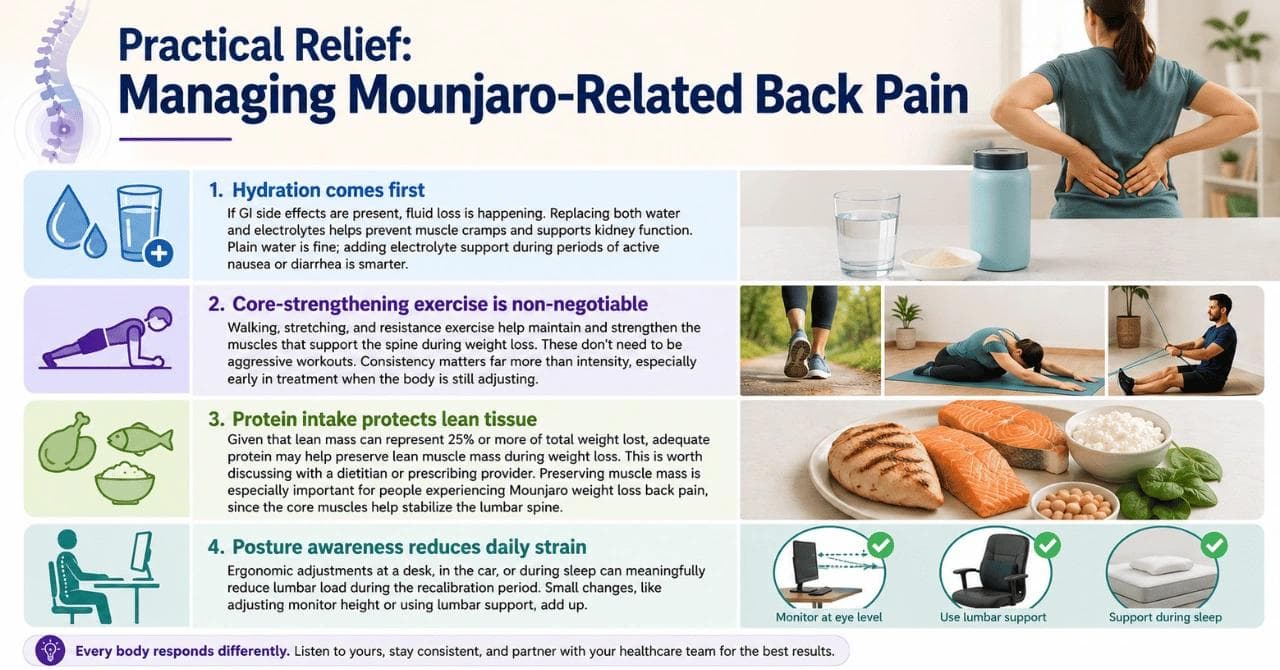
Practical Relief: Managing Mounjaro-Related Back Pain
Many cases of Mounjaro-related lower back pain improve with supportive measures and targeted interventions. None of them is complicated.
Hydration comes first
If GI side effects are present, fluid loss is happening. Replacing both water and electrolytes helps prevent muscle cramps and supports kidney function. Plain water is fine; adding electrolyte support during periods of active nausea or diarrhea is smarter.
Core-strengthening exercise is non-negotiable
Walking, stretching, and resistance exercise help maintain and strengthen the muscles that support the spine during weight loss. These don't need to be aggressive workouts. Consistency matters far more than intensity, especially early in treatment when the body is still adjusting.
Protein intake protects lean tissue
Given that lean mass can represent 25% or more of total weight lost, adequate protein may help preserve lean muscle mass during weight loss. This is worth discussing with a dietitian or prescribing provider. Preserving muscle mass is especially important for people experiencing Mounjaro weight loss back pain, since the core muscles help stabilize the lumbar spine.
Posture awareness reduces daily strain
Ergonomic adjustments at a desk, in the car, or during sleep can meaningfully reduce lumbar load during the recalibration period. Small changes, like adjusting monitor height or using lumbar support, add up.
If you're sourcing your medication and want to explore savings options, prescription drug coupons can help reduce costs while you stay consistent with treatment.
Bottom Line: Most Mounjaro Lower Back Pain Is Temporary
Most cases of Mounjaro lower back pain are indirect rather than a direct side effect of tirzepatide. Rapid weight loss, muscle loss, posture changes, and GI side effects can all contribute to temporary discomfort. Staying hydrated, maintaining core strength, and getting enough protein can often help. However, severe back pain with symptoms like fever, vomiting, or intense abdominal pain requires prompt medical evaluation to rule out serious complications.
Frequently Asked Questions
Mounjaro's official clinical data doesn't list back pain as a common direct side effect. However, post-marketing safety reports have included cases of back pain while taking Mounjaro, although it isn't considered a common direct drug effect. In rare cases, severe back pain paired with fever, vomiting, or intense stomach pain may signal pancreatitis or gallbladder disease, which requires immediate medical attention.
Staying hydrated is the first priority, especially if GI side effects are driving fluid loss. Beyond that, low-impact exercise focused on core and gluteal strength, adequate protein intake to preserve muscle mass, and posture adjustments in daily routines all address the underlying indirect causes. If pain is severe, persistent, or accompanied by other concerning symptoms, see a doctor rather than managing it at home.
Officially, no. Back pain doesn't appear in Mounjaro's primary side effect profile, which is dominated by GI complaints like nausea, diarrhea, and constipation. Musculoskeletal symptoms, including lumbar discomfort, have been described in post-marketing reports and patient experiences and are generally considered indirect effects of rapid weight loss rather than a direct pharmacological action of tirzepatide.
Disclaimer
This article summarizes current research on Mounjaro-related lower back pain and should not be considered a substitute for professional medical consultation. Side effects vary significantly between individuals, and some back pain symptoms can indicate serious conditions that need prompt evaluation. Before adjusting your treatment approach or if you're experiencing severe or worsening symptoms, talk to your prescribing doctor or pharmacist.