Ozempic Long-Term Cost for 5 Years: What Patients Should Expect to Pay?
Key Takeaways
- Total cost depends on insurance coverage, dosage, and treatment duration.
- Ozempic lifetime cost considerations can become important during extended treatment.
- Long-term use often leads to steady, cumulative expenses.
- Patients on Ozempic maintenance long term may adjust dosage under medical supervision.
- No generic version keeps overall pricing consistently high.
- Medical supervision is important for safe and effective long-term use.
- Insurance and pharmacy options can significantly impact out-of-pocket costs.
Key Takeaways:
Ozempic Long-Term Cost for 5 Years is a growing concern for many patients using semaglutide as a long-term treatment for type 2 diabetes or chronic weight management. Because therapy may continue for years, many patients want to understand the potential long-term financial impact. Based on current U.S. retail pricing, uninsured costs can become substantial over time, especially without consistent insurance coverage.
What Is the Ozempic Long-Term Cost for 5 Years of Use?
The cost of Ozempic over 5 years can vary by dosage and coverage. The breakdown below shows estimated expenses in the United States without insurance.
| Time Period | Estimated Cost (Without Insurance) | |
|---|---|---|
| Monthly | $1,000 - $1,200+ | |
| Yearly | $12,000 - $14,400+ | |
| 5 Years | $60,000 - $72,000+ |
← Swipe to see more →
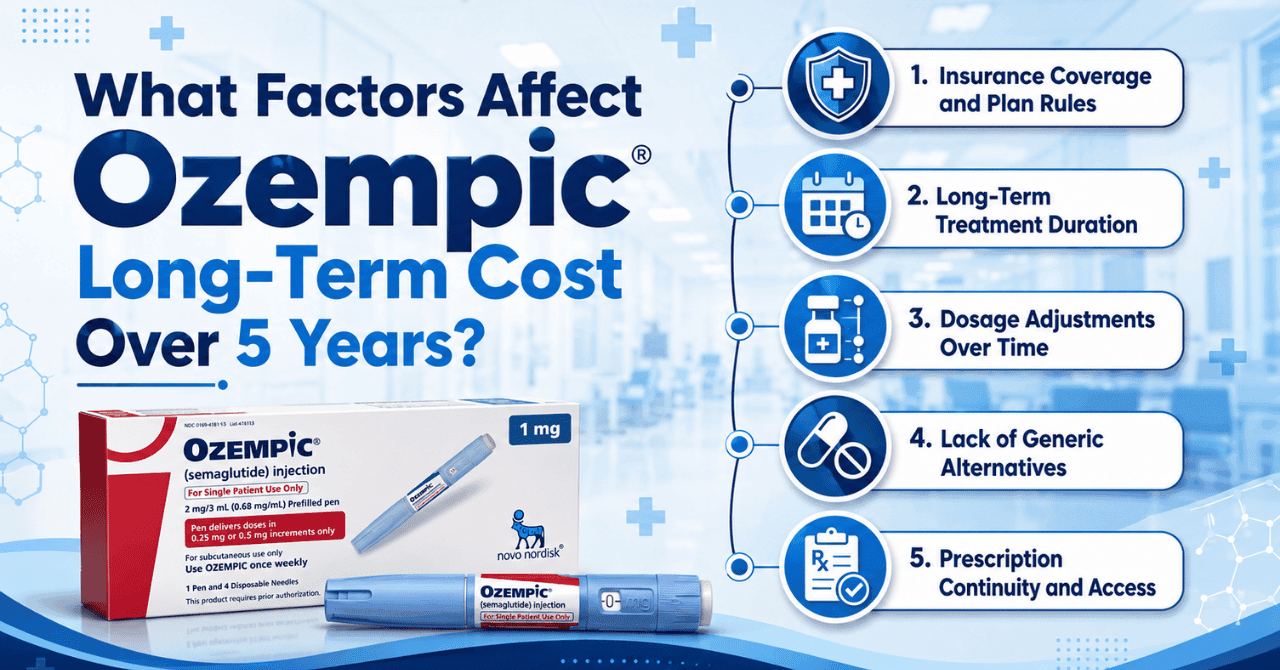
What Factors Affect Ozempic Long-Term Cost Over 5 Years?
The long-term cost of Ozempic over 5 years is influenced by medical, financial, and coverage factors. Since it is a chronic therapy, patients often remain on treatment for extended periods, which makes understanding factors like insurance coverage and access particularly important. Let's explore these key factors, starting with insurance coverage and plan rules.
Insurance Coverage and Plan Rules
Insurance coverage plays a major role in determining out-of-pocket costs. Some plans may cover Ozempic for type 2 diabetes, while others may not include it for weight management use. Coverage terms can also change over time, affecting long-term affordability.
Long-Term Treatment Duration
Ozempic is typically used as a long-term therapy. Clinical research on GLP-1 medications shows that sustained use is often required to maintain results. This extended duration naturally increases total cost over time.
Dosage Adjustments Over Time
Treatment often follows a titration schedule, and the maintenance dose depends on therapeutic response.
Lack of Generic Alternatives
Currently, Ozempic does not have a widely available generic equivalent. This means the branded formulation dictates pricing, which can keep costs consistently high over time.
Prescription Continuity and Access
Interruptions in treatment, delays in refills, or changes in prescribing plans can also influence total long-term cost. Delayed refills, insurance authorization issues, or treatment interruptions may affect overall yearly medication expenses.
How to Reduce Ozempic Cost Safely Over 5 Years?
Reducing the cost of Ozempic over a five-year period requires a careful balance between affordability and medical safety. Since Ozempic is a long-term prescription medication, any cost-saving approach should always be guided by a licensed healthcare provider.
Use Prescribed Dosage Efficiently
Doctors may adjust the dose based on response. In some cases, a lower maintenance dose may help manage long-term costs under medical supervision.
Compare Authorized Pharmacy Pricing and Refill Options
Longer refill cycles or different authorized pharmacies may help reduce overall dispensing costs, depending on prescription rules.
Review Insurance Coverage Regularly
Insurance coverage can change over time. Regular review helps ensure you are using all available benefits for long-term treatment.
Focus on Medical Supervision for Long-Term Use
All dose changes or long-term decisions should be made under the guidance of a healthcare provider for safety.
Research from PubMed Central supports the importance of ongoing medical supervision in long-term treatment outcomes.
Final Thoughts on Ozempic Long-Term Costs
Ozempic is commonly used as a long-term treatment for type 2 diabetes and, in some cases, chronic weight management. While many patients continue therapy to maintain blood sugar or weight-related outcomes, long-term treatment can become financially significant without consistent insurance coverage.
Based on current retail pricing, the five-year cost of Ozempic may become substantial for uninsured patients. Overall affordability depends on factors such as dosage level, insurance benefits, pharmacy pricing, and treatment duration.
Patients considering long-term Ozempic therapy should evaluate both the potential medical benefits and the long-term financial commitment with guidance from a licensed healthcare provider.
Frequently Asked Questions
Based on estimated monthly retail pricing, long-term Ozempic expenses for uninsured patients may exceed $60,000 over five years. Actual cost depends on monthly pricing, dosage, and treatment duration.
The long-term monthly cost of Ozempic in the United States is estimated to be $1,000-$1,200+. Prices may vary based on pharmacy and insurance coverage.
Ozempic does not usually become cheaper automatically over time. Costs depend on market pricing, insurance coverage, and prescription plans.
Yes, insurance can significantly reduce out-of-pocket expenses for eligible patients. Coverage depends on the specific plan and approved medical use.
Long-term use is common under medical supervision for chronic conditions. Patients should follow a doctor’s guidance for safety and monitoring.
Do not stop the medication without consulting your healthcare professional. Some patients may experience weight rebound after stopping treatment.
Disclaimer
This blog is provided for informational purposes only and does not replace professional medical, insurance, financial, or prescription guidance. Pricing, availability, prescription requirements, shipping timelines, and coverage policies may change over time and vary by provider, pharmacy source, and insurance plan. Always consult your healthcare provider, insurance representative, or official government resources before making medication or coverage decisions.