Ozempic Medicare Coverage in 2026: What Patients Need to Know Before Switching
Key Takeaways
- Medicare Part D covers Ozempic for type 2 diabetes, cardiovascular risk reduction, and chronic kidney disease prevention, but not for weight loss alone.
- The new Medicare GLP-1 Bridge program (starting July 1, 2026) covers Wegovy and Zepbound at $50/month, but Ozempic for weight loss is excluded.
- The 2026 annual out-of-pocket cap for Part D is $2,100, which provides real financial relief for high-cost drugs like semaglutide.
- Prior authorization is required by most plans, so your doctor will need to document your diagnosis before coverage kicks in.
Ozempic medicare coverage in 2026 hinges on one critical question: Why is your doctor prescribing it? Medicare Part D covers semaglutide for FDA-approved indications like type 2 diabetes and cardiovascular risk reduction, but federal law bars coverage when it's prescribed purely for weight loss. That single distinction shapes everything, from your monthly copay to whether you qualify for new pilot programs launching this year.
Ozempic Coverage Under Medicare Part D in 2026: The Critical Distinction
Medicare Part D plans cover Ozempic when it's prescribed for an FDA-approved indication: managing type 2 diabetes, reducing cardiovascular risk, or preventing chronic kidney disease progression. But if a doctor writes the prescription exclusively for weight loss, federal law prohibits standard Part D from covering it.
Most plans also require prior authorization before they will approve a single fill. Your doctor needs to submit documentation confirming your diagnosis, typically a type 2 diabetes diagnosis, before the pharmacy can process a covered claim. Skipping this step is one of the most common reasons patients hit unexpected coverage gaps during a Medicare transition period.
Your plan's formulary tier matters too. Ozempic can land on different tiers depending on the prescription drug plan you choose, and that placement directly affects your coinsurance percentage. Checking the formulary before you enroll, not after, saves a lot of frustration.

The Medicare GLP-1 Bridge Program: What It Covers and What It Doesn't
Starting July 1, 2026, a temporary pilot called the Medicare GLP-1 Bridge program will give eligible Part D and Medicare Advantage members access to select GLP-1 weight-loss medications at a flat $50 monthly copay. The program runs through December 31, 2027. Wegovy and Zepbound are included. Ozempic for weight loss is not. That distinction matters for patients who use Wegovy or Zepbound specifically for obesity treatment, since this program could cut their monthly costs substantially compared to paying out of pocket.
There's a catch, though. The Bridge program operates completely outside standard Part D rules. That $50 copay doesn't count toward your annual out-of-pocket maximum. Low-Income Subsidies (Extra Help) don't apply to it either. So if you're a lower-income beneficiary counting on Extra Help to reduce costs, the Bridge program won't layer on top of those savings the way standard Part D benefits do.
Calculating Your Ozempic Cost With Medicare in 2026
Without insurance, Ozempic's list price runs approximately $935 to $1,028 per month. That number makes the Medicare Part D structure feel much more appealing for anyone with a covered diagnosis.
Here's how the cost math typically works. The 2026 Part D deductible can reach up to $615. After you clear that deductible, you generally pay coinsurance (often around 25%) on covered drugs until you hit the annual out-of-pocket cap. In 2026, that cap is $2,100. Once you cross it, Medicare covers 100% of your remaining covered prescription costs for the rest of the year. For a drug priced near $1,000 monthly, hitting that cap is a realistic scenario, and crossing it is meaningful relief.
One more tool worth knowing: the Medicare Prescription Payment Plan (MPPP), available since January 1, 2025, lets Part D beneficiaries spread their out-of-pocket costs, including the deductible, into smaller monthly installments across the year. If a $615 deductible hitting in January is a budget problem, the MPPP gives you a way to smooth that out.
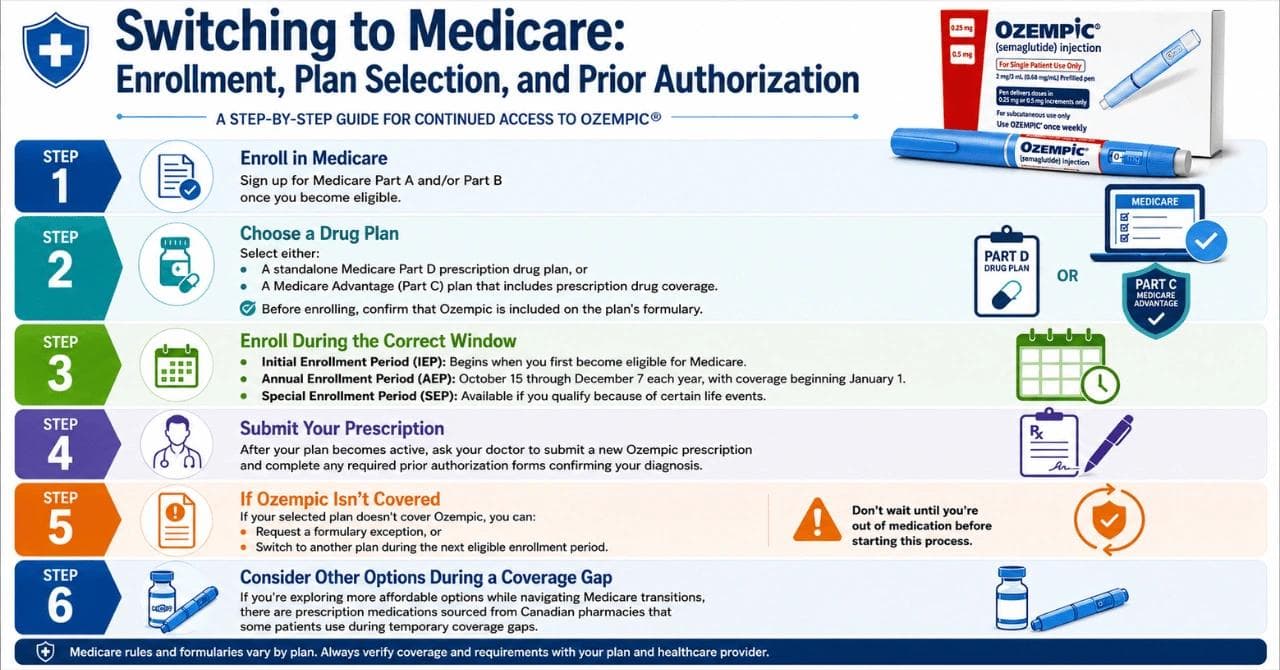
Switching to Medicare: Enrollment, Plan Selection, and Prior Authorization
If you're transitioning to Medicare and need Ozempic coverage, follow these steps:
Step 1: Enroll in MedicareSign up for Medicare Part A and/or Part B once you become eligible.
Step 2: Choose a Drug PlanSelect either:
- A standalone Medicare Part D prescription drug plan, or
- A Medicare Advantage (Part C) plan that includes prescription drug coverage.
Before enrolling, confirm that Ozempic is included on the plan's formulary.
Step 3: Enroll During the Correct Window
- Initial Enrollment Period (IEP): Begins when you first become eligible for Medicare.
- Annual Enrollment Period (AEP): October 15 through December 7 each year, with coverage beginning January 1.
- Special Enrollment Period (SEP): Available if you qualify because of certain life events.
Step 4: Submit Your PrescriptionAfter your plan becomes active, ask your doctor to submit a new Ozempic prescription and complete any required prior authorization forms confirming your diagnosis.
Step 5: If Ozempic Isn't CoveredIf your selected plan doesn't cover Ozempic, you can:
- Request a formulary exception, or
- Switch to another plan during the next eligible enrollment period.
Don't wait until you're out of medication before starting this process.
Step 6: Consider Other Options During a Coverage GapIf you're exploring more affordable options while navigating Medicare transitions, Polar Bear Meds offers Ozempic sourced from Canadian pharmacies, which some patients use during temporary coverage gaps.
Cost-Saving Strategies Beyond Standard Part D Coverage
Novo Nordisk's Patient Assistance Program no longer provides Ozempic to most Medicare Part D beneficiaries as of 2026, since plans generally cover it for approved indications. That's a change from prior years, and it catches some patients off guard.
If your income and resources fall below certain thresholds, Extra Help (also called Low-Income Subsidies) can significantly reduce your deductible and copayments under standard Part D. That's worth checking before assuming you'll pay full cost-sharing amounts.
For patients whose Ozempic use isn't covered under standard Part D (weight loss without a qualifying diagnosis), discount prescription cards may offer some savings. Just know that once you're actively using a Part D plan, those discount cards generally can't be combined with it for the same prescription.
Looking further out, policy discussions around expanding GLP-1 agonist coverage for obesity treatment under Medicare are ongoing. The BALANCE Model and similar proposals could change the landscape, though no permanent expansion is in effect yet. Browsing medication savings options in the meantime is a practical interim step for patients managing medication costs out of pocket.
Key Takeaways: Planning Your Medicare Transition
Ozempic medicare coverage in 2026 is real and meaningful, but only if your prescription is tied to a qualifying diagnosis. Diabetes, cardiovascular risk reduction, and chronic kidney disease prevention all clear the bar. Weight loss alone doesn't, under standard Part D rules.
Before you enroll in any Medicare Part D plan, check the formulary. Confirm that Ozempic is listed, note which tier it falls under, and verify the prior authorization requirements. The $2,100 annual out-of-pocket cap provides genuine financial protection for users of semaglutide Medicare plans once they're enrolled correctly.
If you're managing costs during the transition, tools like the MPPP, Extra Help, and Canadian pharmacy options are all worth understanding before you need them. The earlier you start these conversations with your doctor and your plan, the smoother the switch will be.
Frequently Asked Questions
Yes, Medicare Part D covers Ozempic in 2026, but only for FDA-approved indications like type 2 diabetes, cardiovascular risk reduction, and chronic kidney disease prevention. Federal law prohibits standard Part D coverage when semaglutide is prescribed solely for weight loss. The new Medicare GLP-1 Bridge program does cover select weight-loss GLP-1s (Wegovy and Zepbound) at a $50 monthly copay starting July 1, 2026, but Ozempic for weight loss is not included in that program.
Costs vary by plan, but the 2026 Part D deductible can reach up to $615, after which most beneficiaries pay coinsurance (often around 25%) on covered drugs. That cost-sharing stops once you hit the $2,100 annual out-of-pocket cap, at which point Medicare covers 100% of remaining covered prescription costs for the year. The Medicare Prescription Payment Plan lets you spread those costs into smaller monthly installments if a large upfront deductible is a hardship.
Start by confirming you're enrolled in Medicare Part A and/or Part B, then select a Part D plan or Medicare Advantage plan that lists Ozempic on its formulary. Enroll during your Initial Enrollment Period, the Annual Enrollment Period (October 15 through December 7), or a qualifying Special Enrollment Period. Your doctor will need to submit a new prescription along with prior authorization documentation confirming your diagnosis, so loop them in early to avoid a gap in coverage.
Disclaimer
This article covers how Medicare Part D works for Ozempic based on current rules and program information, but it's not medical or financial advice. Coverage details, formulary placements, and program eligibility can change, and your specific situation may differ from the general scenarios described here. Talk to your doctor about your diagnosis and prescription, and contact Medicare or a licensed insurance counselor to confirm how your plan covers semaglutide before making any enrollment decisions.