Ozempic Tax-Smart Funding in 2026: Solo 401(k) + HSA Stack for US Patients
Key Takeaways
1. Ozempic qualifies as a pre-tax medical expense when prescribed for a diagnosed condition like Type 2 diabetes.
2. HSAs offer a triple-tax advantage: contributions reduce your AGI, funds grow tax-free, and withdrawals for qualified medical expenses cost nothing in taxes.
3. A Solo 401(k) loan may provide short-term cash flow, if the plan allows loans. IRS rules generally limit loans to the lesser of $50,000 or 50% of the vested balance, and missed repayments can create tax consequences.
4. Combining both accounts may reduce taxable income, depending on your eligibility, income, contribution limits, and state tax rules.
Ozempic tax-smart funding isn't just a nice idea for self-employed individuals, it's a financial necessity. Without employer-sponsored benefits, you're absorbing the full cost of this diabetes medication and weight loss drug on your own. This guide explains how a health savings account and Solo 401(k) may work together to lower your after-tax cost. Used correctly, these accounts can help some self-employed patients fund Ozempic tax-free through qualified medical expenses.
Why Ozempic Costs Matter for Self-Employed Individuals
The numbers are stark. Without insurance, Ozempic typically runs between $1,000 and $1,200 per month, which adds up to more than $12,000 per year, according to pricing data from Plexus Diagnostics. That's a serious line item for anyone running their own business.
Self-employed workers don't have an HR department setting up group health plans or employer contributions to offset those costs. Every dollar spent on medication comes directly out of business or personal income. Tax-advantaged accounts exist precisely for situations like this: an HSA and a Solo 401(k), used strategically, can turn a painful out-of-pocket expense into a pre-tax one. That changes the math considerably. The goal is not only to pay the pharmacy bill, but to create real Ozempic cost savings after taxes.
Is Ozempic a Qualified Medical Expense? What the IRS Actually Requires
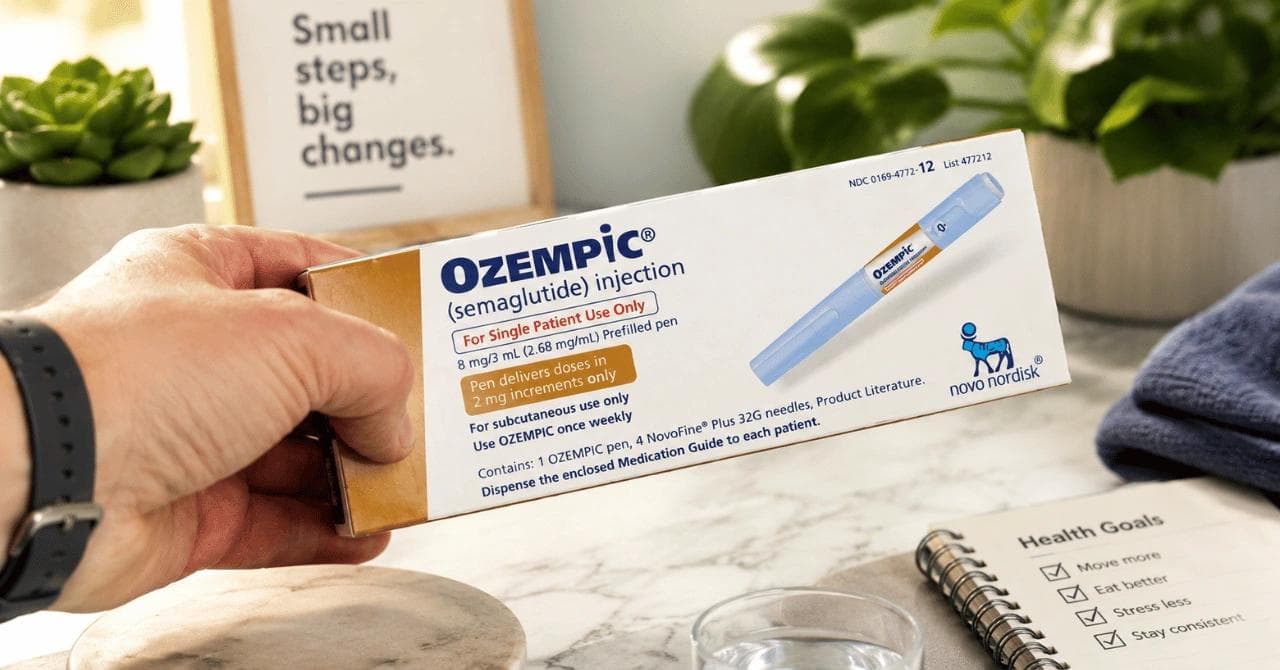
The IRS threshold is a diagnosed medical condition, not just a prescription. If Ozempic is prescribed to treat Type 2 diabetes, it qualifies as a medical expense straightforwardly, with no extra documentation required beyond the prescription itself, according to guidelines summarized by InjectCo.
For weight management use, HSA eligibility depends on medical necessity and documentation. A Letter of Medical Necessity can help show that Ozempic or semaglutide is being used for a diagnosed condition, not general wellness.
Compounded semaglutide follows identical eligibility rules. It must be prescribed for a qualifying condition by a licensed physician. The practical upside is cost: compounded formulations typically range from $179 to $229 per month, according to TrimRx, making them a meaningful alternative to brand-name Ozempic for patients managing their own costs.
HSA for Ozempic: The Triple-Tax Advantage for Self-Employed Patients
An HSA for Ozempic may help eligible self-employed patients cover qualified medical expenses with pre-tax dollars. It works in three layers, each one reducing your tax burden. Contributions go in pre-tax, reducing your adjusted gross income before you even file. Funds grow tax-free inside the account. Withdrawals for qualified medical expenses come out completely tax-free. That's the triple-tax advantage described by Plexus Diagnostics, and it's genuinely hard to beat.
For self-employed individuals, the HSA benefit is even sharper. Contributions are an above-the-line deduction, meaning they reduce AGI without requiring you to itemize, according to Tripla. That matters because roughly 90% of taxpayers take the standard deduction, as noted by Keeper Tax, so itemizing isn't realistic for most people.
The 2026 contribution limits are $4,400 for individuals and $8,750 for families, according to Tripla. A self-employed contractor earning $120,000 who maxes out a family HSA can save approximately $3,000 annually in income taxes, assuming a combined 24% federal and 7% state tax rate. That's real money. To contribute to an HSA at all, you must be enrolled in a High-Deductible Health Plan (HDHP).
If you're looking for Ozempic (semaglutide) at lower cost while you build your tax strategy, sourcing through a licensed Canadian pharmacy is one option many U.S. patients explore.
Solo 401(k) Medical Expenses: Direct Withdrawals vs. Loans
Solo 401(k) medical expenses require careful planning because Solo 401(k) rules differ for loans and withdrawals. Hardship distributions are permitted for medical care costs covering the account holder, their spouse, dependents, or beneficiaries, according to Solo401k.com. The catch is real: those withdrawals trigger ordinary income tax, and if you're under age 59.5, you'll also face a 10% early withdrawal penalty. That's a costly route unless you're in a genuine financial emergency.
The smarter option for most people is a Solo 401(k) loan. You can borrow the lesser of $50,000 or 50% of your account balance, according to IRA Financial. Repay it within five years and there are no taxes, no penalties. The money cycles back into your retirement account, and your long-term investment position stays intact. For covering ongoing Ozempic payments, this approach preserves retirement wealth while freeing up immediate cash flow.
On the contribution side, 2026 limits allow up to $24,500 in employee deferrals, plus an employer contribution of up to 25% of compensation, according to Empower. That's a substantial amount of income you can shelter from taxes each year, building reserves that serve both retirement planning and potential future medical needs.
Stacking HSA and Solo 401(k): Tax Benefits, Deductions, and Retirement Planning
Solo 401k HSA Ozempic planning works best when both accounts run in parallel, each doing a different job. The HSA handles recurring, immediate Ozempic costs with its triple-tax structure. The Solo 401(k) builds retirement savings and, through its loan provision, doubles as an accessible emergency backup. The HSA focuses on pre-tax medical expenses, while the Solo 401(k) supports tax deductions and retirement planning.
Maxing both accounts in 2026 creates multiple simultaneous tax deductions, shielding income from both federal and state taxes. The HSA doesn't have a "use it or lose it" problem if you're investing the balance rather than spending it immediately. Unused funds can be invested for growth inside the account, compounding tax-free over time. That's a long-term investment benefit most people overlook.
This dual-account approach solves a real problem for self-employed individuals: balancing present-day medication affordability against long-term financial security. You don't have to choose one or the other.
Documentation, Tax Deductions, and IRS Regulations to Check
Good recordkeeping isn't optional here. Because IRS regulations can be strict, keep proof for all qualified medical expenses. HSA claims require proof that a withdrawal was used for a qualified medical expense. That means keeping prescriptions, pharmacy receipts, and any LMN on file.
The itemized deduction route for medical expenses is worth understanding, even if most people won't use it. The 7.5% AGI threshold means you can only deduct medical expenses exceeding 7.5% of your adjusted gross income. With the 2026 standard deduction at $16,100 for single filers and $32,200 for married filing jointly, and roughly 90% of taxpayers taking the standard deduction according to Keeper Tax, the HSA is the superior route for nearly everyone.
Avoid early Solo 401(k) withdrawals unless you've exhausted other options. The loan provision exists for exactly this reason. And given that IRS regulations around HSA eligibility and qualified medical expenses can shift, working with a tax professional who understands self-employed accounts is worth the cost. You can also explore medication coupons and savings programs to reduce out-of-pocket costs before tapping tax-advantaged accounts at all.
Final Thoughts: Build Your Ozempic Tax-Smart Funding Plan
Ozempic tax-smart funding starts with planning early. For self-employed US patients, an HSA-eligible HDHP may help cover qualified medical expenses with pre-tax dollars. A Solo 401(k) can also support a wider tax strategy by reducing taxable income when used correctly.
Keep your prescription, receipts, and plan documents organized. If Ozempic is prescribed for weight management, ask a tax advisor whether a Letter of Medical Necessity is needed before using HSA funds. If US retail prices feel too high, compare legitimate options, including insurance appeals, manufacturer programs, Marketplace plan changes, and licensed Canadian pharmacy pricing.
Frequently Asked Questions
Yes. A Solo 401(k) can be accessed for medical care costs through either a hardship distribution or a loan. Hardship withdrawals are subject to ordinary income tax and a 10% early withdrawal penalty if you're under age 59½, so a loan is generally the better choice. Loans allow you to borrow up to the lesser of $50,000 or 50% of your account balance and repay over five years with no tax or penalty consequences.
An HSA provides the triple-tax advantage: pre-tax contributions reduce your AGI (an above-the-line deduction for self-employed individuals), funds grow tax-free inside the account, and withdrawals for qualified medical expenses like Ozempic are entirely tax-free. For a self-employed person earning $120,000 who maxes out a family HSA, the annual income tax savings can reach approximately $3,000, according to Tripla. That's the most tax-efficient way to fund ongoing semaglutide costs.
Yes, when prescribed by a licensed physician to treat a diagnosed condition such as Type 2 diabetes. For weight management use, a Letter of Medical Necessity is strongly recommended to document medical necessity and support HSA or FSA eligibility. Compounded semaglutide follows the same rules and can also qualify as a pre-tax medical expense under the same conditions, according to TrimRx.
Disclaimer
This article covers general information about tax-advantaged accounts and Ozempic cost strategies, but it's not medical or financial advice. HSA eligibility, Solo 401(k) rules, and IRS regulations around qualified medical expenses can vary based on your specific situation. Talk to a licensed tax professional and your prescribing physician before making decisions about account contributions, withdrawals, or medication choices.