Switching From Compounded Tirzepatide to Zepbound: Real Cost Impact for USA Patients
Key Takeaways
1. Switching from compounded tirzepatide to Zepbound can change monthly costs.
2. Zepbound pricing depends on insurance, pharmacy access, and self-pay options.
3. Compounded tirzepatide access changed after FDA shortage updates.
4. Prior authorization or step therapy may affect Zepbound coverage.
5. Patients should compare copays, cash price, shipping, and refill timing.
6. Pharmacy verification matters because compounded GLP-1 drugs are not FDA-approved.
Switching from Compounded Tirzepatide to Zepbound can change monthly costs for USA patients. Zepbound list prices may exceed $1,000 per fill, while some patients also compare the Zepbound Canada price 2026 when reviewing long-term treatment expenses. Published self-pay vial prices may start near $299 monthly. Insurance can reduce costs, but coverage rules vary. Prior authorization may also delay access. This guide explains the real cost impact before switching.
Why Are USA Patients Switching from Compounded Tirzepatide to Zepbound?
Many USA patients are switching because compounded tirzepatide access has changed. According to the Food and Drug Administration, the tirzepatide injection shortage is resolved. The FDA drug shortage list now shows tirzepatide’s shortage resolved status. This created a limited grace period for compounders. The FDA also warned against unauthorized copies of approved drugs. The agency also clarified its policies for compounders.
This matters because compounded access can change after shortage updates. The FDA also noted limits on copying commercially available drugs. These rules can affect compounded tirzepatide availability, refill planning, and pricing.
Insurance is another major reason behind the switch. Compounded medications are often paid for fully out of pocket. Zepbound coverage depends on each Zepbound insurance plan. Prior authorization and step therapy may still apply. Patients are also comparing pharmacy fulfillment differences Zepbound follows standard branded medication dispensing channels. Compounded tirzepatide fulfillment can vary by pharmacy. That difference can affect refills, shipping, and total monthly cost.
How Much Does It Cost to Switch from Compounded Tirzepatide to Zepbound?
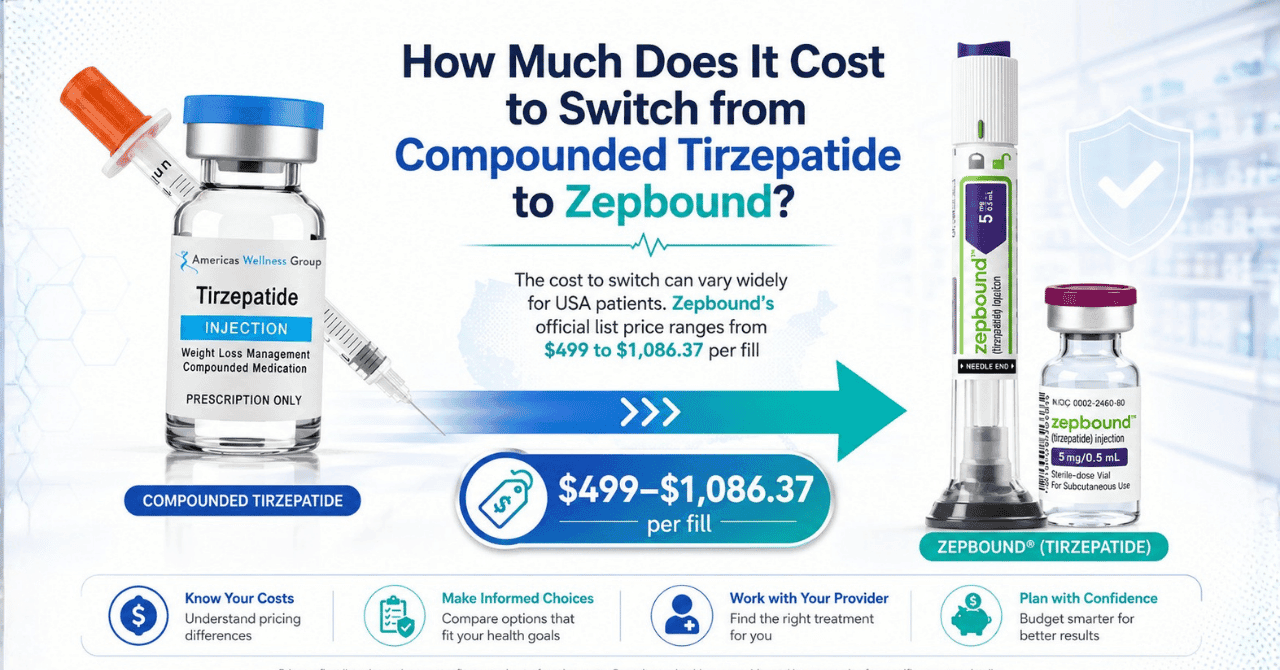
The cost to switch can vary widely for USA patients. Zepbound’s official list price ranges from $499 to $1,086.37 per fill. Actual costs depend on insurance, pharmacy pricing, and savings eligibility. Some insured patients may pay much less after plan approval. However, prior authorization can delay coverage decisions. Patients without coverage may face higher monthly out-of-pocket costs.
Compounded tirzepatide is often paid outside insurance. That makes the switch a payment-method change too. Patients may move from direct cash pricing to insurance billing. They may also compare self-pay options when coverage is denied. Before switching, patients should compare the full monthly cost. This includes copays, cash price, shipping, and refill timing.
Compounded Tirzepatide vs. Zepbound Cost: What USA Patients Should Compare
USA patients should compare total monthly cost, not only the listed price. A Zepbound vs. compounded tirzepatide cost review should stay cost-only. Compounded tirzepatide pricing can vary by pharmacy. Zepbound pricing depends on insurance, product format, and pharmacy access. Patients should also check prescription, shipping, and refill costs before switching.
| Cost Factor | Compounded Tirzepatide | Zepbound |
|---|---|---|
| FDA approval status | Not FDA-approved as a compounded drug | FDA-approved branded medication |
| Typical payment method | Often paid out of pocket | Insurance or self-pay may apply |
| Listed monthly cost | Varies by compounding pharmacy | List price may reach $499-$1,086.37 per fill |
| Insurance coverage | Often limited or unavailable | Depends on each insurance plan |
| Prior authorization | Usually not billed through insurance | May be required by some plans |
| Refill availability | Can change after shortage updates | Depends on branded product supply |
| Fulfillment process | Varies by pharmacy | Follows branded medication channels |
| Extra costs to check | Shipping, supplies, and refill fees | Copays, shipping, and cash-pay pricing |
← Swipe to see more →
Does Insurance Cover Zepbound After Switching from Compounded Tirzepatide?
Zepbound insurance coverage depends on each patient’s prescription drug plan. Switching from compounded tirzepatide does not guarantee automatic coverage. Some plans may cover Zepbound after prior authorization approval. Others may require step therapy before covering the prescription. Some plans may exclude weight-loss medications from coverage.
Patients should check their drug formulary before switching. They should also ask about copays, deductibles, and coinsurance. These costs can change the real monthly price. Compounded tirzepatide is often paid outside of insurance.
Zepbound may move the payment process into insurance billing. That can lower costs for some patients. It can also create delays if approval is required. If coverage is denied, patients can compare other cash-pay options. The cheapest way to get Zepbound without insurance depends on the total checkout costs. They should review total costs before choosing any fulfillment route.
How Do Prescription and Pharmacy Fulfillment Change When Switching to Zepbound?
Switching to Zepbound usually requires a valid branded prescription. A compounded tirzepatide prescription may not transfer directly. The prescriber may need to issue a new prescription. The pharmacy must fill the FDA-approved branded product. This can change billing, packaging, refill timing, and availability checks.
Patients may also notice different fulfillment steps. Zepbound may be processed through insurance or cash-pay channels. Compounded tirzepatide often follows pharmacy-specific fulfillment rules. Shipping can also change after switching. Patients should check cold-chain handling, delivery timelines, and refill policies.
They should also confirm whether shipping fees affect the final cost. Before switching, patients should confirm three details. Check prescription status, pharmacy availability, and total fulfillment cost. This helps avoid surprise delays or added charges.
How Can USA Patients Safely Compare Zepbound Costs After Compounded Tirzepatide?
Start with the total payment due at checkout. The listed drug price is only one part. Check whether the pharmacy requires a valid prescription. Also confirm licensing, contact details, and refill policies. Avoid pharmacies that skip prescription checks.
Patients should compare insurance billing and cash-pay pricing separately. Copays, deductibles, and coinsurance can change the final cost. Shipping fees may also increase the monthly total. FDA says compounded GLP-1 drugs are not FDA-approved. This makes pharmacy verification important before payment.
Patients should use licensed pharmacies and check prescription requirements. Before switching, compare these cost details carefully. Review listed price, copay, shipping, refill timing, and pharmacy policies.
Final Thoughts on Switching from Compounded Tirzepatide to Zepbound Costs
Switching from compounded tirzepatide to Zepbound can change costs quickly. Some patients may see higher monthly cash prices. Others may pay less after insurance approval. The real cost depends on several factors. Insurance coverage, prior authorization, pharmacy pricing, and shipping all matter. Refill timing can also affect total monthly spending. Review all fulfillment fees before switching. They should also verify prescription rules and pharmacy policies. A careful cost review can reduce surprises after the switch.
Frequently Asked Questions
No. Zepbound is an FDA-approved branded medication. Compounded tirzepatide is prepared by a compounding pharmacy and is not FDA-approved.
Yes. Costs can change after the first fill. Deductibles, copays, pharmacy pricing, and coverage updates may affect future refills.
Patients can keep pharmacy quotes, insurance estimates, and refill receipts. These records help compare real monthly spending over time.
Patients should contact their insurer, prescriber, and pharmacy. They can confirm coverage, prescription status, availability, and final payment amount.
Disclaimer
This blog provides general information, not medical, legal, or insurance advice. Pricing, availability, prescription rules, shipping timelines, and coverage policies can change. They also vary by provider, pharmacy, and plan. Consult your healthcare provider, insurer, or official government resources before coverage decisions.