US Direct Pay Ozempic Medicare Excluded: Why You’re Not Eligible and What to Do Instead?
Key Takeaways
Key Takeaways:
1. Many US direct-pay Ozempic programs exclude Medicare patients because of federal healthcare regulations.
2. Medicare may still cover Ozempic in 2026 for type 2 diabetes under certain Part D plans.
3. Ozempic cash prices without insurance often range from $900 to $1,400 per month.
4. Prior Authorization (PA), formulary rules, and diagnosis requirements may affect Medicare coverage.
5. Some patients compare Part D plans, PAPs, or licensed Canadian pharmacies to reduce costs.
Many Americans searching for cheaper GLP-1 medications discover that “US Direct Pay Ozempic Medicare Excluded” restrictions can limit access to certain pricing programs. Medicare beneficiaries are often excluded because of federal healthcare rules tied to prescription drug pricing and coverage. Understanding these restrictions can help patients compare available Ozempic access options in 2026.
Why Do US Direct Pay Ozempic Programs Exclude Medicare Patients?
Many Americans feel confused when they see “Medicare excluded” on US direct-pay GLP-1 programs. These restrictions mainly exist because of federal healthcare regulations. Under federal anti-kickback laws, drug manufacturers cannot offer certain financial incentives to Medicare beneficiaries.
This may include copay assistance, cash-pay discounts, manufacturer-funded savings offers, and certain direct-pay pricing arrangements. These rules help prevent companies from influencing federally funded healthcare spending.
As a result, many US direct-pay Ozempic programs mainly serve uninsured or commercially insured patients. Government-funded beneficiaries are often excluded. The situation becomes more complicated with GLP-1 medications because Medicare may limit coverage when they are prescribed mainly for weight loss.
Current Medicare rules still restrict many weight-management drug benefits. Coverage often depends on diagnosis, medical necessity, Prior Authorization (PA), and individual Part D formularies.
Cash-only pricing structures create another challenge. Expenses paid outside Medicare billing systems may not count toward deductibles, annual out-of-pocket limits, or Medicare Part D spending caps. Because of these limitations, many direct-pay programs avoid Medicare beneficiaries entirely.
This lack of access for Medicare patients has also been highlighted by recent Maximum Fair Price (MFP) discussions, which have increased attention to GLP-1 affordability. Discussions about a potential Medicare GLP-1 Bridge program 2026 also increased attention to medication access. For many Medicare patients, understanding these restrictions is the first step toward finding safer and more affordable medication options.
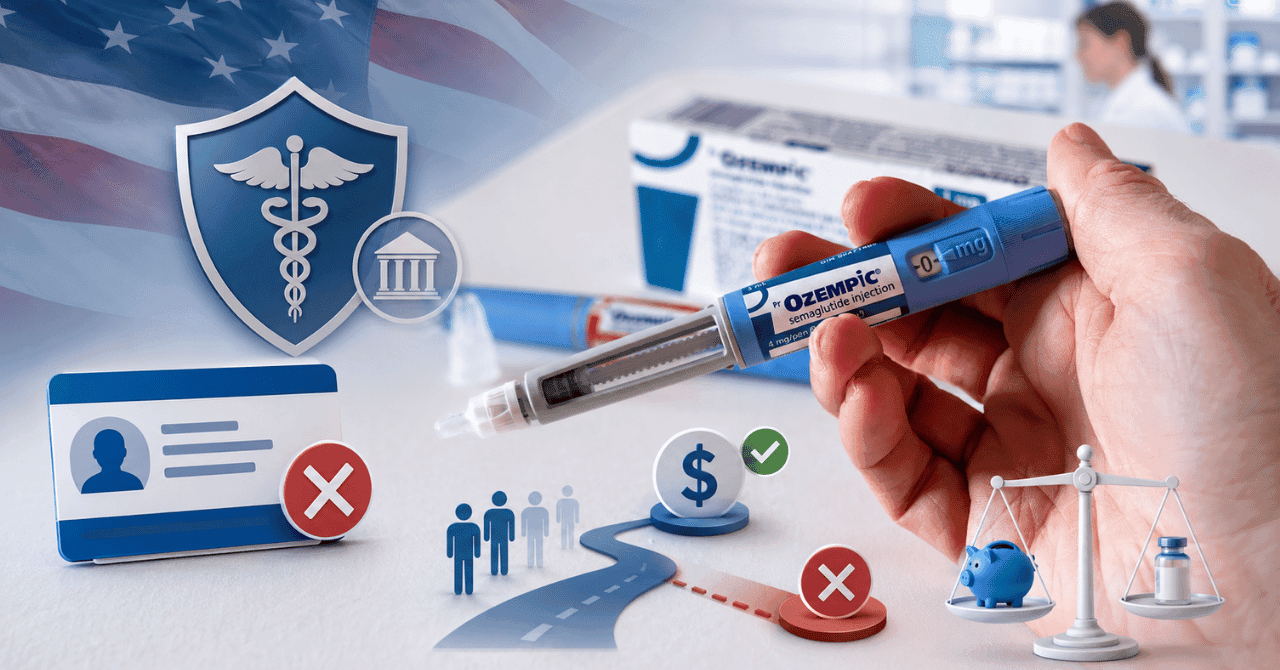
Does Medicare Cover Ozempic in 2026?
Yes, Medicare may cover Ozempic in 2026 when prescribed for type 2 diabetes under Medicare Part D plans. Many plans still require Prior Authorization (PA), formulary approval, and copays. Coverage is usually more limited for weight-loss use. This is why many Americans search, “Why does Medicare not cover Ozempic for weight loss?”
However, the temporary Medicare GLP-1 Bridge program 2026 beginning in July may improve access for some eligible beneficiaries. Coverage can still vary depending on the diagnosis, plan rules, and changes to the Maximum Fair Price (MFP) policy. Because coverage rules vary by plan, many Americans continue to search for updated Medicare Ozempic 2026 information.
Ozempic Cash Price Without Insurance 2026
The cash price of Ozempic without insurance in 2026 remains high for many Americans. Most patients pay between $900 and $1,400 per month, depending on dosage, pharmacy pricing, and location.
| Factors Affecting Ozempic Cost | Impact on Price |
|---|---|
| Dosage strength | Higher doses usually cost more |
| Pharmacy pricing | Prices vary between pharmacies |
| Insurance status | Medicare restrictions may affect savings |
| Prior Authorization (PA) | Delays or denials may increase costs |
| Formulary placement | Higher tiers may increase copays |
← Swipe to see more →
Many Medicare patients seek lower-cost GLP-1 options because manufacturer discount programs often exclude beneficiaries of government-funded insurance. Even when paying fully out of pocket, Medicare restrictions may still apply.
Some eligible patients may explore Patient Assistance Programs (PAPs) or licensed international pharmacy options to safely reduce long-term medication costs.
Strategies for Medicare Patients to Access Ozempic and Reduce Costs
Ozempic for Medicare patients may still be accessible through alternative coverage options and licensed pharmacy services. Some patients compare Medicare Part D plans during enrollment periods to find better GLP-1 coverage and lower copays. Others may qualify for Patient Assistance Programs (PAPs) depending on income and eligibility requirements.
Some Americans also explore licensed Canadian pharmacy options when US cash prices become difficult to manage. Mail-order pharmacies may help lower long-term costs for eligible patients.
Monitoring Maximum Fair Price (MFP) updates may also help patients identify future savings opportunities. Always use a valid prescription and purchase medications only from licensed pharmacies. Medicare coverage policies and GLP-1 pricing rules may change annually.
The Bottom Line on US Direct Pay Ozempic Medicare Exclusions
Many Medicare patients cannot access US direct-pay Ozempic programs because of federal pricing and coverage restrictions. However, some eligible patients explore licensed Canadian pharmacy services, such as Polar Bear Meds, for prescription access. Patients should always review Medicare coverage, compare total costs, and consult a licensed healthcare provider before purchasing medication.
Frequently Asked Questions
Many programs separate commercial discounts from government-funded healthcare plans. This helps companies comply with federal healthcare regulations.
In many cases, Medicare coverage for weight-loss medications remains limited. Coverage depends on diagnosis, plan structure, and medical necessity.
Yes. Medicare patients can still get Ozempic with a valid prescription. If US direct-pay programs exclude you, some patients choose licensed Canadian pharmacies like Polar Bear Meds for lower-cost prescription access.
Disclaimer
This article is for informational purposes only and does not provide medical or legal advice. Ozempic, semaglutide pricing, pharmacy availability, and importation policies are subject to change. Patients should consult a licensed healthcare professional before purchasing or using prescription medication.