Wegovy Restless Legs: What the Research Says and How to Manage Symptoms
Key Takeaways
- No direct causal link between Wegovy (semaglutide) and RLS exists in FDA labeling or clinical trial data.
- Indirect factors, including nutritional deficiencies and electrolyte imbalances from GI side effects, may trigger or worsen RLS symptoms.
- Patients with type 2 diabetes face a significantly higher baseline RLS risk than the general population.
- Targeted blood work and lifestyle adjustments can address most correctable causes.
Wegovy restless legs is a concern showing up more and more in patient communities, even though the official prescribing information doesn't list RLS as a recognized side effect. So what's actually going on? This article breaks down the indirect biological pathways that may explain why some semaglutide users develop leg discomfort, and what you can realistically do about it.
Wegovy Restless Legs: Separating Fact from Patient Reports
Fella Health states medical literature and FDA prescribing information establish no direct causal relationship between Wegovy and new onset RLS. That's the official position. But it doesn't tell the whole story.
Patient forums and online communities tell a different one. Some Wegovy users report developing new RLS symptoms or noticing a clear worsening of existing ones after starting treatment. These are anecdotal accounts, not clinical data. Still, they're consistent enough to take seriously.
The gap between official adverse effect lists and lived patient experience isn't unusual with newer medications. RLS affects roughly 5 to 10% of the U.S. population, so some overlap with any large patient group is statistically expected. What matters is understanding whether Wegovy is creating conditions that make RLS more likely, even if it isn't a direct cause.

Why Rapid Weight Loss Can Trigger RLS Symptoms
Significant weight loss depletes the body fast. According to Ubie Health, rapid weight loss associated with semaglutide therapy can lead to nutritional deficiencies in iron, vitamin B12, and folate, all of which are established triggers for RLS symptoms.
Iron deficiency is the most clinically actionable. When ferritin drops below 75 ng/mL or transferrin saturation falls below 20%, doctors recommend iron supplementation as a first-line intervention for RLS. That's a specific, testable threshold. Getting blood work done early matters here.
B12 and folate depletion can affect neurological function too, which is why nutritional screening should be a priority when Wegovy side effects legs symptoms emerge during treatment. Obesity treatment that works this well metabolically can sometimes outpace the body's ability to maintain micronutrient balance, and that's a gap worth closing proactively.
Gastrointestinal Side Effects and Electrolyte Imbalances
Wegovy's GI side effects are well-documented. Nausea, vomiting, and diarrhea are common, especially during dose escalation, and each one causes fluid and electrolyte losses that can quietly compound over time.
Low magnesium and potassium are particularly relevant here. These electrolytes play a direct role in muscle function, and their depletion can worsen muscle cramps and RLS-like sensations in the legs. Many patients don't connect the two.
There's another medication-related wrinkle worth knowing. Metoclopramide, an antidopaminergic antiemetic sometimes prescribed to manage Wegovy-related nausea, can pharmacologically trigger RLS. If you're taking something to control your semaglutide side effects, that medication itself could be making your leg symptoms worse. This is exactly the kind of interaction that warrants a frank conversation with your prescriber.
Type 2 Diabetes and Baseline RLS Risk
Here's a number that reframes the whole question. Patients with type 2 diabetes have a 15 to 30% prevalence of RLS, compared to 5 to 10% in the general population, according to Fella Health. That's a substantially elevated baseline risk before any medication enters the picture.
Diabetic peripheral neuropathy largely contributes to that risk. It impacts the nervous system in ways that heighten RLS susceptibility independently of any treatment. So when a patient with type 2 diabetes starts Wegovy and then develops RLS symptoms, the diagnosis question isn't straightforward.
Those new symptoms may reflect disease progression rather than a drug effect. That distinction matters for treatment decisions. Attributing everything to semaglutide could mean missing an underlying neurological issue that needs its own management.
Practical Steps to Manage RLS While Taking Wegovy
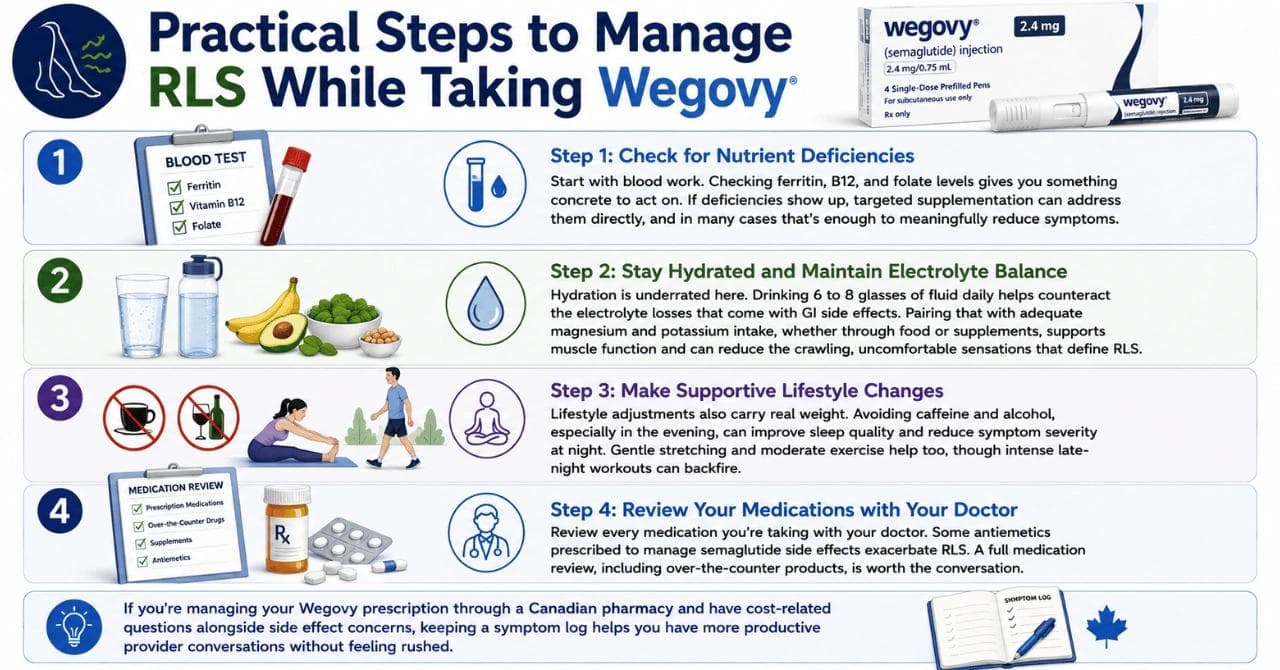
Step 1: Check for Nutrient Deficiencies Start with blood work. Checking ferritin, B12, and folate levels gives you something concrete to act on. If deficiencies show up, targeted supplementation can address them directly, and in many cases that's enough to meaningfully reduce symptoms.
Step 2: Stay Hydrated and Maintain Electrolyte Balance Hydration is underrated here. Drinking 6 to 8 glasses of fluid daily helps counteract the electrolyte losses that come with GI side effects. Pairing that with adequate magnesium and potassium intake, whether through food or supplements, supports muscle function and can reduce the crawling, uncomfortable sensations that define RLS.
Step 3: Make Supportive Lifestyle Changes Lifestyle adjustments also carry real weight. Avoiding caffeine and alcohol, especially in the evening, can improve sleep quality and reduce symptom severity at night. Gentle stretching and moderate exercise help too, though intense late-night workouts can backfire.
Step 4: Review Your Medications with Your Doctor Review every medication you're taking with your doctor. Some antiemetics prescribed to manage semaglutide side effects exacerbate RLS. A full medication review, including over-the-counter products, is worth the conversation.
When to Seek Professional Help and Treatment Options
Persistent or severe RLS warrants proper medical evaluation. Don't wait it out indefinitely. A clinician can rule out other causes, assess whether the symptoms are RLS at all, and run the bloodwork that identifies correctable deficiencies.
When lifestyle modifications and nutritional corrections aren't enough, pharmacological treatment options exist. Alpha-2-delta ligands, including gabapentin and pregabalin, are first-line medications for chronic, persistent RLS. These aren't a direct fix for a Wegovy-caused problem, but they're appropriate when symptoms are affecting sleep quality and daily quality of life.
Dose adjustment of Wegovy is another avenue. If your prescriber believes the medication's GI effects are driving significant electrolyte loss or nutritional depletion, adjusting the dose or slowing the titration schedule may reduce the indirect pressure on your system. That's a decision to make together with your provider, not alone.
For patients managing costs alongside their Wegovy prescription and related medications, exploring a licensed Canadian pharmacy can be a practical way to keep treatment affordable long-term.
Frequently Asked Questions
Fella Health states medical literature and FDA prescribing information establish no direct causal relationship between Wegovy and new onset RLS. That said, indirect factors, including iron deficiency from rapid weight loss and electrolyte imbalances from GI side effects, may create conditions that trigger or worsen symptoms. Patients with type 2 diabetes also carry a higher baseline RLS risk, meaning new symptoms could reflect an underlying condition rather than the medication itself.
The most practical starting point is a blood panel checking ferritin, B12, and folate levels, since correcting deficiencies addresses a common underlying cause. Staying well-hydrated (6 to 8 glasses daily), maintaining electrolyte balance with magnesium and potassium, and avoiding caffeine and alcohol can also reduce symptom severity. If symptoms persist despite these steps, your doctor may consider RLS-specific medications like gabapentin or review whether any co-prescribed antiemetics, such as metoclopramide, are contributing to the problem.
RLS is not listed as a recognized adverse effect of Wegovy in official prescribing information or clinical trial data. Official information documents dysaesthesia, which Wegovy users describe as tingling, burning, or pins-and-needles sensations, occurring in 5% or more. RLS affects an estimated 5 to 10% of the general U.S. population, and a recent American Academy of Sleep Medicine survey found that 13% of over 2,000 respondents reported an RLS diagnosis, so some Wegovy users will have RLS regardless of their medication.
Disclaimer
This article covers what the current research and patient reports say about Wegovy restless legs, but it's not medical advice. If you're experiencing new or worsening leg symptoms while taking semaglutide, talk to your doctor before adjusting your medication or starting any supplementation. A proper evaluation, including blood work, gives you real answers that general information simply can't.