What Are the Bad Side Effects of Amitriptyline
Amitriptyline is a tricyclic antidepressant usually prescribed for depression, nerve pain, and migraine prevention. Like many medications in this class, it may cause side effects that range from mild to more serious, especially during the first few weeks of use. Common effects include dry mouth, drowsiness, constipation, blurred vision, and dizziness, which can affect daily routine and energy levels.
Understanding “what are the bad side effects of Amitriptyline” helps you use it more safely and confidently. Most side effects are mild and temporary, but it is important to watch for rare, serious reactions such as changes in heart rhythm, confusion, or sudden mood changes. Recognizing these early can help you seek medical advice when needed and manage treatment more effectively.
Common Side Effects of Amitriptyline You Should Expect
Amitriptyline's "anticholinergic" nature means it blocks certain nerve impulses, affecting multiple body systems. These symptoms are most intense during the first two weeks of treatment. Below is a list of the most common side effects of Amitriptyline:
Physical and Digestive Side Effects
- Dry mouth: Very common due to reduced saliva
- Constipation: Slower bowel movements
- Blurred vision: Temporary focus issues
- Weight gain: Linked to increased appetite
- Difficulty urinating: Trouble passing urine in some cases
Neurological Side Effects of Amitriptyline
- Drowsiness or fatigue: Often significant, especially at the start
- Dizziness: Particularly when standing up (orthostatic hypotension)
- Sweating: Increased sweating or night sweats
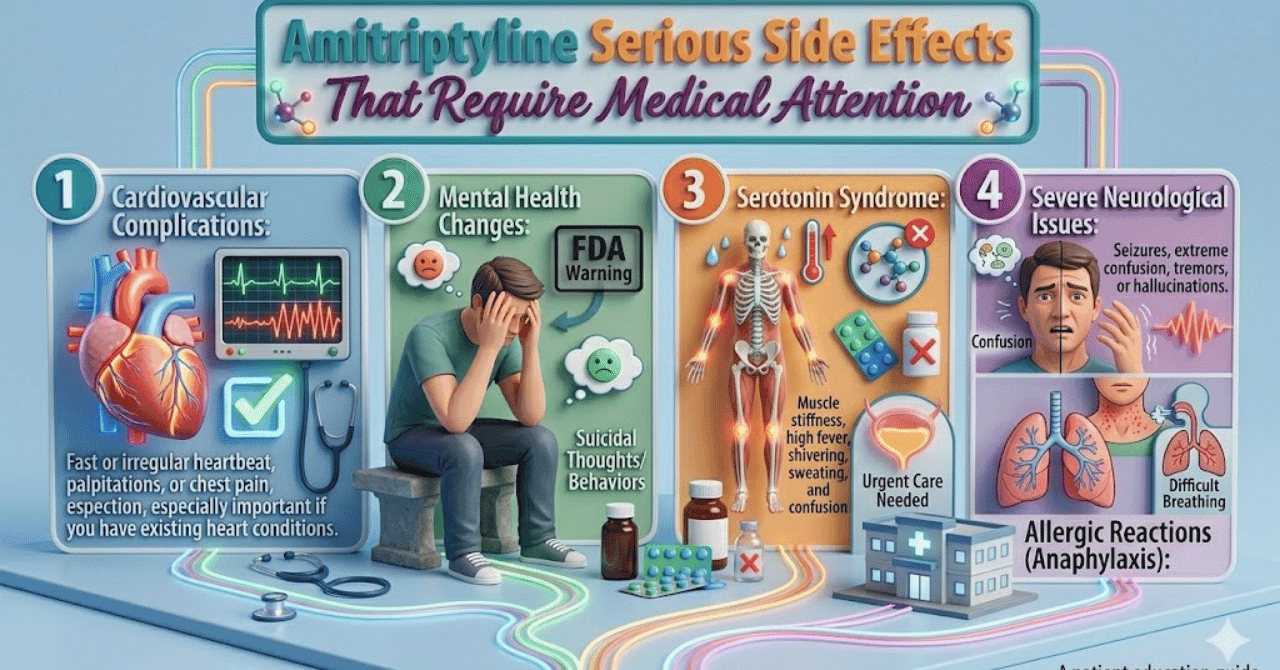
Amitriptyline Serious Side Effects That Require Medical Attention
While most Amitriptyline side effects are mild, some reactions can be serious and require immediate medical attention. Seek help right away if you experience any of the following:
- Cardiovascular complications: Fast or irregular heartbeat, palpitations, or chest pain, especially important if you have existing heart conditions.
- Mental health changes: Amitriptyline carries an FDA black box warning for increased risk of suicidal behaviors and thoughts in children, teenagers, and young adults. Watch for mood swings, agitation, or worsening depression.
- Serotonin syndrome: A potentially life-threatening condition with symptoms such as muscle stiffness, high fever, shivering, sweating, and confusion, especially when combined with other serotonergic drugs.
- Severe neurological issues: Seizures, extreme confusion, tremors, or hallucinations.
- Urinary retention: Difficulty or inability to pass urine, which may require urgent care.
- Allergic reactions (anaphylaxis): Swelling of the face, tongue, or lips, severe rash, or trouble breathing.
Important: Always inform your doctor/provider about all medications you are taking, as drug interactions can raise the risk of Amitriptyline's serious side effects.
Long-Term Side Effects of Amitriptyline
Using Amitriptyline over several months or years can lead to side effects that differ from initial adjustment symptoms. Long-term management requires monitoring the following:
- Persistent Weight Gain: Chronic use can alter metabolism and significantly increase appetite, leading to gradual but substantial weight changes.
- Dental Health Issues: Continuous dry mouth (low saliva) raises the risk of gum disease, oral infections, and tooth decay over time.
- Cognitive "Brain Fog": Some long-term users report mild memory issues, difficulty concentrating, or a feeling of mental slowness.
- Withdrawal (Discontinuation Syndrome): If stopped abruptly, long-term users may face severe nausea, headaches, and irritability. Always taper the dose under medical supervision.
- Bone Health: Some studies suggest an increased risk of bone fractures (osteoporosis/osteopenia) with prolonged use of tricyclic antidepressants, particularly in older adults.
Who Is at Higher Risk of Amitriptyline Side Effects?
Certain groups are more vulnerable to the side effects of Amitriptyline due to age, underlying conditions, or how the body processes the medication.
- Older adults (65+): Higher risk of confusion, drowsiness, falls, constipation, and urinary retention due to stronger anticholinergic effects.
- People with heart conditions: Amitriptyline can affect heart rhythm, so those with arrhythmias, heart block, or a recent heart attack require careful monitoring.
- Individuals with glaucoma: May increase eye pressure, potentially worsening angle-closure glaucoma.
- Young adults (under 25): Increased risk of suicidal thoughts and behavior, as noted in the FDA Black Box Warning, especially at the start of treatment.
- Patients with liver problems: Reduced metabolism can lead to higher drug levels & increased side effects.
How to Manage and Reduce the Amitriptyline Bad Side Effects
Managing side effects of Amitriptyline often involves simple adjustments to your routine and close monitoring of symptoms.
- Take Amitriptyline at bedtime to reduce daytime drowsiness.
- Stay well hydrated and include fiber-rich foods to help prevent constipation.
- Use sugar-free gum or lozenges and sip water frequently to manage dry mouth.
- Stand up slowly from lying or sitting positions to avoid dizziness.
- Avoid alcohol to lower the risk of excessive sedation and side effects.
- Use sunscreen or protective clothing if you experience increased sun sensitivity.
- Keep track of any ongoing or worsening symptoms and consult your doctor if needed.
Amitriptyline Side Effects vs. Benefits: Is It Worth It?
Whether Amitriptyline is worth it depends on the condition being treated and the dose used. Clinical studies from NCBI data show that low doses (10-25 mg) are widely used for neuropathic pain and migraine prevention, often with good results and tolerable side effects.
| Benefits | Risks and Adverse Effects |
|---|---|
| Pain relief: Supported by systematic reviews for neuropathic pain and fibromyalgia (PMC) | Anticholinergic effects: Dry mouth, constipation, blurred vision |
| Improves sleep: Helpful for patients with chronic pain-related sleep issues (PMC) | Weight gain: Common with long-term use |
| Well-studied: Decades of clinical use with consistent outcomes (PubMed) | Drowsiness & dizziness: Especially at the start of your treatment |
| Cost-effective: Affordable compared to many newer therapies | Serious risks: Rare heart rhythm changes (QT prolongation) and an FDA Black Box Warning for suicidal thoughts |
← Swipe to see more →
Is Amitriptyline Worth It?
- For chronic pain and migraines: Often yes. Studies show meaningful symptom relief, especially at lower doses with manageable side effects.
- For depression: Effective, but generally not first-line due to higher side-effect burden compared to newer antidepressants.
Bottom line: Amitriptyline remains a clinically valuable option when used at the right dose and with proper monitoring. Its benefits often outweigh the risks for pain-related conditions, but individual tolerance and medical history should guide its use.
Key Takeaways on the Bad Side Effects of Amitriptyline
Amitriptyline can cause side effects ranging from common issues like dry mouth, drowsiness, and dizziness to more serious risks such as heart rhythm changes and mood-related symptoms. While many mild effects improve as your body adjusts, staying alert to warning signs is essential. Using the lowest effective dose, following proper guidance, and consulting your doctor for any unusual or worsening symptoms helps ensure safer and more effective use.
Frequently Asked Questions
The most common Amitriptyline side effects include dry mouth, drowsiness, dizziness, constipation, blurred vision, and weight changes. These occur due to its anticholinergic and sedative effects and are usually mild but noticeable, especially at the start of treatment.
Most side effects appear within the first few days or weeks and often improve as your body adjusts. Mild effects like dry mouth or drowsiness typically resolve over time, but some may persist longer depending on dose and individual response.
Amitriptyline is usually taken once daily at bedtime because it commonly causes drowsiness. Taking it at night helps reduce daytime sleepiness and can also improve sleep quality.
Medical Disclaimer
This content is for informational purposes only and does not constitute medical advice. The side effects of Amitriptyline can vary based on individual health conditions, dosage, and other medications. Always consult a licensed healthcare provider before starting, stopping, or adjusting any medication.