Rapid Weight Gain in Women: Causes, Symptoms & When to Worry
Unexplained or sudden weight gain in women can feel confusing, especially without clear changes in diet or lifestyle. While occasional weight fluctuations are normal, rapid weight gain may sometimes signal underlying hormonal changes, medical conditions, or medication effects. Understanding what causes rapid weight gain in females is an important first step toward identifying possible triggers.
What Is Considered Rapid Weight Gain in Females?
Rapid weight gain in females refers to a noticeable increase in body weight over a short period, rather than gradual changes over time. Healthcare providers often consider gaining 2 to 3 pounds per day, about 5 pounds per week, or more than 5% of body weight within a month as rapid weight gain.

What Are the Common Causes of Rapid Weight Gain in Females?
Rapid weight gain in females may be linked to hormonal changes, medical conditions, or fluid retention. Identifying the cause is important because treatment often depends on what is triggering the weight gain.
Some of the most common causes include:
- Polycystic Ovary Syndrome (PCOS): PCOS is a hormonal condition that affects ovulation and insulin levels, often causing abdominal weight gain due to insulin resistance. Symptoms may include irregular periods, acne, and excess hair growth.
- Thyroid Disorders (Hypothyroidism): An underactive thyroid slows metabolism, making it easier for the body to store fat and harder to burn calories. This can result in unexplained weight gain, fatigue, dry skin, and sensitivity to cold.
- Insulin Resistance: When the body fails to respond properly to insulin, blood sugar levels remain high, encouraging fat storage. This condition is commonly linked with PCOS and can cause sudden weight gain, especially in the stomach area.
- High Cortisol Levels (Chronic Stress): Long-term stress increases cortisol, a hormone that can boost appetite and promote fat storage, particularly around the abdomen.
- Menopause and Perimenopause: Hormonal changes during menopause or perimenopause can slow metabolism and shift fat storage toward the abdomen and thighs.
- Fluid Retention from Medical Conditions: Conditions affecting the heart, kidneys, or liver may cause the body to retain fluid, leading to sudden weight gain over a short period. This type of weight gain may also cause swelling in the legs, hands, or abdomen.
What Are the Lifestyle Factors that Cause Rapid Weight Gain in Females?
Certain lifestyle habits can also contribute to sudden or unexplained weight gain, especially when they affect metabolism, appetite, or hormone balance.
Common lifestyle factors include:
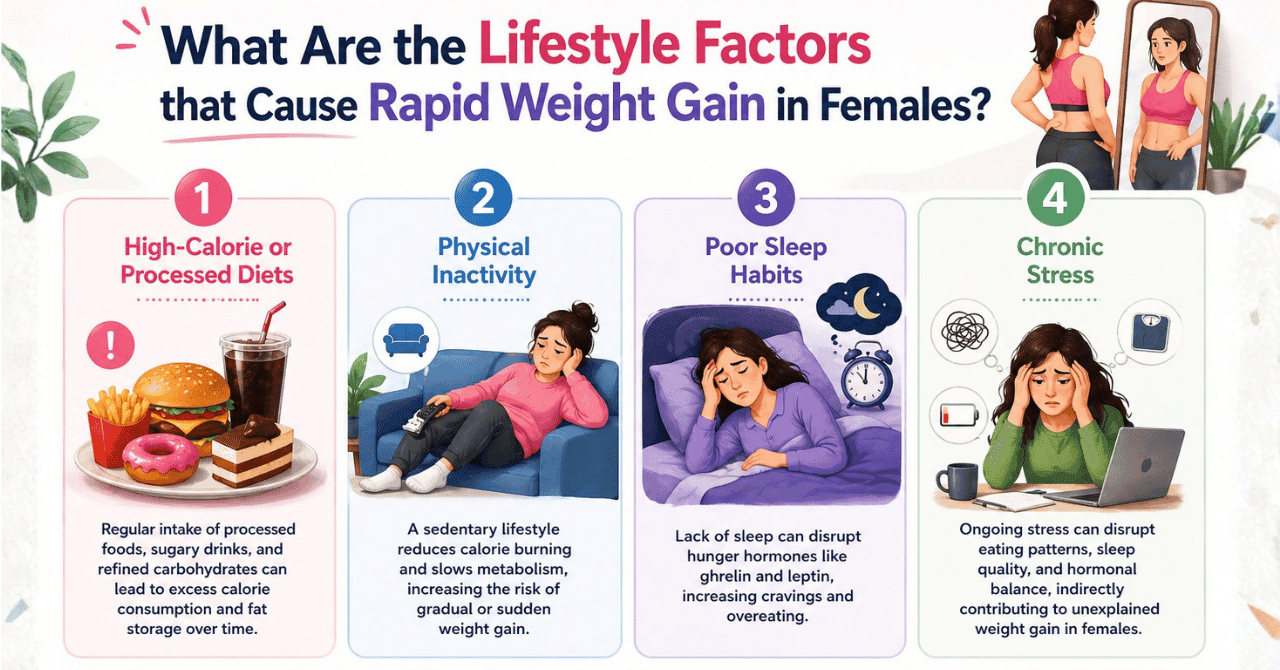
- High-Calorie or Processed Diets: Regular intake of processed foods, sugary drinks, and refined carbohydrates can lead to excess calorie consumption and fat storage over time.
- Physical Inactivity: A sedentary lifestyle reduces calorie burning and slows metabolism, increasing the risk of gradual or sudden weight gain.
- Poor Sleep Habits: Lack of sleep can disrupt hunger hormones like ghrelin and leptin, increasing cravings and overeating.
- Chronic Stress: Ongoing stress can disrupt eating patterns, sleep quality, and hormonal balance, indirectly contributing to unexplained weight gain in females.
What Are the Medications that May Cause Rapid Weight Gain in Females?
Certain classes of medications are known in clinical guidelines and medical literature to be associated with weight gain as a potential side effect. This may occur gradually or more noticeably, depending on the medication type, dosage, and individual response. The following table outlines the most common medication types linked to weight gain and how they may affect the body:
| Medication Type | Examples | How They Affect Weight |
|---|---|---|
| Antidepressants | SSRIs, tricyclic antidepressants | Certain psychiatric medications |
| Corticosteroids | Prednisone | Can cause fluid retention and fat redistribution |
| Hormonal Birth Control | Estrogen-based contraceptives | May increase appetite or cause fluid retention |
| Diabetes Medications | Insulin, sulfonylureas | Promote fat storage by lowering blood sugar |
| Antipsychotics | Certain psychiatric medications | Linked to metabolic changes and increased hunger |
← Swipe to see more →
Why Does Sudden Weight Gain Happen in the Stomach and Thighs in Females?
Sudden weight gain in the stomach and thighs in females is often influenced by hormonal patterns that affect fat distribution rather than just total weight gain. While the underlying causes, such as insulin resistance, changing estrogen levels, or elevated cortisol, play a role, they tend to determine where fat is stored in the body.
For example:
- Lower estrogen levels during menopause are commonly associated with increased abdominal fat.
- Insulin resistance is linked to fat accumulation around the stomach.
- Hormonal imbalances may promote fat storage in the hips and thighs.
This is why sudden weight gain in women may appear more noticeable in specific areas, even when overall weight gain is modest.
What Are the Symptoms of Rapid Weight Gain in Females?
Rapid weight gain in females may occur along with other symptoms, especially when hormonal or medical conditions are involved.
- Fatigue or low energy
- Irregular menstrual cycles
- Increased hunger or cravings
- Mood changes or irritability
- Hair thinning or hair loss
- Acne or skin changes
- Swelling in the legs, hands, or abdomen
- Difficulty losing weight despite lifestyle changes
When Rapid Weight Gain in Females May Be a Medical Concern?
Seek immediate medical help if you experience the following symptoms:
- Swelling in the legs, face, or abdomen
- Shortness of breath
- Severe fatigue
- Chest discomfort
- Sudden increase in abdominal size
- Rapid weight gain without changes in diet or physical activity
How Do Doctors Diagnose the Causes of Rapid Weight Gain in Females?
Doctors use a combination of clinical evaluation and diagnostic tests to identify the causes of rapid weight gain in females. The process typically begins with a detailed review of symptoms, medical history, medication use, and lifestyle factors.
Common diagnostic tests may include:
- Blood tests
- Thyroid function test
- Blood sugar test
- Hormone tests
- Imaging tests
How to Manage and Prevent Rapid Weight Gain in Females?
Managing rapid weight gain in females depends on identifying the underlying cause. In many cases, lifestyle changes combined with medical treatment can help control weight and improve overall health. The following strategies will help prevent unexplained weight gain in females.
- Maintain a Balanced Diet: Focus on whole foods such as vegetables, fruits, lean proteins, and whole grains.
- Stay Physically Active: Regular exercise helps burn calories, improve metabolism, and support hormonal balance.
- Improve Sleep Quality: Aim for a consistent sleep schedule to support healthy hormonal regulation.
- Manage Stress Levels: Stress management techniques such as relaxation exercises and mindfulness may help regulate cortisol levels.
The Final Thoughts on Causes of Rapid Weight Gain in Females
Rapid weight gain in females can result from many factors, including hormonal changes, medical conditions, lifestyle habits, or certain medications. While occasional weight fluctuations are normal, sudden or unexplained weight gain should not be ignored, especially if it persists or accompanies symptoms such as fatigue, swelling, or irregular periods. Early evaluation helps identify treatable causes and prevents long-term complications.
Frequently Asked Questions
Rapid weight gain in females without overeating may be linked to hormonal imbalances, thyroid disorders, insulin resistance, certain medications, or fluid retention. In many cases, underlying medical conditions rather than calorie intake are responsible.
Yes, chronic stress can increase cortisol levels, which may stimulate appetite and promote fat storage, particularly around the abdomen. Poor sleep and emotional eating during stressful periods can also contribute to rapid weight gain.
You should see a doctor if rapid weight gain occurs suddenly, continues without explanation, or is accompanied by symptoms such as swelling, fatigue, breathing difficulty, or irregular periods.
Important Disclaimer
This blog is provided for informational purposes only and does not replace expert medical guidance, diagnosis, or treatment. The information is based on trusted sources such as the FDA and National Library of Medicine, but individual responses may vary. Always consult a licensed healthcare provider before making treatment decisions.