7 Drugs Where Canadian Pharmacies Still Beat U.S. Pricing Programs in 2026
Even as new U.S. discount and direct-pay prescription programs expand in 2026, some high-cost brand-name medications may still cost less through Canadian pharmacies. Many patients researching Canadian pharmacy vs. U.S. drug program 2026 comparisons are primarily focused on long-term maintenance medications. For some brand-name prescriptions, regulated Canadian pricing may remain more predictable than variable U.S. retail and insurance-based pricing systems.
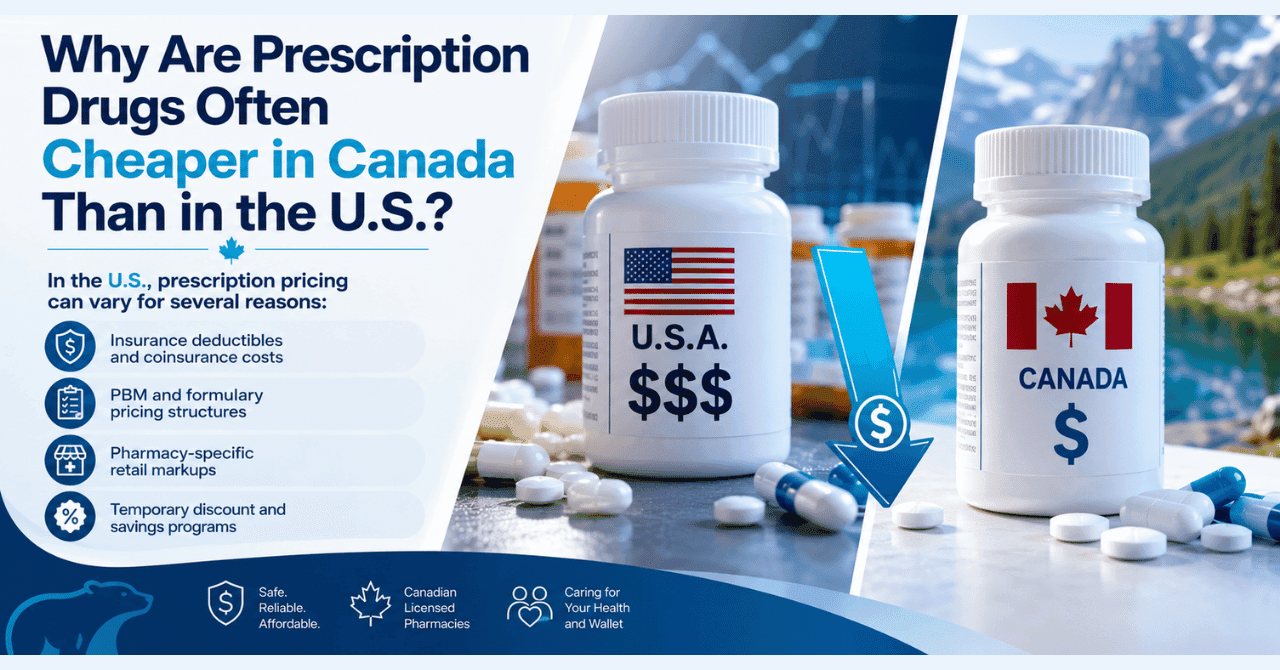
Why Are Prescription Drugs Often Cheaper in Canada Than in the U.S.?
Prescription drug prices are often lower in Canada because the country uses regulated pricing systems. In the United States, prices are shaped by private insurers, PBMs (Pharmacy Benefit Managers), and retail pharmacy networks.
In Canada, agencies such as Health Canada and the Patented Medicine Prices Review Board (PMPRB) help monitor and control drug pricing. These systems are designed to limit excessive price increases and keep pricing more stable over time.
In the U.S., prescription pricing can vary for several reasons:
- Insurance deductibles and coinsurance costs
- PBM and formulary pricing structures
- Pharmacy-specific retail markups
- Temporary discount and savings programs
Some U.S. pricing programs may reduce short-term costs for certain medications. However, eligibility rules and insurance restrictions can still leave many patients with high out-of-pocket expenses.
Because Canadian pricing is more regulated, some brand-name maintenance medications may remain less expensive through Canadian pharmacies than through standard U.S. retail channels.
2026 Cost Comparison: U.S. Price vs. Canadian Pharmacy Price
| Drug Name & Strength | Average U.S. Cash Retail Price | Estimated U.S. Discount Range | Estimated Canadian Pharmacy Price | Key Pricing Factor in 2026 |
|---|---|---|---|---|
| Xifaxan (550 mg / 60 tablets) | ~$4,000 - $4,300 | ~$3,700 - $3,900 | ~$400 - $970 | International generic availability may reduce pricing outside the U.S. |
| Jublia (10% Solution / 8 mL) | ~$1,800 - $1,950 | ~$1,500 - $1,650 | ~$130 - $170 | Coverage exclusions and formulary limitations may increase out-of-pocket costs. |
| Myrbetriq (50 mg / 30 tablets) | ~$450 - $500 | ~$115 - $200 | ~$70 - $105 | Insurance tier changes and deductibles can increase retail costs. |
| Eliquis (5 mg / 60 tablets) | ~$550 - $600 | ~$510 - $540 | ~$75 - $150 | Medicare reforms may reduce annual out-of-pocket costs for eligible seniors. |
| Xarelto (20 mg / 30 tablets) | ~$530 - $580 | ~$490 - $520 | ~$45 - $85 | High-deductible plans may increase early-year retail spending. |
| Jardiance (10 mg / 30 tablets) | ~$700 - $760 | ~$580 - $630 | ~$110 - $140 | Strong market demand and brand pricing continue to affect U.S. retail costs. |
| Trintellix (10 mg / 30 tablets) | ~$450 - $510 | ~$410 - $440 | ~$130 - $160 | Brand-only market exclusivity can contribute to higher retail pricing. |
← Swipe to see more →
Pricing estimates are based on publicly available retail pricing data, manufacturer pricing information, and Canadian pharmacy market estimates reviewed in 2026. Actual pricing may vary depending on pharmacy, insurance coverage, dosage, quantity, and regional availability.
The 7 Drugs You Can Save the Most on in Canada 2026
Some prescription medications continue to show large price differences between Canada and the United States in 2026. In many cases, the biggest gaps appear with brand-name maintenance medications that have limited generic competition or inconsistent insurance coverage in the U.S.
The medications below are commonly researched by patients comparing long-term out-of-pocket costs, especially when domestic retail pricing, deductibles, or formulary restrictions make treatment expenses difficult to manage.
1. Xifaxan (Rifaximin)
Patients often compare Canadian pricing because U.S. retail costs for brand-name Xifaxan remain among the highest for long-term gastrointestinal maintenance medications.
2. Jublia (Efinaconazole)
Jublia can remain expensive in the U.S., particularly when commercial insurance plans apply coverage limitations or higher specialty-tier pricing.
3. Myrbetriq (Mirabegron)
Many patients researching overactive bladder medications compare Canadian pricing due to ongoing deductible and formulary cost variability in the U.S.
4. Eliquis (Apixaban)
Although Medicare reforms have reduced some annual out-of-pocket expenses, Eliquis still carries high retail pricing for many commercially insured and cash-paying patients.
5. Xarelto (Rivaroxaban)
Patients with high-deductible health plans may face substantial upfront retail costs for Xarelto before insurance benefits fully apply.
6. Jardiance (Empagliflozin)
Jardiance remains one of the more expensive long-term diabetes maintenance medications in the U.S., especially for uninsured patients.
7. Trintellix (Vortioxetine)
Because Trintellix remains a brand-name medication with limited generic competition, monthly retail pricing can stay high across many U.S. pharmacy channels.
Consumer Safety: How to Safely Order from Canada in 2026
Patients considering international mail-order pharmacies should understand prescription requirements, shipping timelines, and pharmacy verification standards before placing an order. Reviewing these details carefully can help reduce risks linked to unverified online sellers or unauthorized prescription websites.
Prescription Verification Requirements
Legitimate pharmacies do not dispense prescription medications without proper medical authorization. Patients are generally required to provide:
- A valid prescription from a licensed healthcare provider
- Matching patient and shipping information
- Prescription verification before shipment approval
Websites offering prescription medications without prescription review or verification should be approached cautiously.
Pharmacy Verification and Website Safety
Before ordering from an international pharmacy, patients should confirm that the website:
- Uses secure, encrypted checkout systems (HTTPS)
- Clearly displays contact and customer support information
- Provides transparent refill, shipping, and privacy policies
- Explains prescription verification requirements
- Offers shipment tracking information when available
Patients should also avoid websites that advertise unrealistic pricing, bypass prescription requirements, or provide limited business transparency.
Understanding FDA Importation Guidance
The U.S. Food and Drug Administration (FDA) generally restricts personal importation of prescription medications. However, limited personal-use shipments may proceed under enforcement discretion policies in certain situations. These considerations may include:
- Small personal-use quantities
- Ongoing treatment prescribed by a licensed provider
- Non-controlled prescription medications
- Short-term supply limits per shipment
Importation policies and enforcement practices may change over time, so patients should review current FDA guidance before ordering internationally.
Shipping and Customs Expectations
International mail-order shipments may require additional processing time compared to domestic pharmacy deliveries. Customs review, weather conditions, and carrier delays can affect delivery timelines. To help avoid interruptions in long-term treatment:
- Order refills before current supplies run low
- Review estimated shipping timelines carefully
- Monitor available package tracking updates
- Verify shipping and return policies before purchase
Planning ahead is especially important for maintenance medications that require ongoing daily use.
Canadian Pharmacy vs. U.S. Drug Program 2026: Is Buying From Canada Right for You?
For some U.S. patients using long-term maintenance medications, Canadian pharmacy pricing may provide more predictable out-of-pocket costs. This can differ from variable U.S. retail and insurance-based pricing systems.
However, total savings can still depend on insurance coverage, deductibles, formulary placement, and medication type. Before ordering internationally, patients should compare overall prescription costs carefully and review pharmacy verification standards. They should also confirm that all prescription and importation requirements are properly followed.
Frequently Asked Questions
Canadian pharmacies themselves can operate legally under Canadian regulations. However, the FDA generally restricts personal importation of prescription medications. In certain situations, limited personal-use shipments may proceed under enforcement discretion policies. This most commonly applies to non-controlled maintenance medications prescribed by a licensed healthcare provider.
Yes. Legitimate Canadian pharmacies require a valid prescription from a licensed healthcare provider before dispensing prescription medications. Prescription details are typically reviewed and verified before shipment approval.
Yes. Some Medicare patients compare Canadian pharmacy pricing when reviewing long-term prescription costs. Although Medicare Part D now includes annual out-of-pocket caps for covered medications, deductibles, formulary placement, and coverage structure can still affect yearly spending.
Disclaimer
This article is for informational purposes only and does not provide medical, legal, or financial advice. Information related to prescription drug pricing, Canadian pharmacies, U.S. pricing programs, insurance coverage, and international mail-order options may change over time. Patients should always consult a licensed healthcare provider and verify pharmacy credentials before making any medication-related, purchasing, or importation decisions.