Cardiac Arrest vs. Heart Attack: Symptoms & Prevention
A heart attack (also called myocardial infarction) is a circulation problem that occurs when blood flow to the heart is blocked, while cardiac arrest is an electrical problem that causes the heart to suddenly stop beating. A heart attack usually produces noticeable symptoms such as chest pain, whereas cardiac arrest often leads to sudden collapse without warning. Both conditions are life-threatening emergencies that require immediate medical attention.
What Is the Difference Between Cardiac Arrest and Heart Attack?
Cardiac arrest and heart attack are often confused, but they are different medical emergencies with distinct causes and symptoms. Understanding how they differ helps people recognize warning signs quickly and respond appropriately. The table below provides a quick comparison of heart attack and cardiac arrest to highlight the key differences.
| Feature | Cardiac Arrest | Heart Attack |
|---|---|---|
| Type of Problem | Electrical problem in the heart | Circulation problem caused by blocked blood flow |
| What Happens | The heart suddenly stops beating | Blood flow to the heart muscle is blocked |
| Symptoms | Sudden collapse, no pulse, unconsciousness | Chest pain, shortness of breath, discomfort |
| Onset | Immediate and sudden | Often develops over minutes to hours |
| Emergency Response | Requires immediate CPR and defibrillation | Requires urgent medical treatment |
| Survival Depends On | Immediate emergency response | Fast restoration of blood flow |
← Swipe to see more →
Although the table provides a quick overview, recognizing specific symptoms in real-life situations can help you respond faster.
Cardiac Arrest vs. Heart Attack Symptoms: How to Tell the Difference?
The symptoms of cardiac arrest and heart attack are not the same, even though both are medical emergencies. Cardiac arrest typically causes sudden collapse, whereas heart attack symptoms often build over time. Learning these signs can help you act quickly when every second matters, especially in recognizing symptoms.
Cardiac Arrest Symptoms:
- Sudden collapse
- No breathing or pulse
- Loss of consciousness
Heart Attack Symptoms:
- Chest discomfort or pressure
- Shortness of breath
- Pain spreading to the arm, jaw, or back
- Nausea or unusual fatigue

What Causes Cardiac Arrest vs. Heart Attack?
Although both conditions affect the heart, their causes are very different. A heart attack is mainly caused by blocked blood flow, while an electrical malfunction in the heart triggers cardiac arrest.
Causes of a Heart Attack
Heart attacks usually result from conditions that block or restrict blood flow to the heart. Common causes include:
- Coronary artery disease (atherosclerosis): Plaque buildup narrows the arteries
- Blood clots: A clot can suddenly block an already narrowed artery
- Coronary artery spasm: Temporary tightening of the artery
Causes of Cardiac Arrest
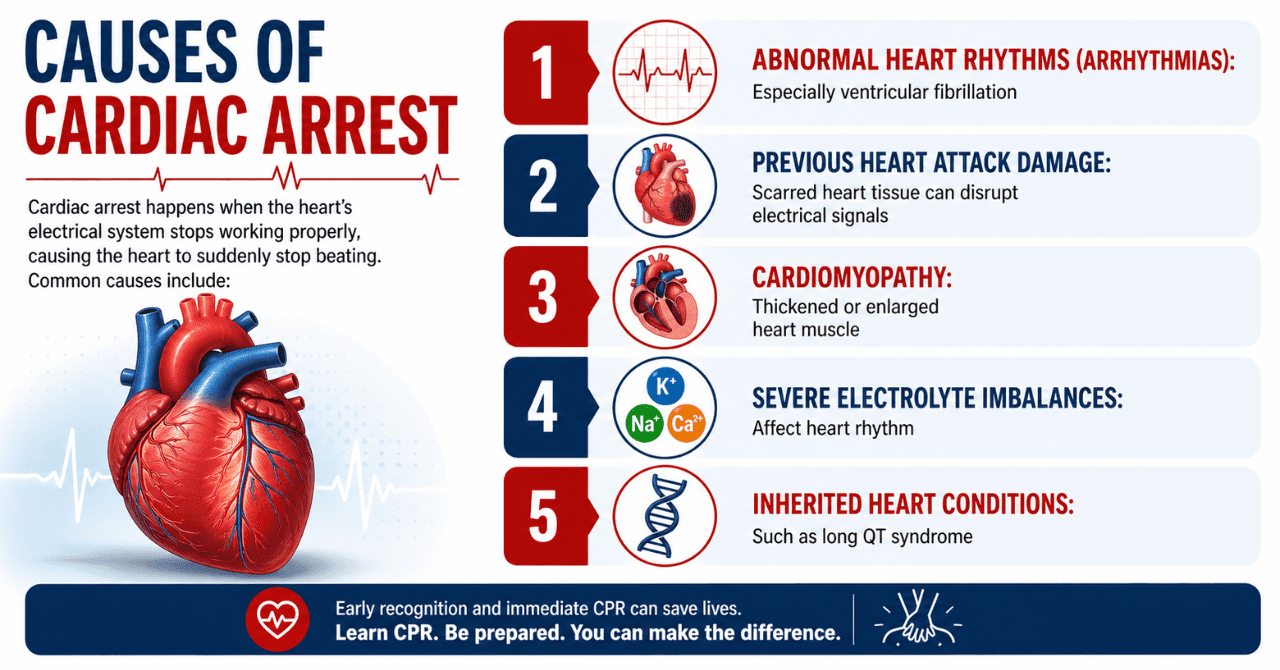
Cardiac arrest happens when the heart’s electrical system stops working properly, causing the heart to suddenly stop beating. Common causes include:
- Abnormal heart rhythms (arrhythmias): Especially ventricular fibrillation
- Previous heart attack damage: Scarred heart tissue can disrupt electrical signals
- Cardiomyopathy: Thickened or enlarged heart muscle
- Severe electrolyte imbalances: Affect heart rhythm
- Inherited heart conditions: Such as long QT syndrome
Cardiac Arrest vs. Heart Attack: What to Do in an Emergency?
Cardiac arrest is generally more immediately life-threatening because the heart stops beating suddenly, while a heart attack usually allows a short window for treatment. Knowing how to respond quickly in each situation can save a life.
If it is cardiac arrest:
- Call emergency services immediately
- Start CPR right away
- Use an automated external defibrillator (AED) as soon as available
- Continue CPR until medical help arrives
If it is a heart attack:
- Help the person sit down and stay calm
- Loosen tight clothing
- Call emergency services right away
- Give aspirin (only if not allergic and advised)
- Monitor symptoms until help arrives
Cardiac Arrest vs. Heart Attack Prevention Tips
Although prevention strategies overlap, some measures specifically reduce the risk of each condition.
To help prevent a heart attack:
- Control cholesterol and blood pressure
- Manage diabetes and maintain a healthy weight
- Avoid smoking and follow a heart-healthy diet
To help prevent cardiac arrest:
- Treat heart rhythm disorders when diagnosed
- Follow prescribed medications for heart disease
- Attend regular heart health checkups
General prevention for both:
- Exercise regularly
- Maintain a healthy lifestyle
- Limit alcohol intake
The Final Thoughts on Cardiac Arrest vs. Heart Attack
Understanding the difference between cardiac arrest and a heart attack can be life-saving. A heart attack is caused by blocked blood flow and often presents warning signs, while cardiac arrest is a sudden electrical failure that requires immediate action. Recognizing symptoms early, seeking timely medical help, and being aware of emergency responses like CPR and AED use can significantly improve outcomes. In both cases, quick action and preventive care play a crucial role in protecting heart health.
Frequently Asked Questions
Common early signs include chest pain or pressure, shortness of breath, fatigue, nausea, and pain in the arm, jaw, or back. Symptoms may vary, especially in women.
Yes. A heart attack can disrupt the heart’s electrical system, triggering a dangerous arrhythmia that may lead to cardiac arrest. Prompt treatment reduces this risk.
No, a heart attack is caused by blocked blood flow to the heart, while cardiac arrest occurs when the heart suddenly stops beating due to an electrical problem.
Medical Disclaimer
This blog is provided for informational purposes only and does not replace expert medical guidance, diagnosis, or treatment. The information is based on trusted sources such as the FDA and National Library of Medicine, but individual responses may vary. Always consult an authorized healthcare professional before making treatment decisions.