Diabetic Shock vs. Insulin Shock: What’s the Difference?
Diabetic shock and insulin shock are often used interchangeably, but they describe different emergencies. Insulin shock occurs when blood sugar drops dangerously low due to excessive insulin. Diabetic shock can refer more broadly to a life-threatening blood sugar crisis, including extremely high sugar levels, such as in diabetic ketoacidosis (DKA).
Both conditions are medical emergencies that can cause shaking, confusion, seizures, or even coma. According to the Centers for Disease Control (CDC), blood glucose below 70 mg/dL is clinically significant. Levels under 54 mg/dL are considered severe hypoglycemia and require immediate treatment. This guide explains the differences, how to spot warning signs, and the 15‑15 rule for safely treating low blood sugar.
Understanding Diabetic Shock and Insulin Shock
What is Insulin Shock? (Severe Hypoglycemia)
Insulin shock is a life-threatening condition caused by severely low blood sugar, usually due to excess insulin. It occurs when glucose is rapidly absorbed by the body's cells, depriving the brain of energy and leading to confusion, seizures, or loss of consciousness.
What is Diabetic Shock? (Severe Hyperglycemia or DKA)
Diabetic shock is a non-clinical term used to describe a severe high blood sugar crisis, often leading to diabetic ketoacidosis (DKA) or hyperosmolar hyperglycemic state (HHS). It happens when the body cannot use sugar for fuel, producing ketones that make the blood acidic and cause extreme dehydration and metabolic imbalance.
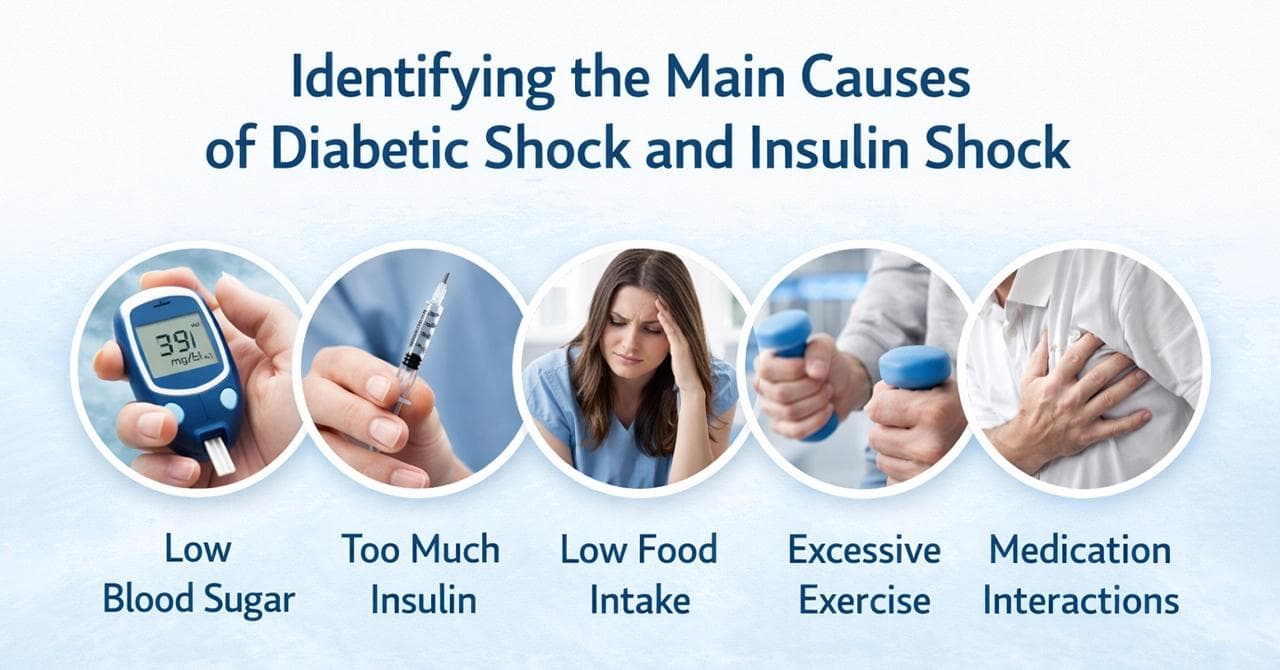
Identifying the Main Causes of Diabetic Shock and Insulin Shock
Understanding the underlying causes of diabetic shock and insulin shock is crucial for prevention. Both conditions involve insulin imbalances, but they differ in origin and triggers.
Common Causes of Insulin Shock
- Medication Errors: Taking too much insulin or administering it incorrectly.
- Skipped or Delayed Meals: Insufficient carbohydrate intake after insulin administration.
- Excessive Physical Activity: Unplanned or intense exercise increases glucose use and insulin sensitivity.
- Alcohol Consumption: Especially on an empty stomach, which prevents the liver from releasing glucose.
Common Causes of Diabetic Shock
- Illness or Infection: Hormones (like cortisol) released during sickness counteract insulin.
- Missed Insulin Doses: Forgetting basal (long-acting) insulin or pump malfunctions.
- New or Undiagnosed Diabetes: Severe hyperglycemia is often the first major symptom leading to a diagnosis.
- Severe Dehydration: Concentrates blood sugar and speeds up the onset of a metabolic crisis.
Recognizing Symptoms: How to Tell the Difference Between Diabetic Shock and Insulin Shock
| Clinical Feature | Insulin Shock (Severe Hypoglycemia) | Diabetic Shock (Severe Hyperglycemia / DKA) |
|---|---|---|
| Onset | Rapid (within minutes) | Gradual (hours to days) |
| Skin Condition | Pale, cold, clammy | Warm, flushed, dry |
| Mental State | Confusion, irritability, anxiety | Drowsiness, fatigue, reduced alertness |
| Physical Signs | Tremors, sweating, rapid heartbeat | Dehydration, weakness, nausea |
| Breath Odor | Normal | Fruity or acetone‑like |
| Thirst & Urination | Typically normal | Excessive thirst and frequent urination |
| Respiration | Normal or shallow | Deep, rapid breathing (Kussmaul respiration) |
| Severe Outcomes | Seizures, unconsciousness | Coma, severe metabolic imbalance |
← Swipe to see more →
Note: If the individual is conscious, blood glucose testing is the most reliable method to distinguish between low and high blood sugar emergencies. If the person is unconscious, seek immediate emergency medical assistance and avoid administering food, fluids, or insulin.
Emergency Treatment for Diabetic and Insulin Shock: The 15-Gram Glucose Protocol
The treatment for a blood sugar emergency depends entirely on whether the levels are too low or too high. Always test blood sugar first to ensure you provide appropriate care.
Treating Insulin Shock (The 15-15 Rule)
If a blood sugar test shows a level below 70 mg/dL, follow the "15-15 Rule" to stabilize the patient as recommended by the American Diabetes Association (ADA) and CDC:
- Eat 15 g of Fast-Acting Carbs: Give the person something that raises sugar quickly. Examples include:
- 3-4 glucose tablets
- 4 ounces (½ cup) of fruit juice or regular (non-diet) soda
- 1 tablespoon of sugar, honey, or corn syrup
- 5-6 hard candies
- Wait 15 Minutes: Allow the body time to absorb the glucose.
- Check Blood Sugar Again: If it is still below 70 mg/dL, repeat the 15 grams of carbs and wait another 15 minutes.
- Once the level is back in a safe range, have the person eat a small snack with protein & complex carbs (such as peanut butter on crackers) to keep it stable.
Important: If the person is unconscious, do not put food or liquid in their mouth. Use a glucagon emergency kit if available and call 911 immediately.
Diabetic Shock Treatment
Unlike a low-sugar crisis, a high-sugar crisis (diabetic shock) cannot be treated with a simple "rule" at home. It is a complex metabolic failure that requires clinical intervention.
- Seek emergency care if blood glucose is above 240 mg/dL and symptoms such as vomiting, confusion, or fruity-smelling breath occur.
- Medical Treatment Includes:
- IV Fluids: To treat the extreme dehydration caused by high sugar.
- Electrolyte Replacement: To balance minerals like potassium that are lost during DKA.
- Insulin Therapy: Administered via IV to slowly and safely lower blood sugar levels.
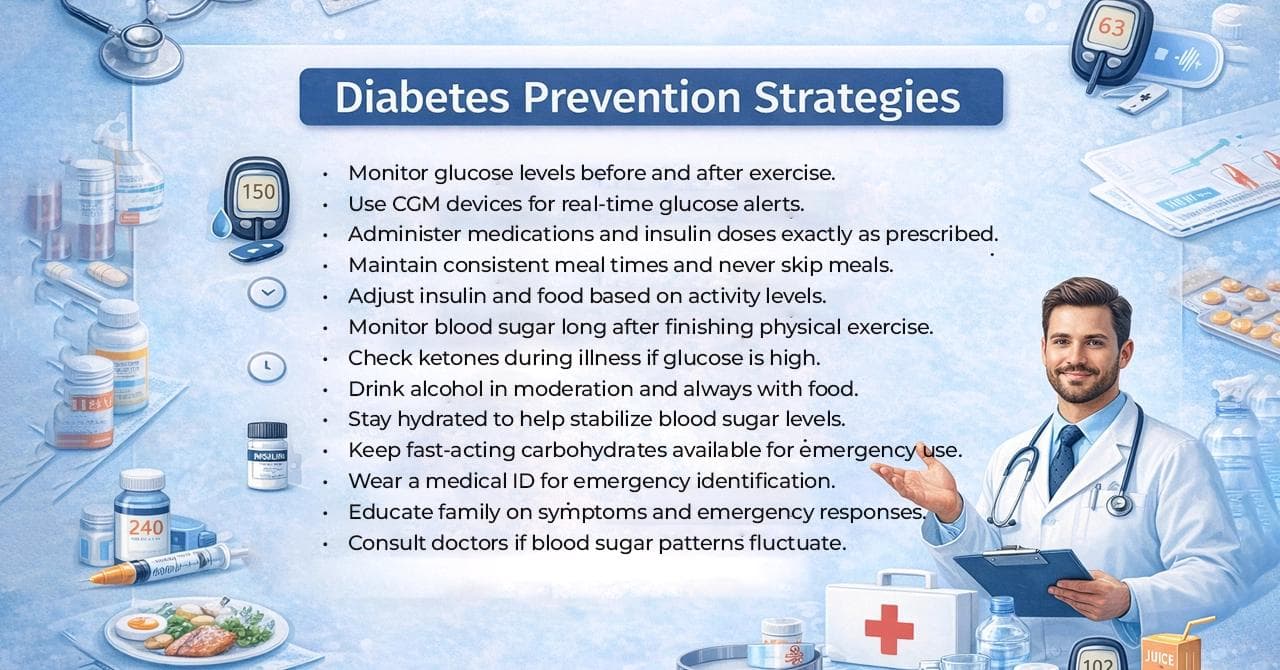
Prevention Strategies: How to Avoid Falling Into Diabetic or Insulin Shock
Follow these essential prevention strategies to significantly reduce the risk of both rapid-onset insulin shock and the gradual development of diabetic shock:
- Monitor blood glucose regularly, especially before, during, and after physical activity.
- Use a continuous glucose monitor (CGM) if available to receive real-time alerts and track trends.
- Take insulin and medications exactly as prescribed and double-check doses.
- Maintain consistent meal timing and avoid skipping meals after taking insulin.
- Adjust food intake or medication based on physical activity levels.
- Be aware that exercise can lower blood sugar for hours; monitor levels accordingly.
- Check for ketones during illness if blood sugar is above 240 mg/dL.
- Limit alcohol intake & always consume it with food.
- Stay well hydrated to support stable blood sugar levels.
- Keep fast-acting carbohydrates readily available for emergencies.
- Carry a medical ID to ensure proper treatment in case of an emergency.
- Inform family or caregivers about symptoms and emergency response steps.
- Track blood sugar patterns and consult a healthcare provider if frequent low or high blood sugar occurs.
Who Is Most at Risk for Diabetic or Insulin Shock?
While anyone with diabetes can experience a blood sugar emergency, certain clinical and lifestyle factors significantly increase the risk.
- People with Type 1 Diabetes: Higher risk due to complete reliance on insulin and greater glucose variability.
- Individuals with Hypoglycemia Unawareness: Reduced ability to detect early low blood sugar symptoms increases the risk of severe hypoglycemia.
- Users of Insulin or Sulfonylureas: These medications can lower blood sugar significantly if not balanced with food and activity.
- Individuals with Kidney Disease: Impaired kidney function slows insulin clearance, increasing the risk of prolonged hypoglycemia.
- Older Adults or Cognitive Impairment: Difficulty managing medications, meals, and symptom recognition can lead to dosing errors.
- History of Frequent Hypo- or Hyperglycemia: Recurrent episodes increase the likelihood of future severe events.
- People with Long-Standing Diabetes: Increased risk of hypoglycemia unawareness due to repeated low blood sugar episodes.
- Individuals with Illness or Infection: Stress hormones can raise blood sugar levels and trigger hyperglycemic crises like DKA.
- Irregular Eating or Lifestyle Patterns: Skipped meals, alcohol use, or unplanned physical activity can destabilize glucose levels.
- Newly Diagnosed Individuals: Higher risk due to limited experience in balancing insulin, diet, and activity.
Conclusion: Final Tips for Managing the Risks of Diabetic Shock and Insulin Shock
Diabetic shock and insulin shock are serious, potentially life-threatening emergencies that require vigilance and prompt action. Understanding their causes, recognizing early symptoms, and knowing the proper treatment, like the 15-15 rule for hypoglycemia, are essential. Regular monitoring, consistent meal and medication habits, and awareness of personal risk factors can prevent crises. Educating yourself and your support system helps ensure a timely response, reducing complications and keeping blood sugar within a safe range.
Frequently Asked Questions
Yes. An overdose of insulin can cause severe hypoglycemia, which may lead to seizures, brain damage, or death if not treated immediately. Elderly or frail individuals are especially at risk. Emergency treatment with fast-acting carbohydrates or a glucagon injection is critical to prevent permanent harm.
Diabetic “fruity breath” typically smells like acetone (nail polish remover), overripe apples, or sweet pear drops. This odor is caused by ketones accumulating in the blood when the body burns fat for energy instead of glucose, often indicating a serious condition called diabetic ketoacidosis (DKA).
While it is rare, individuals with pre-diabetes can experience severe blood sugar fluctuations. However, they typically do not reach the level of full-blown diabetic shock as frequently as people with Type 1 diabetes or advanced Type 2 diabetes.
Diabetic shock from DKA develops gradually over hours or days as blood sugar rises and ketones accumulate, unlike insulin shock, which can occur within minutes.
Yes. If treated promptly with glucose or glucagon, most people recover fully from insulin shock (severe hypoglycemia) within hours. Severe or prolonged episodes may cause temporary cognitive impairment, but timely intervention prevents lasting damage. Untreated insulin shock can lead to serious complications or death.
Yes. Severe diabetic shock (especially DKA or hyperosmolar hyperglycemic state) can be fatal without emergency medical care. Early recognition and treatment are essential.
Medical Disclaimer
This content is for informational purposes only and does not constitute medical advice. Guidance on recognizing, preventing, or treating diabetic shock and insulin shock may vary depending on individual health conditions. Always consult a licensed healthcare provider for personalized advice or before making changes to your diabetes management plan. In case of a medical emergency, call 911 immediately.