Are Metformin and Metformin HCl the Same? Key Differences Explained
Key Takeaways
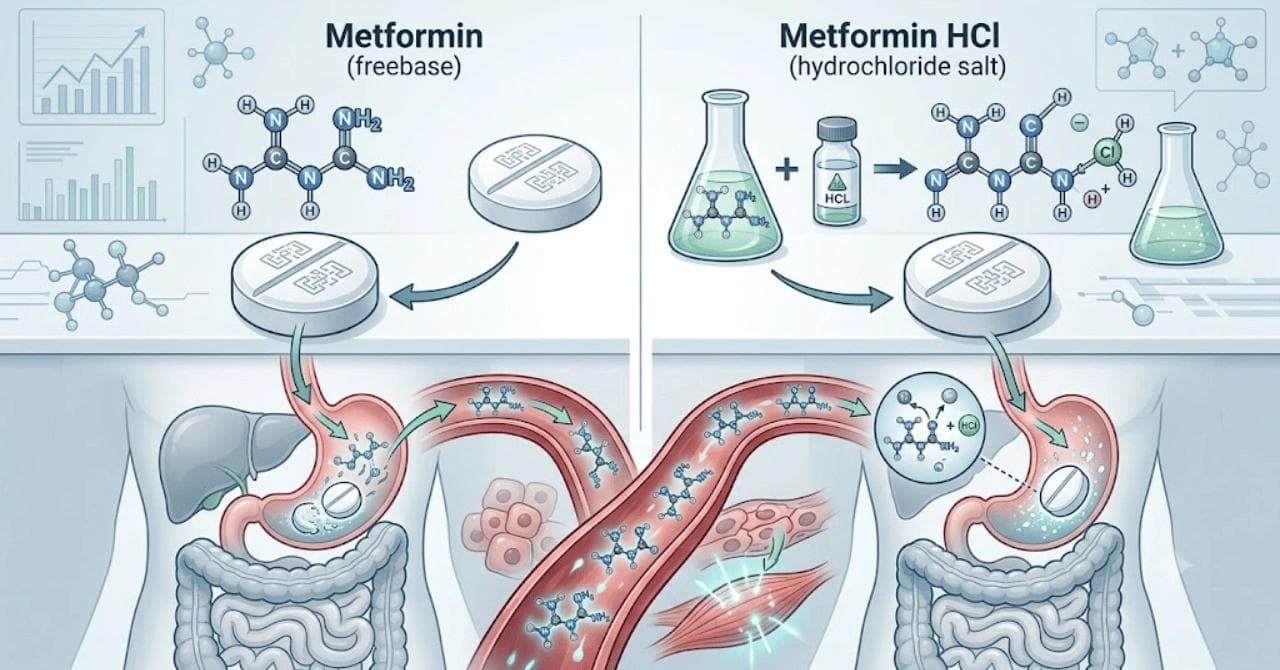
- Metformin and Metformin HCl are essentially the same medication, with HCl being the salt form of the base drug.
- Metformin hydrochloride (HCl) is the standard pharmaceutical form used in nearly all commercially available metformin tablets.
- Both forms have identical therapeutic effects and work the same way in treating diabetes and insulin resistance.
- Metformin HCl tablets are standardized to provide the intended therapeutic dose and are prescribed according to their labeled tablet strength.
Metformin hydrochloride (HCl) is the official chemical name of the medication commonly referred to simply as metformin. Nearly all prescription metformin tablets available today contain metformin hydrochloride, so the two names generally refer to the same medicine rather than different products. Metformin works by reducing glucose production in the liver and improving the body's response to insulin, helping manage blood sugar levels in adults with type 2 diabetes.
For most patients, the important distinction is not between "metformin" and "metformin HCl," but between the medication's immediate-release (IR) and extended-release (ER) formulations. These formulations contain the same active ingredient but differ in how the medication is released into the body, which can affect dosing schedules, convenience, and the likelihood of gastrointestinal side effects.
Metformin or Metformin HCl: Are They Different Medications?
When patients see both metformin and metformin hydrochloride (HCl) on prescription labels, they often wonder whether they are different medications. In practice, they are not. Metformin hydrochloride (HCl) is the official chemical name of the medication commonly referred to simply as metformin, and nearly all prescription metformin tablets contain this hydrochloride form. The two names therefore refer to the same medicine rather than different products. Metformin works by reducing glucose production in the liver and improving the body's response to insulin, helping lower blood sugar levels in adults with type 2 diabetes. When prescribed, the more meaningful distinction is usually between immediate-release (IR) and extended-release (ER) formulations, which contain the same active ingredient but differ in how the medication is released, how often it is taken, and the likelihood of gastrointestinal side effects.
What Every Patient Should Know About Metformin Hydrochloride
While prescriptions for metformin hydrochloride continue to rise globally, many patients remain uncertain about essential aspects of this widely prescribed diabetes medication. Understanding its fundamental characteristics can empower patients to make knowledgeable choices about their treatment. Metformin hydrochloride is pharmacologically equivalent to metformin, functioning primarily by reducing glucose production in the liver and increasing insulin sensitivity. The medication offers effective glycemic control without significant risk of hypoglycemia, while potentially providing cardiovascular benefits and assisting with weight management. Patients should be aware that initial side effects, particularly gastrointestinal issues such as nausea and diarrhea, typically resolve over time. However, individuals with severe kidney problems should exercise caution, as the medication is contraindicated in cases of renal impairment. Regular monitoring during pregnancy and awareness of potential drug interactions guarantee peak safety and efficacy in managing type 2 diabetes.
Immediate-Release vs Extended-Release: How Formulations Affect Your Experience
Patients prescribed metformin often face a choice between two distinct formulations: immediate-release (IR) and extended-release (ER) versions of the medication. These formulations differ markedly in how they deliver the drug and affect patient experience. The IR formulation enters the bloodstream quickly and typically requires twice-daily dosing with meals. While it offers dosing flexibility, it may cause more gastrointestinal side effects due to rapid absorption. In contrast, the ER formulation releases the medication gradually throughout the day, usually requiring only one dose, often with the evening meal. ER metformin provides glucose control comparable to immediate-release metformin while often causing fewer gastrointestinal side effects and improving adherence because it is usually taken once daily.
Side Effects Showdown: Why Metformin ER Causes Fewer Stomach Issues
Research consistently demonstrates that extended-release (ER) metformin causes considerably fewer gastrointestinal side effects compared to its immediate-release counterpart. While up to 40% of immediate-release users experience diarrhea, ER formulations cut this rate approximately in half. The science behind this improvement lies in the medication’s controlled delivery system. The extended-release mechanism gradually disperses the medication throughout the day, preventing sudden spikes of drug concentration in the digestive tract. This measured release reduces gut irritation and minimizes disruption to the intestinal microbiome. Studies confirm that ER formulations notably decrease instances of nausea, vomiting, and abdominal discomfort compared to standard metformin. For those experiencing digestive issues with immediate-release metformin, switching to the ER version often provides relief. Taking the medication with food further improves tolerability, though seeing pill remnants in stool is a normal occurrence with ER formulations and shouldn’t cause concern.
Beyond the Brand Names: Decoding Active Ingredients Across Formulations
A common misconception among patients is that metformin and metformin hydrochloride (HCl) are different medications. In clinical practice, they refer to the same active medication, as nearly all prescription metformin tablets are manufactured as metformin hydrochloride. Whether a prescription label says "metformin" or "metformin HCl," patients are receiving the same medicine with the same therapeutic effect. Both branded and generic products contain the same active ingredient and are held to the same quality and bioequivalence standards. The most meaningful difference is not the name on the label, but whether the medication is formulated as an immediate-release (IR) or extended-release (ER) tablet, which changes how the drug is released into the body and may influence dosing schedules and gastrointestinal tolerability, rather than how the medication works.
Can You Switch Between Metformin Types? Practical Guidance from Pharmacists
Understanding the interchangeability of different metformin formulations involves careful consideration of several medical factors. Healthcare providers may switch patients between immediate-release (IR) and extended-release (ER) metformin formulations when clinically appropriate. Because nearly all oral metformin products contain metformin hydrochloride, patients are not switching between different active ingredients but rather between different release formulations.
The ER version offers potential benefits for those experiencing gastrointestinal side effects, with its gradual release mechanism often providing better tolerance. Dosage adjustments may be necessary during the switch, given that the absorption rates differ between formulations. Pharmacists play an important role in guiding these changes, monitoring blood glucose levels, and ensuring ideal therapeutic outcomes. They consider factors such as patient compliance, cost implications, and potential drug interactions. For many individuals, the ER formulation’s once-daily dosing can simplify their medication routine while maintaining effective diabetes management.
Frequently Asked Questions
Drinking excessive or chronic amounts of alcohol while taking metformin increases the risk of the rare but serious complication lactic acidosis. Occasional moderate alcohol intake may be acceptable for some people, but discuss this with your healthcare provider.
Metformin does not reduce the effectiveness of hormonal birth control. However, if metformin causes severe vomiting or diarrhea for more than 24 hours, oral contraceptives may not be absorbed properly. Follow your contraceptive's instructions and consult your healthcare provider if this occurs.
Blood sugar levels may begin improving within several days of starting metformin. However, the medication's full glucose-lowering effect, including improvements reflected in HbA1c, typically develops over the next 2 to 3 months.
Take Metformin with meals. This reduces nausea, stomach upset, and diarrhea.
Metformin may produce modest weight loss in some people without diabetes, particularly those with obesity, insulin resistance, or polycystic ovary syndrome (PCOS). Clinical studies generally report an average weight loss of about 1 to 3 kg, although individual results vary. Metformin is not FDA-approved as a weight-loss medication.