Why Do Diabetics Die After Amputations: Causes and Prevention
When diabetics die after amputations, it is mainly because the surgery occurs at an advanced stage of disease, not because the procedure itself is usually fatal. Severe infection leading to sepsis, poor blood circulation, and underlying heart disease are the most common causes. According to the Centers for Disease Control and Prevention (CDC), diabetes damages blood vessels and nerves, allowing even minor wounds to turn into serious infections that may require amputation. Life expectancy after a diabetic foot amputation is often lower because these complications are already present. This increases the overall risk of serious health problems and death.
What Is the Survival Rate After Diabetic Amputation?
The survival rate after diabetic amputation is relatively low, especially in major lower limb cases, because patients often already have advanced complications like poor circulation and heart disease. A nationwide analysis of diabetic amputations shows that the 30-day mortality rate ranges from 3.5% to 34%, depending on the patient’s condition at discharge.
Data from the Centers for Medicare & Medicaid Services (CMS) show that about 50% of patients survive 3 years after a major lower extremity amputation, and around 40% survive 5 years. Survival varies based on factors such as the type of amputation, age, and underlying conditions like heart or kidney disease. Major amputations generally have lower survival rates than minor procedures.

Main Causes of Death After Diabetic Amputation
Death after amputation is usually not caused by the surgery itself, but by a combination of ongoing disease and post-surgical complications. In many cases, amputation is a sign of advanced vascular disease affecting the entire body, not just the limb. The table below summarizes the key causes and how they lead to death:
| Cause | How It Leads to Death After Amputation |
|---|---|
| Sepsis and infection | Wounds heal slowly due to diabetes, allowing infection to spread into the bloodstream and lead to septic shock |
| Cardiovascular disease | Ischemic heart disease is a leading cause of death, with many patients already having damaged blood vessels |
| Poor blood circulation | Reduced blood flow limits oxygen delivery, delaying healing and increasing infection risk |
| Kidney failure and organ stress | Long-term diabetes damages organs, making recovery from surgery more difficult |
← Swipe to see more →
Most patients do not die from a single cause. Instead, diabetes, poor circulation, cardiovascular disease, and infection interact, creating a cumulative risk that increases mortality. These same factors also make recovery more difficult after surgery.
How Diabetes Leads to Amputation
Diabetes leads to amputation through a chain of problems that affect the nerves and blood flow.
- Peripheral neuropathy: Reduces sensation, so injuries often go unnoticed
- Diabetic foot ulcers: Develop from untreated wounds and are a major cause of amputations
- Poor blood circulation: Slows healing and weakens the body’s ability to fight infection
- Infection and gangrene: Can lead to tissue death, making amputation necessary
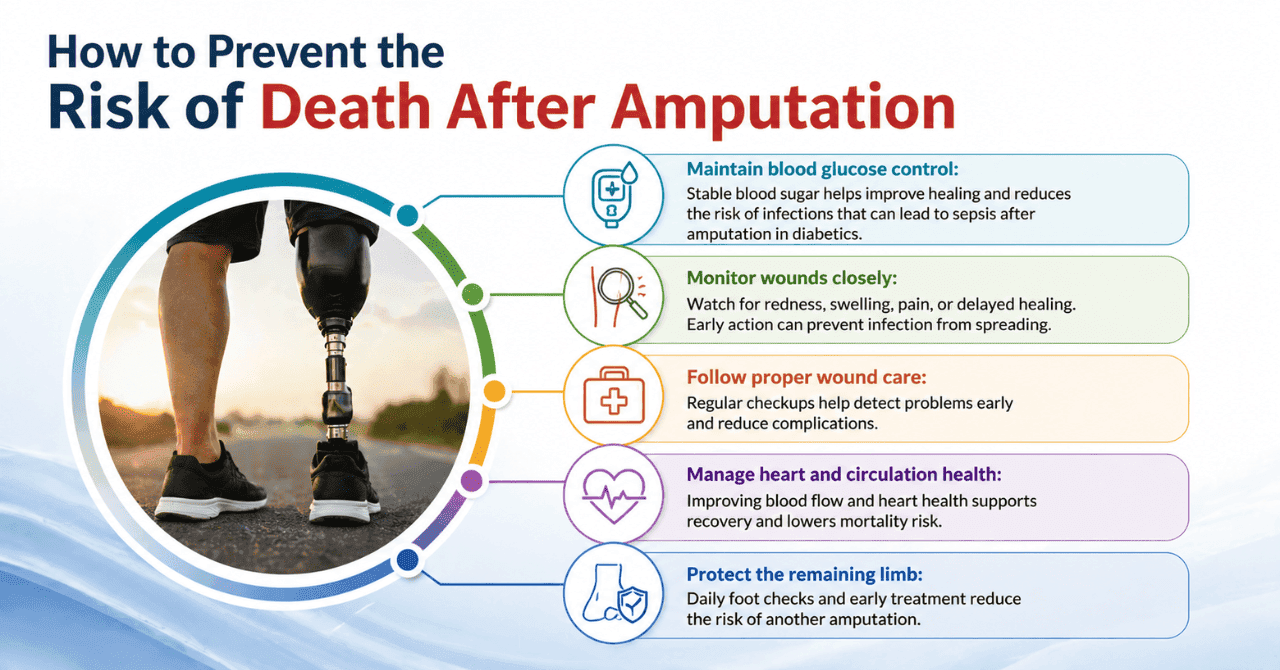
How to Prevent the Risk of Death After Amputation
Reducing the risk of death after amputation focuses on preventing infection, improving healing, and managing underlying conditions.
- Maintain blood glucose control: Stable blood sugar helps improve healing and reduces the risk of infections that can lead to sepsis after amputation in diabetics.
- Monitor wounds closely: Watch for redness, swelling, pain, or delayed healing. Early action can prevent infection from spreading.
- Follow proper wound care: Regular checkups help detect problems early and reduce complications.
- Manage heart and circulation health: Improving blood flow and heart health supports recovery and lowers mortality risk.
- Protect the remaining limb: Daily foot checks and early treatment reduce the risk of another amputation.
The Bottom Line: What to Know After a Diabetic Amputation
Diabetic amputations become dangerous when advanced nerve damage, poor circulation, and infection are already present. Surgery removes damaged tissue, but it does not fix the underlying disease. The risk stays high when wounds heal slowly, sepsis develops, or heart and kidney problems are already affecting recovery, which is why blood sugar control, close wound monitoring, and early medical care matter so much after surgery.
Frequently Asked Questions
The life expectancy after diabetic foot amputation varies, but survival rates are significantly reduced. CMS reports about 50% 3-year survival and about 40% 5-year survival after one major lower extremity amputation. The exact outlook depends on infection, blood circulation, kidney function, and heart disease.
Diabetics die after amputations mainly due to complications like sepsis after amputation in diabetics, cardiovascular disease, and delayed healing caused by poor blood circulation. The surgery removes damaged tissue, but it does not treat the underlying conditions that increase mortality risk.
Many diabetic amputations can be prevented with proper care. Managing blood glucose control, early treatment of a diabetic foot ulcer, regular foot checks, and addressing poor blood circulation can significantly reduce the risk of complications that lead to amputation.
Medical Disclaimer
This blog is provided for informational purposes only and does not replace expert medical guidance, diagnosis, or treatment. The content is based on trusted sources such as the Centers for Disease Control and Prevention (CDC), the National Institute of Diabetes and Digestive and Kidney Diseases (NIDDK), the Centers for Medicare & Medicaid Services (CMS), and peer-reviewed studies from the National Library of Medicine, but individual responses may vary. Always consult an authorized healthcare professional before making treatment decisions.