Does Mounjaro Cause Hair Loss? Symptoms, Reasons, and Solutions
Hair loss while using Mounjaro can feel alarming, especially when shedding increases suddenly. Mounjaro itself is not listed as a common cause of hair loss in the FDA prescribing information, but some users do experience hair thinning during treatment. In most cases, this is linked to rapid weight loss rather than a direct effect of the drug.
Research on GLP-1 medications, including tirzepatide, shows that this type of shedding is usually an indirect response to physical stress, like rapid weight loss. So, if you are asking, does Mounjaro cause hair loss, the answer is yes, it can happen, but it is usually indirect and reversible rather than permanent.
What Are the Symptoms of Mounjaro Hair Loss?
Mounjaro hair thinning usually appears as diffuse shedding rather than patchy bald spots. This means you lose hair evenly across the scalp instead of in specific areas. Common symptoms include:
- More hair falling out in the shower or on your pillow
- Increased strands while brushing or styling
- Thinning ponytail or reduced overall volume
- Gradual hair thinning instead of sudden bald patches
These symptoms reflect a temporary shift in the hair growth cycle rather than permanent hair loss. If you are wondering, does Mounjaro cause hair loss in females? Current data suggests women may report it more often, but the pattern and cause remain the same.
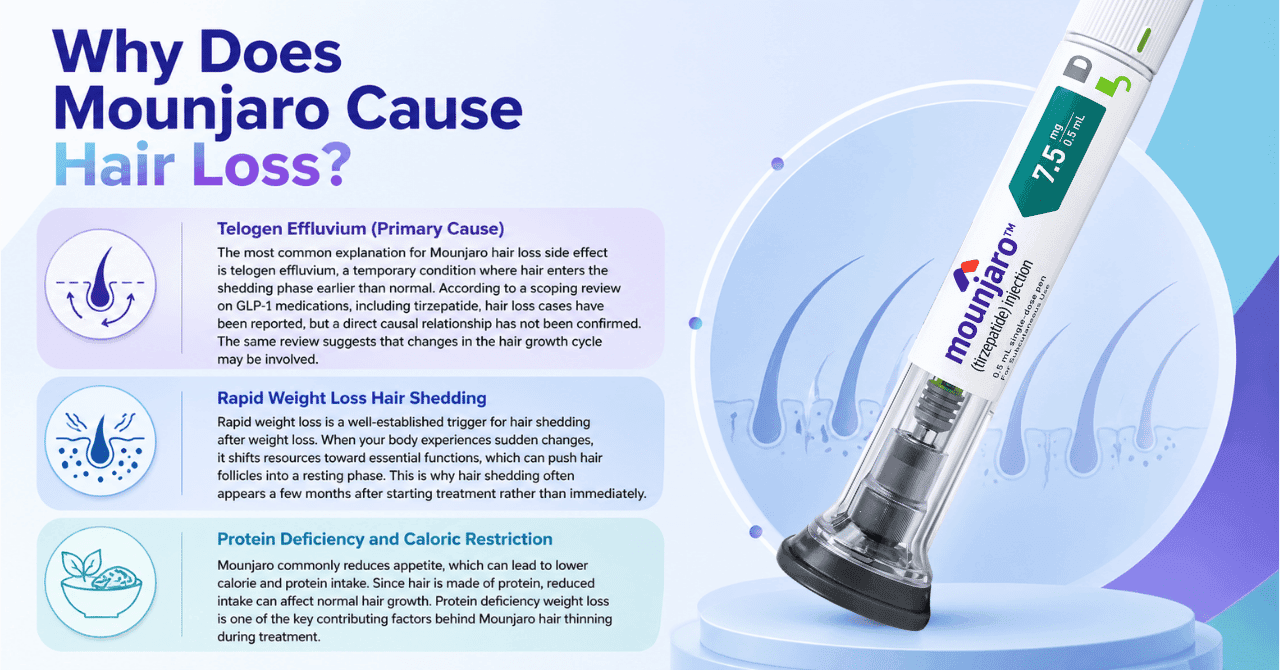
Why Does Mounjaro Cause Hair Loss?
Mounjaro hair loss is usually not caused by the drug directly. Instead, it is linked to how your body reacts to rapid weight loss and reduced intake during treatment. The main reasons behind this include:
Telogen Effluvium (Primary Cause)
The most common explanation for Mounjaro hair loss side effect is telogen effluvium, a temporary condition where hair enters the shedding phase earlier than normal. According to a scoping review on GLP-1 medications, including tirzepatide, hair loss cases have been reported, but a direct causal relationship has not been confirmed. The same review suggests that changes in the hair growth cycle may be involved.
Rapid Weight Loss Hair Shedding
Rapid weight loss is a well-established trigger for hair shedding after weight loss. When your body experiences sudden changes, it shifts resources toward essential functions, which can push hair follicles into a resting phase. This is why hair shedding often appears a few months after starting treatment rather than immediately.
Protein Deficiency and Caloric Restriction
Mounjaro commonly reduces appetite, which can lead to lower calorie and protein intake. Since hair is made of protein, reduced intake can affect normal hair growth. Protein deficiency weight loss is one of the key contributing factors behind Mounjaro hair thinning during treatment.
How to Prevent Hair Loss on Mounjaro
If you are thinking about how to prevent hair loss on Mounjaro, the main goal is to reduce stress on your body while your weight is changing. The best prevention steps focus on slowing the drop, keeping your intake steady, and avoiding extra hair damage.
| What to focus on | How to do it |
|---|---|
| Slow the weight-loss pace | Avoid rapid weight loss, since the weight-loss study links faster loss with telogen effluvium and later shedding. |
| Keep nutrition steady | Do not let Mounjaro’s appetite suppression turn into skipped meals or very low intake. |
| Protect fragile hair | Use gentle hair care, avoid tight styles, and limit heat or harsh treatments while shedding is active. |
| Check with your doctor | If shedding is heavy or persistent, ask your clinician whether anything else is contributing. |
| Use supplements carefully | Do not treat biotin for hair growth as a guaranteed fix. Use any supplement only if your doctor recommends it. |
← Swipe to see more →
Will Hair Grow Back After Mounjaro?
Yes, in most cases, hair regrowth happens because the shedding is usually temporary.
- Shedding usually starts within 2 to 4 months after the trigger.
- Hair loss may continue for a few months before slowing down.
- Regrowth begins as the hair cycle returns to normal.
Mounjaro hair loss recovery is expected in most people, since the underlying trigger is temporary rather than permanent follicle damage.
The Bottom Line: Can Mounjaro Cause Hair Loss?
Hair loss is not listed as a common direct cause on the FDA label for Mounjaro. However, available evidence on GLP-1 medications shows that shedding can occur as an indirect, temporary response to rapid weight changes rather than a direct result of the medication causing permanent follicle damage. Before starting Mounjaro, consult a licensed healthcare provider and use a trusted source to ensure safe, appropriate access to treatment.
Frequently Asked Questions
Yes, it can happen in women, but the evidence points more toward rapid weight loss and telogen effluvium than a direct drug effect. The GLP-1 scoping review found a female predominance in reported cases, and the weight-loss study also found women were especially vulnerable to telogen effluvium after weight loss.
Hair shedding from weight-loss-related telogen effluvium usually starts a few months after the trigger and then improves as the body stabilizes. The weight-loss study found diffuse hair loss commonly followed rapid weight loss, and acute telogen effluvium usually resolves with full regrowth.
Maintaining balanced nutrition is key to keeping hair healthy while on Mounjaro. Avoid very low-calorie intake, ensure enough protein, and use gentle hair care practices. Since hair loss is often linked to rapid weight loss, stabilizing your diet helps reduce shedding and supports regrowth.
Yes, hair typically regrows after stopping or stabilizing treatment if the shedding was caused by telogen effluvium linked to weight changes.
Nutrients like iron, zinc, and protein support normal hair growth. Biotin for hair growth may help in some cases, but it should not replace a balanced diet or medical advice.
Medical Disclaimer
This blog is provided for informational purposes only and does not replace expert medical guidance, diagnosis, or treatment. The content is based on trusted sources, including the U.S. Food and Drug Administration (FDA) prescribing information and peer-reviewed research published in the National Library of Medicine (PubMed), but individual responses may vary. Always consult an authorized healthcare professional before making treatment decisions.