Does Rybelsus Cause Constipation? A Complete Patient Guide
Yes, Rybelsus can cause constipation in some patients. According to FDA prescribing information, constipation is listed among the common gastrointestinal side effects of semaglutide, the active ingredient in Rybelsus, along with nausea, diarrhea, vomiting, and abdominal pain. This happens because semaglutide slows the movement of food through the digestive system, which can change normal bowel patterns for some people. For many patients, digestive symptoms often improve within a few weeks as the body adjusts to the medication.
Why Rybelsus Can Cause Constipation
Rybelsus works as a GLP-1 receptor agonist that helps control blood sugar levels. One of the ways this medication works is by reducing the speed at which food passes through the stomach and digestive tract, a process known as delayed gastric emptying.
Because digestion slows down, bowel movements may also become less frequent for some patients. This change in digestive speed can sometimes lead to temporary constipation, particularly when people first start the medication or increase their dose.

What Is the Most Common Side Effect of Rybelsus?
Rybelsus can cause several gastrointestinal side effects because the medication slows digestion as part of its blood-sugar-lowering mechanism.
| Common Rybelsus Side Effects | Description |
|---|---|
| Nausea | One of the most frequently reported symptoms during early treatment |
| Abdominal pain | Mild stomach discomfort or cramping |
| Diarrhea | Loose or frequent bowel movements |
| Decreased appetite | Reduced hunger, which could aid in weight reduction |
| Vomiting | Usually occurs during dose adjustment |
| Constipation | Slower digestive movement can lead to less frequent bowel movements. |
← Swipe to see more →
How to Relieve Constipation Caused by Rybelsus
In most cases, constipation from Rybelsus can be managed with simple lifestyle changes. Because the medication slows digestion, supporting healthy bowel movement habits can help reduce discomfort during treatment. Helpful strategies may include:
Drink enough fluids:
- Adequate hydration helps soften stool and supports normal bowel movements.
Increase dietary fiber:
- Fiber helps move waste through the digestive tract. Good sources include:
- Vegetables
- Fruits
- Whole grains
- Legumes
Stay physically active:
- Regular movement, such as walking or light exercise, may help stimulate intestinal activity.
Maintain consistent meal habits:
- Eating regular meals can support healthy digestion and bowel rhythm.
If constipation becomes persistent or severe, patients should seek medical advice from a doctor to explore suitable treatment options.
Which GLP-1 Medications Are More Likely to Cause Constipation?
Constipation is a known gastrointestinal side effect of GLP-1 receptor agonists, including semaglutide-based medications. While the risk is generally similar across this class, differences in dose, formulation, and individual response can affect how symptoms appear.
| Medication | Type | Constipation Risk | Notes |
|---|---|---|---|
| Rybelsus | Oral semaglutide | Moderate | Slows gastric emptying; a common early effect |
| Ozempic | Injectable semaglutide | Similar | Comparable side effect profile |
| Wegovy | High-dose semaglutide | Slightly higher | Higher doses: more GI side effects |
| Other GLP-1s | Liraglutide, dulaglutide | Varies | Same mechanism; response differs |
← Swipe to see more →
All GLP-1 medications work by slowing digestive motility, which explains why constipation can occur across this class. Symptoms are usually temporary and improve as the body adjusts to treatment.
What Foods and Habits Can Worsen Constipation on Rybelsus?
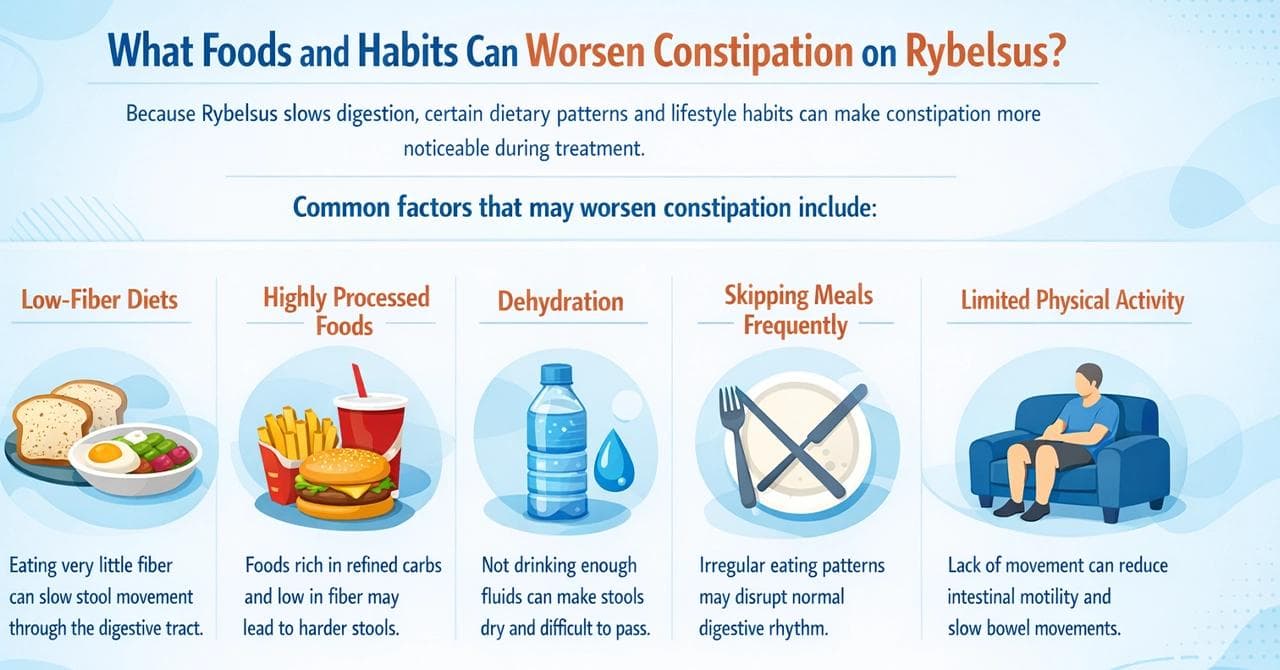
Because Rybelsus slows digestion, certain dietary patterns and lifestyle habits can make constipation more noticeable during treatment. Common factors that may worsen constipation include:
- Low-fiber diets: Eating very little fiber can slow stool movement through the digestive tract.
- Highly processed foods: Foods that are rich in refined carbohydrates and low in fiber may lead to the formation of harder stools.
- Dehydration: Not drinking enough fluids can make stools dry and difficult to pass.
- Skipping meals frequently: Irregular eating patterns may disrupt normal digestive rhythm.
- Limited physical activity: Lack of movement can reduce intestinal motility and slow bowel movements.
Making small adjustments to diet, hydration, and activity levels may help support more regular digestion while taking Rybelsus.
When to Worry About Constipation While Taking Rybelsus
Constipation related to Rybelsus is usually mild and temporary. However, ongoing or severe symptoms should be discussed with a healthcare provider. Seek medical advice if you experience:
- Severe abdominal pain
- Vomiting along with constipation
- Inability to pass stool for several days
- Constipation that continues to worsen despite lifestyle changes
These symptoms may indicate a more severe digestive issue and should be evaluated by a healthcare provider.
The Final Call About Rybelsus and Constipation
Rybelsus may cause constipation in some patients because it slows digestion as part of its mechanism of action. While this change in digestive speed can affect bowel habits, the symptom is usually mild and often improves as the body adjusts to treatment. Simple steps such as staying hydrated, increasing fiber consumption, and maintaining regular physical activity can help support healthy digestion while taking the medication.
If you are exploring medications such as Rybelsus, Polar Bear Meds offers access to trusted prescription treatments and educational resources to help patients make informed decisions with their healthcare providers.
Important Disclaimer
This content is provided for informational purposes only and does not replace expert medical guidance, diagnosis, or treatment. The information is based on reputable medical sources and clinical literature, but individual responses to medications may vary. Always consult an authorized healthcare professional before making treatment decisions.
Frequently Asked Questions
Semaglutide medications, such as Rybelsus, slow the movement of food through the digestive system. This process helps control blood sugar but may also slow bowel movements in some people. As a result, stools may pass less frequently, which can lead to temporary constipation during treatment.
Digestive side effects such as constipation, nausea, or diarrhea are more likely to occur during the early stages of treatment or when the dosage increases. As the body becomes accustomed to the medication, these symptoms often become milder or improve over time. If digestive symptoms persist or become uncomfortable, patients should consult a healthcare professional regarding their symptoms.
No. Not everyone who takes Rybelsus experiences constipation. While constipation is listed as a possible gastrointestinal side effect of semaglutide, many patients experience other symptoms, such as nausea or diarrhea instead. Individual responses to the medication can vary depending on factors such as dosage, diet, hydration, and overall digestive health.
Constipation related to Rybelsus is often temporary. Digestive side effects are more common when patients first begin treatment or increase their dose. For many people, bowel habits gradually improve within a few weeks as the body adjusts to the medication.