



We offer competitive pricing on all our medications. Find a lower price? We'll match it from any verified Canadian online pharmacy! Know More
Strength
Quantity
To Place OrderCall 1-(888)-478-2193
 Ships from Canada

We offer competitive pricing on all our medications. Find a lower price? We'll match it from any verified Canadian online pharmacy! Know More

Dr. Jackson Miller is a board-certified medicine physician & hospitalist. He is a healthcare professional with a strong background in patient care. With years of experience and a patient-first approach, he believes the foundation of good health is a patient who feels informed and empowered. He contributes to medical content review, drawing on his background in clinical practice and patient education. He focuses on presenting health information in a clear, accurate, and accessible way to help readers make informed decisions. His work emphasizes clarity, evidence-based guidance, and understandable explanations of medical topics.
Ordering your medication online is simple and convenient.
Select the prescribed dosage and quantity, then proceed to checkout.
Sign in or create a new account.
Upload your prescription.
Complete your purchase by processing the payment.
Select the prescribed dosage and quantity, then proceed to checkout.
Sign in or create a new account.
Upload your prescription.
Complete your purchase by processing the payment.
Shipping takes approximately 3-5 business days.

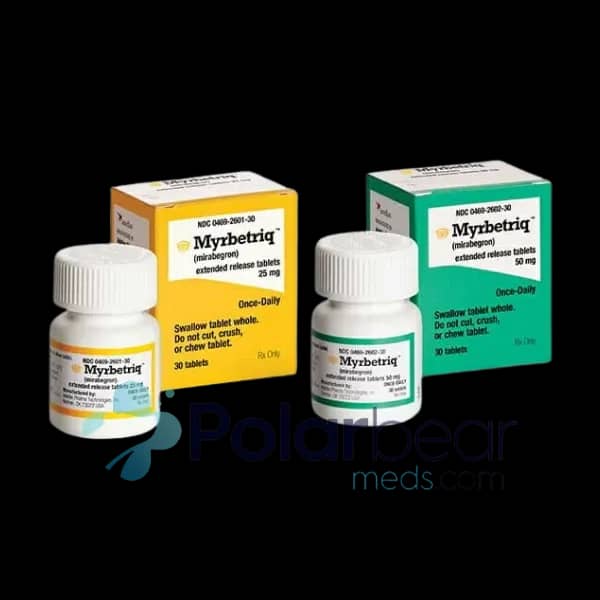
Myrbetriq is a prescription medication containing mirabegron, a beta-3 adrenergic agonist used to treat overactive bladder (OAB) symptoms such as frequent urination, urinary urgency, and urge urinary incontinence. It is typically prescribed when patients need medication to help improve bladder control and reduce sudden urges to urinate.
Key information about Myrbetriq is summarized below:
| Category | Information |
|---|---|
| Brand Name | Myrbetriq |
| Active Ingredient | Mirabegron |
| Strengths | 25 mg, 50 mg |
| Drug Class | Beta-3 adrenergic agonist |
| FDA Approved | Yes |
| Primary Use | Treatment of overactive bladder (OAB) symptoms |
| Dosage Form | Oral tablets |
| Prescription Required | Yes |
| Storage | Store at 68°F-77°F (20°C-25°C); excursions permitted to 59°F-86°F (15°C-30°C). Keep at controlled room temperature. |
← Swipe to see more →

Myrbetriq tablets are prescribed to treat overactive bladder (OAB) in adults. This condition causes symptoms such as urinary urgency, frequent urination, and urge urinary incontinence. Doctors may prescribe this medication:
In pediatric patients aged 3 years and older, Myrbetriq may be used to treat neurogenic detrusor overactivity (NDO). Tablets are generally used in patients weighing 35 kg or more, while granules may be used in lower-weight pediatric patients.

Myrbetriq (mirabegron) works by activating beta-3 adrenergic receptors in the bladder. This action relaxes the detrusor smooth muscle during the bladder’s storage phase, allowing the bladder to hold more urine and increasing bladder capacity. The mechanism of action includes:
Myrbetriq is available in two formulations designed for different dosing needs and patient populations.
| Formulation | Description |
|---|---|
| Myrbetriq Tablets | Extended-release tablets containing 25 mg or 50 mg of mirabegron |
| Myrbetriq Granules | Extended-release oral suspension prepared from granules |
← Swipe to see more →
These two formulations are not interchangeable on a milligram-per-milligram basis. The appropriate product should be selected based on the patient’s condition, age, and body weight.

Follow your healthcare provider’s instructions when taking this medication. General guidelines include:
If you miss a dose, take it as soon as you remember. If more than 12 hours have passed, skip the missed dose and take the next dose at the usual time. Do not take two doses at the same time.
The appropriate dose of Myrbetriq depends on the patient’s condition, age, and response to treatment. The typical adult starting dose is 25 mg once daily, which may be increased to 50 mg once daily after 4 to 8 weeks if needed. Doctors typically start with a lower dose and adjust it if needed.
Adult dosage for overactive bladder (OAB):
| Treatment | Recommended Dose |
|---|---|
| Starting dose | 25 mg once daily |
| Dose increase | May increase to 50 mg once daily after 4-8 weeks |
← Swipe to see more →
Pediatric dosage for neurogenic detrusor overactivity (NDO):
| Patient Weight | Starting Dose | Maximum Dose |
|---|---|---|
| 11 kg to <22 kg | 3 mL (24 mg) | 6 mL (48 mg) |
| 22 kg to <35 kg | 4 mL (32 mg) | 8 mL (64 mg) |
| ≥35 kg | 25 mg once daily | 50 mg once daily |
← Swipe to see more →
Dosage in kidney or liver impairment:
| Condition | Recommended Dose |
|---|---|
| Mild to moderate renal impairment | 25 mg to 50 mg once daily |
| Severe renal impairment | Maximum 25 mg once daily |
| Moderate hepatic impairment | Maximum 25 mg once daily |
| Severe hepatic impairment | Not recommended |
← Swipe to see more →
Important dosage information:

In clinical studies, high doses of mirabegron were associated with palpitations, increased pulse rate, and elevated blood pressure. If an overdose occurs, treatment is usually supportive and symptomatic. Healthcare providers may monitor:
Patients who may have taken too many Myrbetriq tablets should seek immediate emergency medical help or contact a poison control center.

Like all medications, Myrbetriq tablets may cause side effects in some patients. Many side effects are mild and may improve as the body adjusts to treatment. However, some reactions may require medical attention.
Commonly reported Myrbetriq side effects include:
Although uncommon, Myrbetriq may cause serious side effects. Patients should seek medical attention immediately if they experience:
This is not a complete list of side effects. Contact your healthcare provider for medical advice about adverse reactions. You may report side effects to the FDA at 1-800-FDA-1088 or visit MedWatch.

Myrbetriq may increase blood pressure in some patients. Healthcare providers may recommend periodic blood pressure monitoring during treatment, particularly in individuals with a history of hypertension. This medication is not recommended in patients with serious uncontrolled high blood pressure (systolic blood pressure of 180 mm Hg or higher and/or diastolic blood pressure of 110 mm Hg or higher).
Myrbetriq should be used with caution in certain patients due to potential safety risks. Important warnings include:
If any of these symptoms occur, stop taking the medication and seek emergency medical care immediately.
Before starting this medication, inform your healthcare provider if you have:
There are no adequate studies of Myrbetriq in pregnant women to determine drug-related risks. Animal studies have shown developmental effects at very high exposure levels. It is not known whether mirabegron passes into human breast milk. Patients who are pregnant, planning to become pregnant, or breastfeeding should consult a healthcare provider before using this medication.

Myrbetriq may interact with certain medications that affect how the drugs work or increase the risk of side effects.
| Drug or Drug Class | Interaction Consideration |
|---|---|
| CYP2D6 substrate medications | Mirabegron may increase the blood levels of drugs metabolized by the CYP2D6 enzyme, so monitoring or dose adjustment may be required |
| Digoxin | Starting with the lowest digoxin dose and monitoring blood levels may be recommended |
| Warfarin | May slightly increase warfarin exposure; monitoring may be advised |
← Swipe to see more →
Patients should inform their healthcare provider about all supplements, over-the-counter drugs, and prescription medications they use before starting Myrbetriq tablets.

Several medications may be used as alternatives to treat overactive bladder (OAB). The most appropriate option depends on the patient’s condition and response to treatment.
| Brand Name | Active Ingredient | Drug Class |
|---|---|---|
| Gemtesa | Vibegron | Beta-3 adrenergic agonist |
| Vesicare | Solifenacin | Muscarinic antagonist |
| Detrol | Tolterodine | Antimuscarinic |
| Toviaz | Fesoterodine | Antimuscarinic |
| Ditropan XL | Oxybutynin | Anticholinergic |
← Swipe to see more →
Brand availability may vary depending on location and pharmacy supply. A healthcare provider will determine the most appropriate option based on the patient’s symptoms and treatment response.

Prescription medications for an overactive bladder may be costly at many U.S. retail pharmacies. Ordering Myrbetriq online from Polar Bear Meds may help reduce overall costs while maintaining safety, quality, and reliability.
All Myrbetriq orders require a valid prescription. Medications are dispensed by licensed pharmacies that comply with applicable pharmacy regulations and safety standards.

This content is for informational purposes only and does not replace expert medical guidance, diagnosis, or treatment. Myrbetriq is a prescription medication used to treat overactive bladder (OAB) symptoms such as urinary urgency, frequency, and urge urinary incontinence. Always consult an authorized healthcare professional before starting, stopping, or changing the dosage. Individual results, side effects, and dosing needs may vary.

Learn more about Myrbetriq and related topics



We offer competitive pricing on all our medications. We'll match if you find a lower price on an identical product at a verified Canadian online pharmacy!
To Place Order, call 1-(888) 478-2193 or fill out the Contact Form
Rated 4.9/5 Verified Reviews on Shopper Approved
