How Long Does Semaglutide Show Up in a Blood Test?
Semaglutide (brand names Ozempic and Wegovy) is a long-acting GLP-1 receptor agonist used for type 2 diabetes and weight management. Because of its weekly dosing, many patients ask: Does Semaglutide show up in a blood test after stopping treatment? Understanding its clearance timeline is important when switching medications or preparing for surgery.
While not found in standard drug screenings, Semaglutide can be detected through specialized laboratory assays for several weeks. In most cases, it takes about five to seven weeks for the drug to be reduced to a clinically negligible level in the bloodstream. During this period, its effects on blood glucose levels, HbA1c, and weight may still be observed, reflecting its continued biological activity.
The Semaglutide Detection Window: Timeline After Your Last Dose
Semaglutide (Ozempic/Wegovy) remains in the body for several weeks after the final injection. According to pharmacokinetic data published in PubMed Central (PMC9272494), it has an average half-life of about 7 days, resulting in slow, steady elimination over time.
Semaglutide Half-Life and Drug Elimination Timeline (Week-by-Week Breakdown)
| Time After Last Dose | Remaining Semaglutide in Body | What It Means |
|---|---|---|
| Week 1 (7 days) | ~50% | Strong drug activity is still present |
| Week 2 (14 days) | ~25% | Noticeable metabolic effects continue |
| Week 3 (21 days) | ~12.5% | Gradual reduction in effect |
| Week 4 (28 days) | ~6% | Low but detectable levels |
| Week 5-7 (35-49 days) | <3% | Near complete elimination |
← Swipe to see more →
Based on clinical pharmacokinetic Semaglutide evidence, it is typically fully cleared within 5-7 weeks after the last dose. This is primarily due to its albumin-binding mechanism and long half-life.
Factors Influencing How Long Semaglutide Remains Detectable in Blood
While Semaglutide follows a predictable clearance pattern, individual differences in metabolism, dosage, and protein binding can slightly affect how long it stays detectable in the body.
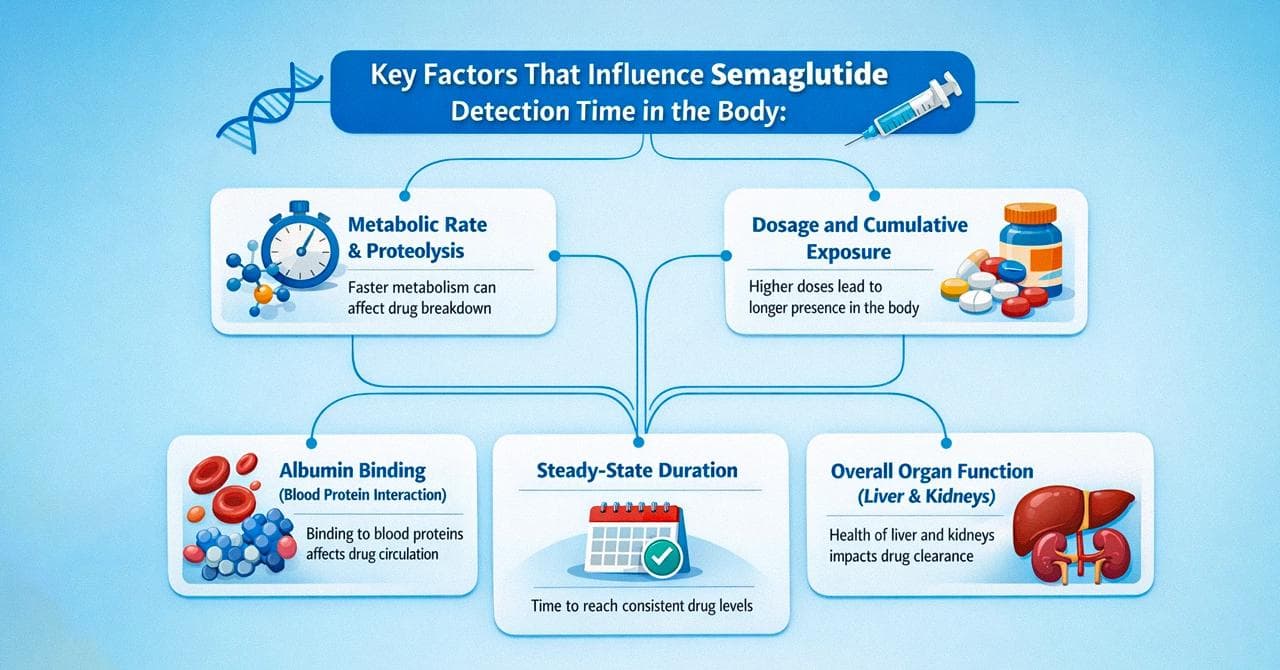
Key Factors That Influence Semaglutide Detection Time in the Body
- Metabolic Rate & ProteolysisSemaglutide is a peptide drug and is primarily broken down through proteolytic metabolism (enzymatic breakdown) rather than direct kidney filtration. A slower metabolic rate can delay this process, keeping the drug detectable for longer.
- Dosage and Cumulative ExposureHigher maintenance doses (e.g., 2.4 mg) and long-term use lead to greater drug accumulation in the body, which can extend the time required for levels to fall below detectable limits.
- Albumin Binding (Blood Protein Interaction)Semaglutide binds strongly to albumin, a key blood protein. This binding slows its release and clearance. Variations in albumin levels may slightly influence how long the drug remains in circulation.
- Steady-State DurationAfter 4-5 weeks of consistent weekly dosing, Semaglutide reaches a steady state in the body. Patients on long-term therapy may have a slightly longer washout period.
- Overall Organ Function (Liver & Kidneys)Healthy liver and kidney function support efficient removal of the drug’s metabolic byproducts.
Does Semaglutide Affect Routine Blood Work or Lab Results?
Semaglutide does not show up on standard drug screenings or routine blood tests, such as a Complete Blood Count (CBC) or Comprehensive Metabolic Panel (CMP). However, it significantly affects metabolic markers.
- HbA1c and fasting glucose: Decrease due to improved blood sugar control
- Lipid levels: Cholesterol and triglycerides may improve
- Kidney and liver markers: Monitored during treatment (changes may occur due to dehydration, not direct drug toxicity)
Semaglutide is highly unlikely to cause false positives on standard drug tests.
Is Semaglutide Tested in Standard Blood Tests or Drug Screens?
A common concern is whether Semaglutide (Ozempic/Wegovy) will appear on a 5-panel or 10-panel employment drug screen. The short answer is no. Standard drug tests are designed to detect controlled substances such as:
- Amphetamines and cocaine
- Opioids and phencyclidine (PCP)
- Cannabis (tetrahydrocannabinol-THC)
Because Semaglutide is a peptide hormone, not a narcotic or stimulant, it is not included in these screenings. Similarly, routine medical tests like a CBC or CMP focus on general health markers rather than identifying specific prescription drugs.
Does Semaglutide Show Up on Blood Tests or Drug Tests?
Yes, but only through specialized laboratory methods such as liquid chromatography mass spectrometry (LC-MS/MS). These tests are complex, costly, and typically used in clinical research or forensic settings, not in routine healthcare or workplace testing.
Safety Considerations When Semaglutide Is Still in Your System
Semaglutide remains in the body for approximately 5 to 7 weeks after the last dose. This period is also referred to as the washout period, meaning the time required for the drug to fully clear from the body. During this phase, here are the key safety considerations patients should be aware of:
- Ongoing Side Effects: Gastrointestinal symptoms such as nausea, vomiting, diarrhea, and constipation may continue due to the drug’s long half-life.
- Surgery and Anesthesia Risk: The American Society of Anesthesiologists (ASA) recommends stopping weekly Semaglutide at least 1 week before elective surgery to reduce aspiration risk.
- Blood Sugar Changes: Glucose levels may fluctuate in diabetic patients as the medication wears off, requiring monitoring to avoid hypo- or hyperglycemia.
- Hydration and Kidney Safety: Dehydration from reduced intake or gastrointestinal side effects may temporarily affect kidney function markers.
- Gallbladder Risk: Weight loss and metabolic changes may increase the risk of gallbladder-related complications in some individuals.
- Pregnancy and Conception Planning: Guidance recommends stopping Semaglutide at least 2 months before pregnancy to ensure complete clearance from the body.
These precautions apply throughout the full 5-7 week elimination window as Semaglutide gradually clears from the system.
Semaglutide Blood Detection vs Other GLP-1 Medications
GLP-1 receptor agonists differ in how long they stay in the body due to variations in half-life and protein binding. Semaglutide has one of the longest clearance times in its class, based on pharmacokinetic data from comparative studies (PMC11944337, PMC12155001). Below is the GLP-1 drug clearance time comparison (based on half-life pharmacokinetics):
| Medication | Common Brands | Half-Life | Estimated Blood Detection Window |
|---|---|---|---|
| Semaglutide | Ozempic / Wegovy | ~7 days | ~5-7 weeks |
| Tirzepatide | Mounjaro / Zepbound | ~5 days | ~4-5 weeks |
| Dulaglutide | Trulicity | ~5 days | ~3-4 weeks |
| Liraglutide | Victoza / Saxenda | ~13 hours | ~2-3 days |
| Exenatide | Byetta | ~2.4 hours | <1 day |
← Swipe to see more →
Final Verdict: How Long Does Semaglutide Show Up in the Blood Test After the Last Dose?
Semaglutide is not included in standard drug screens or routine medical panels. It does not appear in employment or general healthcare testing. However, due to its long half-life, it remains in the body for about 5-7 weeks after the last dose. Detection requires specialized laboratory methods that are rarely used in routine practice. Because its effects gradually fade over this period, a 5-week washout period is generally considered for surgical safety. A ~2-month guideline is commonly recommended for pregnancy planning to ensure complete clearance.
Frequently Asked Questions
Yes, Semaglutide can be detected for several weeks after stopping treatment, but only through specialized laboratory testing. It is not detected in routine blood tests or standard drug screening panels.
Semaglutide is detected using advanced methods such as liquid chromatography–mass spectrometry (LC-MS/MS). These tests are typically used in research or specialized clinical settings, not in routine healthcare.
Yes. You should always inform your doctor. Semaglutide slows gastric emptying, so anesthesia guidelines recommend stopping weekly GLP-1 medications at least 1 week before elective surgery to reduce aspiration risk.
Medical Disclaimer
This content is for informational purposes only and does not constitute medical advice. Semaglutide effects and clearance may vary based on individual health conditions. Always consult a licensed healthcare provider or qualified specialist before starting, stopping, or changing any medication.