Is Watermelon Good for Type 2 Diabetes? Benefits and Risks Explained
If you’re wondering “is watermelon good for type 2 diabetes,” the short answer is: yes, but only in controlled portions. Watermelon contains natural sugars (fructose) and has a high glycemic index, meaning it can raise blood glucose levels quickly. However, because it is mostly water and relatively low in carbohydrates per serving, its overall impact depends on how much you eat.
The National Institute of Diabetes and Digestive and Kidney Diseases (NIDDK) states that carbohydrates from food are converted into glucose and directly affect blood sugar levels, making portion control essential in diabetes management. So, watermelon is not off-limits, but large portions can still raise blood glucose levels. This guide explains how watermelon affects blood glucose levels, its benefits and risks, and how to eat it safely with type 2 diabetes.
How Does the Watermelon Glycemic Index Affect Type 2 Diabetes?
The watermelon glycemic index is considered high, but that alone does not determine whether it is good or bad for type 2 diabetes. According to USDA nutrition data, portion size plays a key role in its overall effect on blood glucose levels.
Glycemic Load vs. Glycemic Index
| Factor | What It Means | Impact on Type 2 Diabetes |
|---|---|---|
| Glycemic Index (GI) | Measures how quickly a food raises blood glucose levels | Watermelon has a high GI, so it can raise blood sugar quickly when eaten alone |
| Glycemic Load (GL) | Accounts for both GI and the amount of carbohydrates in a serving | A typical portion contains fewer carbs, so the overall blood glucose impact is lower |
← Swipe to see more →
Because watermelon is over 90% water, a standard serving provides a relatively small amount of carbohydrates. Since your body converts carbohydrates into glucose, the total portion you eat has a greater effect on blood glucose levels than the glycemic index alone.
What Is the Watermelon Sugar Content and Carb Impact for Type 2 Diabetes?
Understanding watermelon sugar content helps you decide how it fits into your daily carbohydrate intake.
| Nutrient | Approximate Amount (1 cup diced) | Why It Matters for Diabetes |
|---|---|---|
| Carbohydrates | ~11-12 grams | Directly affects blood glucose levels |
| Natural sugars | ~9 grams | Contribute to total carb intake, even though they are not added sugars |
| Calories | ~45-50 kcal | Low-calorie, but still requires portion control |
← Swipe to see more →
This sugar comes from natural sugars, not added sugars. Because of this, watermelon should be counted as part of your daily carbohydrate intake, especially if you are monitoring blood glucose levels or following a structured diabetes meal plan.
Can People with Type 2 Diabetes Eat Watermelon?
Yes, people with type 2 diabetes can eat watermelon, but only when portion size is controlled. If you’re asking, can diabetics eat watermelon? The answer depends on how it fits into your total carbohydrate intake. According to the Centers for Disease Control and Prevention (CDC), managing diabetes requires eating the right foods in the right amounts at the right times to keep blood glucose levels within a target range. This means watermelon can be included in your diet, but it should not be eaten freely or in large portions.
What Are the Benefits of Watermelon for Type 2 Diabetes?
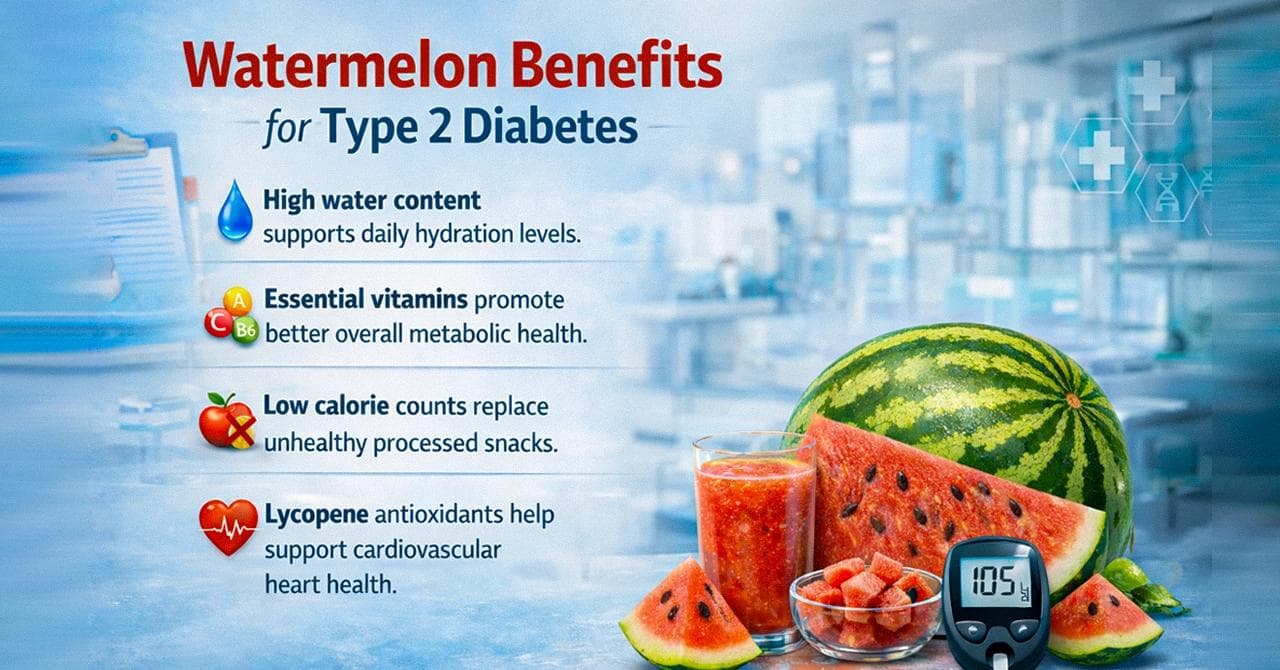
Watermelon does not treat type 2 diabetes, but it can be part of a balanced diet when eaten in controlled portions. Here are the relevant benefits:
- Supports hydration: Watermelon is over 90% water, which helps contribute to daily fluid intake.
- Provides essential nutrients: It contains vitamins such as vitamin A and vitamin C, which support overall health.
- Low-calorie option: Watermelon is relatively low in calories, making it a better choice compared to high-calorie processed snacks.
- May support heart health: It contains antioxidants like lycopene, which are associated with cardiovascular health.
How to Eat Watermelon Safely with Type 2 Diabetes
If you want to include watermelon in your diet, how you eat it matters as much as how much you eat.
- Control portion size: Stick to about 1 cup of diced watermelon per serving to keep carbohydrate intake manageable.
- Do not eat it alone: Pair watermelon with protein or healthy fats to help slow glucose absorption, as mixed meals can reduce rapid increases in blood glucose levels.
- Avoid juice forms: Watermelon juice removes the natural structure of the fruit, leading to faster sugar absorption.
- Include it within your meal plan: Count it as part of your daily carbohydrate intake to avoid exceeding your limit.
Individual responses to carbohydrate intake may vary depending on medications, insulin use, and overall blood glucose control.
Final Answer: Is Watermelon Good for Type 2 Diabetes?
So, is watermelon good for type 2 diabetes? Yes, but only when eaten in controlled portions. While watermelon can raise blood glucose levels due to its natural sugars and high watermelon glycemic index, its overall impact depends on portion size and how you include it in your diet. When managed properly, watermelon is not bad for diabetics and can be part of a balanced plan. The key is to treat it as a carbohydrate source, monitor your intake, and include it in a way that supports stable blood glucose levels.
Frequently Asked Questions
Watermelon can be included in a diabetes diet, but it should be eaten in controlled portions and within your daily carbohydrate intake rather than consumed freely or in large amounts.
Watermelon can raise blood glucose levels because it has a high glycemic index. However, its glycemic load is relatively low, so smaller portions are less likely to cause significant spikes.
Approximately 1 cup of diced watermelon per serving is generally considered a safe portion. This provides around 11-12g of carbohydrates and should be included in your daily carbohydrate-counting plan.
No, watermelon is not bad for diabetics when eaten in moderation. Problems usually occur when it is consumed in large amounts or without considering total carbohydrate intake.
People with poorly controlled blood sugar, frequent glucose spikes, especially after high-carbohydrate meals, or those not actively tracking carbohydrate intake may need to limit or avoid watermelon until their levels are more stable.
Yes, watermelon is better tolerated when eaten as part of a balanced meal rather than on its own. This helps manage how quickly sugars affect your blood glucose levels.
Important Disclaimer
This blog is provided for informational purposes only and does not replace expert medical guidance, diagnosis, or treatment. The information is based on trusted sources, including the FDA and National Institutes of Health (NIH), but individual responses may vary. Always consult an authorized healthcare professional before making treatment decisions.