How to Diagnose Bipolar Disorder in 2026?
Understanding how to diagnose bipolar disorder in 2026 involves a detailed mental health evaluation to identify patterns of manic, hypomanic, and depressive episodes. Clinicians review medical and psychiatric history, conduct interviews, and may use mood tracking. Additional tests help rule out other conditions, as diagnosis depends on consistent mood patterns rather than a single test.
What Are the Diagnostic Criteria for Bipolar Disorder?
According to the National Institutes of Health (NIH), healthcare professionals use DSM-5 criteria to diagnose bipolar disorder, which defines manic, hypomanic, and depressive episodes based on specific symptoms and duration requirements. The diagnosis also involves distinguishing between bipolar 1 vs bipolar 2 diagnosis, based on the severity and duration of manic or hypomanic episodes.
Manic Episode Criteria
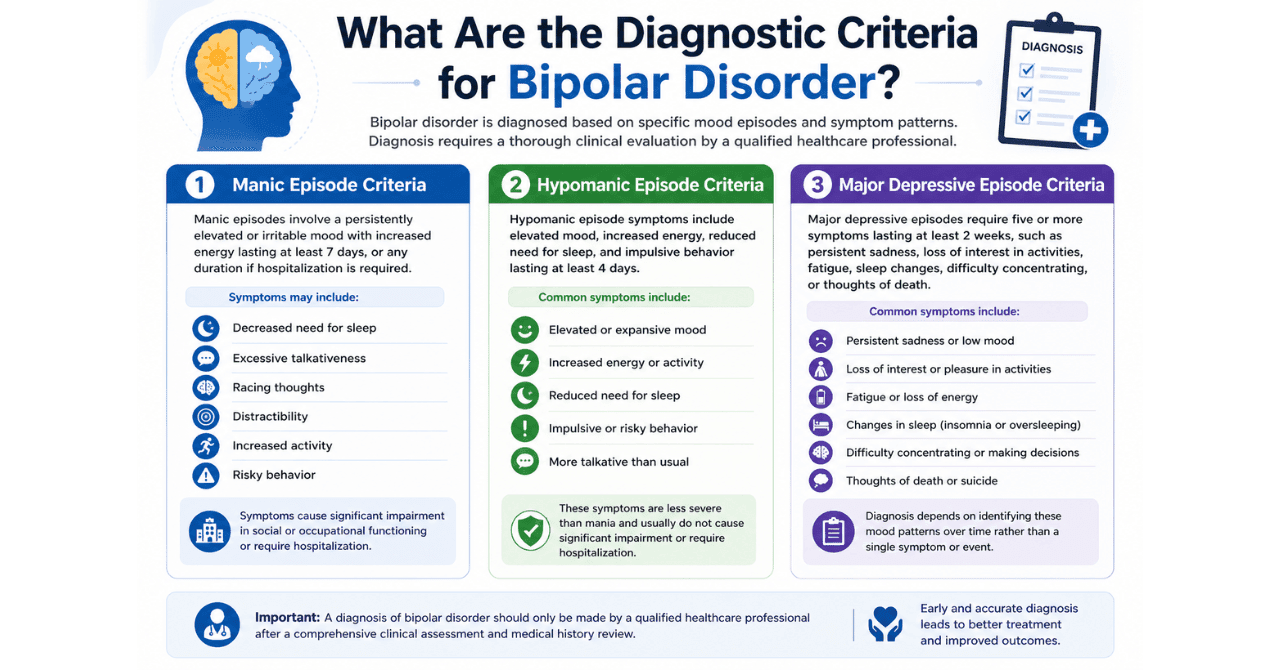
Manic episodes involve a persistently elevated or irritable mood with increased energy lasting at least 7 days, or any duration if hospitalization is required. Symptoms may include decreased need for sleep, excessive talkativeness, racing thoughts, distractibility, increased activity, or risky behavior.
Hypomanic Episode Criteria
Hypomanic episode symptoms include elevated mood, increased energy, reduced need for sleep, and impulsive behavior lasting at least 4 days. These symptoms are less severe than mania and usually do not cause significant impairment or require hospitalization.
Major Depressive Episode Criteria
Major depressive episodes require five or more symptoms lasting at least 2 weeks, such as persistent sadness, loss of interest in activities, fatigue, sleep changes, difficulty concentrating, or thoughts of death. Diagnosis depends on identifying these mood patterns over time rather than a single symptom or event.
While these criteria define bipolar disorder, doctors use a structured clinical process to apply them in real-world diagnosis.
How Doctors Diagnose Bipolar Disorder (Process and Tests)
Doctors diagnose bipolar disorder through a structured clinical evaluation, not a single test, by identifying mood patterns over time and ruling out other conditions.
Clinical Interview and Mental Health Evaluation
A psychiatrist for bipolar diagnosis, psychologist, or physician assesses symptoms of mania, hypomania, and depression, including changes in mood, energy, sleep, behavior, and functioning, using DSM-5-TR criteria.
Symptom history and mood patterns
Doctors assess long-term mood patterns, including:
- Frequency and duration of mood episodes
- Triggers or life events
- Impact on work, relationships, and daily life
Mood charts or tracking tools may be used to identify recurring patterns.
Family and medical history
A family history of mood disorders, including bipolar disorder, increases the likelihood of diagnosis, as genetic factors play an important role in the condition. Doctors also assess past medical conditions, medications, or substance use that could influence symptoms.
Physical examination and lab tests
There is no blood test to confirm bipolar disorder. Still, doctors may order tests (e.g., thyroid function tests, metabolic panels) to rule out medical causes such as thyroid disorders, neurological conditions, or medication effects that can mimic mood symptoms.
Psychological screening tools
Clinicians may use validated questionnaires, such as the Mood Disorder Questionnaire (MDQ), to support assessment. These tools help screen for bipolar symptoms but do not replace a clinical diagnosis. In some cases, tools such as the Bipolar Spectrum Diagnostic Scale (BSDS) may be used alongside screening questionnaires.
Differential diagnosis (ruling out other conditions)
Doctors perform a differential diagnosis of depression vs bipolar disorder and distinguish it from conditions with overlapping symptoms, including:
- Major depressive disorder
- Anxiety disorders
- Comorbid conditions such as ADHD and bipolar disorder
- Substance-induced mood disorders
An accurate diagnosis depends on identifying distinct episodes of elevated mood (mania or hypomania) alongside depressive periods.
Important: Bipolar disorder is diagnosed based on consistent mood episode patterns over time, not a single visit or test. In many cases, diagnosis may require multiple assessments to confirm symptom patterns.
Who Should Get Evaluated for Bipolar Disorder?
Individuals should be evaluated for bipolar disorder if they experience recurring mood changes, including periods of elevated mood, increased energy, or depression that affects daily functioning. Those with repeated depressive episodes that do not respond to treatment may also require further assessment.
A family history of mood disorders, including bipolar disorder, increases risk. Persistent patterns such as impulsive behavior, reduced need for sleep, and noticeable mood shifts should be assessed by a qualified mental health professional. Research published in PubMed Central also shows that early symptom recognition and family history are important factors in identifying individuals who may require diagnostic evaluation.

Can Bipolar Disorder Be Misdiagnosed?
Yes, bipolar disorder is commonly misdiagnosed. The most frequent issue is diagnosing it as major depressive disorder, because many individuals seek help during depressive episodes, while past mania or hypomania goes unreported.
Bipolar disorder can also be confused with conditions that share overlapping symptoms, including:
- Anxiety disorders (restlessness, sleep disturbance)
- ADHD (impulsivity, distractibility)
- Borderline personality disorder (mood instability)
- Substance-related conditions (mood changes linked to use or withdrawal)
Misdiagnosis often occurs when longitudinal mood history is incomplete or when elevated episodes are mild or overlooked. As a result, treatment may focus only on depression, which can delay proper management.
Accurate diagnosis depends on identifying distinct patterns of manic or hypomanic episodes over time, along with depressive symptoms, rather than relying on a single episode or short-term assessment.
How Long Does It Take to Diagnose Bipolar Disorder?
Many people ask, how long does it take to diagnose bipolar disorder. Diagnosis can take multiple visits over weeks or months, as clinicians need to observe consistent patterns of mood episodes. In some cases, it may take longer if symptoms are unclear or overlap with other conditions.
The Final Thoughts on Diagnosing Bipolar Disorder in 2026
So, how to diagnose bipolar disorder in 2026? Diagnosing bipolar disorder in 2026 relies on a careful, evidence-based approach that focuses on identifying consistent mood episode patterns. There is no single test, so an accurate diagnosis depends on a detailed clinical evaluation, symptom history, and ruling out other medical or mental health conditions.
Early recognition and comprehensive assessment by a qualified professional are essential to avoid misdiagnosis and ensure appropriate treatment. As awareness and diagnostic tools continue to improve, timely evaluation and consistent monitoring remain key to managing bipolar disorder effectively and supporting long-term mental health outcomes.
Frequently Asked Questions
Yes, a primary care doctor can identify symptoms and provide an initial assessment, but bipolar disorder is typically diagnosed by a psychiatrist or licensed mental health professional.
Yes, bipolar disorder can be assessed through telehealth consultations with licensed mental health professionals. Online evaluations include clinical interviews and symptom assessments similar to in-person visits.
Bipolar disorder is a long-term condition, but it can be effectively managed with consistent treatment, including medication, therapy, and lifestyle changes. Early diagnosis, regular follow-up, and adherence to treatment help maintain stability and improve quality of life.
Medical Disclaimer
This blog is provided for informational purposes only and does not replace professional medical advice, diagnosis, or treatment. Information is based on trusted sources, including peer-reviewed studies and recognized medical organizations. Always consult an authorized healthcare professional before making treatment decisions.