How to Gain Weight and Muscle with Fast Metabolism
Gaining size can feel challenging when your body burns calories quickly, but it’s achievable with a structured plan. How to Gain Weight and Muscle with Fast Metabolism begins with maintaining a consistent calorie surplus, prioritizing nutrient-dense meals, and following a progressive strength-training program. By consistently fueling your body with adequate protein, carbohydrates, and healthy fats while supporting recovery, you can promote muscle growth and achieve gradual, sustainable weight gain.
Why Is It Hard to Gain Weight with a Fast Metabolism?
Gaining weight is challenging when your body uses energy more efficiently than it stores it. Even at rest, a higher basal metabolic rate (BMR) increases calorie expenditure, making it harder to sustain the surplus required for weight gain. Over time, the body may also adapt by increasing energy output when intake rises, further slowing progress. Several factors contribute to this metabolic "speed":
- High NEAT Levels: Non-exercise activity thermogenesis (daily movement like fidgeting, walking, posture) can quietly burn hundreds of extra calories.
- Genetics: Some individuals are naturally predisposed to lean body types with faster energy turnover and lower fat storage.
- Appetite Regulation: Faster metabolism can be linked with stronger satiety signals, making it difficult to consistently eat enough.
- Lifestyle & Stress: Intense activity and chronic stress elevate cortisol, which may increase energy expenditure and affect appetite patterns.
- Underlying Conditions: Medical issues such as hyperthyroidism can significantly raise metabolic rate and should be evaluated if weight gain remains difficult despite adequate intake.
How to Calculate a Calorie Surplus for Muscle Growth
To build muscle, you generally need to consume more energy than you burn. Start by estimating your TDEE (total daily energy expenditure), then add a controlled calorie surplus.
Steps to Calculate a Calorie Surplus for Muscle Growth
- Calculate Your Maintenance Calories (TDEE): Multiply body weight in pounds by 14 to 16 based on activity level.
- Add a Calorie Surplus for Muscle Growth:
- Lean Bulk: Add 200 to 300 calories per day.
- Moderate Bulk: Add 300 to 500 calories per day.
- Set a Weekly Weight Gain Target: Aim for about 0.25 to 0.5 percent body weight gain per week.
- Track and Adjust Your Calorie Surplus: Monitor progress for 1 to 2 weeks.
- If you are not gaining, increase intake by about 200 calories.
- If you are gaining too quickly, reduce intake slightly.
Tip: A 5 to 10 percent calorie surplus above maintenance supports steady, lean muscle growth.

Best High-Calorie Foods to Gain Weight Fast
To gain weight without feeling overly full, focus on calorie-dense foods that deliver more energy in smaller portions.
1. Healthy Fats and Proteins
- Nuts and nut butters: Peanut or almond butter (about 180 to 200 calories per two tablespoons).
- Avocados: Around 250 to 300 calories per fruit.
- Animal protein: Chicken thighs, red meat, and fatty fish like salmon.
- Healthy oils: One tablespoon of olive oil adds about 120 calories.
2. Complex Carbohydrates
- Grains: Rice, pasta, oats, and quinoa are easy meal bases.
- Starchy vegetables: Potatoes and sweet potatoes.
- Dried fruits: Dates, raisins, and apricots for quick calorie boosts.
3. Full-Fat Dairy
- Whole milk and yogurt: High in calories and protein
- Cheese: Easy way to increase total intake
4. Liquid Calories (Easy Intake Boost)
- If eating large meals is difficult, use high-calorie smoothies. Blend milk, oats, peanut butter, and a protein source to increase calories without increasing fullness.
Combining all three macronutrients in meals improves calorie consistency and supports muscle recovery efficiency.
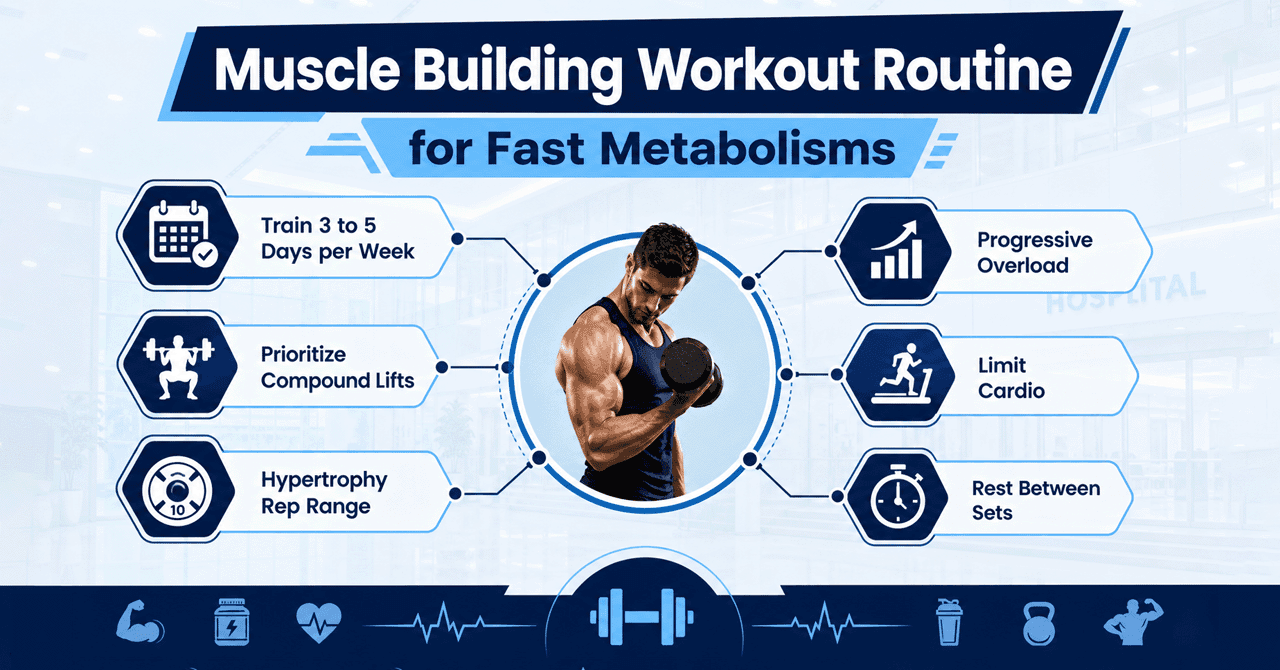
Muscle Building Workout Routine for Fast Metabolisms
To build muscle without burning excessive calories, focus on high intensity with controlled volume and proper recovery.
- Train 3 to 5 Days per Week: Allows muscle growth without excessive calorie burn.
- Prioritize Compound Lifts: Squats, deadlifts, bench press, rows.
- Hypertrophy Rep Range: 6 to 12 reps with challenging weights.
- Progressive Overload: Gradually increase weight or reps each week.
- Limit Cardio: Keep sessions short, around 15 to 20 minutes.
- Rest Between Sets: 90 to 120 seconds for strength and recovery.
Why Recovery and Sleep Are Crucial for High-Metabolism Gainers
Muscle is built during recovery, not just training. For high-metabolism individuals, poor recovery can limit muscle growth and slow weight gain.
- Protein Synthesis: Deep sleep is when muscle repair and growth occur
- Hormonal Balance: Low sleep increases cortisol and reduces growth hormone
- Energy Conservation: Proper rest helps maintain a calorie surplus
- Central Nervous System (CNS) Recovery: Rest supports strength and performance in workouts
Goal: Aim for 7 to 9 hours of quality sleep. If fatigue or soreness persists, add an extra rest day to support recovery.
Read more about why bodybuilders take insulin for muscle growth and the associated risks.
Common Mistakes to Avoid When Gaining Muscle as a Hardgainer
Even with a perfect plan, small errors can stall progress. Use this checklist to troubleshoot your weight gain journey:
| Category | The Common Mistakes | The Better Strategy |
|---|---|---|
| Diet | Estimating calories by guesswork | Track intake consistently to stay in a surplus |
| Skipping meals or inconsistent eating | Follow a structured, regular eating pattern | |
| Training | Too much cardio or overtraining | Keep workouts focused and energy-efficient |
| Ignoring compound movements | Base workouts on multi-joint lifts | |
| No progression in training | Gradually increase load or intensity | |
| Recovery | Ignoring sleep quality | Prioritize deep, consistent rest |
| Training while overly fatigued | Allow proper recovery between sessions | |
| Mindset | Expecting fast results | Stay consistent with a long-term approach |
| Constantly changing routines | Stick to a structured program |
← Swipe to see more →
Final Thoughts on How to Gain Weight and Muscle with Fast Metabolism
Gaining weight and muscle with a fast metabolism requires consistency in three areas: a controlled calorie surplus, progressive strength training, and proper recovery. When these elements are maintained over time, the body can efficiently build muscle instead of burning excess energy. While progress may be gradual, tracking intake, staying disciplined, and following a structured plan ensure sustainable and lean weight gain without unnecessary fat accumulation.
Frequently Asked Questions
Start with your maintenance calories (TDEE), then eat about 200 to 500 calories more per day. The exact number varies by body size and activity level, so track your weight for 1 to 2 weeks and adjust intake if you are not gaining steadily.
Yes. Muscle gain is possible if you maintain a consistent calorie surplus, eat enough protein, and follow progressive strength training. A fast metabolism may slow the rate, but it does not prevent muscle growth.
Train 3 to 5 times per week, focusing on strength-based workouts. This frequency supports muscle growth while allowing enough recovery to avoid excessive calorie burn.
Medical Disclaimer
This content is for informational purposes only and does not constitute medical advice. Information about gaining weight and muscle with a fast metabolism may vary based on individual health status, medical history, and lifestyle factors. Always consult a licensed healthcare provider or registered dietitian before making significant changes to your exercise routine, diet, or overall health plan.