Ibsrela vs. Linzess: Which IBS-C Treatment Works Better in 2026?
Living with Irritable Bowel Syndrome with Constipation (IBS-C) can feel like a continuous cycle of discomfort. It can impact daily life through symptoms such as persistent abdominal pain, bloating, and infrequent bowel movements. As treatment approaches continue to evolve, medications like Ibsrela and Linzess have become widely prescribed options in the U.S. for managing IBS-C symptoms.
While the U.S. Food & Drug Administration (FDA) approves both medications, they work through different mechanisms and may suit different patient needs. Understanding their effectiveness, side effects, and overall suitability is essential for making an informed treatment decision in 2026.
Which Works Better in 2026: Ibsrela vs. Linzess for IBS-C Treatment
In 2026, the choice between Ibsrela (tenapanor) and Linzess (linaclotide) depends on how your body responds to their distinct mechanisms; neither is universally superior.
- Linzess is often the first-line option, acting as a secretagogue to increase gut fluid, flush the system, and reduce pain signals. It is highly effective for those seeking a once-daily “reset” for bowel movements.
- Ibsrela works as a retainagogue, limiting sodium absorption and keeping water in the stool, producing softer, more natural bowel movements with less sudden urgency. It is preferred by patients who find Linzess too strong or ineffective.
The optimal choice depends on individual symptoms, tolerance, and personal response.
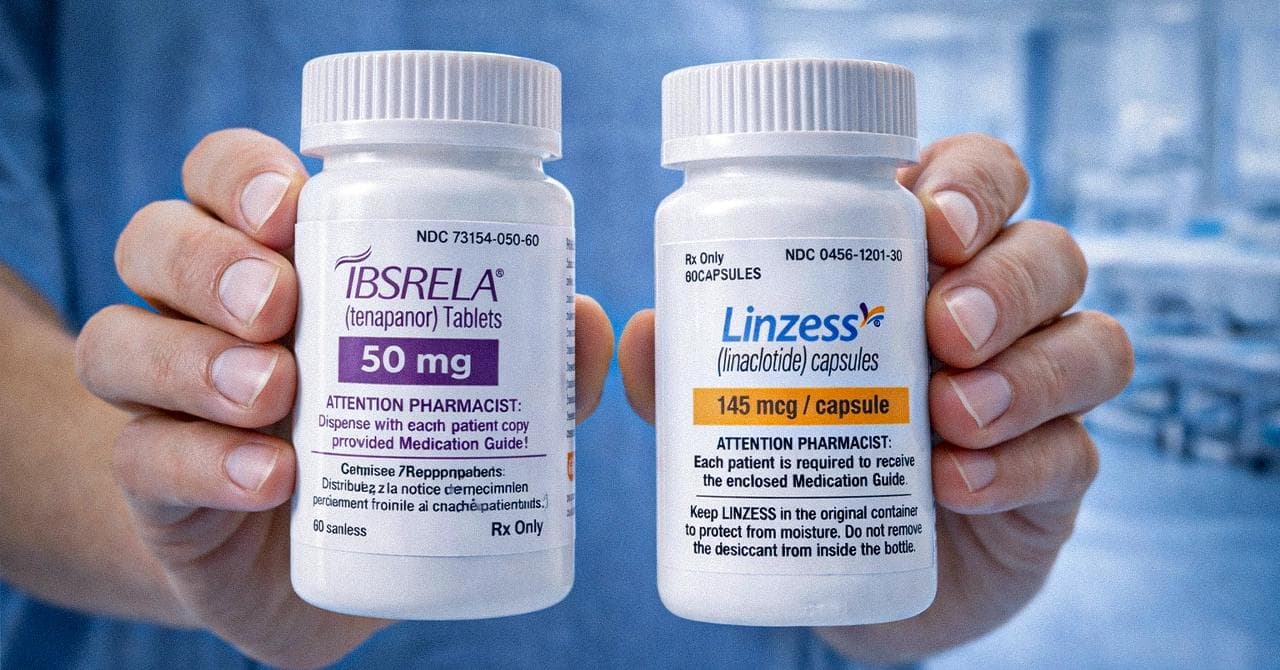
How Ibsrela vs. Linzess Works (Key Differences Explained)
Understanding how Ibsrela and Linzess work helps explain why patients may respond differently to each treatment. Although both target IBS-C symptoms, they act on different pathways in the gut.
How Ibsrela (Tenapanor) Works
Ibsrela is an NHE3 inhibitor that works locally in the intestines.
- It reduces sodium absorption from the gut
- This allows more water to remain in the intestinal lumen
- The result is softer stool and improved bowel movement frequency
- It may also help reduce visceral hypersensitivity linked to abdominal pain
This mechanism supports a fluid-retention approach within the gut, rather than stimulating secretion.
How Linzess (Linaclotide) Works
Linzess is a guanylate cyclase-C (GC-C) agonist that acts on intestinal receptors.
- It increases chloride and bicarbonate secretion into the intestines
- This draws water into the gut, helping accelerate stool transit
- It also raises cyclic GMP levels, which can reduce pain signaling
This reflects a fluid-secretion mechanism that actively increases intestinal fluid.
Is Ibsrela More Effective Than Linzess for Abdominal Pain and Bloating?
Ibsrela and Linzess are both clinically effective for reducing abdominal pain and bloating in IBS-C. Current evidence suggests comparable overall efficacy, with no consistent data showing one is universally superior. However, patient response may differ:
- Ibsrela: Some patients report better improvement in abdominal pain, likely due to its effect on gut sensitivity
- Linzess: Also improves pain and bloating, with strong clinical outcomes across broader IBS-C symptoms
Linzess Side Effects vs. Ibsrela Side Effects (Diarrhea and Safety)
Both Linzess and Ibsrela are commonly prescribed for IBS-C, but their side-effect patterns, especially diarrhea, differ in frequency, timing, and tolerability.
Side-by-side comparison based on FDA-approved Phase 3 clinical trials:
| Side Effect | Linzess (290 mcg) | Ibsrela (50 mg) |
|---|---|---|
| Diarrhea (overall) | ~19-20% | ~15-16% |
| Severe diarrhea | ~2% | ~2-3% |
| Discontinuation (due to diarrhea) | ~4-5% | ~6-7% |
| Abdominal distension (bloating) | ~2% | ~2-3% |
| Flatulence (gas) | ~4-5% | ~3-4% |
| Dizziness | Rare (<1%) | ~2% |
← Swipe to see more →
- Linzess tends to cause more frequent but often short-term diarrhea.
- Ibsrela may have slightly better incidence rates, but a higher likelihood of stopping treatment due to tolerability.
Both medications can cause severe diarrhea and dehydration. Persistent symptoms should be medically evaluated.
Ibsrela 50 mg vs. Linzess 290 mcg: Dosage and How to Take Them
| Factor | Ibsrela (50 mg) | Linzess (290 mcg) |
|---|---|---|
| Standard dose | 50 mg | 290 mcg |
| Frequency | Twice daily | Once daily |
| When to take | Immediately before breakfast & dinner | On an empty stomach, 30 minutes before the first meal |
| With food? | Must be taken before meals | Must be taken before eating |
| Capsule/tablet handling | Swallow whole | Can be swallowed whole or mixed with applesauce/water |
| Missed dose | Skip and continue the next dose | Skip and take the next scheduled dose |
← Swipe to see more →
Cost and Insurance Coverage for Ibsrela vs. Linzess in 2026
When comparing Ibsrela and Linzess for IBS‑C treatment, cost and coverage are common concerns for patients, especially in the U.S.
At Polar Bear Meds, we strive to help patients access prescription medications more affordably by offering competitive pricing and support with orders from licensed Canadian pharmacy partners.
- Retail cost: Without insurance, IBS‑C treatments like Linzess and Ibsrela can be expensive in the United States. Many patients pay hundreds of dollars per month at retail pharmacy prices.
- Insurance coverage: Both medications may be covered by commercial plans, but coverage and copays vary widely by insurer and plan. Prior authorization is often required.
- Saving options: Purchasing through our Canadian pharmacy network can provide significant savings compared with typical U.S. retail prices, with access to licensed pharmacists and support throughout the process.
Actual costs and coverage depend on your individual insurance plan and pharmacy benefit. Always check with your insurer or pharmacist for current pricing and coverage details.
Can You Switch from Linzess to Ibsrela? (Patient Guide)
If Linzess isn’t working well or causes side effects, switching to a Linzess alternative, such as Ibsrela (Tenapanor), is common. Both act locally in the gut but via different mechanisms, so some patients respond better after the switch.
Key Steps on How to Safely Switch from Linzess to Ibsrela
- Consult your doctor: Never start or stop medications on your own. Ibsrela is for adults (18+) only.
- Washout period: Wait approximately 24 hours after your last Linzess dose before starting Ibsrela to reduce overlap and diarrhea risk.
- Follow proper timing:
- Linzess: Once daily, on an empty stomach
- Ibsrela: Twice daily, before meals
- Monitor your response: Track bowel habits, abdominal pain, and any dizziness (which occurs in approximately 2% of patients with Ibsrela).
- Why it may help: Ibsrela’s sodium-blocking mechanism can improve symptoms like pain and reduce urgency compared to Linzess.
- Safety reminder: Contact your doctor if severe diarrhea, dizziness, or dehydration occurs.
Ibsrela vs. Linzess: FDA Approval, Safety, and Key Comparison (2026)
| Feature / Factor | Linzess (Linaclotide) | Ibsrela (Tenapanor) |
|---|---|---|
| FDA Approval Year | 2012 | 2019 |
| Approved Indications | IBS-C (adults & children 7+), Chronic Idiopathic Constipation (CIC, children 6+) | IBS-C (adults only) |
| Pediatric Approval | Yes (IBS-C ≥7 years, CIC ≥6 years) | No (18+ only) |
| Adult Approval | Yes | Yes |
| Boxed Warning | Serious dehydration in children <2 years | Serious dehydration in children <6 years |
| Pros | - Broad constipation relief - Pediatric approval - Extensive long-term safety data | - Alternative for adults intolerant to Linzess - Targets severe abdominal pain - Slightly lower diarrhea incidence for some patients |
| Discontinuation Rate (Diarrhea) | Approximately 4-5% | Approximately 6-7% |
| Monitoring / Safety Notes | Monitor for severe diarrhea, dehydration | Monitor for diarrhea, dizziness, and dehydration; the first week's response varies |
← Swipe to see more →
The Verdict: Does Ibsrela or Linzess Work Better for IBS-C in 2026?
Both Ibsrela (Tenapanor) and Linzess (Linaclotide) are FDA-approved, effective treatments for IBS-C in adults. Linzess is often first-line due to its broad constipation relief and long-term safety data, including pediatric approval. Ibsrela is a key Linzess alternative for adults who need targeted relief from abdominal pain or cannot tolerate Linzess. Choice should be individualized, considering symptom patterns, side-effect profiles, and dosing convenience. Insurance coverage and guidance from a healthcare professional are also important for safe, optimal results.
Frequently Asked Questions
No, Ibsrela (Tenapanor) and Linzess (Linaclotide) are not recommended without direct medical supervision. Both increase intestinal fluid and can over-treat constipation, raising the risk of severe diarrhea and dehydration. Always consult a healthcare provider before combining IBS-C medications.
Ibsrela may help reduce bloating more effectively in some patients, likely due to its effect on sodium absorption and gut sensitivity. However, both drugs reduce bloating overall, and individual responses vary.
Ibsrela can start improving IBS-C symptoms, including bowel movements and abdominal discomfort, within about 1 week for many patients, based on clinical trial data.
No. As of 2026, neither Ibsrela (Tenapanor) nor Linzess (Linaclotide) has a generic version available in the U.S.
Medical Disclaimer
This blog is for informational purposes only and does not replace professional medical advice. Individual responses to Ibsrela, Linzess, or other IBS-C treatments may vary. Always consult a licensed healthcare provider before starting, switching, or adjusting any IBS-C medication.