What Types of Medications Can Cause Constipation?
Constipation is a common but often overlooked side effect of many medications, including antidepressants, antihistamines, blood pressure drugs, and nonsteroidal anti-inflammatory drugs (NSAIDs) like ibuprofen and aspirin. It is typically defined as having fewer than three bowel movements per week or passing hard, difficult stools. While factors like diet, hydration, and physical activity play an important role in digestion, certain medications can significantly slow bowel movements. If you’re experiencing persistent constipation, reviewing the medicines you take, along with your daily habits, can help identify the underlying cause.
Why Certain Medications Can Cause Constipation?
Certain medications can cause constipation because they affect how the digestive system moves, absorbs fluids, and responds to nerve signals. In many cases, these factors slow the passage of stool through the intestines, making bowel movements less frequent and harder to pass. These changes are a common cause of drug-induced constipation, especially with long-term medication use.
Medications may cause constipation in several ways:
- Slowing Intestinal Movement (gut motility)
Some medications reduce the natural muscle contractions that move stool through the digestive tract. When stool moves more slowly, the body absorbs more water from it, making it dry and difficult to pass.
- Reducing Fluid in the Intestines
Certain drugs affect how fluids are absorbed in the intestines. Less fluid in the stool can make it harder and more compact, increasing the risk of constipation.
- Blocking nerve signals in the digestive system
Some medications, particularly those with anticholinergic effects, interfere with nerve signals that help coordinate bowel movements. This disruption can reduce the urge to pass stool.
- Relaxing intestinal muscles
Medications that relax smooth muscles, such as some blood pressure drugs, can also slow stool movement and contribute to constipation.
Research published in PubMed Central shows that medication-related changes in intestinal movement and fluid balance are key causes of drug-induced constipation.
Which Prescription Medications Can Cause Severe Constipation?
Some prescription medications are more likely than others to cause severe constipation, especially when taken for long periods or at higher doses. In some cases, severe constipation may lead to complications such as fecal impaction if not addressed early.
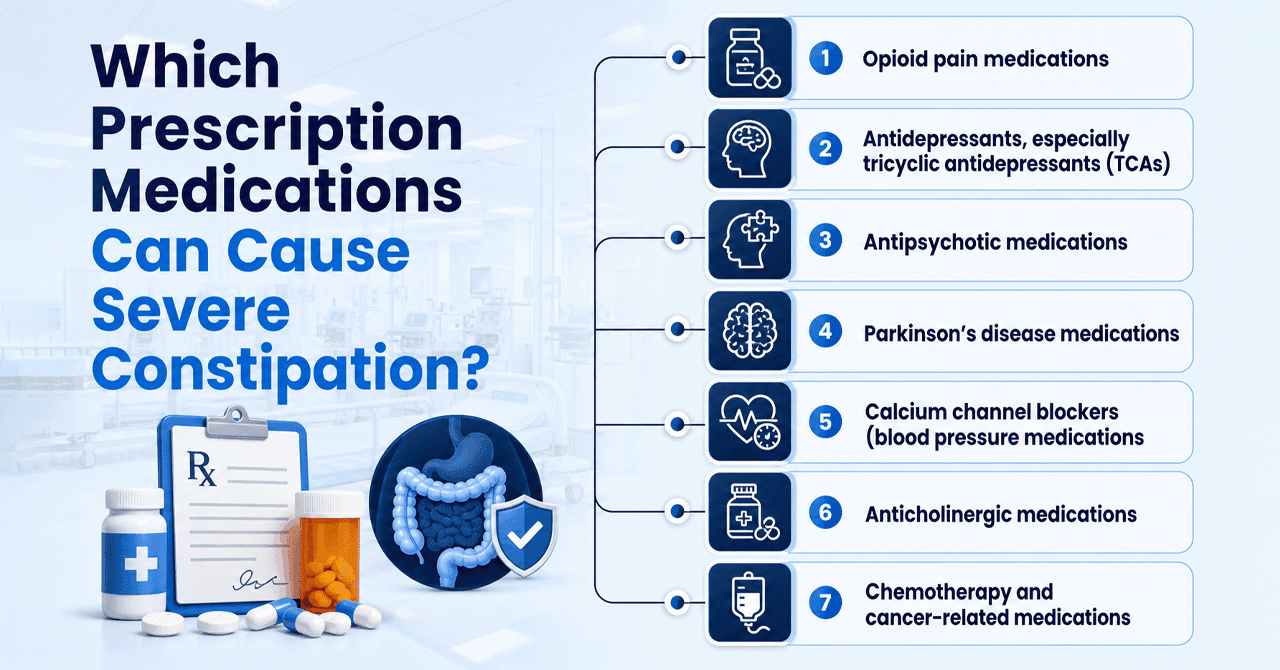
Prescription medications commonly linked to severe constipation include:
Opioid pain medications
Opioids are one of the leading causes of severe medication-related constipation. Medicines such as oxycodone, hydrocodone, morphine, and tramadol are one of the leading causes of severe medication-related constipation. Healthcare providers often refer to this condition as opioid-induced constipation (OIC), which may require targeted treatment.
Antidepressants, especially tricyclic antidepressants (TCAs)
Tricyclic antidepressants such as amitriptyline and nortriptyline can reduce are commonly associated with constipation, particularly with long-term use. While newer antidepressants may have a lower risk, constipation can still occur in some individuals.
Antipsychotic medications
Some antipsychotic medications may cause constipation due to anticholinergic effects. In severe cases, these medications may significantly slow bowel movement and require careful monitoring.
Parkinson’s disease medications
Some medications used to manage Parkinson’s disease symptoms may worsen constipation by affecting the nerve control of intestinal muscles. People with Parkinson’s disease may already have slowed gut movement, which increases the risk further.
Calcium channel blockers (blood pressure medications)
Prescription calcium channel blockers used to treat high blood pressure and heart conditions can relax smooth muscles, including those in the intestines, leading to slower stool movement.
Anticholinergic medications
These medications are used for various conditions, including bladder disorders, respiratory conditions, and certain neurological problems. They reduce muscle contractions in the digestive tract, which can lead to persistent constipation.
Chemotherapy and cancer-related medications
Some chemotherapy medications used to control nausea during cancer treatment can slow digestion and lead to significant constipation. Close monitoring is often necessary during treatment.
If symptoms persist for several days, worsen over time, or cause significant discomfort, it is important to consult a healthcare provider. Adjusting the medication, changing the dose, or adding supportive treatments may help manage symptoms safely.
Which Over-the-Counter Medications Can Cause Constipation?
Several OTC drugs that cause constipation are commonly used, especially when taken regularly or in higher doses. These products may slow digestion, harden stool, or reduce fluid in the intestines.
Common over-the-counter medications that can cause constipation include:
- Antacids containing calcium or aluminum: Often used for heartburn or acid reflux, these antacids can slow bowel movement and make stools harder to pass.
- Iron supplements: Frequently used to treat or prevent iron deficiency anemia, iron tablets are one of the most well-known OTC causes of constipation.
- Antihistamines for allergies and colds: Medications used to relieve allergy symptoms may reduce gut motility and contribute to dry, hard stools.
- Antidiarrheal medications: Products used to control diarrhea work by slowing intestinal movement, which can sometimes lead to constipation.
- Nonsteroidal anti-inflammatory drugs (NSAIDs): OTC pain relievers such as ibuprofen and naproxen may contribute to constipation in some individuals, particularly with frequent use.
If constipation continues, review medications with a pharmacist or healthcare provider.

How to Prevent Constipation Caused by Medications?
Constipation caused by medications can often be reduced or prevented by taking early steps to support healthy digestion. These strategies are most effective when started alongside medications known to slow bowel movements.
Ways to prevent constipation include:
- Increase fiber intake: Include fruits, vegetables, whole grains, and legumes to support regular bowel movements.
- Stay well hydrated: Drinking enough water helps keep stools soft and easier to pass.
- Stay active: Regular movement helps stimulate digestion and bowel function.
- Use medications as directed: Avoid overuse unless advised by a healthcare provider.
- Consider supportive options: Fiber supplements or stool softeners may help if recommended by a healthcare provider.
- Review medications regularly: A pharmacist or doctor can help identify drugs that may be contributing to symptoms.
When to See a Doctor for Constipation Caused by Medications?
While mild constipation can often improve with lifestyle changes, certain symptoms may indicate a more serious issue that requires medical attention.
You should contact a healthcare provider if you experience:
- Constipation lasting longer than 1-2 weeks
- Severe or persistent abdominal pain
- Blood in the stool or rectal bleeding
- Unexplained weight loss
- Ongoing nausea or vomiting
- Little or no relief from laxatives
- Signs of fecal impaction, such as a constant feeling of fullness or inability to pass stool
Older adults and people taking multiple medications may have a higher risk of complications. Do not stop or change prescribed medications without medical advice.
Wrapping It Up: Medications that Can Cause Constipation
Many prescription and over-the-counter medications can contribute to constipation by slowing intestinal movement or affecting fluid balance in the digestive tract. Common medication groups linked to constipation include opioid pain relievers, antidepressants, blood pressure medications, antihistamines, iron supplements, and certain antacids.
Recognizing medication-related constipation early may help prevent complications. Simple lifestyle changes such as increasing fiber intake, staying hydrated, and remaining physically active may help manage symptoms. However, persistent or severe constipation should be discussed with a healthcare provider to ensure safe treatment adjustments.
Frequently Asked Questions
Yes, certain blood pressure medications, especially calcium channel blockers and some other antihypertensive drugs, can slow bowel movement and lead to constipation. Clinical research from the National Institutes of Health shows that medications such as calcium channel blockers, beta-blockers, and diuretics may cause constipation as a side effect in some patients.
Yes, some vitamins and supplements, particularly iron and calcium supplements, are known to cause constipation. Taking these supplements with enough fluids and dietary fiber may help reduce symptoms.
Yes, certain antidepressants, especially tricyclic antidepressants (TCAs), can slow intestinal movement and contribute to constipation in some individuals.
Increasing water intake, adding fiber-rich foods, staying physically active, and using stool softeners or laxatives when recommended by a healthcare provider are commonly used methods to relieve medication-related constipation.
Important Disclaimer
This blog provides information only and does not replace expert medical guidance, diagnosis, or treatment. The information is based on trusted sources such as the FDA and National Library of Medicine, but individual responses may vary. Always consult a licensed healthcare provider before making treatment decisions.