Is Coconut Milk Good for Diabetics? Benefits and Risks
When managing diabetes, people often focus on the foods they can and cannot eat. Coconut, in its many forms, coconut milk, coconut oil, and coconut cream, is nutrient-dense and widely available, but it raises questions for those monitoring blood sugar. Many wonder, “Is Coconut Milk Good for Diabetics?”
Coconut milk is low in carbohydrates and contains MCTs (medium-chain triglycerides), which are healthy fats that can support stable blood sugar levels and provide quick energy. It is also dairy-free and easier to digest than cow’s milk, making it a convenient alternative for many. However, coconut milk is calorie-dense, so it should be incorporated thoughtfully within a balanced diet. This article explores its benefits, risks, and practical tips for people with diabetes.
Can You Drink Coconut Milk if You Have Diabetes?
Yes, you can drink unsweetened coconut milk if you have diabetes. Its minimal sugar content makes it unlikely to cause immediate blood sugar spikes. However, it is high in saturated fat and calories, so it should be considered a healthy fat source rather than a direct replacement for a beverage. For best results, use carton-based versions for drinking and limit canned coconut milk to small portions in cooking.
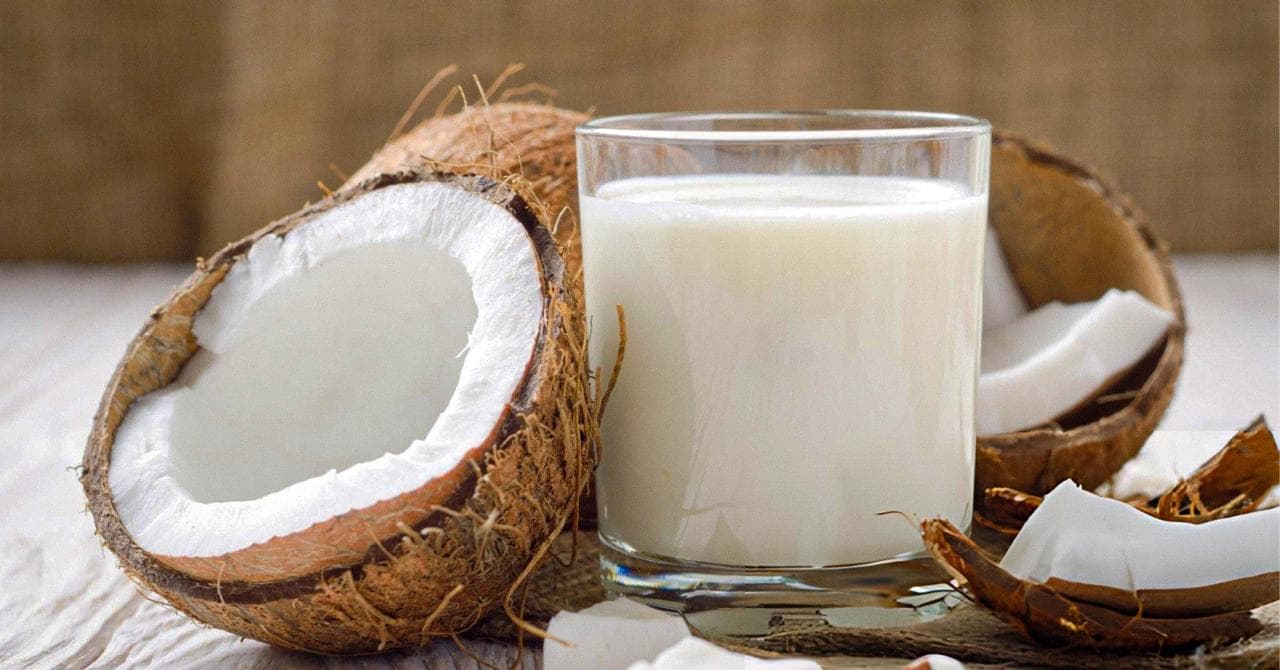
Nutritional Breakdown of Coconut Milk: Carbs, Fats, and Calories
Here’s a precise nutritional breakdown of coconut milk based on USDA FoodData Central (from raw liquid made with grated coconut meat and water). It provides the most accurate values for carbohydrates, fats, calories, and key micronutrients per 100 g serving.
| Nutrient | Amount per 100 g |
|---|---|
| Calories | 230 kcal |
| Carbohydrates | 5.54 g |
| • Total Sugars | 3.34 g |
| • Dietary Fiber | 2.20 g |
| Protein | 2.29 g |
| Total Fat | 23.84 g |
| • Saturated Fat | 21.14 g |
| • Monounsaturated Fat | 1.01 g |
| • Polyunsaturated Fat | 0.26 g |
| Net Carbs (Carbs - Fiber) | ~3.34 g |
| Calcium | 16 mg |
| Iron | 1.64 mg |
| Magnesium | 37 mg |
| 263 mg | |
| Sodium | 15 mg |
← Swipe to see more →
Blood Sugar Benefits of Coconut Milk: Why It’s a Smart Choice for Diabetics
Coconut milk is a blood-sugar-friendly option due to its high fat-to-carb ratio, which may help naturally prevent rapid glucose spikes. With a low glycemic load (~4.8 per 100 g serving), it helps maintain steady energy levels. Its medium-chain triglycerides (MCTs) are processed differently by the liver, providing quick energy and potentially supporting metabolic health.
How Coconut Milk Supports Blood Sugar Control in Diabetes
- Minimal Carbohydrates: Unsweetened coconut milk contains negligible sugar, making it ideal for a low-glycemic diet.
- Buffers Glucose Absorption: Fats in coconut milk slow the digestion of other carbohydrates in the same meal, helping stabilize blood sugar levels.
- MCT Power: MCTs are rapidly used for energy and can help improve insulin sensitivity and reduce inflammation.
- Dairy-Free: Being lactose-free, it avoids potential digestive inflammation, indirectly supporting blood sugar management.
Patient Tip: Pair coconut milk with protein (like nuts or seeds) to make a balanced, diabetic-friendly snack.
Potential Risks: Is Coconut Milk Safe for All Diabetics?
Unsweetened coconut milk can be safe for most people with Type 1 or Type 2 diabetes when consumed in moderation (½-1 cup daily). However, it is not risk-free. Its high saturated fat and calorie content may affect heart health, cholesterol levels, and weight management, which are especially important for anyone managing diabetes.
Diabetes-Specific Risks of Coconut Milk for Type 1 and Type 2
- High Saturated Fat: May raise LDL (bad) cholesterol, increasing cardiovascular risk.
- Weight Gain & Insulin Sensitivity: Excess calories can reduce insulin effectiveness and complicate blood sugar control.
- Added Sugars: Some products contain hidden sweeteners like coconut nectar or evaporated cane juice, which can spike blood glucose.
- Canned vs. Carton: Thick, canned coconut milk has far more fat and calories than lighter carton-based versions, so portion control is essential.
Canned vs. Carton Coconut Milk: Which Is Best for Diabetics?
Canned and carton coconut milk originates from coconut; they serve very different roles in a diabetic-friendly diet.
Carton Coconut Milk (Daily Beverage Choice)
Unsweetened carton coconut milk is diluted with water to mimic the consistency of dairy milk.
- Best for: Coffee, tea, cereal, or drinking by the glass.
- Why it’s safer for diabetics: Lower in calories (~15-20 kcal per 100 g) and saturated fat (~1.5 g per 100 g), making it suitable for everyday consumption without significantly impacting blood sugar or heart health.
- Verdict: Ideal for daily use as a milk alternative while keeping calories and saturated fat under control.
Canned Coconut Milk (Cooking Ingredient)
Canned coconut milk is the undiluted extract of coconut meat, rich and thick.
- Best for: Curries, soups, stews, or dairy-free baking.
- Why diabetics should use caution: Very high in calories (~230 kcal per 100 g) and saturated fat (~21 g per 100 g). Even a small portion can significantly increase daily fat intake, which may affect weight and cardiovascular risk.
- Verdict: Use sparingly, as a flavor enhancer or fat source, not a beverage substitute.
Quick Nutritional Comparison: Canned vs. Carton Coconut Milk (Per 100 g)
| Feature | Unsweetened Carton | Full-Fat Canned (USDA) |
|---|---|---|
| Calories | 15-20 kcal | 230 kcal |
| Total Fat | 1.5-2 g | 23.8 g |
| Saturated Fat | 1.5 g | 21.1 g |
| Net Carbs | <1 g | 3.3 g |
| Sugar | 0 g | 3.3 g (natural) |
| Best Use for Diabetics | Daily milk replacement | Occasional cooking ingredient |
← Swipe to see more →
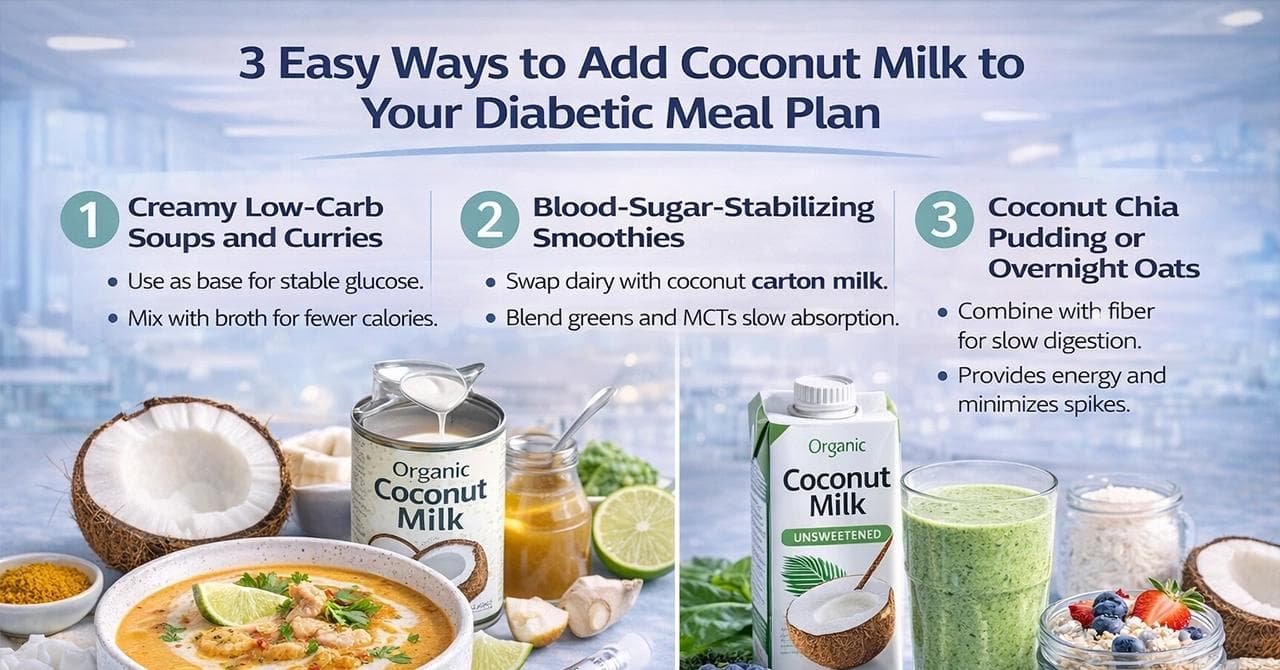
3 Easy Ways to Add Coconut Milk to Your Diabetic Meal Plan
Incorporating coconut milk into a diabetic-friendly diet is simple when you focus on unsweetened varieties and moderate portions.
1. Creamy Low-Carb Soups and Curries
Use unsweetened coconut milk as a base for stews and curries. The fats slow the digestion of other ingredients, helping prevent glucose spikes. For lighter meals, mix canned coconut milk 50/50 with broth for a lighter, lower-calorie version.
2. Blood-Sugar-Stabilizing Smoothies
Swap dairy or sweetened milk for unsweetened carton coconut milk in smoothies. Blend with leafy greens, berries, and chia seeds. The MCTs slow absorption of natural fruit sugars, supporting stable blood glucose.
3. Coconut Chia Pudding or Overnight Oats
Combine unsweetened coconut milk with chia seeds or oats for a high-fiber, slow-digesting breakfast. The combination of fiber and MCTs provides sustained energy and minimizes insulin spikes.
Coconut Milk vs. Other Dairy Alternatives (Which Wins?)
| Milk Alternative (Unsweetened) | Glycemic Index | Net Carbs (per cup) | Calories (per cup) | Best Diabetic Use Case |
|---|---|---|---|---|
| Coconut Milk (Carton) | Low (~40) | 1-2 g | 45 kcal | Keto-friendly, low-carb, supports blood sugar |
| Almond Milk | Low (~25) | 1-2 g | 30 kcal | Lowest calorie, weight management |
| Soy Milk | Low (~34) | 3-4 g | 80 kcal | High protein, low-GI, supports satiety |
| Oat Milk | High (~60) | 15-20 g | 120 kcal | High-carb foods may cause glucose spikes; use sparingly |
← Swipe to see more →
If you want the creamiest flavor without a blood sugar spike, unsweetened coconut milk (carton) wins. Just be sure to balance your saturated fat intake for the rest of the day to keep your heart as healthy as your glucose levels.
Final Verdict: Is Coconut Milk a Safe Addition to Your Diabetic Diet?
Yes, unsweetened coconut milk can be a healthy, blood-sugar-friendly choice for people with diabetes when consumed thoughtfully. Carton varieties are low in carbs, provide MCTs that may help stabilize blood glucose, and are ideal as a beverage or in smoothies. Canned coconut milk, being high in saturated fat and calories, should be limited to cooking. Always pair with protein or fiber-rich foods, monitor portion sizes, and choose unsweetened products to safely include it in both Type 1 and Type 2 diabetic meal plans.
Frequently Asked Questions
Unsweetened coconut milk is low in carbs and has a low glycemic load (~4.8 per 100 g serving), so it’s unlikely to cause blood sugar spikes when consumed in moderation. However, sweetened or flavored versions can cause spikes due to added sugars, so choosing unsweetened varieties is essential for blood sugar control.
For many diabetics, unsweetened coconut milk can be a better option than cow’s milk because it is lower in carbs and free of lactose, but it is high in saturated fat, so portion control is important.
Coconut milk contains medium-chain triglycerides (MCTs) that may support metabolism and satiety, but evidence is limited. Weight loss benefits are most effective when combined with a balanced, calorie-controlled diet.
Canned or full-fat coconut milk is high in saturated fat, which may raise LDL (“bad”) cholesterol. Consuming carton-based or light varieties in moderation minimizes this risk while supporting blood sugar management.
Medical Disclaimer
This content is for informational purposes only and does not constitute medical advice. The effects of coconut milk and diabetes may vary from person to person. Always consult a healthcare provider or registered dietitian before making changes to your diabetes meal plan.