Mounjaro Foot Pain, Tingling, and Cold Feet: What the Evidence Actually Shows
Key Takeaways
1. Foot pain and tingling are not listed among common Mounjaro side effects, but some patients report them.
2. Rapid weight loss, dehydration, low blood sugar, and pre-existing diabetic neuropathy may explain some foot symptoms.
3. Pre-existing diabetic neuropathy often explains nerve-related symptoms, not the medication itself.
4. Most foot symptoms are manageable, but persistent or severe signs warrant prompt medical attention.
Mounjaro foot pain is not listed as a common side effect in official prescribing information. Still, patients report Mounjaro tingling feet, Mounjaro cold feet, numbness, or Mounjaro nerve pain while using tirzepatide. These symptoms may relate to diabetes, dehydration, blood sugar changes, rapid weight loss, or another medication side effect. Mounjaro is FDA-approved for type 2 diabetes.
Mounjaro Foot Pain and Side Effects: What Official Data Shows
Let's be clear about what the clinical record actually says. Foot pain, tingling, and cold feet are not listed among common adverse reactions in Mounjaro’s official prescribing information. In official trial data, common Mounjaro side effects were mainly gastrointestinal, including nausea, diarrhea, vomiting, constipation, dyspepsia, and abdominal pain. In placebo-controlled adult trials, nausea occurred in 12% to 18% of Mounjaro-treated patients. Diarrhea occurred in 12% to 17%, while constipation occurred in 6% to 7%.
So, where do the foot complaints come from? They're real. Some patients report Mounjaro cold feet, tingling, or aching feet online, but these reports are not the same as confirmed clinical trial findings. This is why Mounjaro side effects feet searches should be read carefully, not treated as proof of a confirmed adverse reaction.
The gap between official labeling and lived experience isn't unusual with newer medications. What matters is understanding the indirect pathways that connect this medication to those symptoms, as these mechanisms are genuinely worth knowing, especially for anyone managing diabetes alongside weight loss treatment.

Does Mounjaro Directly Damage Nerves in Your Feet?
Current prescribing information does not identify peripheral neuropathy or nerve damage as a common adverse reaction. However, new foot pain, numbness, weakness, or tingling still needs clinical review, especially in patients with diabetes. Mounjaro activates GIP and GLP-1 receptors, which are part of its endocrine effect on blood sugar and insulin resistance. This helps improve blood sugar control by supporting insulin release, lowering glucagon, and slowing gastric emptying. None of those actions directly harm nerve tissue.
NIDDK estimates that about one-third to one-half of people with diabetes have peripheral neuropathy, which often affects the feet and legs. When foot tingling or numbness appears during Mounjaro treatment, pre-existing neuropathy is one possible explanation your provider may consider. Distinguishing between the two requires a proper clinical assessment, not just a side-effect checklist. This matters because diabetic foot symptoms can overlap with medication concerns, circulation issues, or unrelated foot health problems.
Rapid Weight Loss and 'Slimmer's Paralysis': The Compression Risk
Rapid weight loss has been reported as a risk factor for peroneal nerve compression. This nerve runs near the outside of the knee and helps control foot movement. Rapid body changes may also alter pressure on soft tissues, including fascia, nerves, and joints, which can sometimes feel like joint pain. In some cases, compression can cause numbness, weakness, or foot drop. This is not listed as a direct Mounjaro side effect, but it may matter for patients losing weight quickly.
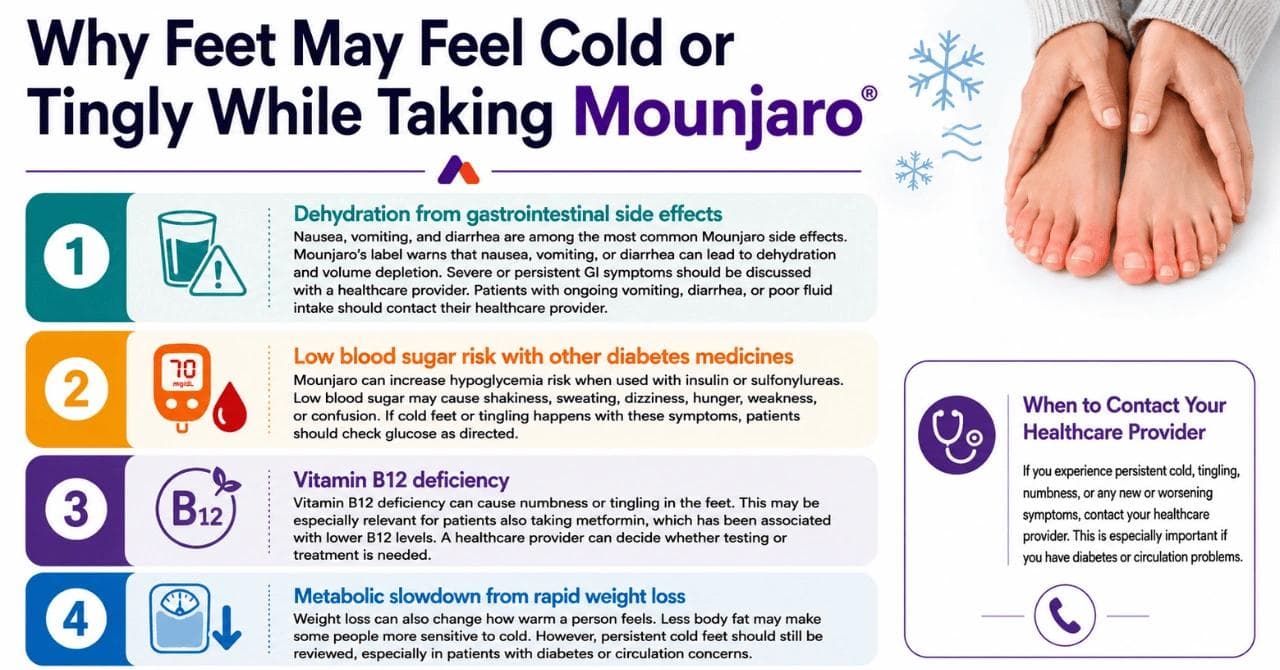
Why Feet May Feel Cold or Tingly While Taking Mounjaro
Several distinct mechanisms can produce Mounjaro tingling feet, cold feet, or foot discomfort, and they're worth separating out clearly.
Dehydration from gastrointestinal side effects
Nausea, vomiting, and diarrhea are among the most common Mounjaro side effects. Mounjaro’s label warns that nausea, vomiting, or diarrhea can lead to dehydration and volume depletion. Severe or persistent GI symptoms should be discussed with a healthcare provider. Patients with ongoing vomiting, diarrhea, or poor fluid intake should contact their healthcare provider.
Low blood sugar risk with other diabetes medicines
Mounjaro can increase hypoglycemia risk when used with insulin or sulfonylureas. Low blood sugar may cause shakiness, sweating, dizziness, hunger, weakness, or confusion. If cold feet or tingling happens with these symptoms, patients should check glucose as directed.
Vitamin B12 deficiency
Vitamin B12 deficiency can cause numbness or tingling in the feet. This may be especially relevant for patients also taking metformin, which has been associated with lower B12 levels. A healthcare provider can decide whether testing or treatment is needed.
Metabolic slowdown from rapid weight loss
Weight loss can also change how warm a person feels. Less body fat may make some people more sensitive to cold. However, persistent cold feet should still be reviewed, especially in patients with diabetes or circulation concerns.
Foot Symptoms and Blood Glucose Control: A Temporary Trade-Off
One of the more counterintuitive aspects of diabetes treatment is that improving blood sugar control can temporarily worsen neuropathy symptoms before things get better. In some people with diabetes, rapid improvement in blood sugar may trigger treatment-induced neuropathy. One review notes this risk when A1c drops by more than 2 percentage points over about 3 months. This is not specific to Mounjaro, but it may matter when glucose improves quickly.
The practical implication is that new or worsening tingling in the feet during the early weeks of treatment doesn't automatically signal a problem with the medication, as it may reflect the endocrine system adjusting to better metabolic conditions. Any new or worsening neuropathy symptoms should be discussed with the prescribing clinician.
Your Action Plan: Managing Foot Pain While on Mounjaro
Managing foot-related symptoms starts with addressing the most controllable factors.
Hydration and nutrition
Drink enough fluids to compensate for any GI losses. Small, nutrient-dense meals help maintain electrolyte balance and reduce the severity of nausea, which in turn limits fluid loss. If you're experiencing significant vomiting or diarrhea, consider an electrolyte replacement drink.
Electrolyte and magnesium awareness
Low magnesium is a common contributor to cramps and tingling that often goes unchecked. If you're experiencing leg or foot cramps alongside other Mounjaro symptoms, ask your provider to check electrolyte levels.
Blood sugar monitoring
If you're taking Mounjaro alongside other glucose-lowering medications, hypoglycemia is a real risk. Regular blood sugar checks, especially after meals and exercise, help catch low readings before they trigger vasoconstriction and cold extremity symptoms. Reliable blood glucose monitoring supplies make this routine much easier to maintain consistently.
When to call your doctor
Mild, occasional tingling or cold feet is one thing; persistent pain, swelling, redness, inflammation, weakness, or signs of poor circulation are another. Any sudden foot drop, severe numbness, or symptoms accompanied by chest pain or shortness of breath require prompt medical evaluation. Don't wait on those. Your provider can check for postural blood pressure changes, B12 levels, and electrolyte imbalances in a single visit. They can also rule out unrelated causes of foot pain, such as gout, injury, or joint pain.
If you're managing the cost of ongoing treatment, medication savings options may help reduce the financial burden of long-term prescriptions.
Bottom Line: What Mounjaro Foot Pain Usually Means
Tirzepatide foot pain and cold feet are not considered direct toxic effects of Mounjaro. These symptoms are more often linked to indirect factors like dehydration, hypoglycemia, B12 deficiency, pre-existing diabetic neuropathy, or rapid weight loss-related compression risks.
Mounjaro remains an FDA-approved treatment for type 2 diabetes. Patients seeking pain relief for persistent foot pain, numbness, weakness, or cold feet should speak with their healthcare provider before changing treatment. If cost is part of the challenge, U.S. patients with a valid prescription can compare Canadian pharmacy options through Polar Bear Meds.
Frequently Asked Questions
Mounjaro nerve pain is not listed as a common adverse reaction in official prescribing information. Its mechanism of action doesn't involve neurotoxic effects, and some animal studies suggest it may actually have neuroprotective properties. Rapid weight loss associated with the medication can indirectly lead to compression neuropathies, such as peroneal nerve compression causing foot drop, due to the loss of protective fat around superficial nerves.
Mounjaro side effects feet searches are common, but foot pain is not listed as a common side effect in Mounjaro’s official prescribing information. Patients do report it anecdotally, but the causes are typically indirect: pre-existing diabetic neuropathy, rapid weight loss, dehydration, or nutritional deficiencies. The symptoms are real; the investigation should simply look beyond the drug itself.
Do not ignore persistent or severe foot pain. Contact your doctor if you notice swelling, redness, numbness, weakness, wounds, poor circulation signs, or sudden foot drop. Your healthcare provider may check glucose, hydration, kidney function, B12, or other possible causes.
Poor circulation is not listed as a common Mounjaro side effect. However, diabetes can affect nerves and blood vessels in the feet. Dehydration from vomiting or diarrhea may also need medical attention, especially if symptoms persist.
Disclaimer
This article is for informational purposes only and is not medical advice. Mounjaro should be used only as prescribed by a licensed healthcare provider. If you experience foot pain, tingling, numbness, weakness, cold feet, or circulation changes while using Mounjaro, speak with your doctor or pharmacist before changing or stopping treatment.