Ozempic Frequent Yawning: Why It Happens and What to Do About It
Key Takeaways
- Fatigue occurs in fewer than 5% of users but tends to peak during initial weeks or after dose increases.
- GI side effects like nausea and vomiting drain fluids, which compounds tiredness and drives yawning.
- Most symptoms improve within a few weeks as the body adjusts to the medication.
Ozempic frequent yawning is a real, documented side effect that catches many users off guard. Semaglutide, the active ingredient, does far more than regulate blood sugar. It reshapes your appetite, slows digestion, and triggers a cascade of metabolic adjustments that can leave you fighting fatigue and yawning constantly, especially in those first few weeks on the medication.
How Ozempic Works and Why Side Effects Matter
Ozempic is a GLP-1 receptor agonist, meaning it mimics a natural hormone your gut releases after eating. It works by regulating blood sugar and suppressing appetite, two mechanisms that sound straightforward but carry significant downstream effects on your energy levels.
Slowing gastric emptying is one of those effects. Food moves through your digestive system more slowly, which helps control blood sugar spikes but also means your body is continuously adapting to a new metabolic rhythm. That adaptation costs energy. Understanding this mechanism makes the side effects, including drowsiness and yawning, easier to anticipate and manage rather than dismiss.

Dehydration and GI Side Effects: The Hidden Yawning Culprit
This is where the Ozempic yawning cause becomes clearest. GI side effects are by far the most common experience on this medication. Vomiting and diarrhea, in particular, can deplete your body fast. Dehydration then triggers its own set of problems: fatigue, brain fog, dizziness, and yes, persistent yawning.
Dehydration from GI side effects is one of the primary contributors to low energy on Ozempic, which means the fluid loss you barely notice during a rough nausea spell can quietly fuel hours of tiredness and yawning afterwards.
In many cases, yawning while taking semaglutide follows this chain: nausea leads to poor fluid intake, poor fluid intake leads to dehydration, dehydration leads to fatigue and drowsiness, and yawning follows.
Low Blood Sugar and Energy Crashes on Ozempic
Hypoglycemia is another piece of this puzzle, though it's more relevant for specific patients. Low blood sugar becomes a meaningful risk when Ozempic is combined with other glucose-lowering medications like insulin or sulfonylureas. The symptoms, including shakiness, sweating, confusion, and fatigue, can all manifest as excessive yawning and general weakness.
For people taking Ozempic purely for weight loss without diabetes medications, the risk looks different. Semaglutide works in a glucose-dependent manner, which means it's unlikely to push blood sugar dangerously low on its own. Still, reduced caloric intake from appetite suppression can cause mild energy dips that feel like hypoglycemia, even when blood sugar is technically within range.
If you're managing diabetes with multiple medications, monitoring blood sugar with a reliable glucose meter is worth discussing with your provider.
Caloric Deficit and Metabolic Adjustment as Energy Drains
Appetite suppression is one of Ozempic's most sought-after effects for weight loss. But eating significantly less than your body is used to creates a caloric deficit that takes time to adapt to. That deficit, especially early in treatment, can cause real fatigue.
Early metabolic changes compound this. Your body is adjusting to new hormone signaling from the GLP-1 receptor agonist, recalibrating how it stores and burns energy. The good news is that this adjustment period doesn't last indefinitely. Research consistently shows that most common side effects, including fatigue, are usually mild and temporary, improving within a few weeks as the body adapts.
Practical Strategies to Combat Yawning and Fatigue
Side effect management on Ozempic doesn't require stopping the medication. A few targeted adjustments help most people get through the adjustment phase.
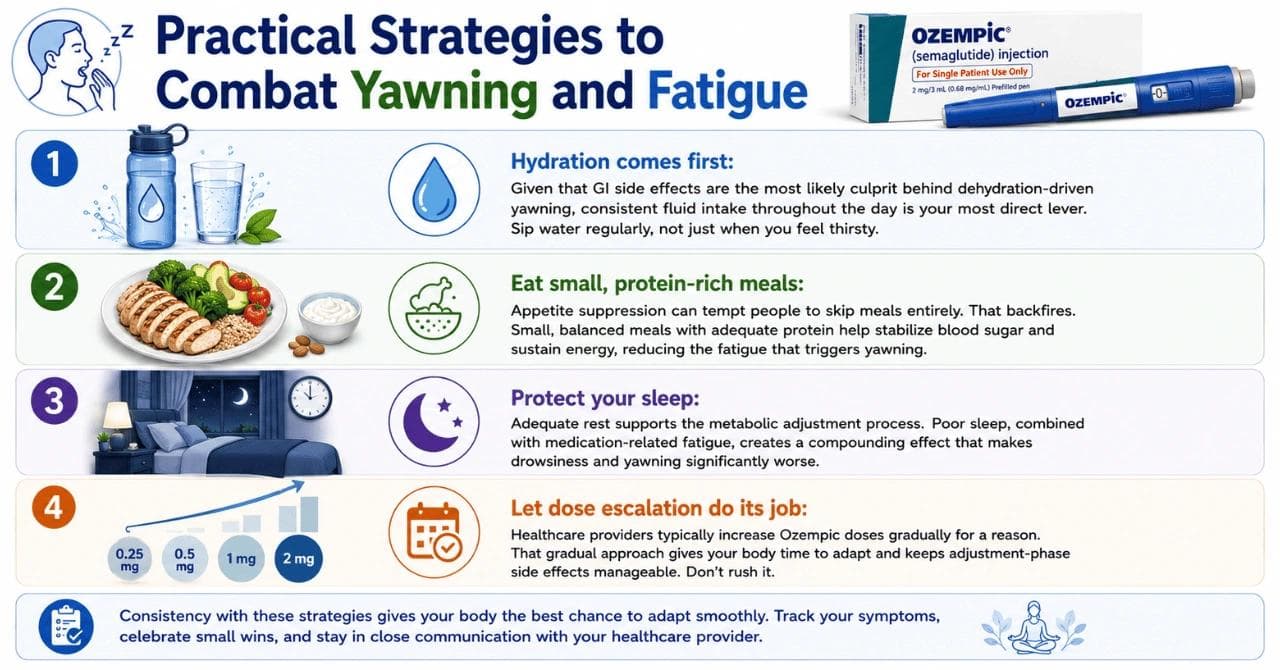
1. Hydration comes first: Given that GI side effects are the most likely culprit behind dehydration-driven yawning, consistent fluid intake throughout the day is your most direct lever. Sip water regularly, not just when you feel thirsty.
2. Eat small, protein-rich meals: Appetite suppression can tempt people to skip meals entirely. That backfires. Small, balanced meals with adequate protein help stabilize blood sugar and sustain energy, reducing the fatigue that triggers yawning.
3. Protect your sleep: Adequate rest supports the metabolic adjustment process. Poor sleep, combined with medication-related fatigue, creates a compounding effect that makes drowsiness and yawning significantly worse.
4. Let dose escalation do its job: Healthcare providers typically increase Ozempic doses gradually for a reason. That gradual approach gives your body time to adapt and keeps adjustment-phase side effects manageable. Don't rush it.
For patients monitoring blood glucose, you can browse diabetes care supplies, including glucose meters and test strips to support at-home tracking during treatment.
When Yawning Signals a Problem Worth Reporting
Most fatigue and yawning on Ozempic resolves within a few weeks. If it doesn't, that's worth flagging. Persistent or severe fatigue lasting beyond three to four weeks, especially if it's worsening rather than improving, warrants a conversation with your provider.
Red flags include signs of dehydration (dark urine, dry mouth, persistent headaches), symptoms of hypoglycemia (shakiness, confusion, rapid heartbeat), or any other side effects that feel like they're escalating. According to Medicadepot, if you do experience hypoglycemia symptoms, consuming 15 grams of fast-acting carbohydrates is the immediate response while you seek medical guidance.
Never discontinue Ozempic on your own. Dosage adjustments often resolve persistent side effects without stopping treatment entirely. Your provider can assess whether the yawning points to dehydration, a nutrient deficiency, or a medication interaction worth addressing.
If you're looking to manage your Ozempic prescription affordably, Polar Bear Meds offers licensed Canadian pharmacy access to prescription medications, including semaglutide options, with delivery to U.S. patients.
Frequently Asked Questions
Ozempic frequent yawning stems from several overlapping mechanisms rather than one direct cause. Fatigue, which occurs in fewer than 5% of users according to Medicadepot, is the most common driver, particularly during the first weeks of treatment or after a dose increase. Dehydration from GI side effects like vomiting and diarrhea compounds tiredness, and for patients combining Ozempic with insulin or sulfonylureas, hypoglycemia can trigger additional weakness and yawning.
Yawning is listed as a common side effect of semaglutide, though clinical trial summaries tend to highlight GI issues like nausea, vomiting, and abdominal pain more prominently. Fatigue, which is the primary mechanism behind yawning on Ozempic, affects fewer than 5% of users according to Medicadepot. That makes it less prevalent than GI symptoms, but Ozempic user experiences frequently mention tiredness and yawning together, particularly in the early weeks of treatment.
Start with hydration and nutrition: drink fluids consistently throughout the day and eat small, protein-rich meals to stabilize energy and blood sugar. Prioritize adequate sleep, since fatigue from the medication and poor rest reinforce each other. If yawning persists beyond the first few weeks or comes with symptoms like shakiness, confusion, or dizziness, contact your healthcare provider to assess whether a dosage adjustment or investigation into dehydration or hypoglycemia is needed.
Disclaimer
This article covers what the research says about yawning on Ozempic and semaglutide side effects, but it's not medical advice. Everyone's response to this medication is different, and a doctor or pharmacist who knows your full health picture is the right person to guide your treatment. If something feels off, don't wait; reach out to your provider.