Ozempic Side Effects 2026: What US Patients Should Know Before Starting Treatment
Key Takeaways
1. Gastrointestinal side effects are the most commonly reported adverse reactions with Ozempic, especially during dose escalation.
2. Some patients have reported dry mouth and taste changes, although these are not among the most commonly listed adverse reactions in the prescribing information.
3. Rare serious risks include gastroparesis, pancreatitis, gallbladder disease, and an FDA-boxed warning on thyroid tumors.
4. Most common side effects resolve as the body adjusts - red-flag symptoms need immediate medical attention.
Ozempic side effects 2026 data confirms that most people starting semaglutide will experience at least some Ozempic GI symptoms, especially during the first few weeks of treatment. But the full picture is more nuanced than "it makes you nauseous." From taste changes and dry mouth to rare but serious conditions like gastroparesis, knowing what to expect and when to call your doctor makes a real difference in how you manage treatment.
Ozempic's Most Common Side Effects: What 70% of Users Experience
The GI system takes the hardest hit. Gastrointestinal reactions are the most frequently reported adverse events in clinical trials. That's not a small minority. That's most people who start this medication.
Nausea leads the list. Clinical trials for Ozempic found it affected about 1 in 5 patients (roughly 20%), while broader semaglutide studies put that figure higher, at 25-40% of users. Vomiting occurred in approximately 10-15% of semaglutide users in studies, and constipation affected 15-20%. Diarrhea and abdominal pain round out the most commonly reported Ozempic GI symptoms, though they tend to be less persistent than nausea.
Why does this happen? Ozempic works by activating glucagon-like peptide-1 (GLP-1) receptors, which slow gastric emptying and suppress appetite. Those mechanisms are exactly what make it effective. They're also what upset the stomach in the early weeks.
For most people, these symptoms are temporary. As the body adjusts to semaglutide, GI distress tends to ease on its own, particularly after each dose increase stabilizes. Starting low and titrating slowly is the primary strategy for keeping this phase manageable.

Mouth and Throat Changes: Ozempic Oral Side Effects You Might Not Expect
Ozempic oral side effects get less attention than nausea, but they're surprisingly common and can affect quality of life in ways patients don't anticipate.
"Ozempic Tongue" and Taste Changes
Taste changes have been reported anecdotally by some patients, but dysgeusia is not listed among the most common adverse reactions in the FDA prescribing information.
Dry Mouth and Its Dental Risks
Xerostomia (dry mouth) is a documented side effect of GLP-1 receptor agonists, likely driven by dehydration or reduced saliva production, according to BG Dental Wellness. Saliva isn't just for comfort. It neutralizes acids, washes away bacteria, and protects enamel. Without enough of it, patients face a higher risk of tooth decay, gum irritation, and general oral discomfort.
Halitosis, Sore Throat, and Enamel Erosion
Bad breath linked to Ozempic can stem from two directions: dry mouth reducing the natural cleansing action of saliva, and acid reflux or vomiting exposing the mouth to stomach acids. That same acid exposure is what threatens dental enamel. Repeated vomiting or ongoing acid reflux may also irritate the esophagus, potentially contributing to esophagitis, although this is generally related to persistent reflux rather than a direct effect of semaglutide itself. BG Dental Wellness notes that frequent vomiting caused by Ozempic increases the risk of enamel erosion significantly, especially if patients brush immediately after vomiting (which actually spreads the acid further).
Practical steps to protect your mouth include: staying well-hydrated, using fluoride toothpaste, rinsing with water (not brushing) after vomiting, chewing sugar-free gum to stimulate saliva, and mentioning these symptoms to your dentist. If you're managing your Ozempic prescription through a canadian pharmacy and notice oral changes, flag them at your next provider visit rather than waiting.
Digestive Distress: Managing Ozempic Stomach Issues and GI Symptoms
Knowing the symptoms is one thing. Managing them day-to-day is another. Here's what actually helps with Ozempic stomach issues and other Ozempic GI symptoms.
Dietary Adjustments That Make a Difference
Smaller, more frequent meals are consistently more tolerable than large ones. Bland, low-fat foods, think crackers, toast, rice, or bananas, put less stress on a stomach that's already emptying slowly. Avoiding greasy, fried, spicy, or overly sweet foods reduces the likelihood of triggering nausea or dyspepsia. Strong odors can also set off queasiness, so cooking simple meals during the adjustment phase is worth the trade-off.
Hydration and Positioning
Sipping water frequently throughout the day (rather than drinking large amounts at once) helps with both hydration and nausea. After meals, staying upright for 30-45 minutes reduces acid reflux risk. Some patients find that adjusting their injection timing to the evening, or to a day when they can rest, helps them sleep through the peak side effect window.
Medication Options When Lifestyle Changes Aren't Enough
Over-the-counter options like bismuth subsalicylate or dimenhydrinate can take the edge off mild nausea. For more persistent cases, doctors may prescribe ondansetron or metoclopramide. These aren't long-term solutions, but they can make the first few weeks far more tolerable.
The Case for Gradual Dose Escalation
Starting at a lower dose and increasing slowly is one of the most effective ways to reduce initial GI impact. Rushing the titration schedule is one of the most common reasons patients experience severe early symptoms. If your current dose feels overwhelming, talk to your prescriber before assuming the medication isn't right for you.
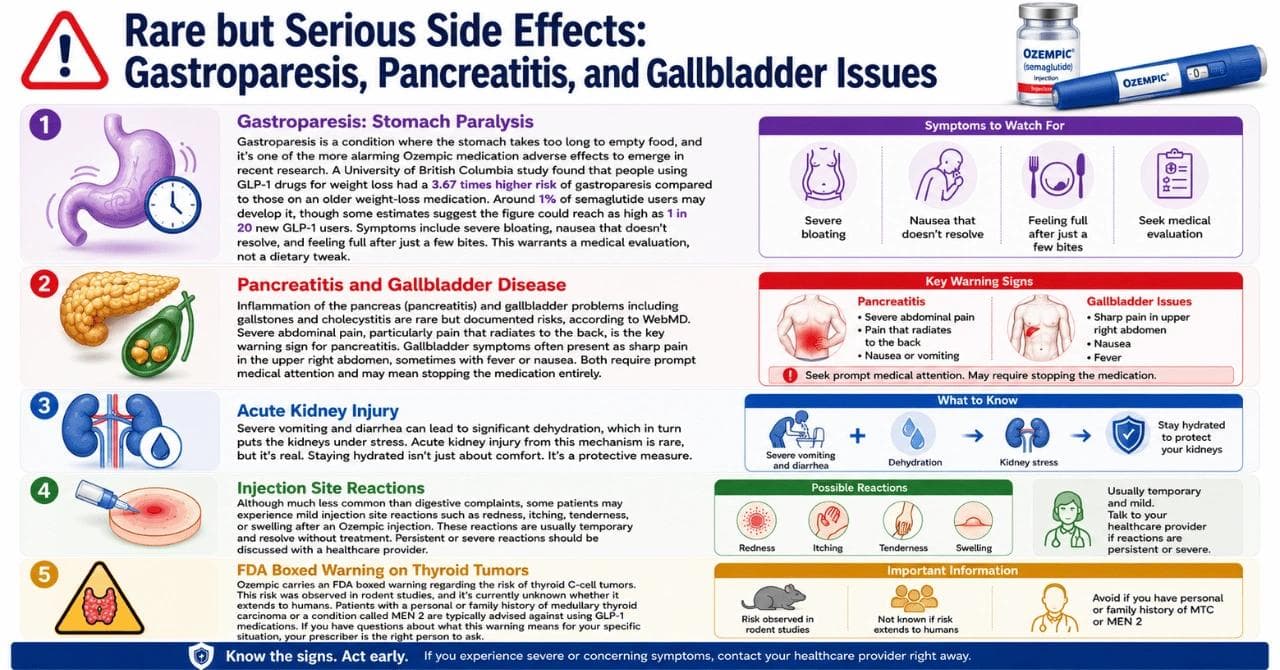
Rare but Serious Side Effects: Gastroparesis, Pancreatitis, and Gallbladder Issues
Most people taking Ozempic will never experience these Ozempic medication adverse effects, but they're serious enough that every patient should know the warning signs. But they're serious enough that every patient should know what to watch for.
Gastroparesis: Stomach Paralysis
Gastroparesis is a condition where the stomach takes too long to empty food, and it's one of the more alarming Ozempic medication adverse effects to emerge in recent research. A University of British Columbia study found that people using GLP-1 drugs for weight loss had a 3.67 times higher risk of gastroparesis compared to those on an older weight-loss medication. Around 1% of semaglutide users may develop it, though some estimates suggest the figure could reach as high as 1 in 20 new GLP-1 users. Symptoms include severe bloating, nausea that doesn't resolve, and feeling full after just a few bites. This warrants a medical evaluation, not a dietary tweak.
Pancreatitis and Gallbladder Disease
Inflammation of the pancreas (pancreatitis) and gallbladder problems including gallstones and cholecystitis are rare but documented risks, according to WebMD. Severe abdominal pain, particularly pain that radiates to the back, is the key warning sign for pancreatitis. Gallbladder symptoms often present as sharp pain in the upper right abdomen, sometimes with fever or nausea. Both require prompt medical attention and may mean stopping the medication entirely.
Acute Kidney Injury
Severe vomiting and diarrhea can lead to significant dehydration, which in turn puts the kidneys under stress. Acute kidney injury from this mechanism is rare, but it's real. Staying hydrated isn't just about comfort. It's a protective measure.
Injection Site Reactions
Although much less common than digestive complaints, some patients may experience mild injection site reactions such as redness, itching, tenderness, or swelling after an Ozempic injection. These reactions are usually temporary and resolve without treatment. Persistent or severe reactions should be discussed with a healthcare provider.
FDA Boxed Warning on Thyroid Tumors
Ozempic carries an FDA boxed warning regarding the risk of thyroid C-cell tumors. This risk was observed in rodent studies, and it's currently unknown whether it extends to humans. Patients with a personal or family history of medullary thyroid carcinoma or a condition called MEN 2 are typically advised against using GLP-1 medications. If you have questions about what this warning means for your specific situation, your prescriber is the right person to ask.
Upper Respiratory Symptoms: Ozempic Sinus Problems and Nasopharyngitis
Not everyone connects a runny nose or sore throat to their diabetes medication. They should. Ozempic sinus problems, specifically nasopharyngitis (presenting as common cold-like symptoms including nasal congestion, runny nose, and pharyngitis), are a documented side effect of the medication.
The exact mechanism isn't fully understood. Possible explanations include immune modulation from GLP-1 receptor activity or increased tissue sensitivity in the upper respiratory tract. Whatever the cause, these symptoms tend to be mild and self-limiting for most patients.
Managing them looks a lot like managing an actual cold: rest, fluids, and over-the-counter decongestants or saline rinses as needed. If symptoms are severe, persistent, or accompanied by fever, check in with your doctor to rule out an actual infection rather than a medication effect.
How Long Do Ozempic Side Effects Last and When Should You Worry?
For common side effects, the trajectory is generally encouraging. Nausea, fatigue, diarrhea, and constipation typically resolve within a few days to weeks as the body adjusts to each dose level. After a dose increase, expect a short recurrence. That's normal. The pattern usually improves as the new dose stabilizes.
Some factors influence how long symptoms linger. Dose speed (escalating too fast), individual metabolism, and concurrent medications all play a role. Patients on other diabetes medications face an added concern: hypoglycemia can occur when Ozempic is combined with certain drugs, and low blood sugar has its own set of symptoms that can be confused with standard GI distress.
Red-Flag Symptoms That Need Immediate Attention
Don't wait for these:
- Severe abdominal pain (possible pancreatitis or gallbladder disease)
- Persistent vomiting that prevents keeping fluids down (dehydration and kidney injury risk)
- Signs of a severe allergic reaction: hives, swelling of the face or throat, difficulty breathing (anaphylaxis or angioedema)
- Sudden changes in vision or signs of very low blood sugar
These aren't "adjustment period" symptoms. They're signals to seek care the same day.
Bottom Line: Managing Ozempic Side Effects Safely
Most Ozempic side effects are temporary and become more manageable over time. While common Ozempic stomach issues often improve as your body adapts to semaglutide, rare Ozempic medication adverse effects require immediate medical evaluation. Knowing the difference between expected side effects and warning signs, and keeping your healthcare provider informed, is the foundation of safe, effective treatment.
Frequently Asked Questions
For most people, common side effects like nausea, fatigue, diarrhea, and constipation are temporary and ease within a few days to weeks as the body adjusts to the medication or a new dose. Some symptoms may linger longer depending on individual response and dosing speed. Serious side effects like pancreatitis or gallbladder problems won't resolve on their own and require prompt medical attention.
The most common GI side effects aren't considered dangerous and tend to improve with time. But Ozempic does carry a risk of rare, serious adverse effects that can be genuinely dangerous, including severe pancreatitis, acute kidney injury from dehydration, anaphylaxis, gastroparesis, gallbladder disease, and an FDA-boxed warning on thyroid tumors. Hypoglycemia is also a risk, particularly when Ozempic is used alongside other diabetes medications.
Eating smaller, more frequent meals of bland, low-fat foods (crackers, toast, rice) and avoiding greasy or spicy food helps significantly. Staying hydrated with small, frequent sips, staying upright after meals for 30-45 minutes, and adjusting injection timing to the evening can all reduce peak nausea. For persistent cases, over-the-counter options like bismuth subsalicylate are a starting point, while doctors may prescribe ondansetron or metoclopramide for more severe symptoms.
Disclaimer
This article covers what the current research says about Ozempic's side effect profile, but it's not medical advice. Every patient's situation is different, and side effects can interact with other conditions and medications in ways this article can't predict. Talk to your doctor or pharmacist before making any changes to your treatment, and seek emergency care if you experience severe symptoms.