Ozempic Sinus Congestion: Why It Happens and How to Get Relief
Key Takeaways
- Upper respiratory infections occurred in 8-10% of semaglutide users in clinical trials, compared to 6% on placebo.
- Three main physiological pathways link Ozempic to sinus symptoms: immune effects, acid reflux, and vagus nerve stimulation.
- Saline rinses, humidifiers, and certain OTC medications can manage symptoms without stopping your prescription.
- Don't discontinue Ozempic for sinus issues without talking to your doctor first.
Ozempic sinus congestion is more common than the official FDA labeling suggests, and if you're sniffling through your weekly injection, you're not imagining things. Semaglutide works through glucagon-like peptide-1 receptors found throughout the body, including in places that directly affect your nasal passages and immune response. This article breaks down why it happens and what actually helps.
Why Ozempic Users Report Runny Nose and Sinus Issues
There's a real gap between what the FDA label formally lists and what patients actually experience. Rhinorrhea (runny nose) doesn't appear as a named side effect in all official Ozempic documentation, yet reports from users and clinicians consistently describe it. That disconnect matters for anyone trying to figure out whether their congestion is medication-related.
The clinical trial data tells a clearer story. According to data cited by Doctronic.ai, upper respiratory infections occurred in 8-10% of patients taking semaglutide, compared to 6% in the placebo group. Trials for Wegovy, another semaglutide product, showed even higher rates: 22% of patients reported nasopharyngitis (common cold) and 8% reported upper respiratory tract infections, according to data from Habitual. These aren't trivial numbers. They suggest a genuine, if modest, signal worth paying attention to.
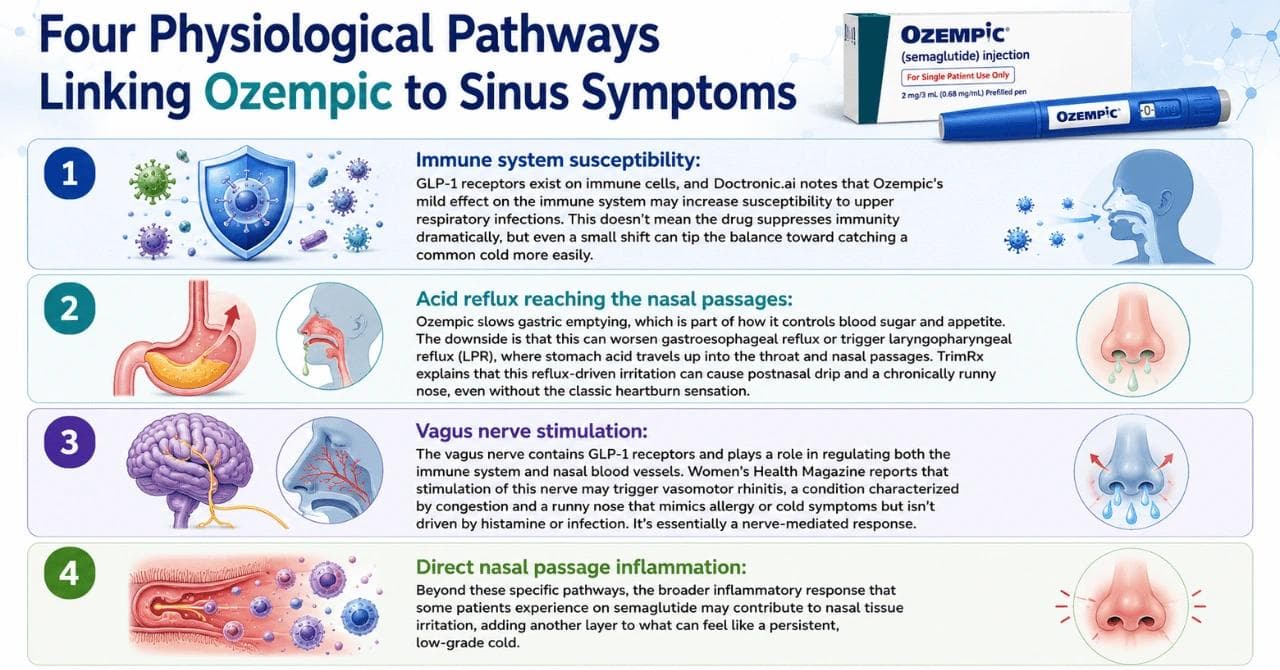
Four Physiological Pathways Linking Ozempic to Sinus Symptoms
So what's actually going on? There are four plausible mechanisms, and for many patients, more than one may be operating at once.
1. Immune system susceptibility: GLP-1 receptors exist on immune cells, and Doctronic.ai notes that Ozempic's mild effect on the immune system may increase susceptibility to upper respiratory infections. This doesn't mean the drug suppresses immunity dramatically, but even a small shift can tip the balance toward catching a common cold more easily.
2. Acid reflux reaching the nasal passages: Ozempic slows gastric emptying, which is part of how it controls blood sugar and appetite. The downside is that this can worsen gastroesophageal reflux or trigger laryngopharyngeal reflux (LPR), where stomach acid travels up into the throat and nasal passages. TrimRx explains that this reflux-driven irritation can cause postnasal drip and a chronically runny nose, even without the classic heartburn sensation.
3. Vagus nerve stimulation: The vagus nerve contains GLP-1 receptors and plays a role in regulating both the immune system and nasal blood vessels. Women's Health Magazine reports that stimulation of this nerve may trigger vasomotor rhinitis, a condition characterized by congestion and a runny nose that mimics allergy or cold symptoms but isn't driven by histamine or infection. It's essentially a nerve-mediated response.
4. Direct nasal passage inflammation: Beyond these specific pathways, the broader inflammatory response that some patients experience on semaglutide may contribute to nasal tissue irritation, adding another layer to what can feel like a persistent, low-grade cold.
Home Remedies and Safe OTC Options for Ozempic Sinus Relief
The good news: most cases of Ozempic sinus congestion respond well to straightforward management. Start with the basics before reaching for medication.
First-line home strategies include staying well-hydrated, running a humidifier (especially overnight), and using a saline spray or nasal rinse daily. These approaches keep mucus thin and nasal passages moist without any drug interactions to worry about. Reddit users in the Ozempic community consistently flag these as their most reliable go-to options.
OTC medications that are generally considered safe alongside semaglutide include acetaminophen for discomfort, non-sedating antihistamines like cetirizine or loratadine if histamine-driven rhinitis is suspected, guaifenesin as a mucus thinner, and nasal steroid sprays such as fluticasone for persistent inflammation. These options address symptoms without meaningfully interfering with blood sugar control.
Decongestants are a different story. Pseudoephedrine and phenylephrine, the active ingredients in most standard cold and sinus products, can elevate blood pressure and heart rate. They may also interfere with blood glucose control. That combination makes them a real concern for anyone managing diabetes on a prescription medication like Ozempic. Talk to your doctor or pharmacist before using them, even for a short course.
Dietary adjustments matter too, particularly if reflux is contributing to your symptoms. Eating smaller meals, avoiding food within two to three hours of lying down, and cutting back on acidic or spicy foods can reduce LPR-related postnasal drip meaningfully.
When Sinus Issues Signal a Need to Contact Your Doctor
Most Ozempic-related sinus symptoms are mild and settle as the body adjusts to the medication. But some situations genuinely warrant a call.
If congestion or upper respiratory symptoms persist beyond two weeks, worsen instead of improving, or come with fever, facial pain, or thick discolored mucus, those are signs of a possible bacterial sinus infection that needs its own treatment. Similarly, any symptoms suggesting a severe allergic reaction, such as hives, swelling, or difficulty breathing, require immediate medical attention.
On the question of stopping Ozempic: don't do it without medical guidance. Discontinuing the medication can reverse blood sugar control, increase cardiovascular risk, and lead to appetite rebound and weight regain. Sinus congestion is frustrating, but it's rarely a reason to abandon a therapy that's working. A doctor can assess whether a dose adjustment, a temporary hold, or a different management strategy makes more sense for your specific situation.

Managing Side Effects Without Sacrificing Treatment Benefits
Ozempic sinus congestion is real, and the physiology behind it is well enough understood that you can address it directly. For most people, symptoms are mild and improve over time as the body adapts to semaglutide. The therapeutic benefits of this prescription medication, including blood sugar control, reduced cardiovascular risk, and meaningful weight management, are substantial enough that temporary nasal symptoms shouldn't drive the decision to stop.
Work with your doctor to find the right balance. If you're managing costs alongside side effects, Polar Bear Meds offers Ozempic sourced from licensed Canadian pharmacies with delivery to the U.S. and their medication coupons and savings page is worth checking before your next refill. Managing Ozempic sinus congestion well means staying on a treatment that's working, not abandoning it over a symptom that has real solutions.
Frequently Asked Questions
Clinical trial data show upper respiratory infections in 8-10% of semaglutide users compared to 6% on placebo. Wegovy trials reported nasopharyngitis in 22% of patients and upper respiratory tract infections in 8%. While official FDA labeling doesn't always list rhinorrhea as a direct side effect, many patients and clinicians report it, often linking it to acid reflux or vagus nerve stimulation.
Staying hydrated, using a humidifier, and applying a saline spray are the safest first steps. Non-sedating antihistamines, guaifenesin, and nasal steroid sprays can provide additional relief. Decongestants like pseudoephedrine or phenylephrine require a conversation with your doctor first, since they can affect blood pressure and blood glucose control.
Stopping without medical guidance isn't recommended. Most sinus symptoms are mild and tend to improve as your body adjusts to the medication. Abruptly discontinuing Ozempic can reverse its therapeutic benefits, including blood sugar control and cardiovascular protection, and may lead to increased appetite and weight regain.
Disclaimer
This article is informational and isn't a substitute for medical advice. If you're experiencing sinus symptoms or any side effects from Ozempic, talk to your doctor or pharmacist before adjusting your dose or adding new medications. They can help you manage symptoms safely while keeping your treatment on track.